English


Thomas Newcomen
Thomas Newcomen was an English inventor who created the first practical steam engine in 1712…
Reads at Grades 6–8 Listens at Grades 4–8
Print & create
Answer keys·No prep·Free with an account
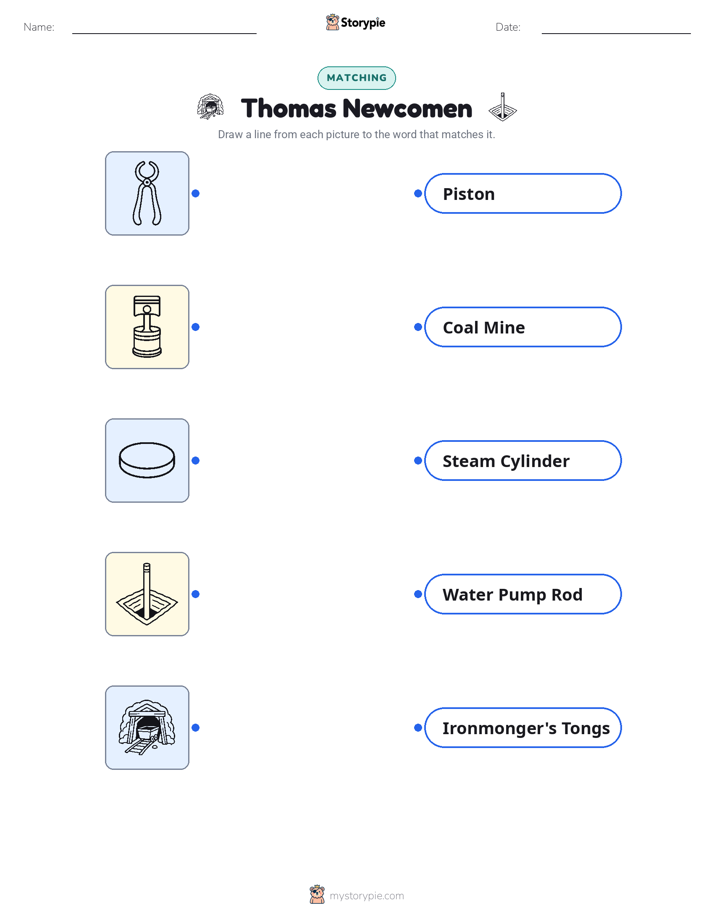
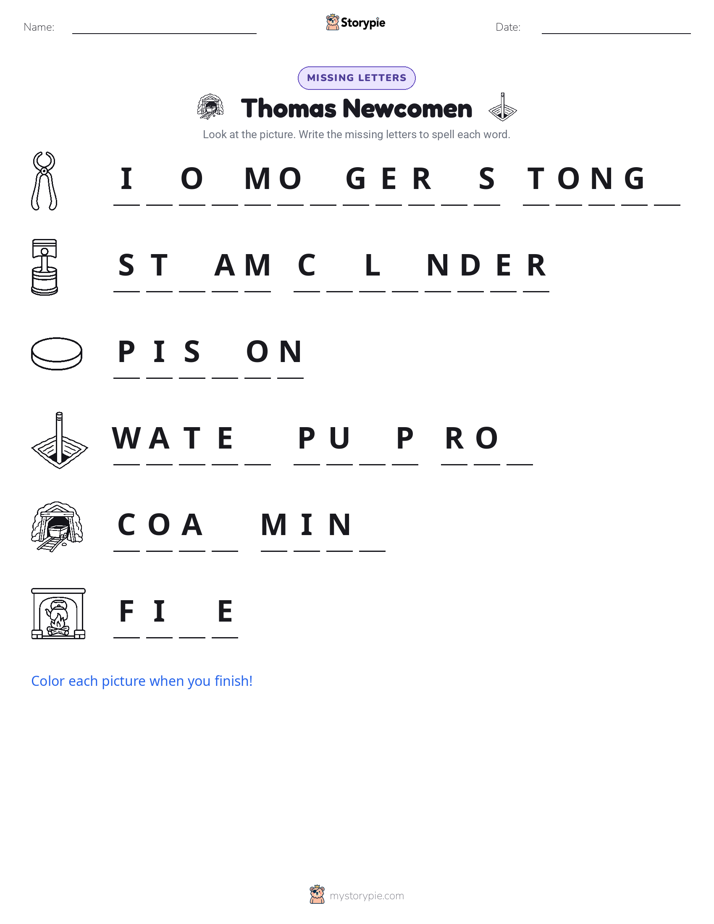
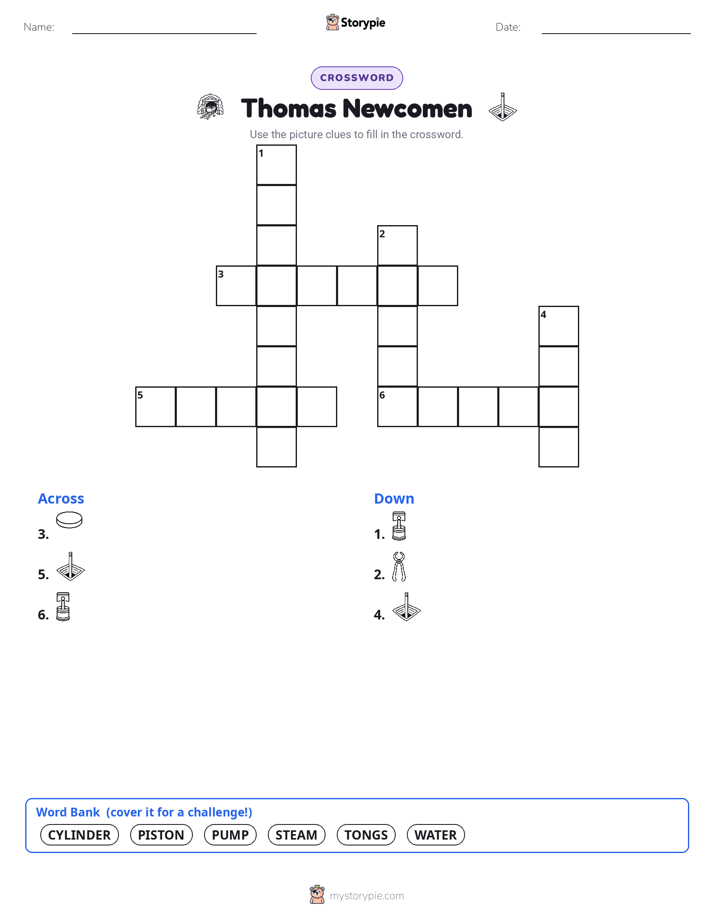
28 worksheets · answer keys · full story · quiz · Ages 10-12 · CEFR B2
Plus adds 244,000+ more stories in 27 languages, audio for every one, and printables for all of them.
Just want Thomas Newcomen?

Hello there! My name is Thomas Newcomen, and I would like to tell you my story. I was born in a town called Dartmouth, in a beautiful part of England called Devon, and I was christened on February 24th, 1664. In my town, I became an ironmonger, which is a person who works with and sells goods made of iron. I was always fascinated by how things worked, constantly tinkering with tools and machines to understand them better. This work gave me a deep knowledge of metals, which became incredibly important for the work I would do later in my life. While I was also a preacher in my local church, my greatest passion was using my hands and my mind to invent and build things that could solve real problems for people.
In my part of England, mining for coal and tin was a vital industry. However, the miners faced a tremendous and dangerous problem. As they dug deeper into the earth, the mines would constantly fill with groundwater. This flooding made it impossible to work and put the miners' lives at risk. At the time, people used teams of horses that walked in circles to power simple pumps, but this method was slow and couldn't handle the amount of water in the deeper mines. I saw how this challenge was holding everyone back. The country needed coal to heat homes and power its growing industries, and the miners desperately needed a safer way to do their jobs. This watery problem stuck in my mind, and I became determined to find a new, more powerful solution using the principles of science and engineering.
Thomas Newcomen: The Man Who Harnessed Steam
Hello there! My name is Thomas Newcomen, and I would like to tell you my story. I was born in a town called Dartmouth, in a beautiful part of England called Devon, and I was christened on February 24th, 1664. In my town, I became an ironmonger, which is a person who works with and sells goods made of iron. I was always fascinated by how things worked, constantly tinkering with tools and machines to understand them better. This work gave me a deep knowledge of metals, which became incredibly important for the work I would do later in my life. While I was also a preacher in my local church, my greatest passion was using my hands and my mind to invent and build things that could solve real problems for people.
In my part of England, mining for coal and tin was a vital industry. However, the miners faced a tremendous and dangerous problem. As they dug deeper into the earth, the mines would constantly fill with groundwater. This flooding made it impossible to work and put the miners' lives at risk. At the time, people used teams of horses that walked in circles to power simple pumps, but this method was slow and couldn't handle the amount of water in the deeper mines. I saw how this challenge was holding everyone back. The country needed coal to heat homes and power its growing industries, and the miners desperately needed a safer way to do their jobs. This watery problem stuck in my mind, and I became determined to find a new, more powerful solution using the principles of science and engineering.
I was not alone in this difficult quest. I formed a partnership with a skilled plumber named John Calley, whose expertise with pipes and metalwork was essential to our success. Together, we studied the work of other inventors and scientists. An inventor named Thomas Savery had already designed a type of steam pump, but it was not powerful or practical enough for the deep mines we needed to clear. We were particularly inspired by a scientific discovery: when steam cools and condenses back into water, it takes up a much smaller amount of space. This rapid change in volume creates a powerful vacuum. We realized we could harness the pressure of the air that is all around us—what scientists call atmospheric pressure—if we could create a vacuum inside a strong metal cylinder. Our idea was to fill a cylinder with steam to push out all the air, then inject a spray of cold water to instantly condense the steam. This would create the vacuum, allowing the weight of the atmosphere outside to push a piston down with incredible force.
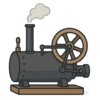
Putting our idea into practice took many years of hard work, trial, and error. My partner John Calley and I spent countless hours in our workshop, building and testing different parts of our machine. We called our invention an 'atmospheric engine,' but many people simply called it a 'fire engine' because of the large fire required to boil water and produce the steam. Finally, in the year 1712, we installed our first full-sized, working engine at a coal mine near Dudley Castle in Staffordshire. It was an enormous machine, with a huge wooden beam that rocked up and down like a giant seesaw. At one end of the beam was the piston moving inside its cylinder. At the other end was the rod that reached deep into the mine to operate the water pump. The engine was loud and hissed with steam, but most importantly, it worked. It successfully pumped water out of the deep mine far faster and more effectively than any team of horses ever could.
News of our successful engine spread quickly through the mining communities. Soon, mine owners from all over Britain, and eventually from other countries in Europe, wanted one of our engines for their own mines. For more than 50 years after its invention in 1712, my atmospheric engine was the most advanced and powerful technology available for pumping water. Its success allowed miners to dig deeper for coal and other valuable minerals than had ever been possible before. This was incredibly important because coal was becoming the essential fuel that would power a whole new era of industry. My invention was more than just a pump; it was the world's first practical engine that could convert heat energy from a fire into useful mechanical work. It represented the true beginning of what historians now call the Industrial Revolution.
I lived to be 65 years old, passing away on August 5th, 1729. Though my time on Earth had ended, the work of my engine was only just beginning. Decades after my death, a brilliant Scottish engineer named James Watt would study my design and make significant improvements, creating an even more efficient and powerful steam engine. But the foundation for his work, and for all the steam-powered machines that followed, was the atmospheric engine that John Calley and I built in 1712. I am remembered today as the person who created the first practical steam engine, an invention that helped launch the modern industrial world and forever changed the way people live and work.
Wow facts
About
Thomas Newcomen was an English inventor who created the first practical steam engine in 1712, the Newcomen atmospheric engine, which was designed to pump water out of mines.
Take a Quiz
Question 1 of 5
In your own words, what was the main problem Thomas Newcomen was trying to solve, and what was the basic scientific idea behind his solution?
Explore next





Want to do even more?
Go beyond exploring. Unlock tools that turn every story into real learning.

Storypie Plus for families
Full stories, quizzes, and printables. Nights and car rides, sorted.
- Unlimited audio stories
- Create Mode: your child stars in the story
- Offline downloads
- Printable worksheets & coloring pages

Why Storypie for Schools
Students engaged. Prep in seconds. Evenings back to you.
- Worksheets & Quizzes
- Classroom Management
- Formative Assessment
- Custom Curriculum & Lesson Plans
- 27 Languages

Why Storypie for Homeschool
Curriculum done. They'll ask for more. Hours back in your day.
- Worksheet Generator
- First-Person Audio Stories
- Built-in Comprehension Quizzes
- Custom Curriculum & Lesson Plans
- Print & Go Activities