English

Vera Rubin
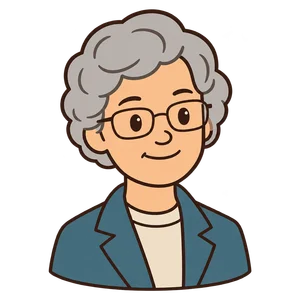
Vera Rubin was a pioneering American astronomer whose observations of galaxy rotation rates provided some of…
Reads at Grades 6–8 Listens at Grades 4–8
Print & create
Answer keys·No prep·Free with an account
28 worksheets · answer keys · full story · quiz · Ages 10-12 · CEFR B2
Plus adds 290,000+ more stories in 27 languages, audio for every one, and printables for all of them.
Just want Vera Rubin?
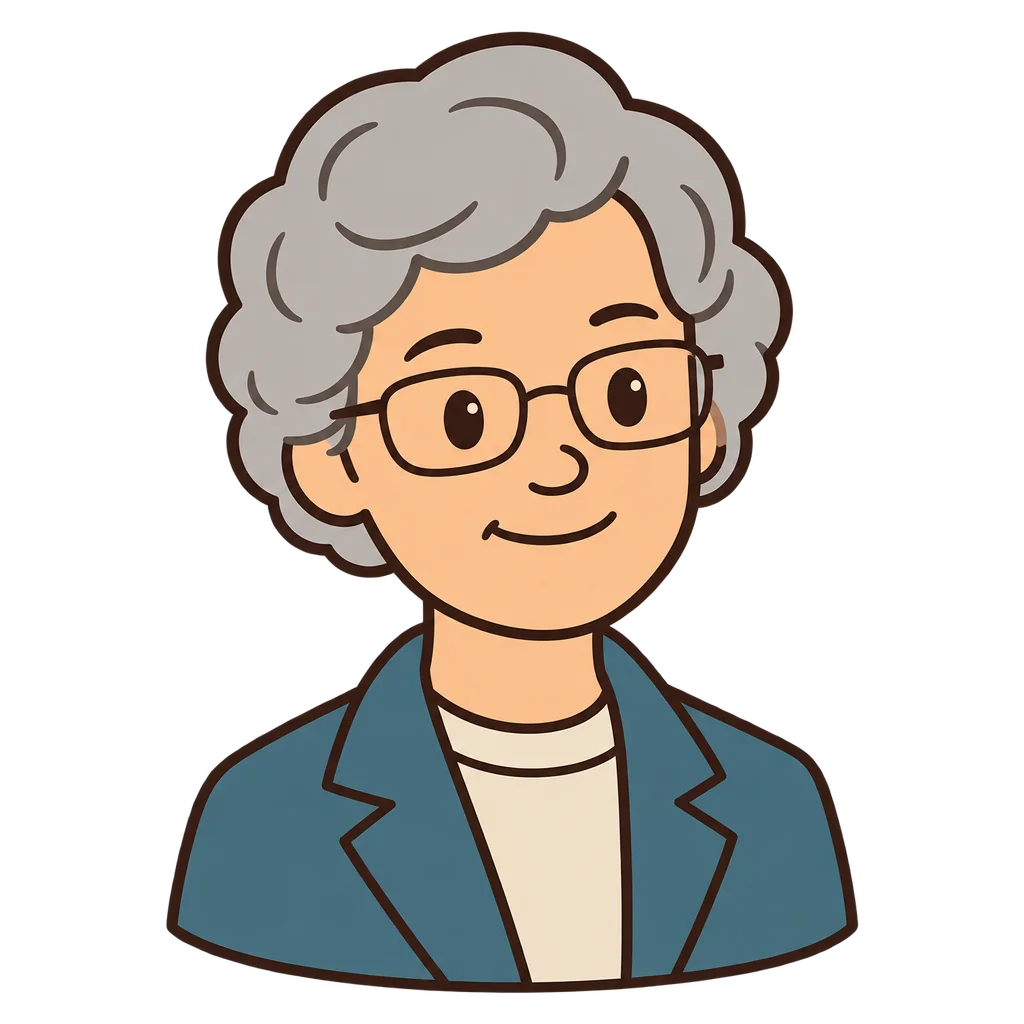
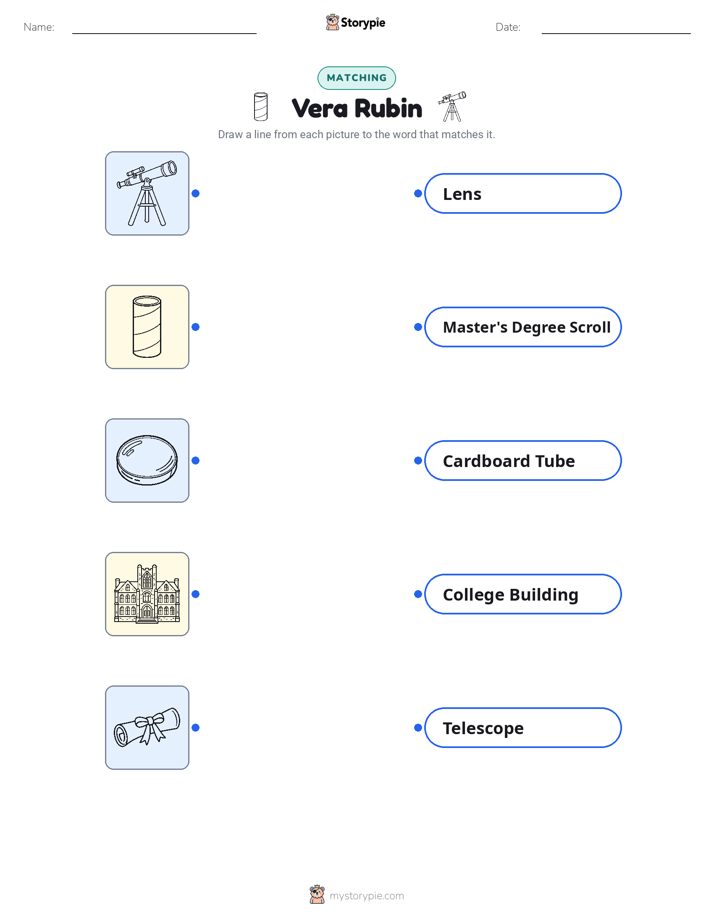
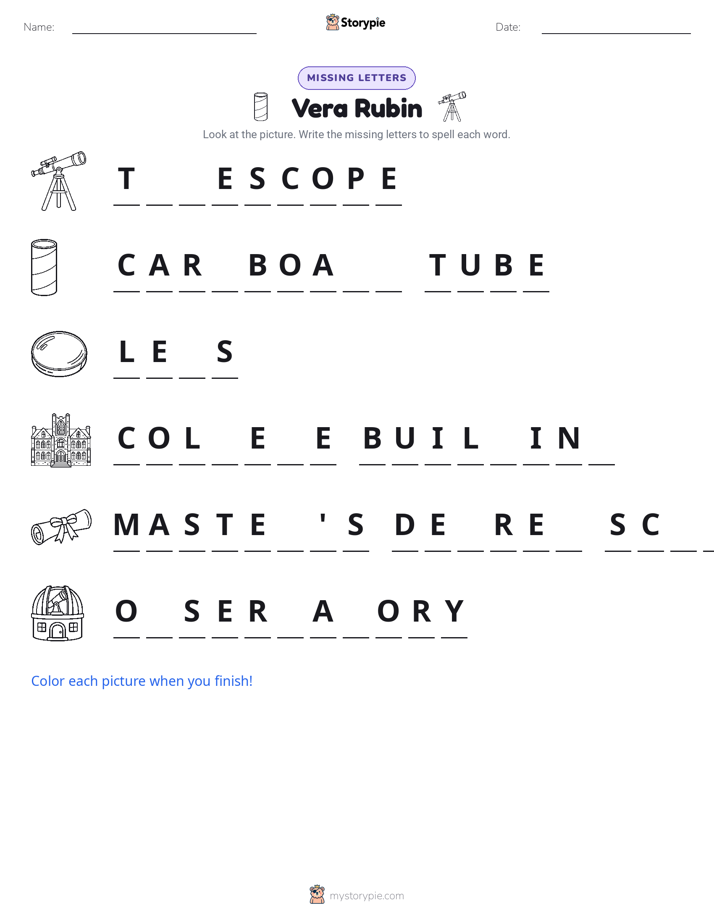
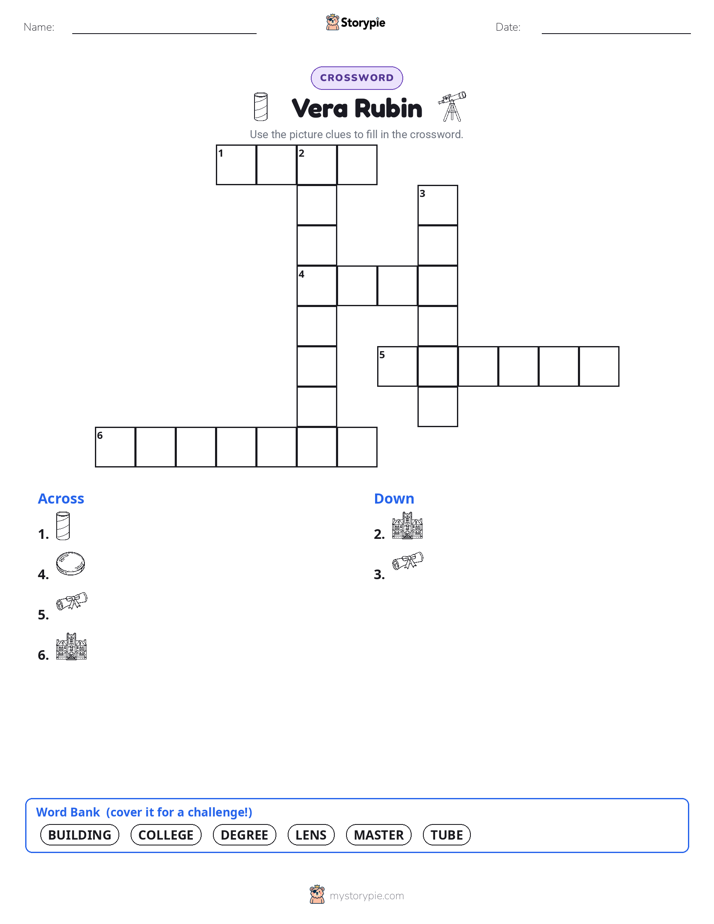
Hello, my name is Vera Rubin, and I spent my life looking at the stars. My story begins in the 1930s in Washington, D.C. From my bedroom window, I would lie awake and watch the stars trail across the night sky. I was mesmerized by their silent, predictable journey. I wanted to understand how it all worked—the vast, dark space and the brilliant lights within it. My parents encouraged my curiosity, and my father, who was an electrical engineer, was especially helpful. He took me to amateur astronomy meetings and helped me explore my passion. When I was 14 years old, he helped me build my very first telescope. We used a simple cardboard tube and a lens he ground for me. Looking through that telescope and seeing the heavens up close for the first time cemented my dream. I knew, without a doubt, that I wanted to be an astronomer. At that time, it was a very unusual path for a girl to choose, but the stars were calling to me, and I was determined to answer.
Following my dream was not always easy. I went to Vassar College to study astronomy and graduated with my degree in 1948. I was excited to continue my education and applied to the graduate astronomy program at Princeton University, which was one of the best in the country. However, I soon received a letter informing me that they did not accept women into their program. It was a discouraging moment, but I refused to let it stop me. I knew there were other paths to the stars. Instead, I enrolled at Cornell University, where I earned my master's degree in 1951. Even in my early studies there, I began noticing things that didn't quite add up. My research showed that galaxies seemed to be moving in strange ways, clustering together when theories suggested they should be spreading out. After Cornell, I moved back to Washington, D.C., and attended Georgetown University, where I earned my Ph.D. in 1954. All the while, I was also raising a young family, which added another layer of challenge to my journey.
Vera Rubin: A Journey into the Dark
Hello, my name is Vera Rubin, and I spent my life looking at the stars. My story begins in the 1930s in Washington, D.C. From my bedroom window, I would lie awake and watch the stars trail across the night sky. I was mesmerized by their silent, predictable journey. I wanted to understand how it all worked—the vast, dark space and the brilliant lights within it. My parents encouraged my curiosity, and my father, who was an electrical engineer, was especially helpful. He took me to amateur astronomy meetings and helped me explore my passion. When I was 14 years old, he helped me build my very first telescope. We used a simple cardboard tube and a lens he ground for me. Looking through that telescope and seeing the heavens up close for the first time cemented my dream. I knew, without a doubt, that I wanted to be an astronomer. At that time, it was a very unusual path for a girl to choose, but the stars were calling to me, and I was determined to answer.
Following my dream was not always easy. I went to Vassar College to study astronomy and graduated with my degree in 1948. I was excited to continue my education and applied to the graduate astronomy program at Princeton University, which was one of the best in the country. However, I soon received a letter informing me that they did not accept women into their program. It was a discouraging moment, but I refused to let it stop me. I knew there were other paths to the stars. Instead, I enrolled at Cornell University, where I earned my master's degree in 1951. Even in my early studies there, I began noticing things that didn't quite add up. My research showed that galaxies seemed to be moving in strange ways, clustering together when theories suggested they should be spreading out. After Cornell, I moved back to Washington, D.C., and attended Georgetown University, where I earned my Ph.D. in 1954. All the while, I was also raising a young family, which added another layer of challenge to my journey.
Throughout my career, I often found myself in places where women were not expected to be. In the world of science in the mid-20th century, nearly all of the astronomers, physicists, and engineers were men. But my curiosity about the universe was stronger than any obstacle. In 1965, I achieved a significant milestone when I became the first woman officially permitted to use the instruments at the world-famous Palomar Observatory in California. It was an incredible opportunity, but it also highlighted the challenges I faced. When I arrived, I discovered there were no women's restrooms in the building. It was simply assumed that only men would be working there. I refused to let such a simple thing get in my way. I found an unused bathroom, took a piece of paper, drew a picture of a skirt, and taped it to the door. Just like that, I had created a women's restroom. It was a small act, but it symbolized my determination to claim my place in the world of astronomy and do the research I was born to do.
My most important work began in the 1970s when I partnered with my colleague, an instrument-maker named Kent Ford. He had built an incredibly sensitive spectrograph, a device that could measure the light from distant stars with amazing precision. Using this tool, we could determine how fast stars were moving within spiral galaxies. We decided to study our cosmic neighbor, the Andromeda galaxy. According to the established laws of gravity, we expected the stars near the bright, dense center of the galaxy to be moving much faster than the stars on the far outer edges. Imagine a spinning merry-go-round; the people on the outside move slower than the parts near the center. We thought galaxies worked the same way. But when we looked at the data, we found something that stunned us. The stars on the very edge of the Andromeda galaxy were spinning just as fast as the stars near the center. This discovery went against everything we thought we knew. Based on the amount of visible matter—the stars, gas, and dust we could see—those fast-moving outer stars should have been flung off into space, like children flying off a merry-go-round that spins too fast.
Our shocking discovery presented a huge puzzle. If the galaxies weren't flying apart, what was holding them together? The gravity from all the visible stars and gas simply wasn't strong enough. After carefully checking our measurements again and again, we were forced to consider a radical idea. There had to be something else out there, a huge amount of invisible 'stuff' spread throughout the galaxy, providing the extra gravitational pull needed to keep everything in place. We couldn't see this material with any telescope, and it didn't give off any light or energy, but its gravitational effects were undeniable. This mysterious, unseen substance came to be known as 'dark matter.' Our research provided the most convincing evidence yet that this dark matter existed. We concluded that it makes up most of the matter in our universe—far more than all the shining stars and galaxies combined. We live in a cosmos that is mostly invisible.
I lived to be 88 years old, and looking back, I am proud of the discoveries I made. My work helped change our entire understanding of the cosmos, revealing that the universe was far more mysterious and complex than we had ever imagined. I am also incredibly proud to have been a voice for encouraging young people, especially girls, to look up at the sky and ask big questions. Science needs the curiosity and creativity of everyone. Today, a powerful new observatory in Chile has been named in my honor: the Vera C. Rubin Observatory. It is designed to survey the entire night sky, continuing the work of peering into the dark to uncover the universe's greatest secrets. My journey of discovery continues through the work of a new generation of astronomers.
Wow facts
About
Vera Rubin was a pioneering American astronomer whose observations of galaxy rotation rates provided some of the most direct and robust evidence for the existence of dark matter.
Take a Quiz
Question 1 of 5
What was the main problem Vera Rubin and Kent Ford discovered when they measured the speed of stars in the Andromeda galaxy?
Explore next



Want to do even more?
Go beyond exploring. Unlock tools that turn every story into real learning.

Storypie Plus for families
Full stories, quizzes, and printables. Nights and car rides, sorted.
- Unlimited audio stories
- Create Mode: your child stars in the story
- Offline downloads
- Printable worksheets & coloring pages

Why Storypie for Schools
Students engaged. Prep in seconds. Evenings back to you.
- Worksheets & Quizzes
- Classroom Management
- Formative Assessment
- Custom Curriculum & Lesson Plans
- 27 Languages

Why Storypie for Homeschool
Curriculum done. They'll ask for more. Hours back in your day.
- Worksheet Generator
- First-Person Audio Stories
- Built-in Comprehension Quizzes
- Custom Curriculum & Lesson Plans
- Print & Go Activities