English

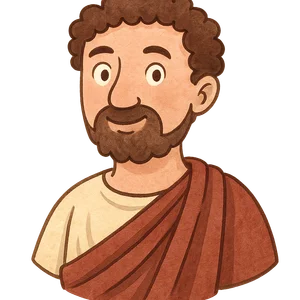
Virgil
Virgil, born Publius Vergilius Maro, was an ancient Roman poet of the Augustan period…
Reads at Grades 6–8 Listens at Grades 4–8
Print & create
Answer keys·No prep·Free with an account
28 worksheets · answer keys · full story · quiz · Ages 10-12 · CEFR B2
Plus adds 164,000+ more stories in 27 languages, audio for every one, and printables for all of them.
Just want Virgil?
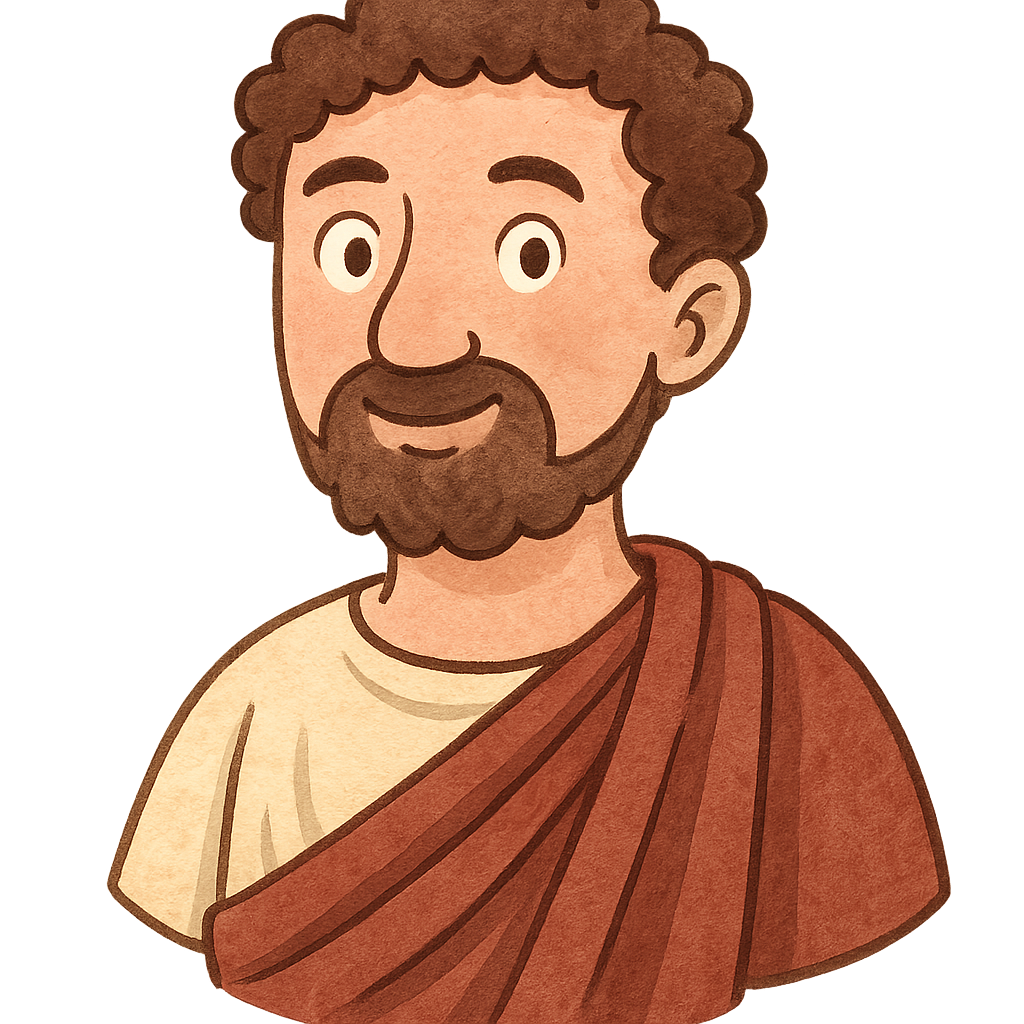
Hello. My name is Publius Vergilius Maro, but for more than two thousand years, the world has known me as Virgil. I was born on October 15th, 70 BCE, on my family's farm near the town of Mantua, in a region of northern Italy that was then called Cisalpine Gaul. My childhood was spent surrounded by the rhythms of the countryside—the changing seasons, the rustling leaves, and the hard work of the fields. This deep connection to nature would shape my writing for the rest of my life. My family was not wealthy, but they believed in the power of education. They sent me away to cities like Rome and Naples to study rhetoric, medicine, and philosophy. I learned a great deal about many subjects, but my heart was always captured by the music of words. The power of poetry to tell stories, to capture feelings, and to build worlds fascinated me more than anything else.
I came of age during a very turbulent period in Roman history. The old Roman Republic, with its senators and assemblies, was crumbling, and powerful generals were fighting for control. It was a time of great change and uncertainty, but also of great creativity. Around 39 BCE, I published my first major work, a collection of ten poems called the 'Eclogues.' These poems were inspired by my country childhood and told stories about the lives and loves of shepherds. Their gentle, beautiful language caught the attention of a man named Maecenas, who was a wealthy and generous patron of the arts. He saw promise in my work and introduced me to his close friend, a powerful young man named Octavian. Octavian would soon end the civil wars and, in 27 BCE, become Augustus, the very first emperor of Rome. The friendship and financial support from Maecenas and Augustus gave me a gift few artists ever receive: the freedom to dedicate myself entirely to my writing. This led me to my next work, the 'Georgics,' which I completed around 29 BCE. It was a long poem that celebrated the beauty and dignity of farm life, honoring the hard work that sustained the Roman people.
Virgil: Poet of Ancient Rome
Hello. My name is Publius Vergilius Maro, but for more than two thousand years, the world has known me as Virgil. I was born on October 15th, 70 BCE, on my family's farm near the town of Mantua, in a region of northern Italy that was then called Cisalpine Gaul. My childhood was spent surrounded by the rhythms of the countryside—the changing seasons, the rustling leaves, and the hard work of the fields. This deep connection to nature would shape my writing for the rest of my life. My family was not wealthy, but they believed in the power of education. They sent me away to cities like Rome and Naples to study rhetoric, medicine, and philosophy. I learned a great deal about many subjects, but my heart was always captured by the music of words. The power of poetry to tell stories, to capture feelings, and to build worlds fascinated me more than anything else.
I came of age during a very turbulent period in Roman history. The old Roman Republic, with its senators and assemblies, was crumbling, and powerful generals were fighting for control. It was a time of great change and uncertainty, but also of great creativity. Around 39 BCE, I published my first major work, a collection of ten poems called the 'Eclogues.' These poems were inspired by my country childhood and told stories about the lives and loves of shepherds. Their gentle, beautiful language caught the attention of a man named Maecenas, who was a wealthy and generous patron of the arts. He saw promise in my work and introduced me to his close friend, a powerful young man named Octavian. Octavian would soon end the civil wars and, in 27 BCE, become Augustus, the very first emperor of Rome. The friendship and financial support from Maecenas and Augustus gave me a gift few artists ever receive: the freedom to dedicate myself entirely to my writing. This led me to my next work, the 'Georgics,' which I completed around 29 BCE. It was a long poem that celebrated the beauty and dignity of farm life, honoring the hard work that sustained the Roman people.
Shortly after I finished the 'Georgics,' my friend Emperor Augustus gave me the greatest challenge of my life. Around 29 BCE, he asked me to write a grand national epic for Rome. He wanted a story that would connect the new Roman Empire to a legendary, heroic past, giving the Roman people a sense of shared identity and destiny. This was a monumental task, and it would consume the rest of my life. I decided to tell the story of a brave Trojan hero named Aeneas. In my tale, Aeneas escapes from the ruins of his city after it is destroyed by the Greeks. Guided by the gods, he endures a long and perilous journey across the sea, facing storms, monsters, and heartbreak. He finally arrives in Italy, where his descendants are destined to found the city of Rome. For the next eleven years, I poured all of my energy into this poem, which I called the 'Aeneid.' I was a perfectionist and worked slowly and carefully, sometimes spending an entire day crafting just a few perfect lines. I wanted every word to be just right.
By the year 19 BCE, my great epic was nearly complete, but I felt it still needed polishing. To ensure my descriptions of the places in the story were accurate, I decided to travel to Greece, intending to spend three years revising the manuscript before its final publication. Unfortunately, my journey was cut short. While visiting a town on a hot day, I caught a powerful fever. I knew I was gravely ill, so I immediately set sail back to Italy. My condition grew worse during the voyage, and I passed away shortly after my ship reached the port of Brundisium on September 21st, 19 BCE. Because I was a perfectionist, I believed the 'Aeneid' was still unfinished and unworthy of being read. My final wish was for my friends to burn the manuscript. But Emperor Augustus would not allow it. He believed the poem was a masterpiece and too important to the Roman people to be lost forever. He overruled my wish and ordered my friends to edit it lightly and publish it for the world.
I lived to be 50 years old. Although I never had the chance to see it published, the 'Aeneid' almost immediately became the most important work of literature in ancient Rome. For centuries, it was the central text studied by Roman schoolchildren and recited by scholars and leaders. For more than two thousand years, my story of Aeneas—a hero defined by his sense of duty, his perseverance, and his role in creating a new civilization—has inspired countless writers, artists, and thinkers. I am remembered as Rome's greatest poet, and it is my hope that my words continue to show people the enduring power a great story can have to shape the world.
Wow facts
About
Virgil, born Publius Vergilius Maro, was an ancient Roman poet of the Augustan period, best known for his three major works: the Eclogues, the Georgics, and the epic poem, the Aeneid.
Take a Quiz
Question 1 of 5
In your own words, describe the journey of how my most famous poem, the 'Aeneid', came to be written and published.
Explore next


Want to do even more?
Go beyond exploring. Unlock tools that turn every story into real learning.

Storypie Plus for families
Full stories, quizzes, and printables. Nights and car rides, sorted.
- Unlimited audio stories
- Create Mode: your child stars in the story
- Offline downloads
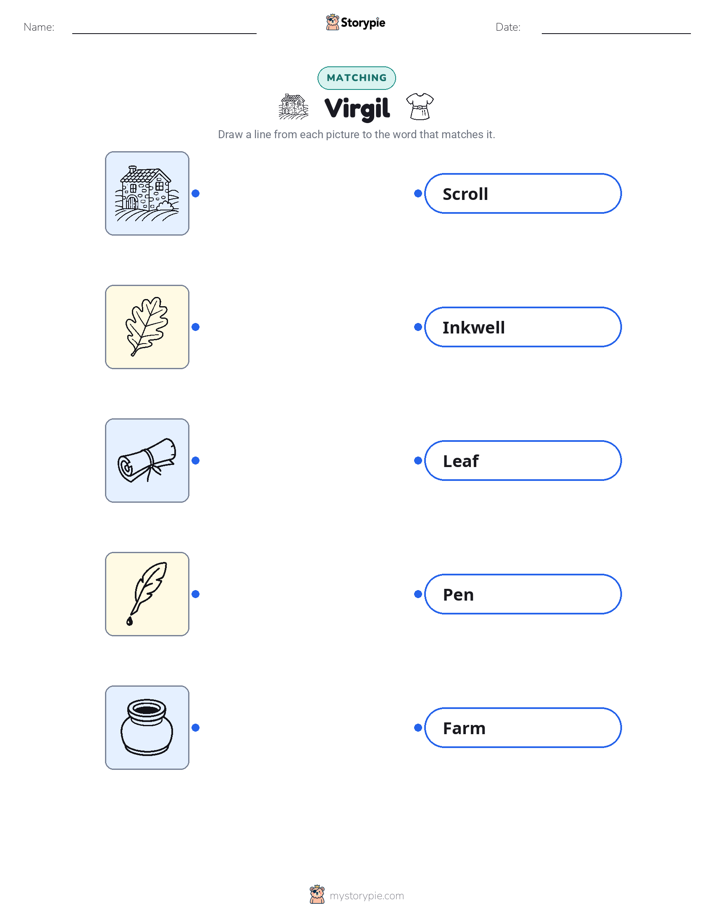
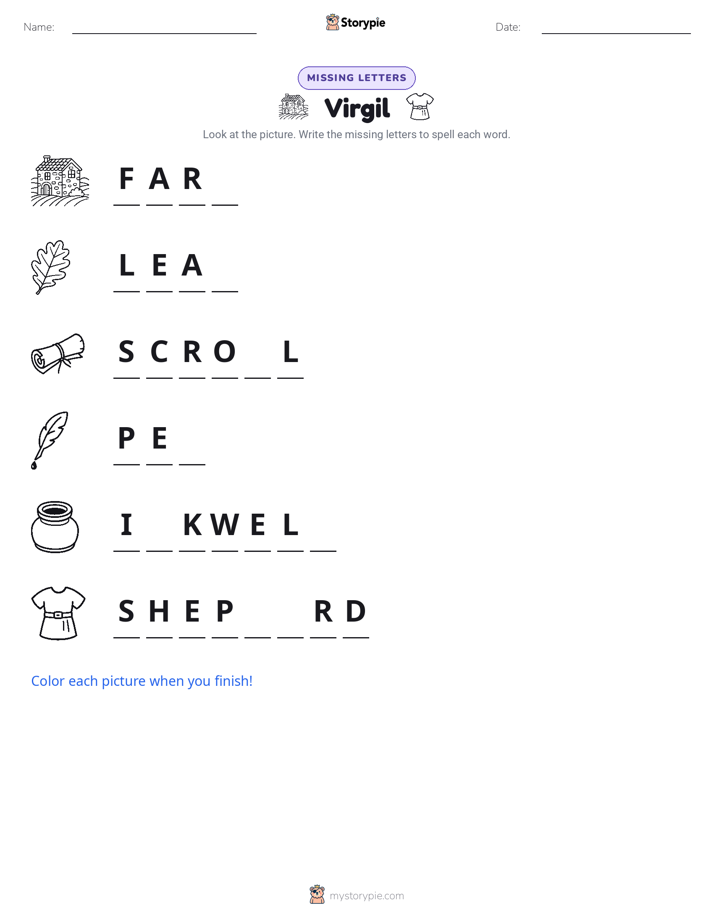
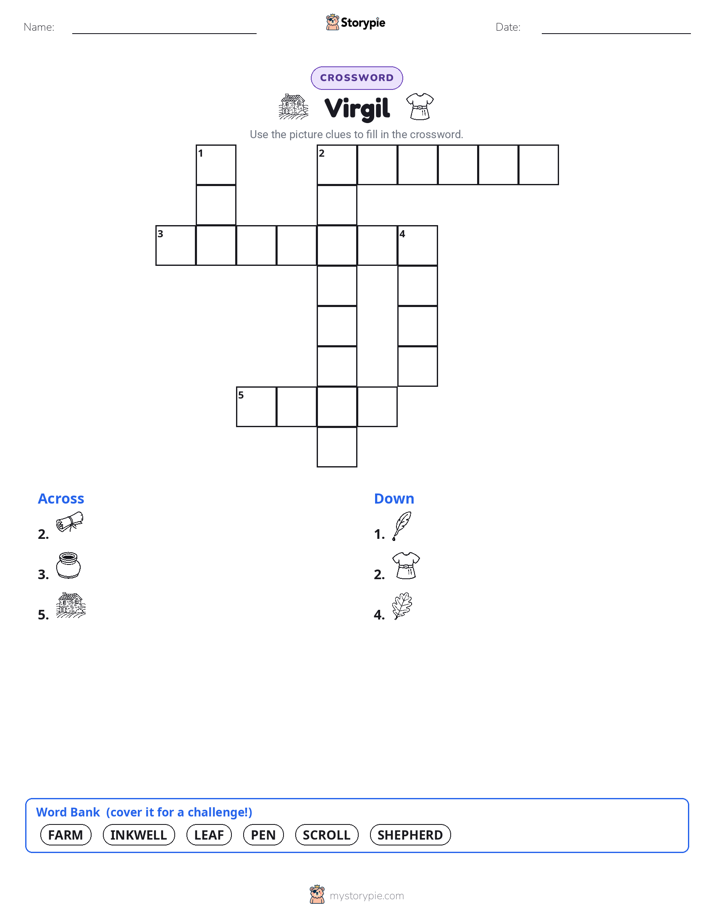
- Printable worksheets & coloring pages

Why Storypie for Schools
Students engaged. Prep in seconds. Evenings back to you.
- Worksheets & Quizzes
- Classroom Management
- Formative Assessment
- Custom Curriculum & Lesson Plans
- 27 Languages

Why Storypie for Homeschool
Curriculum done. They'll ask for more. Hours back in your day.
- Worksheet Generator
- First-Person Audio Stories
- Built-in Comprehension Quizzes
- Custom Curriculum & Lesson Plans
- Print & Go Activities