English

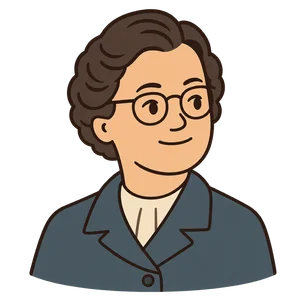
Virginia Apgar
Virginia Apgar was an American physician, anesthesiologist…
Reads at Grades 3–5 Listens at Grades 1–5
Print & create
Answer keys·No prep·Free with an account
28 worksheets · answer keys · full story · quiz · Ages 8-10 · CEFR B1
Plus adds 290,000+ more stories in 27 languages, audio for every one, and printables for all of them.
Just want Virginia Apgar?
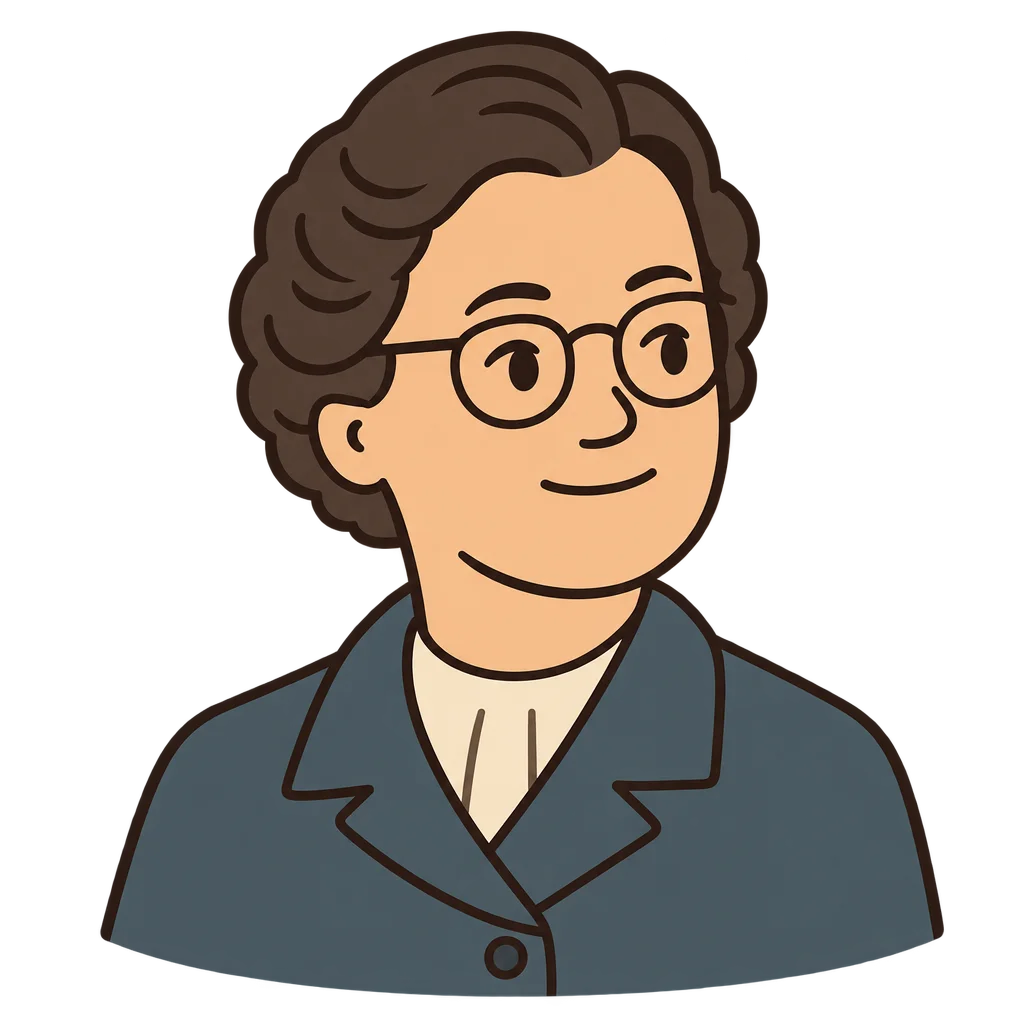
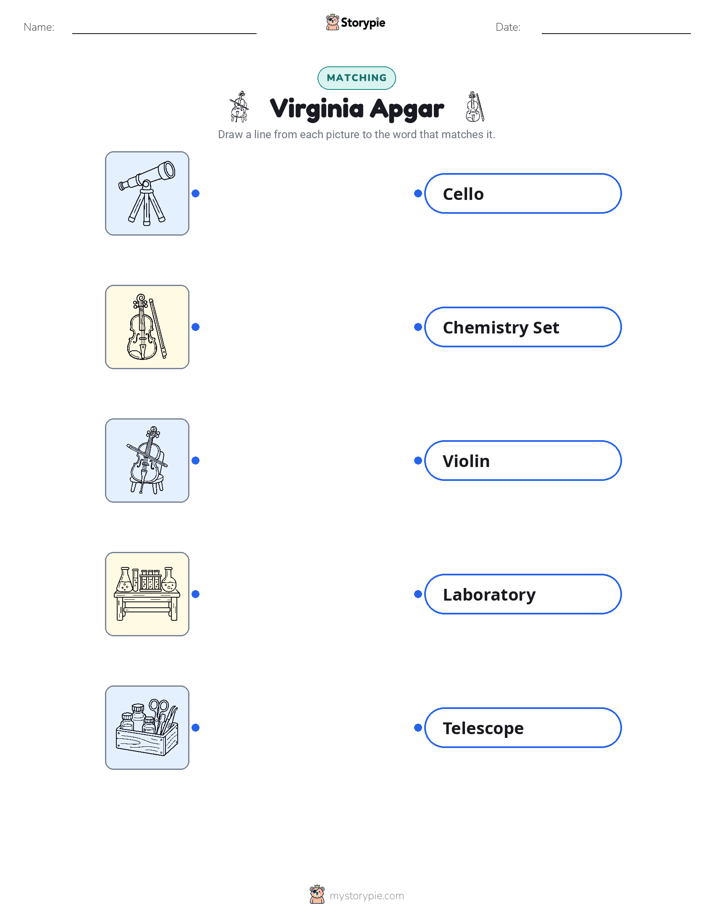
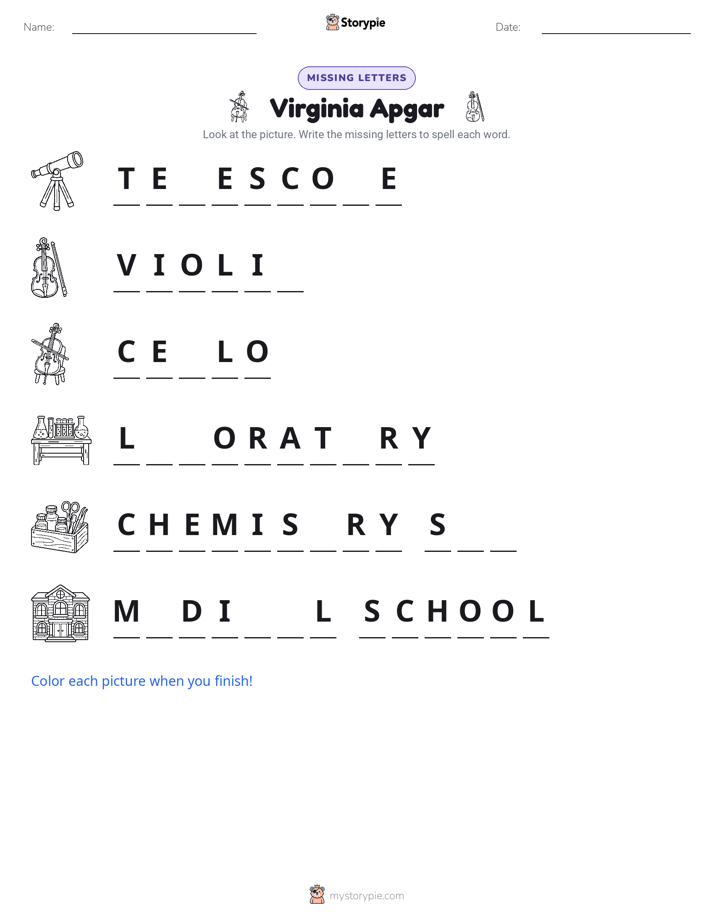
Hello! My name is Virginia Apgar, and I want to tell you the story of how I found a way to help the tiniest of patients: newborn babies. I was born on June 7th, 1909, in Westfield, New Jersey. My family was full of music and science. My father was an inventor who even built a telescope in our backyard, and my older brother had a chemistry lab in our basement! I loved playing my violin, but I was also fascinated by science and how things worked. I knew from a young age that I wanted to be a doctor. After I graduated from high school in 1925, I went to Mount Holyoke College, where I studied zoology and chemistry. I worked all kinds of jobs to pay for my education because I was determined to achieve my dream of going to medical school.
In 1929, I was one of only nine women in my class at Columbia University College of Physicians and Surgeons in New York City. Medical school was challenging, but I loved it! I graduated in 1933 near the top of my class. My biggest dream was to become a surgeon. I worked very hard for several years, but a wise professor named Dr. Allen Whipple gave me some advice. In the 1930s, it was very difficult for women to become successful surgeons. He saw my talent and energy and suggested I try a new and very important field called anesthesiology. Anesthesiologists are the doctors who help patients stay comfortable and pain-free during surgery. Dr. Whipple believed I could become a leader in this new field, so I decided to change my path.
I threw myself into learning everything about anesthesiology. It was a brand-new specialty, and there was so much to discover! In 1938, I became the director of the new division of anesthesia at the hospital. I was in charge of teaching other doctors and students. I spent a lot of my time in the delivery room, where babies are born. I was especially interested in how the anesthesia given to mothers during childbirth affected their newborn babies. At the time, doctors didn't have a good way to quickly check if a baby was healthy right after birth. I saw many babies who were born needing a little extra help, but no one knew how to spot them fast enough.
Virginia Apgar: A Score for Life
Hello! My name is Virginia Apgar, and I want to tell you the story of how I found a way to help the tiniest of patients: newborn babies. I was born on June 7th, 1909, in Westfield, New Jersey. My family was full of music and science. My father was an inventor who even built a telescope in our backyard, and my older brother had a chemistry lab in our basement! I loved playing my violin, but I was also fascinated by science and how things worked. I knew from a young age that I wanted to be a doctor. After I graduated from high school in 1925, I went to Mount Holyoke College, where I studied zoology and chemistry. I worked all kinds of jobs to pay for my education because I was determined to achieve my dream of going to medical school.
In 1929, I was one of only nine women in my class at Columbia University College of Physicians and Surgeons in New York City. Medical school was challenging, but I loved it! I graduated in 1933 near the top of my class. My biggest dream was to become a surgeon. I worked very hard for several years, but a wise professor named Dr. Allen Whipple gave me some advice. In the 1930s, it was very difficult for women to become successful surgeons. He saw my talent and energy and suggested I try a new and very important field called anesthesiology. Anesthesiologists are the doctors who help patients stay comfortable and pain-free during surgery. Dr. Whipple believed I could become a leader in this new field, so I decided to change my path.
I threw myself into learning everything about anesthesiology. It was a brand-new specialty, and there was so much to discover! In 1938, I became the director of the new division of anesthesia at the hospital. I was in charge of teaching other doctors and students. I spent a lot of my time in the delivery room, where babies are born. I was especially interested in how the anesthesia given to mothers during childbirth affected their newborn babies. At the time, doctors didn't have a good way to quickly check if a baby was healthy right after birth. I saw many babies who were born needing a little extra help, but no one knew how to spot them fast enough.
I knew there had to be a simple way for any doctor or nurse to check a baby’s health in the first few minutes of life. So, in 1952, I came up with a plan. I created a scoring system based on five simple things that could be checked quickly. A medical student once joked that my name, APGAR, could be used to remember them: Appearance (what color is the baby’s skin?), Pulse (how fast is the heart beating?), Grimace (does the baby react when stimulated?), Activity (is the baby moving its arms and legs?), and Respiration (is the baby breathing well?). Each of the five signs gets a score of 0, 1, or 2. The scores are added up at one minute and five minutes after birth. A high score meant the baby was doing great, but a low score was a signal that the baby needed immediate medical help. My 'Apgar Score' was simple, fast, and it worked! It helped save countless babies' lives.
My Apgar Score became used in hospitals all over the world. I was so proud, but I felt there was more I could do to help children. So, in 1959, I went back to school and earned another degree, this time in public health from Johns Hopkins University. That same year, I started a new chapter of my life working with an organization called the March of Dimes. My new job was to travel the country and teach people about birth defects and the importance of healthy pregnancies. I loved talking to people and spreading the message that every baby deserves a healthy start in life. I flew my own small airplane to some of my speaking events and always carried my violin with me, sometimes even playing with local orchestras.
I spent the rest of my career working to improve the health of mothers and babies. I lived to be 65 years old, and my work continued even after I was gone. Today, the Apgar Score is still the first test almost every baby receives, helping doctors and nurses all around the globe know exactly how to care for them in their very first moments of life. I am so happy that my simple idea has helped millions of children begin their lives safely. I hope my story shows you that if you see a problem, no matter how big or small, you can use your curiosity and determination to find a solution that can change the world.
Wow facts
About
Virginia Apgar was an American physician, anesthesiologist, and medical researcher who created the Apgar Score, a simple and effective method to assess the health of newborn babies immediately after birth.
Take a Quiz
Question 1 of 5
In the story, Virginia says a professor suggested she try a "new and very important field." What does the word "field" mean in this sentence?
Explore next






Want to do even more?
Go beyond exploring. Unlock tools that turn every story into real learning.

Storypie Plus for families
Full stories, quizzes, and printables. Nights and car rides, sorted.
- Unlimited audio stories
- Create Mode: your child stars in the story
- Offline downloads
- Printable worksheets & coloring pages

Why Storypie for Schools
Students engaged. Prep in seconds. Evenings back to you.
- Worksheets & Quizzes
- Classroom Management
- Formative Assessment
- Custom Curriculum & Lesson Plans
- 27 Languages

Why Storypie for Homeschool
Curriculum done. They'll ask for more. Hours back in your day.
- Worksheet Generator
- First-Person Audio Stories
- Built-in Comprehension Quizzes
- Custom Curriculum & Lesson Plans
- Print & Go Activities