English

Wilhelm Röntgen
Wilhelm Röntgen was a German physicist who, in 1895…
Reads at Grades 6–8 Listens at Grades 4–8
Print & create
Answer keys·No prep·Free with an account
28 worksheets · answer keys · full story · quiz · Ages 10-12 · CEFR B2
Plus adds 164,000+ more stories in 27 languages, audio for every one, and printables for all of them.
Just want Wilhelm Röntgen?
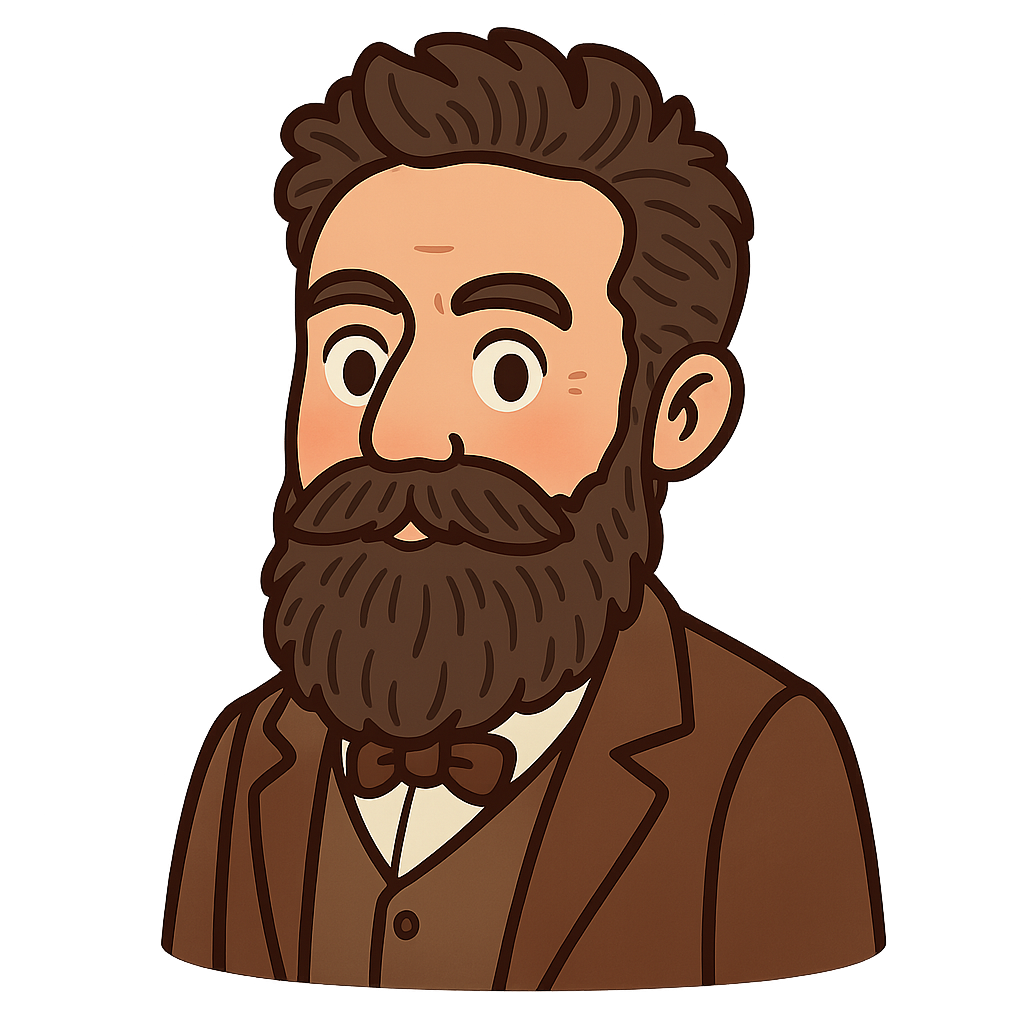
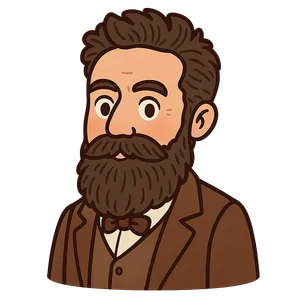
Hello, my name is Wilhelm Röntgen, and I want to share the story of a discovery that changed the world. My journey began on March 27th, 1845, in a small town called Lennep, in the Kingdom of Prussia. As a boy, I wasn't always the best student in the traditional sense, but I was deeply curious about the world around me. I spent my childhood exploring the forests and countryside, and I loved building intricate mechanical contraptions in my workshop. My path, however, was not a straight one. I faced a significant challenge when I was unfairly expelled from my school. For a moment, it felt like my dreams of a scientific career were over. But I refused to let that setback define me. I persevered, studying on my own until I was able to enroll at the University of Zurich in 1865. My hard work paid off, and in 1869, I proudly earned my Ph.D. in physics, proving that with determination, you can overcome even the most difficult obstacles.
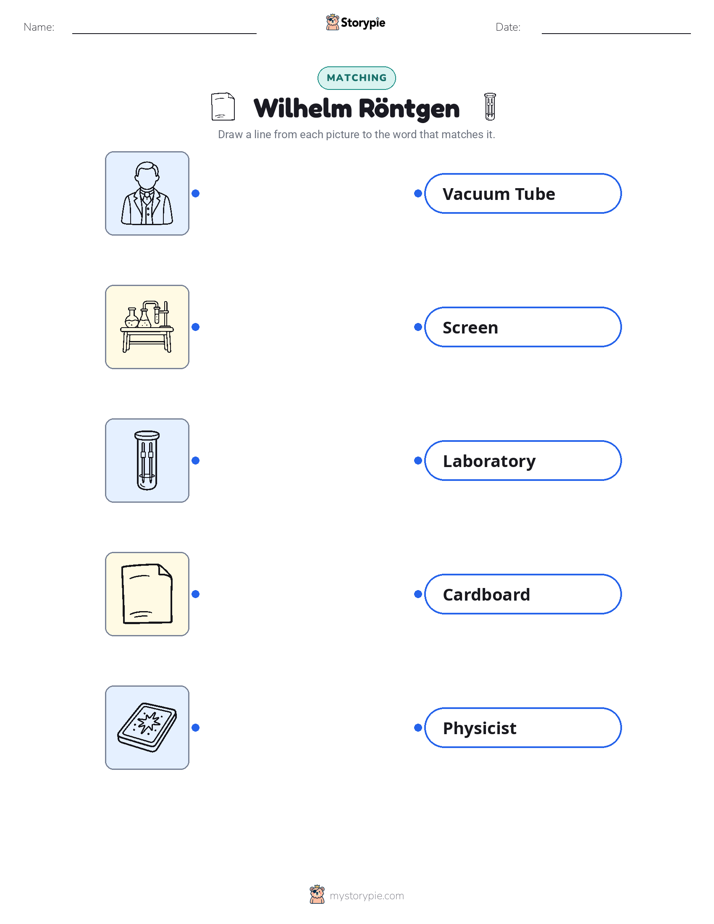
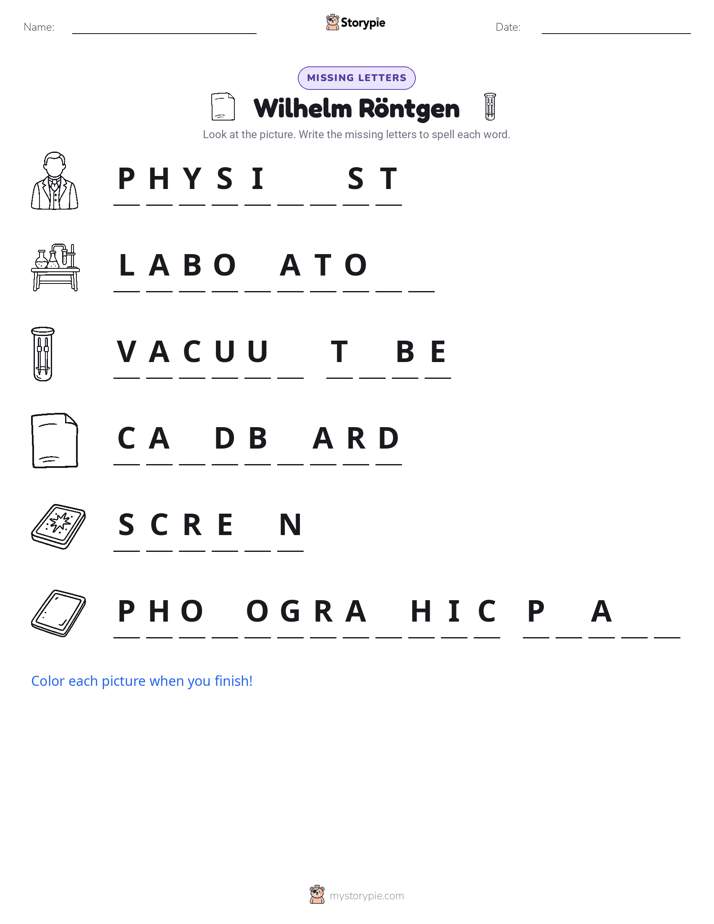
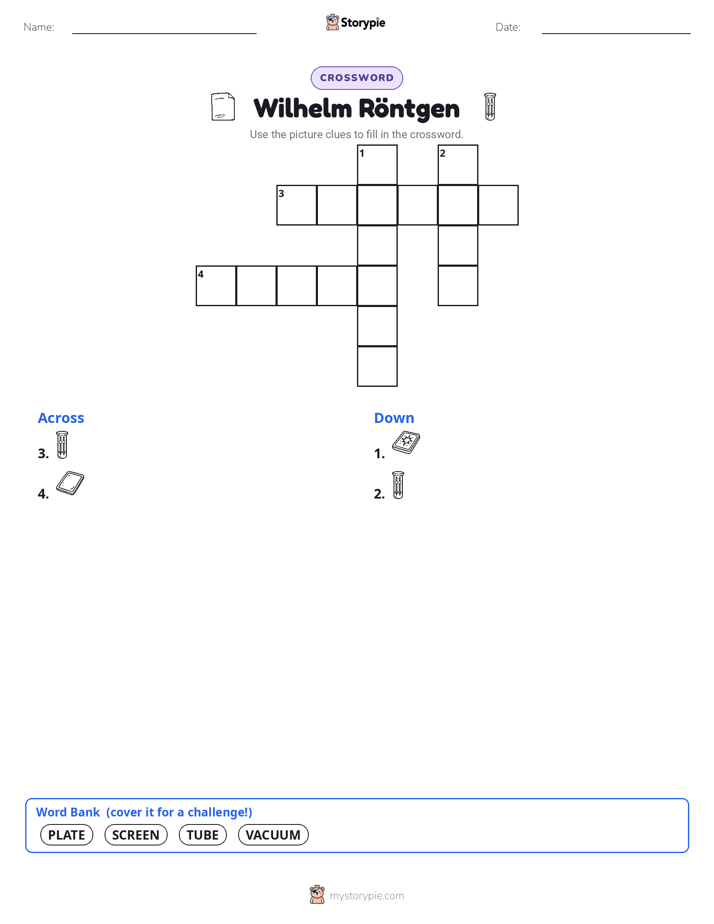
My professional life was dedicated to the pursuit of knowledge. I became a professor of physics, a role that allowed me to both teach and conduct my own research, which was my greatest passion. Over the years, I worked at several respected universities, including those in Strasbourg and Giessen. In 1888, I accepted a position at the University of Würzburg, which is where my life would change forever. During this time, I was fortunate to have my wonderful wife, Anna Bertha Ludwig, by my side. We were married in 1872, and her support was a constant source of strength for me. In my laboratory, I became fascinated by the invisible forces of the universe. I spent countless hours studying cathode rays, which are streams of electrons that pass through a vacuum tube. I was convinced there were secrets hidden within these invisible energies, and I was determined to uncover them.
Wilhelm Röntgen
Hello, my name is Wilhelm Röntgen, and I want to share the story of a discovery that changed the world. My journey began on March 27th, 1845, in a small town called Lennep, in the Kingdom of Prussia. As a boy, I wasn't always the best student in the traditional sense, but I was deeply curious about the world around me. I spent my childhood exploring the forests and countryside, and I loved building intricate mechanical contraptions in my workshop. My path, however, was not a straight one. I faced a significant challenge when I was unfairly expelled from my school. For a moment, it felt like my dreams of a scientific career were over. But I refused to let that setback define me. I persevered, studying on my own until I was able to enroll at the University of Zurich in 1865. My hard work paid off, and in 1869, I proudly earned my Ph.D. in physics, proving that with determination, you can overcome even the most difficult obstacles.
My professional life was dedicated to the pursuit of knowledge. I became a professor of physics, a role that allowed me to both teach and conduct my own research, which was my greatest passion. Over the years, I worked at several respected universities, including those in Strasbourg and Giessen. In 1888, I accepted a position at the University of Würzburg, which is where my life would change forever. During this time, I was fortunate to have my wonderful wife, Anna Bertha Ludwig, by my side. We were married in 1872, and her support was a constant source of strength for me. In my laboratory, I became fascinated by the invisible forces of the universe. I spent countless hours studying cathode rays, which are streams of electrons that pass through a vacuum tube. I was convinced there were secrets hidden within these invisible energies, and I was determined to uncover them.
Everything came together on the evening of November 8th, 1895. I was working late in my laboratory, which was completely dark to help me see the faint effects of the cathode rays. My experiment involved a special glass tube, which I had covered entirely with heavy black cardboard to block any visible light from escaping. As I passed an electrical current through the tube, I was startled to see a faint, shimmering green glow from a bench across the room. I looked closer and saw that the glow was coming from a small screen coated with a chemical called barium platinocyanide. This was impossible. The cardboard should have blocked everything. I realized I had stumbled upon a new, unknown kind of ray—one that was completely invisible but powerful enough to pass right through the thick cardboard. For the next several weeks, I worked in secret, eating and even sleeping in my lab. I discovered that these mysterious rays could pass through wood, paper, and even thin metals. Because I had no idea what they were, I decided to call them 'X-rays,' with the 'X' standing for the unknown.
The most astonishing moment was yet to come. I needed to see if these rays could pass through human tissue, and I asked my wife, Anna, to help me. I had her place her hand on a photographic plate, and I aimed the X-rays at it for several minutes. When I developed the plate, we were both stunned by the image that appeared. It was a clear picture of the bones inside her hand, with her dark wedding ring floating around her finger bone. It was the world’s very first X-ray image. Knowing this discovery was too important to keep to myself, I published my findings on December 28th, 1895. The news spread like wildfire around the globe. Doctors immediately recognized the incredible potential of being able to see inside the human body without surgery. For my work, I was deeply honored to receive the very first Nobel Prize in Physics in 1901. But I never sought fame or fortune from my discovery. I refused to patent the process, believing that such a powerful tool for healing should belong to all of humanity.
I lived a full and fascinating life until I was 77 years old. Looking back, I am filled with pride to know that my curious nature and my perseverance led to a discovery that transformed medicine forever. X-rays gave doctors a powerful new way to diagnose injuries and illnesses, saving countless lives. My greatest hope was always that science would be used to help people, and I am grateful that my work continues to do just that every single day in hospitals and clinics all around the world.
Wow facts
About
Wilhelm Röntgen was a German physicist who, in 1895, produced and detected electromagnetic radiation in a wavelength range known as X-rays. This achievement earned him the first-ever Nobel Prize in Physics in 1901.
Take a Quiz
Question 1 of 5
Why did Wilhelm Röntgen call his discovery 'X-rays'?
Explore next





Want to do even more?
Go beyond exploring. Unlock tools that turn every story into real learning.

Storypie Plus for families
Full stories, quizzes, and printables. Nights and car rides, sorted.
- Unlimited audio stories
- Create Mode: your child stars in the story
- Offline downloads
- Printable worksheets & coloring pages

Why Storypie for Schools
Students engaged. Prep in seconds. Evenings back to you.
- Worksheets & Quizzes
- Classroom Management
- Formative Assessment
- Custom Curriculum & Lesson Plans
- 27 Languages

Why Storypie for Homeschool
Curriculum done. They'll ask for more. Hours back in your day.
- Worksheet Generator
- First-Person Audio Stories
- Built-in Comprehension Quizzes
- Custom Curriculum & Lesson Plans
- Print & Go Activities