English

Wilhelm Röntgen
Wilhelm Röntgen was a German physicist who, in 1895…
Reads at Grades K-2 Listens at K–3
Print & create
Answer keys·No prep·Free with an account
28 worksheets · answer keys · full story · quiz · Ages 6-8 · CEFR A2
Plus adds 164,000+ more stories in 27 languages, audio for every one, and printables for all of them.
Just want Wilhelm Röntgen?
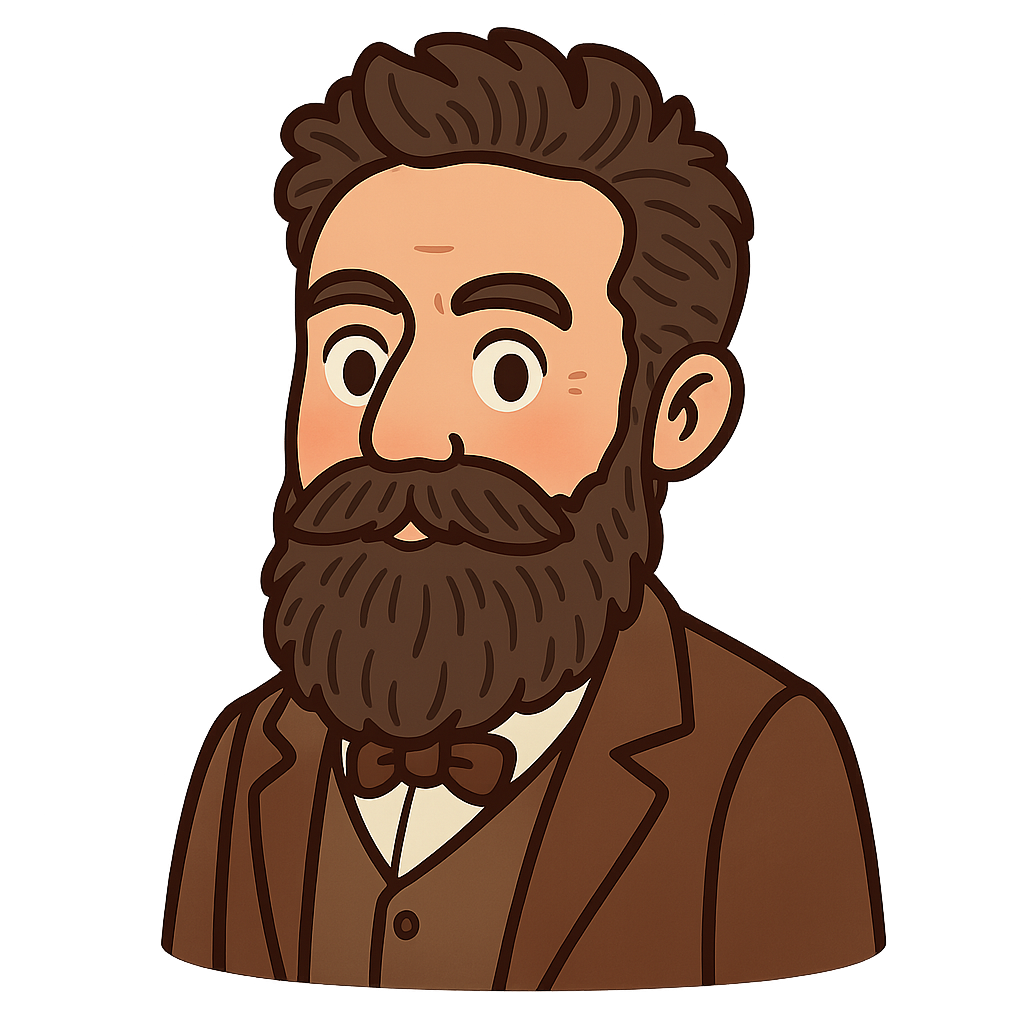
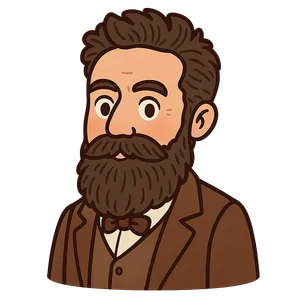
Hello! My name is Wilhelm Röntgen. I was born a long time ago, on March 27th, 1845, in a country called Germany. When I was a boy, I didn't always enjoy being in school, but I really loved exploring outside in nature. My favorite things to do were building things and trying to figure out how different machines worked. That feeling of wanting to know how things work is called curiosity, and it stayed with me my whole life. It's what helped me decide to become a scientist when I grew up.
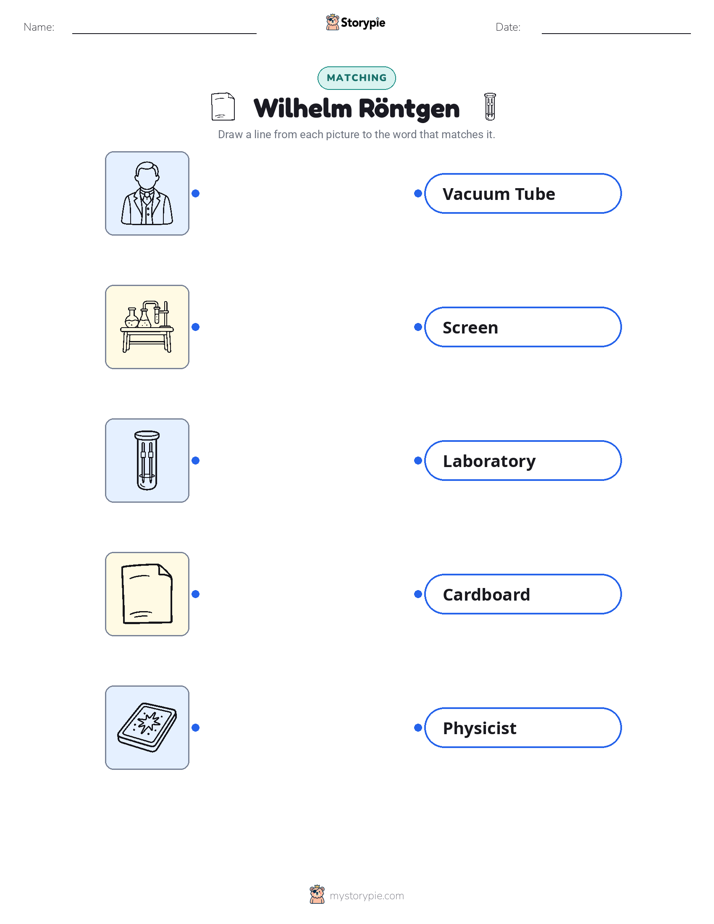
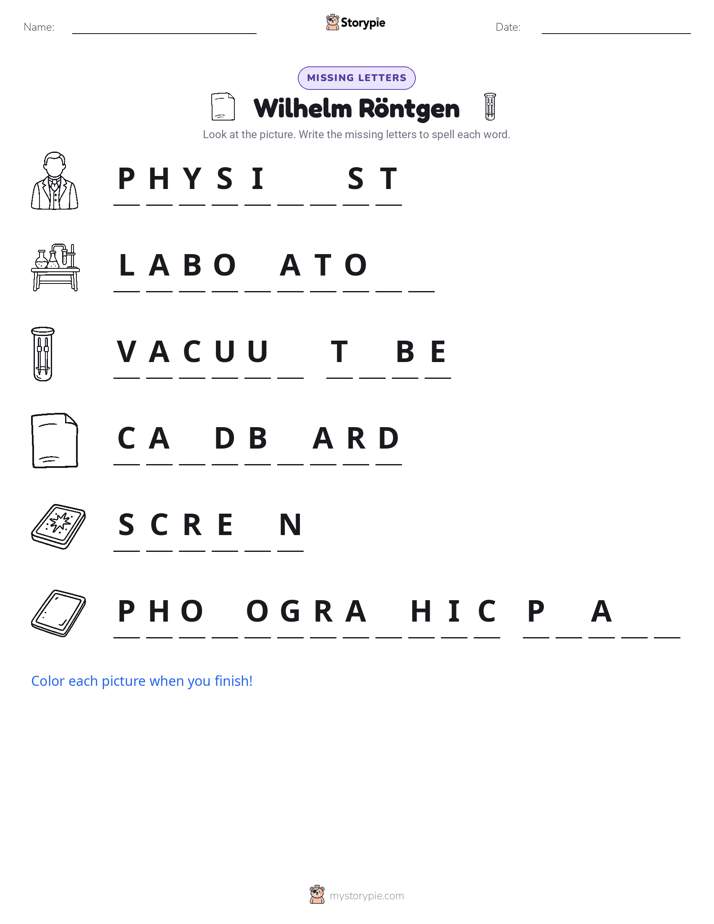
As an adult, I became a professor, which is like a teacher at a university, and I had my very own laboratory. It was my favorite place in the whole world! My lab was filled with all sorts of interesting things, like special glass tubes, many different wires, and cool machines. I loved doing experiments to learn new things about how our world works. I would spend many, many hours in my lab, carefully testing my ideas to see what would happen.
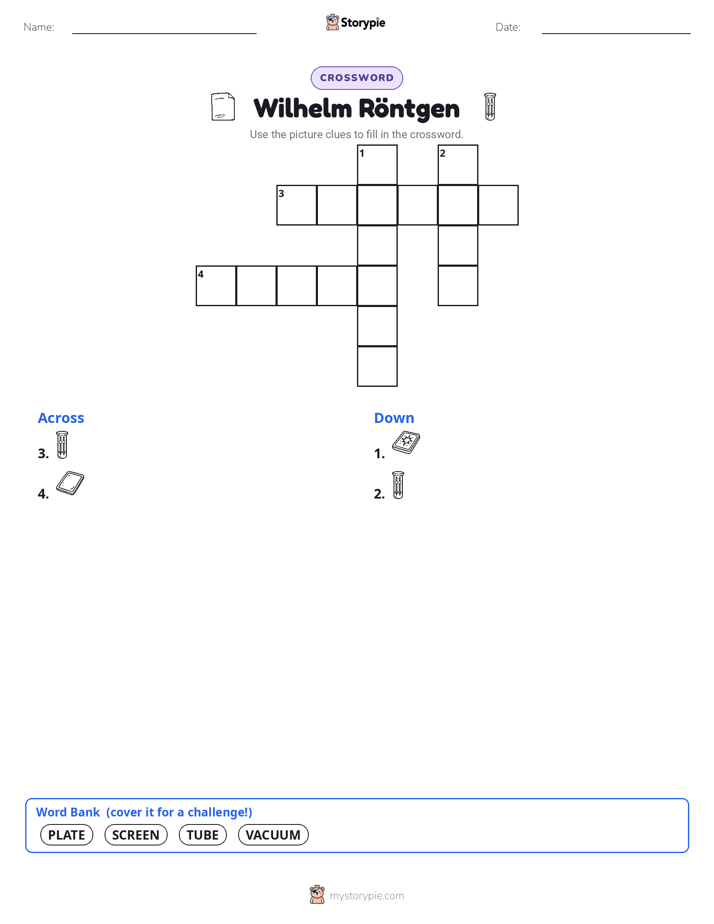
One evening, on November 8th, 1895, I was working late in my dark laboratory. I was busy with an experiment using a special glass tube that I had covered up with thick, black paper so no light could get out. All of a sudden, I saw something strange. Across the room, a screen began to glow with a faint green light! I was so surprised because nothing was supposed to be shining on it. I realized that I must have discovered some new, invisible rays that were so powerful they could pass right through the paper. Because they were such a mystery, I decided to call them 'X-rays'.
Wilhelm Röntgen: The Man Who Discovered X-Rays
Hello! My name is Wilhelm Röntgen. I was born a long time ago, on March 27th, 1845, in a country called Germany. When I was a boy, I didn't always enjoy being in school, but I really loved exploring outside in nature. My favorite things to do were building things and trying to figure out how different machines worked. That feeling of wanting to know how things work is called curiosity, and it stayed with me my whole life. It's what helped me decide to become a scientist when I grew up.
As an adult, I became a professor, which is like a teacher at a university, and I had my very own laboratory. It was my favorite place in the whole world! My lab was filled with all sorts of interesting things, like special glass tubes, many different wires, and cool machines. I loved doing experiments to learn new things about how our world works. I would spend many, many hours in my lab, carefully testing my ideas to see what would happen.
One evening, on November 8th, 1895, I was working late in my dark laboratory. I was busy with an experiment using a special glass tube that I had covered up with thick, black paper so no light could get out. All of a sudden, I saw something strange. Across the room, a screen began to glow with a faint green light! I was so surprised because nothing was supposed to be shining on it. I realized that I must have discovered some new, invisible rays that were so powerful they could pass right through the paper. Because they were such a mystery, I decided to call them 'X-rays'.
I was so excited about my discovery! I had to show someone what these new rays could do. I asked my wife, Anna, if I could take a special picture of her hand using them. She agreed, and when we looked at the picture, we were amazed. We could see all the bones inside her hand, and we could even see the ring she was wearing on her finger! It was the very first X-ray picture ever taken of a person. In 1901, I was given a very special award called the Nobel Prize for this important discovery.
I lived to be 77 years old. My discovery of X-rays changed the world in a big way. Today, doctors and dentists use X-ray machines every single day to look inside our bodies. They can find broken bones or see what is making someone feel sick. I am so happy that my curious experiment in a dark lab all those years ago still helps so many people get well all over the world.
Wow facts
About
Wilhelm Röntgen was a German physicist who, in 1895, produced and detected electromagnetic radiation in a wavelength range known as X-rays. This achievement earned him the first-ever Nobel Prize in Physics in 1901.
Take a Quiz
Question 1 of 4
Why did I call my discovery 'X-rays'?
Explore next






Want to do even more?
Go beyond exploring. Unlock tools that turn every story into real learning.

Storypie Plus for families
Full stories, quizzes, and printables. Nights and car rides, sorted.
- Unlimited audio stories
- Create Mode: your child stars in the story
- Offline downloads
- Printable worksheets & coloring pages

Why Storypie for Schools
Students engaged. Prep in seconds. Evenings back to you.
- Worksheets & Quizzes
- Classroom Management
- Formative Assessment
- Custom Curriculum & Lesson Plans
- 27 Languages

Why Storypie for Homeschool
Curriculum done. They'll ask for more. Hours back in your day.
- Worksheet Generator
- First-Person Audio Stories
- Built-in Comprehension Quizzes
- Custom Curriculum & Lesson Plans
- Print & Go Activities