English


Zaha Hadid
Zaha Hadid was a groundbreaking Iraqi-British architect known for her futuristic designs featuring dramatic…
Reads at Grades 6–8 Listens at Grades 4–8
Print & create
Answer keys·No prep·Free with an account
28 worksheets · answer keys · full story · quiz · Ages 10-12 · CEFR B2
Plus adds 164,000+ more stories in 27 languages, audio for every one, and printables for all of them.
Just want Zaha Hadid?

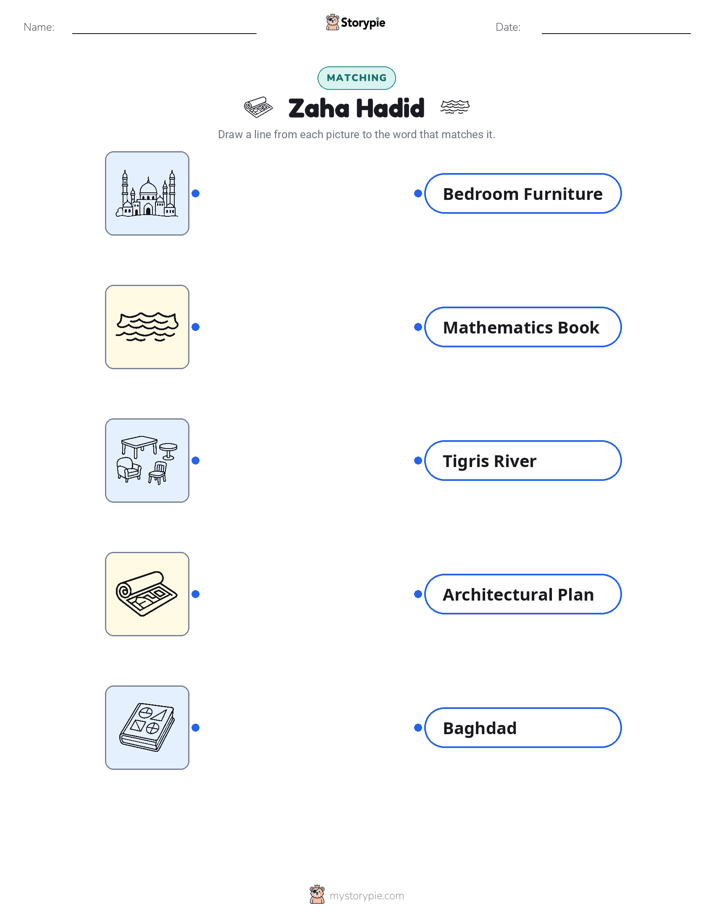
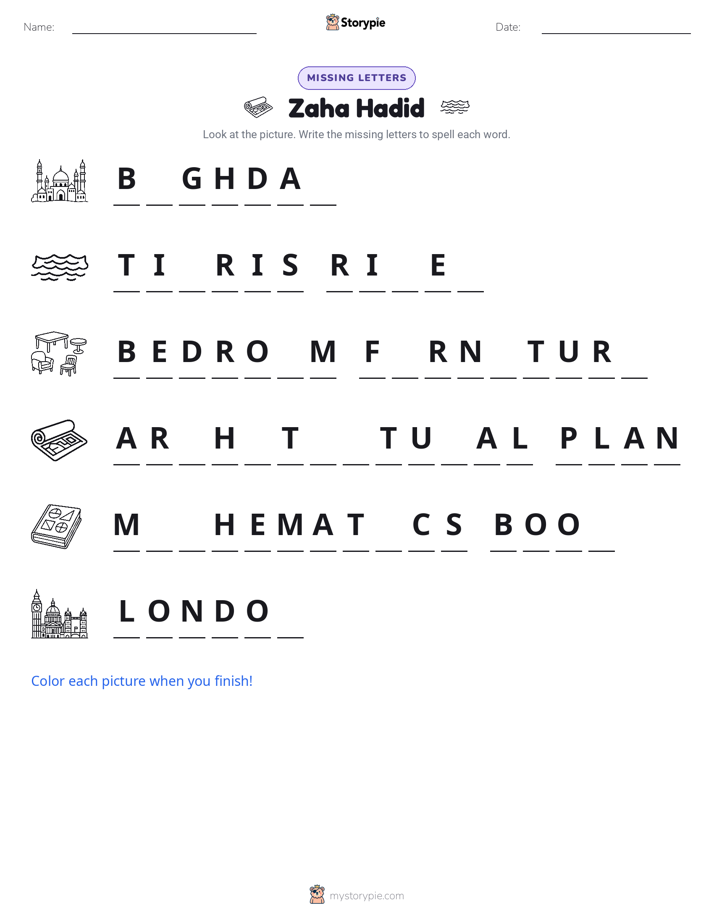
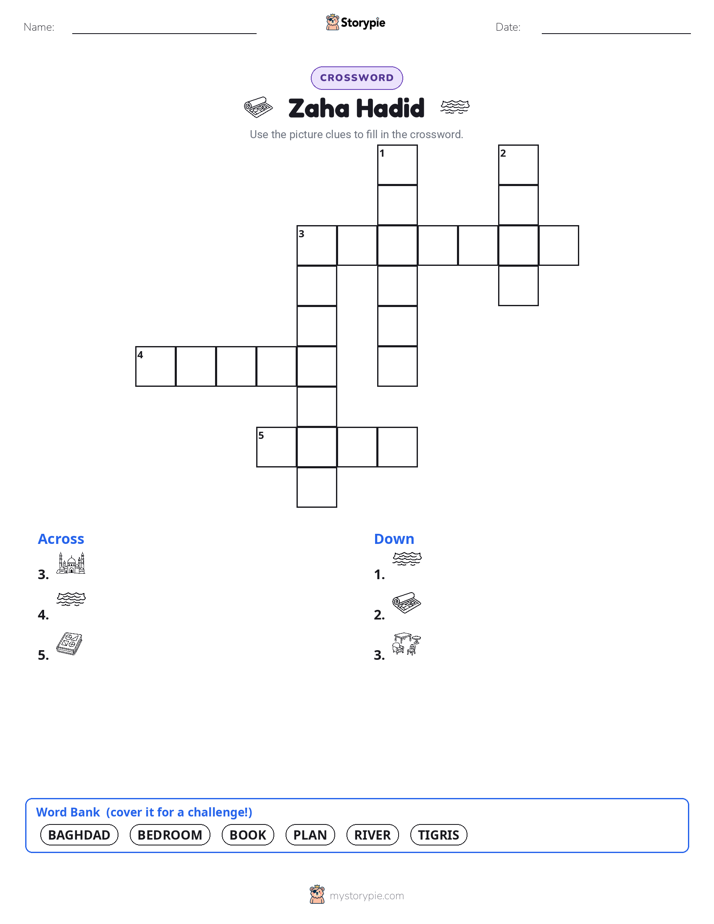
Hello! My name is Zaha Hadid, and I want to tell you my story. I was born in a beautiful city called Baghdad in Iraq, on October 31st, 1950. Growing up, my world was filled with inspiration, from the flowing waters of the Tigris River to the modern buildings popping up all around me. My parents believed that my brothers and I could be anything we wanted to be, and that support gave me great confidence. I was fascinated by patterns and shapes from a young age. I even took it upon myself to design all the furniture for my own bedroom when I was just a girl. My father was involved in planning and development, and I loved looking at his architectural plans, imagining all the amazing buildings I could create one day.
After first studying mathematics in Beirut, I decided to follow my biggest dream. In 1972, I moved to London, England, to become an architect. I enrolled in a famous school called the Architectural Association School of Architecture, a place buzzing with new ideas. It was an exciting time, but my ideas were very different from everyone else's. While many architects designed buildings with straight lines and predictable square corners, I drew buildings with swooping curves and sharp, unexpected angles. My paintings of these designs looked futuristic, almost like they were from another planet! Because my ideas were so wild and different, some people didn't believe they could ever be built. They called me a 'paper architect,' suggesting that my designs would only ever exist on paper.
Zaha Hadid
Hello! My name is Zaha Hadid, and I want to tell you my story. I was born in a beautiful city called Baghdad in Iraq, on October 31st, 1950. Growing up, my world was filled with inspiration, from the flowing waters of the Tigris River to the modern buildings popping up all around me. My parents believed that my brothers and I could be anything we wanted to be, and that support gave me great confidence. I was fascinated by patterns and shapes from a young age. I even took it upon myself to design all the furniture for my own bedroom when I was just a girl. My father was involved in planning and development, and I loved looking at his architectural plans, imagining all the amazing buildings I could create one day.
After first studying mathematics in Beirut, I decided to follow my biggest dream. In 1972, I moved to London, England, to become an architect. I enrolled in a famous school called the Architectural Association School of Architecture, a place buzzing with new ideas. It was an exciting time, but my ideas were very different from everyone else's. While many architects designed buildings with straight lines and predictable square corners, I drew buildings with swooping curves and sharp, unexpected angles. My paintings of these designs looked futuristic, almost like they were from another planet! Because my ideas were so wild and different, some people didn't believe they could ever be built. They called me a 'paper architect,' suggesting that my designs would only ever exist on paper.
I was determined to prove them wrong. In 1980, I started my own company in London, Zaha Hadid Architects. For many years, it was a struggle. I entered countless design competitions and kept dreaming up new projects, even though most of them weren't being built. But I never gave up on my vision. My big break finally came in 1993, when my first major building was completed: the Vitra Fire Station in Germany. It was a building of sharp, concrete wings that looked like it was frozen in motion. It was bold and different, and it showed the world that my 'impossible' ideas could become real. After that, people started believing in my work. A decade later, in 2003, I designed the Rosenthal Center for Contemporary Art in Cincinnati, Ohio, which was my very first project in America.
As more of my buildings were constructed, they became known for their flowing, natural shapes, and some people started calling me the 'Queen of the Curve.' My designs were complex, so I used powerful computers to help figure out how to build these structures, which looked more like waves, mountains, or shells than traditional buildings. You might have seen some of my work, like the London Aquatics Centre with its incredible wave-like roof, which was built for the 2012 Olympics, or the stunning Guangzhou Opera House in China. My career reached a major milestone in 2004 when I received a huge honor: I became the first woman ever to win the Pritzker Architecture Prize. This award is like the Nobel Prize for architects, and it was a proud moment for me and for women everywhere.
I spent my life designing buildings, furniture, and art, always trying to imagine what the future could look like and pushing the boundaries of what was possible. I lived to be 65 years old, and my journey ended on March 31st, 2016. But my story doesn't stop there. I am remembered for showing the world that buildings can be powerful and beautiful pieces of art and for breaking barriers for women in the field of architecture. My firm, Zaha Hadid Architects, continues to design incredible projects all over the globe, so my ideas are still taking shape and inspiring people to dream in curves and bold new ways.
Wow facts
About
Zaha Hadid was a groundbreaking Iraqi-British architect known for her futuristic designs featuring dramatic curves and flowing lines. She was the first woman to receive the Pritzker Architecture Prize.
Take a Quiz
Question 1 of 5
What was the first major building I designed that was actually built, and why was it so important for my career?
Explore next




Want to do even more?
Go beyond exploring. Unlock tools that turn every story into real learning.

Storypie Plus for families
Full stories, quizzes, and printables. Nights and car rides, sorted.
- Unlimited audio stories
- Create Mode: your child stars in the story
- Offline downloads
- Printable worksheets & coloring pages

Why Storypie for Schools
Students engaged. Prep in seconds. Evenings back to you.
- Worksheets & Quizzes
- Classroom Management
- Formative Assessment
- Custom Curriculum & Lesson Plans
- 27 Languages

Why Storypie for Homeschool
Curriculum done. They'll ask for more. Hours back in your day.
- Worksheet Generator
- First-Person Audio Stories
- Built-in Comprehension Quizzes
- Custom Curriculum & Lesson Plans
- Print & Go Activities