English


Adaptation
Adaptation is the evolutionary process by which organisms become better suited to their environment…
Reads at Grades K-2 Listens at K–3
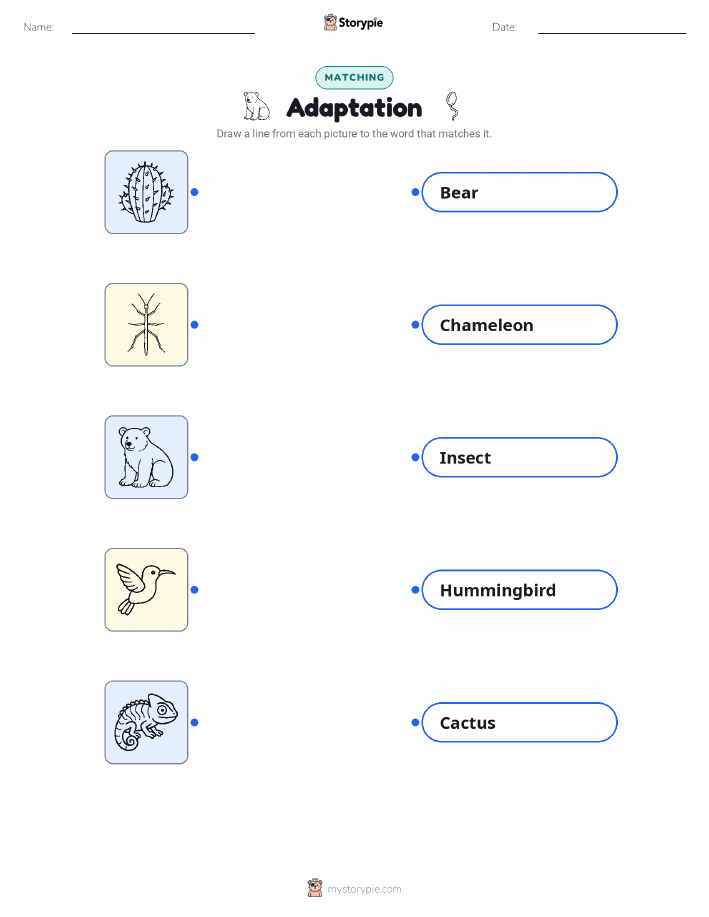
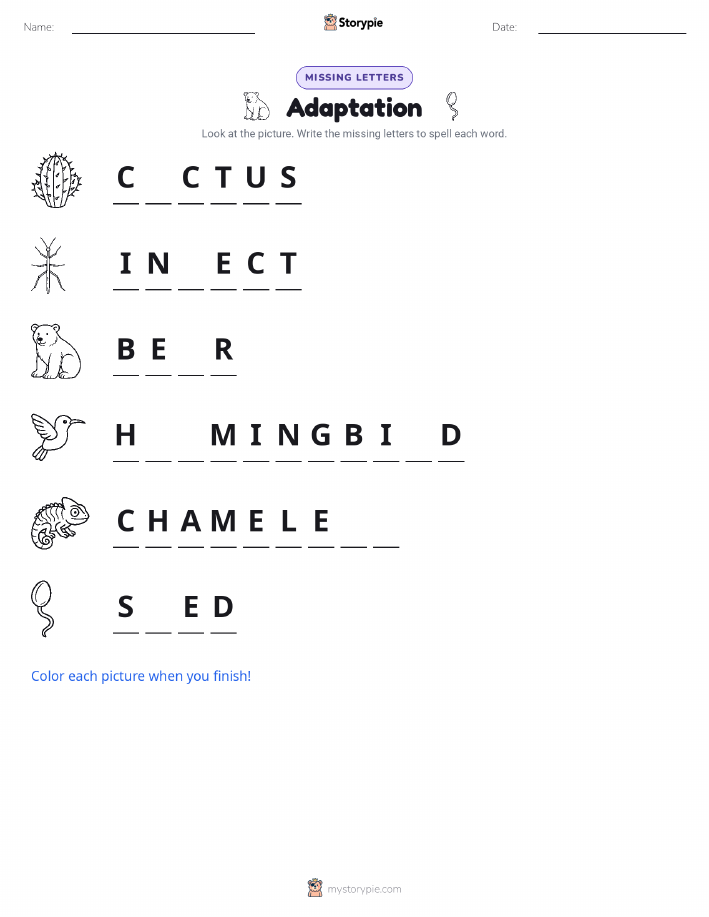
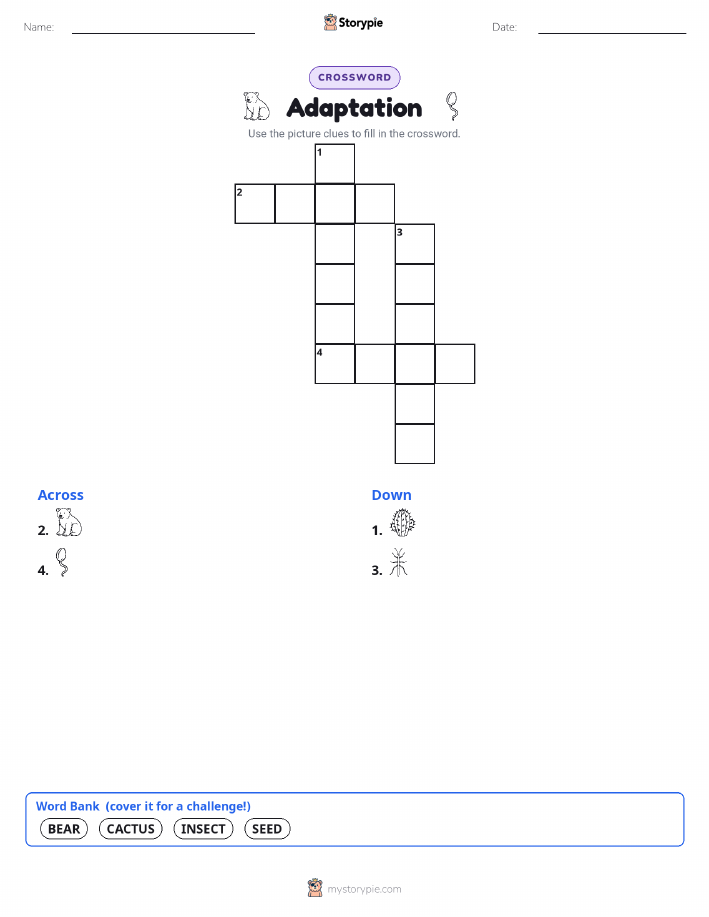
Print & create
Answer keys·No prep·Free with an account
28 worksheets · answer keys · full story · quiz · Ages 6-8 · CEFR A2
Plus adds 291,000+ more stories in 27 languages, audio for every one, and printables for all of them.
Just want Adaptation?

Have you ever wondered how a polar bear stays so cozy and warm in the freezing snow? That’s me. I give the polar bear a thick, white coat that works like the best winter jacket ever, and it also helps him hide from his dinner. I am also the reason a camel has such long, beautiful eyelashes. They aren’t just for looks. They are special shields that keep pesky sand from getting in its eyes during a desert windstorm. I am a secret superpower that helps animals everywhere. I give chameleons their amazing ability to change colors to send signals, control their warmth, and sometimes hide, and I shaped the hummingbird’s beak to be long and skinny, like a straw, so it can sip sweet nectar from deep inside a flower. I am a hidden helper, giving living things traits that help them survive in their special homes, though these traits are not perfect.
For a long, long time, I was a secret. People knew about me long before Darwin, but they still wondered how I worked. But then, a very curious man named Charles Darwin set off on an adventure. He sailed on a big ship called the HMS Beagle, traveling all across the wide ocean to see new lands and meet new creatures. His journey took him to a special group of islands called the Galápagos Islands. These islands were like magical worlds, each one a little different from the next. There, Charles met lots of little birds called finches. These birds had many kinds of beaks. Some kinds of finches had strong, thick beaks that helped them crack open hard seeds. Other kinds had narrow, pointy beaks that helped them pick wiggly insects out of the bark of trees. Why were they so different? Charles Darwin thought and thought. After his voyage, he kept studying living things. Different kinds of finches had beaks suited to different foods, even on the same island. He understood that helpful traits could become more common as parents passed them to their young over many generations. He and Alfred Russel Wallace explained how I work through natural selection. People already knew my name. I am Adaptation.
The Secret of Adaptation
Have you ever wondered how a polar bear stays so cozy and warm in the freezing snow? That’s me. I give the polar bear a thick, white coat that works like the best winter jacket ever, and it also helps him hide from his dinner. I am also the reason a camel has such long, beautiful eyelashes. They aren’t just for looks. They are special shields that keep pesky sand from getting in its eyes during a desert windstorm. I am a secret superpower that helps animals everywhere. I give chameleons their amazing ability to change colors to send signals, control their warmth, and sometimes hide, and I shaped the hummingbird’s beak to be long and skinny, like a straw, so it can sip sweet nectar from deep inside a flower. I am a hidden helper, giving living things traits that help them survive in their special homes, though these traits are not perfect.
For a long, long time, I was a secret. People knew about me long before Darwin, but they still wondered how I worked. But then, a very curious man named Charles Darwin set off on an adventure. He sailed on a big ship called the HMS Beagle, traveling all across the wide ocean to see new lands and meet new creatures. His journey took him to a special group of islands called the Galápagos Islands. These islands were like magical worlds, each one a little different from the next. There, Charles met lots of little birds called finches. These birds had many kinds of beaks. Some kinds of finches had strong, thick beaks that helped them crack open hard seeds. Other kinds had narrow, pointy beaks that helped them pick wiggly insects out of the bark of trees. Why were they so different? Charles Darwin thought and thought. After his voyage, he kept studying living things. Different kinds of finches had beaks suited to different foods, even on the same island. He understood that helpful traits could become more common as parents passed them to their young over many generations. He and Alfred Russel Wallace explained how I work through natural selection. People already knew my name. I am Adaptation.
Your ability to learn is one of my gifts, passed down through many generations. When you learn to put on a warm coat in a chilly breeze, figure out the rules of a new board game, or get better at riding your bike, you are using that gift. Learning happens during your own life. I work much more slowly, as helpful traits are passed from parents to their young over many generations. Together, your learning and I help you get ready for any adventure that comes your way.
Wow facts
About
Adaptation is the evolutionary process by which organisms become better suited to their environment, enhancing their survival and reproduction. It can also refer to a specific trait that helps an organism survive.
Take a Quiz
Question 1 of 4
Who was the man in the story who sailed on HMS Beagle and helped explain adaptation?
Explore next


Want to do even more?
Go beyond exploring. Unlock tools that turn every story into real learning.
Storypie Plus for families
Full stories, quizzes, and printables. Nights and car rides, sorted.
- Unlimited audio stories
- Create Mode: your child stars in the story
- Offline downloads
- Printable worksheets & coloring pages

Why Storypie for Schools
Students engaged. Prep in seconds. Evenings back to you.
- Worksheets & Quizzes
- Classroom Management
- Formative Assessment
- Custom Curriculum & Lesson Plans
- 27 Languages

Why Storypie for Homeschool
Curriculum done. They'll ask for more. Hours back in your day.
- Worksheet Generator
- First-Person Audio Stories
- Built-in Comprehension Quizzes
- Custom Curriculum & Lesson Plans
- Print & Go Activities