English

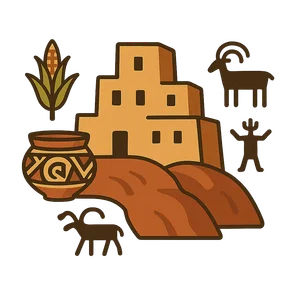
Ancestral Puebloans (Anasazi)
The Ancestral Puebloans were an ancient Native American culture that spanned the present-day Four Corners…
Reads at Grades K-2 Listens at K–3
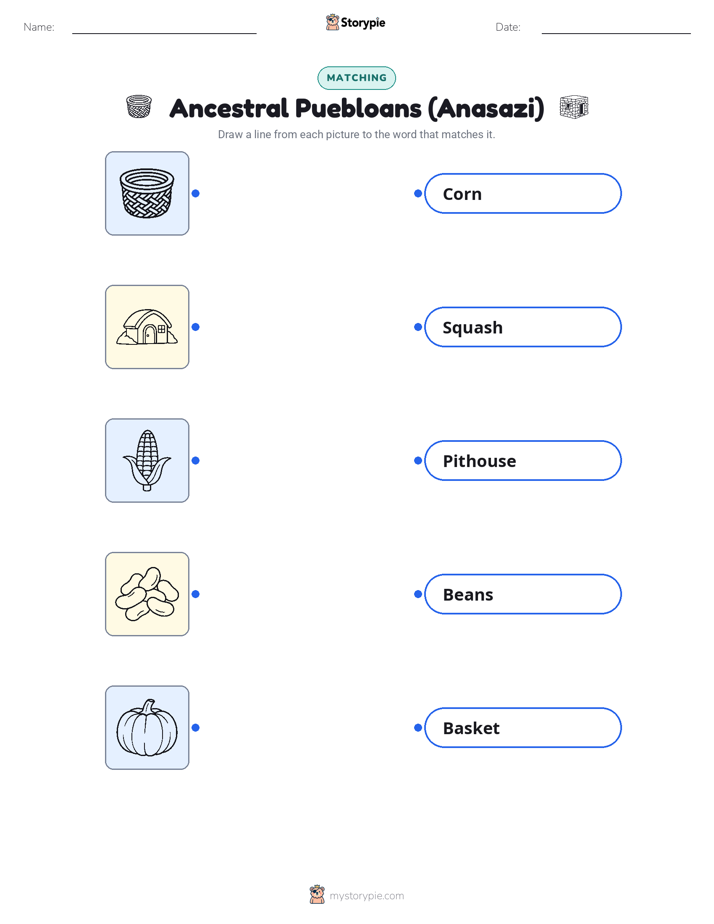
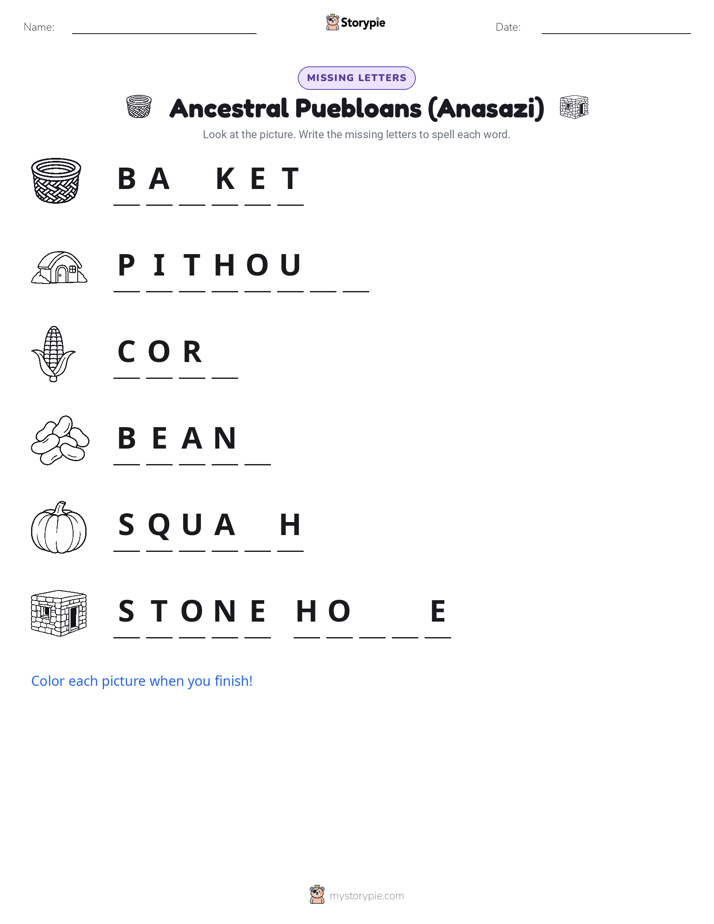
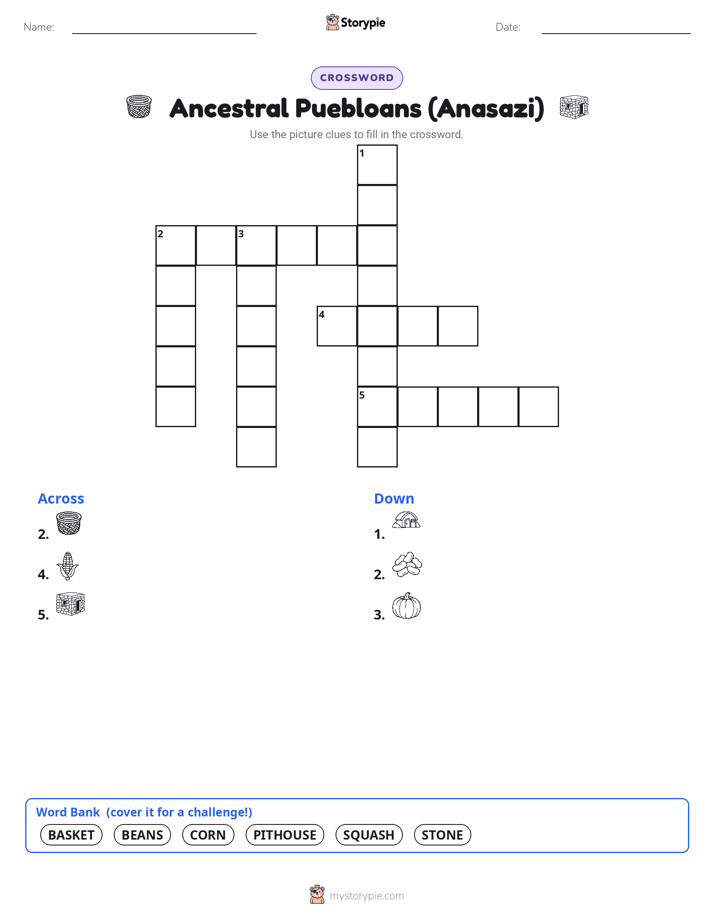
Print & create
Answer keys·No prep·Free with an account
28 worksheets · answer keys · full story · quiz · Ages 6-8 · CEFR A2
Plus adds 244,000+ more stories in 27 languages, audio for every one, and printables for all of them.
Just want Ancestral Puebloans (Anasazi)?
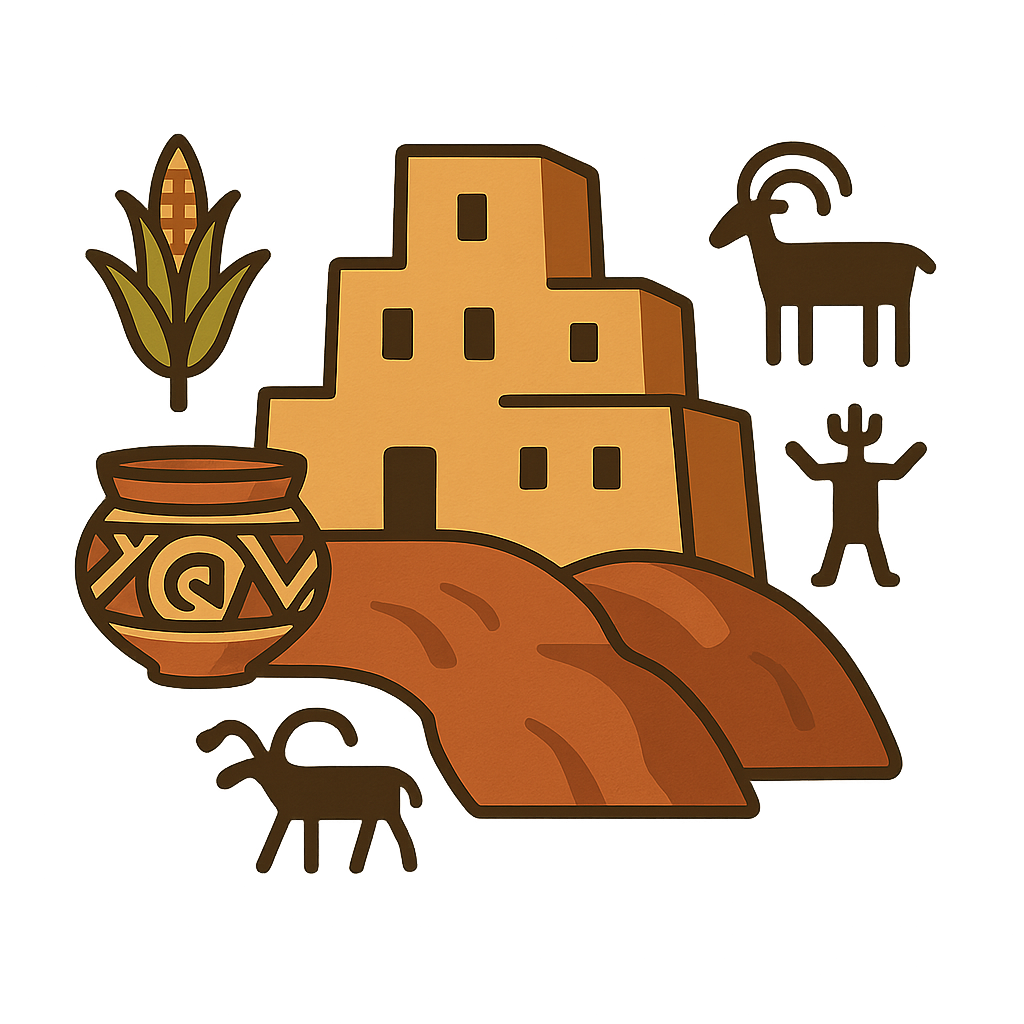
Imagine waking up with the sun warming the stone walls all around you. Your home is tucked into a giant golden cliff, like a bird's nest high in a tree. Below, in the deep canyon, green patches of corn, beans, and squash soak up the sunshine. You can smell the earth and the sweet corn growing. To visit your friend, you don't walk down a street. Instead, you carefully climb a wooden ladder to the home above yours or down to the one below. It feels like living in a big, busy village carved right out of a mountain, safe and snug. All day long, you hear the sounds of families talking, children laughing, and people grinding corn for dinner. Can you picture it. A whole town reaching for the bright blue sky, with everyone connected, living together between the earth and the clouds.
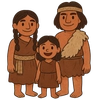
Hello. I am the memory and spirit of the people who lived in those amazing homes. You might hear us called the Ancestral Puebloans. That's a name historians gave us, and it means "the ancient people." My story started a very, very long time ago, around 1200 BCE. Back then, my people were famous for weaving beautiful, strong baskets from plants. We used them for everything, from carrying food to storing seeds for the next year. As time went on, we learned a wonderful secret from the earth. We learned how to farm. We planted what we called the "Three Sisters": corn, beans, and squash. They were sisters because they grew best when they were all together, helping each other reach for the sun. At first, we lived in simple homes dug into the ground, called pit houses, which kept us warm in the winter and cool in the summer. But as we got better at building, our homes got bigger and better, too. We started using stones and mud to build incredible villages. Some of our greatest homes were in a place called Chaco Canyon around the year 1000 CE. They were huge, with hundreds of rooms, and it was a bustling center where people gathered for ceremonies and to share ideas. Later, between 900 and 1350 CE, we built our famous cliff dwellings in places like Mesa Verde, masterpieces of safety and community. We also made beautiful pottery, painting it with bold black lines on a white background. We were very smart observers. We watched the sun, moon, and stars to know exactly when to plant our crops each year so they would grow big and strong.
A Story Carved in Stone
Imagine waking up with the sun warming the stone walls all around you. Your home is tucked into a giant golden cliff, like a bird's nest high in a tree. Below, in the deep canyon, green patches of corn, beans, and squash soak up the sunshine. You can smell the earth and the sweet corn growing. To visit your friend, you don't walk down a street. Instead, you carefully climb a wooden ladder to the home above yours or down to the one below. It feels like living in a big, busy village carved right out of a mountain, safe and snug. All day long, you hear the sounds of families talking, children laughing, and people grinding corn for dinner. Can you picture it. A whole town reaching for the bright blue sky, with everyone connected, living together between the earth and the clouds.
Hello. I am the memory and spirit of the people who lived in those amazing homes. You might hear us called the Ancestral Puebloans. That's a name historians gave us, and it means "the ancient people." My story started a very, very long time ago, around 1200 BCE. Back then, my people were famous for weaving beautiful, strong baskets from plants. We used them for everything, from carrying food to storing seeds for the next year. As time went on, we learned a wonderful secret from the earth. We learned how to farm. We planted what we called the "Three Sisters": corn, beans, and squash. They were sisters because they grew best when they were all together, helping each other reach for the sun. At first, we lived in simple homes dug into the ground, called pit houses, which kept us warm in the winter and cool in the summer. But as we got better at building, our homes got bigger and better, too. We started using stones and mud to build incredible villages. Some of our greatest homes were in a place called Chaco Canyon around the year 1000 CE. They were huge, with hundreds of rooms, and it was a bustling center where people gathered for ceremonies and to share ideas. Later, between 900 and 1350 CE, we built our famous cliff dwellings in places like Mesa Verde, masterpieces of safety and community. We also made beautiful pottery, painting it with bold black lines on a white background. We were very smart observers. We watched the sun, moon, and stars to know exactly when to plant our crops each year so they would grow big and strong.
A legacy Written in Stone
After hundreds of years living in our beautiful cliff homes, a big change happened. Around the year 1300 CE, my people began to pack up their belongings and move away. It’s a bit of a mystery why we left our homes in the cliffs. Maybe the weather changed, and it didn't rain enough for our crops to grow. This is what scientists call a drought. Or maybe our communities had grown so big that it was simply time to find new places to call home. But I want you to know that my story did not end when we left those stone houses behind. It was just the start of a new chapter. My people, the Ancestral Puebloans, traveled across the land and settled in new places. Their children, and their children's children, are the wonderful Pueblo people who live today, like the Hopi and Zuni people in Arizona and New Mexico. My stone houses still stand tall in the cliffs, reminding everyone of a clever, strong, and creative community that knew how to work together. My spirit lives on in the songs, dances, and traditions of the Pueblo people today and in the quiet canyons that echo with our memory. My story inspires us to listen to the earth, build strong communities, and know that even when we move on, we leave something beautiful behind.
Wow facts
About
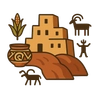
The Ancestral Puebloans were an ancient Native American culture that spanned the present-day Four Corners region of the United States, renowned for their agriculture, pottery, and unique cliff dwellings and pueblos.
Take a Quiz
Question 1 of 4
What were the 'Three Sisters' that the Ancestral Puebloans grew?
Explore next

Want to do even more?
Go beyond exploring. Unlock tools that turn every story into real learning.

Storypie Plus for families
Full stories, quizzes, and printables. Nights and car rides, sorted.
- Unlimited audio stories
- Create Mode: your child stars in the story
- Offline downloads
- Printable worksheets & coloring pages

Why Storypie for Schools
Students engaged. Prep in seconds. Evenings back to you.
- Worksheets & Quizzes
- Classroom Management
- Formative Assessment
- Custom Curriculum & Lesson Plans
- 27 Languages

Why Storypie for Homeschool
Curriculum done. They'll ask for more. Hours back in your day.
- Worksheet Generator
- First-Person Audio Stories
- Built-in Comprehension Quizzes
- Custom Curriculum & Lesson Plans
- Print & Go Activities