English


Art Deco
Art Deco is a style of visual arts, architecture, and design that originated in France in the 1910s…
Reads at Grades 6–8 Listens at Grades 4–8
Print & create
Answer keys·No prep·Free with an account
28 worksheets · answer keys · full story · quiz · Ages 10-12 · CEFR B2
Plus adds 164,000+ more stories in 27 languages, audio for every one, and printables for all of them.
Just want Art Deco?

Picture a city at twilight, where the tallest buildings stretch toward the stars, their spires glittering with metallic light. See the sharp, clean zig-zag patterns carved into a grand lobby floor, and feel the smooth, powerful lines of a car gliding down the avenue. I am in the gleam of polished chrome, the rich grain of lacquered wood, and the splash of bold, confident colors like black, gold, and electric blue. I am the feeling of speed, the hum of machinery, and the thrilling promise of a future filled with glamour and invention. For some, I am a memory of a time when the world felt brand new, a symphony of strong angles, repeating patterns, and elegant symmetry. For others, I am a discovery, a style that still feels modern and exciting. I am a declaration of confidence, built from steel and stone, and shining with optimism. I am Art Deco.
My story begins not in a skyscraper, but in the studios and workshops of Paris. In the 1910s, many artists and designers were growing tired of the styles that came before me. They found the flowing, nature-inspired curves of Art Nouveau to be a bit fussy and old-fashioned for a world that was rapidly changing. They wanted something new, something that captured the energy of the Machine Age—the power of trains, ocean liners, and airplanes. So, they started experimenting with a look that was more disciplined, geometric, and strong. For years I was developing, taking shape in beautiful furniture, glasswork, and posters. Then came my grand debut. My official coming-out party was the International Exhibition of Modern Decorative and Industrial Arts, which opened its gates in Paris on April 28th, 1925. It was a spectacular world’s fair, and I was everywhere. Pavilions from different nations showed off my bold new look. My style wasn't born from a single idea; I gathered my inspiration from all over the world and throughout time. I took the bold, geometric shapes I saw in Cubist paintings by artists like Picasso and Braque. I was fascinated by the arts of ancient civilizations, like the stepped pyramids of the Aztecs and Mayans. And just a few years earlier, on November 4th, 1922, the world had been electrified by the discovery of King Tutankhamun's tomb in Egypt. Suddenly, Egyptian motifs—lotus flowers, scarab beetles, and bold sunbursts—became incredibly popular, and I wove them into my designs, adding a touch of ancient mystery to my modern form. I was a blend of the ancient and the futuristic, the handmade and the machine-made.
I Am Art Deco: The Style of the Future
Picture a city at twilight, where the tallest buildings stretch toward the stars, their spires glittering with metallic light. See the sharp, clean zig-zag patterns carved into a grand lobby floor, and feel the smooth, powerful lines of a car gliding down the avenue. I am in the gleam of polished chrome, the rich grain of lacquered wood, and the splash of bold, confident colors like black, gold, and electric blue. I am the feeling of speed, the hum of machinery, and the thrilling promise of a future filled with glamour and invention. For some, I am a memory of a time when the world felt brand new, a symphony of strong angles, repeating patterns, and elegant symmetry. For others, I am a discovery, a style that still feels modern and exciting. I am a declaration of confidence, built from steel and stone, and shining with optimism. I am Art Deco.
My story begins not in a skyscraper, but in the studios and workshops of Paris. In the 1910s, many artists and designers were growing tired of the styles that came before me. They found the flowing, nature-inspired curves of Art Nouveau to be a bit fussy and old-fashioned for a world that was rapidly changing. They wanted something new, something that captured the energy of the Machine Age—the power of trains, ocean liners, and airplanes. So, they started experimenting with a look that was more disciplined, geometric, and strong. For years I was developing, taking shape in beautiful furniture, glasswork, and posters. Then came my grand debut. My official coming-out party was the International Exhibition of Modern Decorative and Industrial Arts, which opened its gates in Paris on April 28th, 1925. It was a spectacular world’s fair, and I was everywhere. Pavilions from different nations showed off my bold new look. My style wasn't born from a single idea; I gathered my inspiration from all over the world and throughout time. I took the bold, geometric shapes I saw in Cubist paintings by artists like Picasso and Braque. I was fascinated by the arts of ancient civilizations, like the stepped pyramids of the Aztecs and Mayans. And just a few years earlier, on November 4th, 1922, the world had been electrified by the discovery of King Tutankhamun's tomb in Egypt. Suddenly, Egyptian motifs—lotus flowers, scarab beetles, and bold sunbursts—became incredibly popular, and I wove them into my designs, adding a touch of ancient mystery to my modern form. I was a blend of the ancient and the futuristic, the handmade and the machine-made.
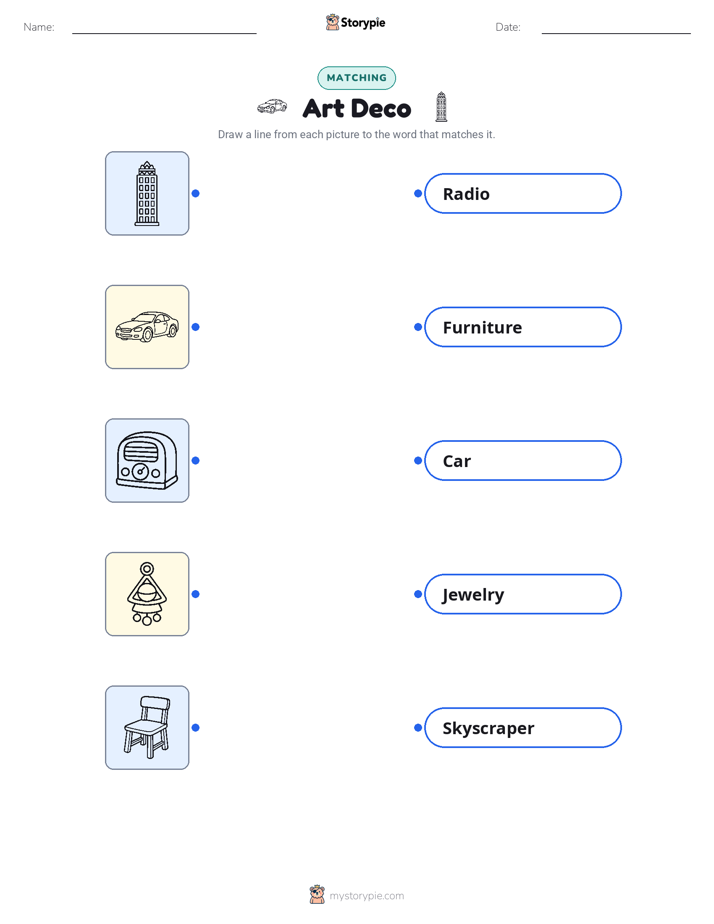
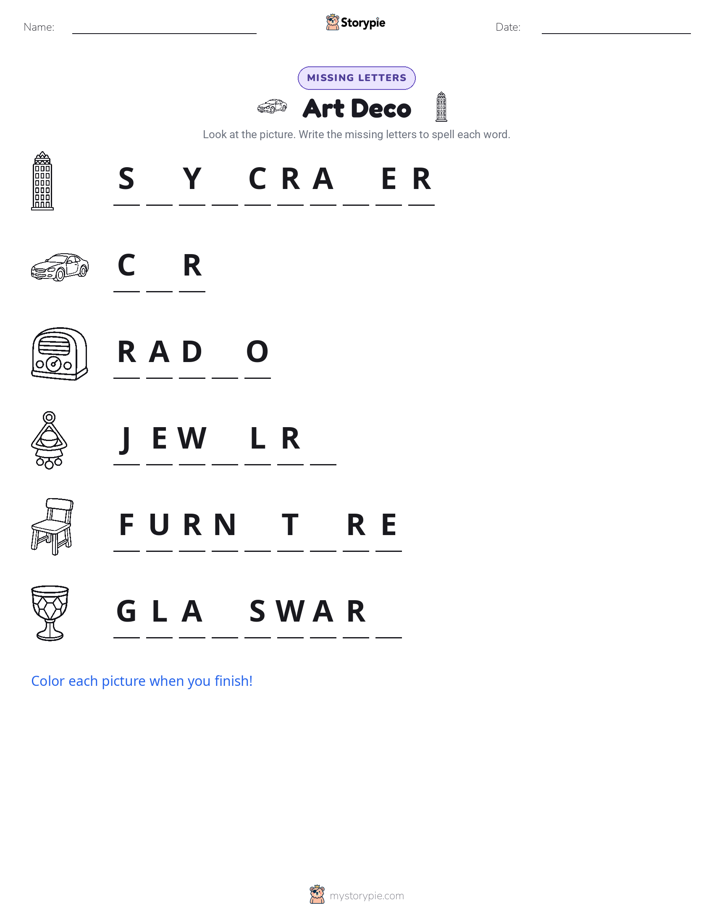
After my sensational debut in Paris, I packed my bags and journeyed across the Atlantic Ocean to the United States. It was the Roaring Twenties, a time of great ambition and change, and America welcomed me with open arms. I was the perfect style for a country that was building its future, quite literally, into the sky. I became the language of the skyscraper. Architects used my strong vertical lines to make their buildings seem even taller, and they used my decorative patterns to create breathtaking entrances and crowns. I proudly dressed some of the most famous buildings in the world. In 1930, the architect William Van Alen gave me a magnificent, shining crown of triangular windows and arches atop the Chrysler Building in New York City. The next year, in 1931, I helped the Empire State Building soar to become the tallest building in the world, its spire a symbol of human achievement. But I wasn’t only for the rich and powerful. I believed in bringing modern style to everyone. I streamlined the look of everyday objects, from the smooth, curved cases of radios that brought news and music into people’s homes to the geometric patterns on jewelry, clocks, and movie posters. I was everywhere, a touch of modern glamour for a modern world. My golden age, however, was short. As the 1930s came to an end, the world’s mood grew more serious. With the threat of a great war looming, my celebratory, luxurious style began to feel less appropriate, and I slowly faded into the background.
But a style with so much energy and optimism can never truly disappear. I simply rested for a while. Then, in the 1960s, a new generation of designers and historians looked back and rediscovered my charm. They saw the beauty in my clean lines, my rich materials, and my joyful spirit. People began to appreciate my classic designs again, and a movement began to preserve the beautiful buildings I had inspired. If you want to see where my spirit is alive and well today, just take a trip to Miami’s South Beach. There, you’ll find a whole district of my buildings, painted in bright pastel colors and lit up with cheerful neon signs at night. They show a more playful, tropical side of my personality. I never went away; I was just waiting to be remembered. My story is a reminder of a time when people looked to the future with incredible hope and excitement. I represent innovation, progress, and the belief that beauty can be found in strength and elegance. Today, I continue to inspire artists, architects, and designers to be bold, to embrace geometric beauty, and to create things that feel both timeless and thrillingly new.
Wow facts
About
Art Deco is a style of visual arts, architecture, and design that originated in France in the 1910s, just before World War I, and became popular internationally in the 1920s and 1930s. It is characterized by bold geometric shapes, rich materials, and a feeling of modern luxury.
Take a Quiz
Question 1 of 5
What is the main idea of this story?
Explore next






Want to do even more?
Go beyond exploring. Unlock tools that turn every story into real learning.

Storypie Plus for families
Full stories, quizzes, and printables. Nights and car rides, sorted.
- Unlimited audio stories
- Create Mode: your child stars in the story
- Offline downloads
- Printable worksheets & coloring pages

Why Storypie for Schools
Students engaged. Prep in seconds. Evenings back to you.
- Worksheets & Quizzes
- Classroom Management
- Formative Assessment
- Custom Curriculum & Lesson Plans
- 27 Languages

Why Storypie for Homeschool
Curriculum done. They'll ask for more. Hours back in your day.
- Worksheet Generator
- First-Person Audio Stories
- Built-in Comprehension Quizzes
- Custom Curriculum & Lesson Plans
- Print & Go Activities