English

Art Museums
Art museums can be public, private, or nonprofit institutions that care for, research…
Reads at Grades 6–8 Listens at Grades 4–8
Print & create
Answer keys·No prep·Free with an account
28 worksheets · answer keys · full story · quiz · Ages 10-12 · CEFR B2
Plus adds 244,000+ more stories in 27 languages, audio for every one, and printables for all of them.
Just want Art Museums?
Have you ever walked into a building and felt the air grow quiet and still? Your footsteps echo on polished floors as you move through rooms filled with silent storytellers. In one room, a golden frame holds a swirling storm at sea, painted centuries ago. In another, a figure carved from smooth, cool marble seems like it could blink and step off its pedestal. You can travel from ancient Egypt to modern-day New York City just by walking down a hall. You might see shimmering armor worn by knights, delicate glass vases from the Roman Empire, or giant canvases splashed with colors so bright they make you feel happy just by looking at them. I am a place that holds all these treasures. I am a time machine, a library of images, and a treasure chest for the whole world to share. I am an Art Museum, a home for stories told in color, stone, and light.
My story didn't begin with grand public entrances and welcoming signs. For a very long time, my ancestors were private collections, hidden away in the palaces of kings, queens, and wealthy families. Art was a symbol of power and wealth, a treasure for the privileged, not for everyone. During the Renaissance in Italy, from the 14th to the 16th centuries, powerful families like the Medici in Florence gathered incredible collections of paintings and sculptures. They were passionate patrons of the arts, but only the most important guests received an invitation to view their treasures. Their magnificent collection eventually became the heart of the Uffizi Gallery, which finally opened its doors to the public in 1765, a major step forward. Even before that, another important moment happened in England. In 1683, the Ashmolean Museum opened at the University of Oxford. It was one of the very first museums in the world to welcome the public, a revolutionary idea at the time. But the event that truly defined who I am today took place in France during a time of immense upheaval known as the French Revolution. The people of France decided that the king's magnificent home, the Louvre Palace in Paris, and all the masterpieces inside it, should not belong to a single ruler. They believed it belonged to the nation. On August 10th, 1793, the Louvre opened as a public museum. For the first time, a country's greatest artistic treasures were on display for any citizen to come and experience. This idea was radical and powerful—that art is a shared heritage that can inspire, educate, and unite us all.
A Home for Stories in Color and Stone
Have you ever walked into a building and felt the air grow quiet and still? Your footsteps echo on polished floors as you move through rooms filled with silent storytellers. In one room, a golden frame holds a swirling storm at sea, painted centuries ago. In another, a figure carved from smooth, cool marble seems like it could blink and step off its pedestal. You can travel from ancient Egypt to modern-day New York City just by walking down a hall. You might see shimmering armor worn by knights, delicate glass vases from the Roman Empire, or giant canvases splashed with colors so bright they make you feel happy just by looking at them. I am a place that holds all these treasures. I am a time machine, a library of images, and a treasure chest for the whole world to share. I am an Art Museum, a home for stories told in color, stone, and light.
My story didn't begin with grand public entrances and welcoming signs. For a very long time, my ancestors were private collections, hidden away in the palaces of kings, queens, and wealthy families. Art was a symbol of power and wealth, a treasure for the privileged, not for everyone. During the Renaissance in Italy, from the 14th to the 16th centuries, powerful families like the Medici in Florence gathered incredible collections of paintings and sculptures. They were passionate patrons of the arts, but only the most important guests received an invitation to view their treasures. Their magnificent collection eventually became the heart of the Uffizi Gallery, which finally opened its doors to the public in 1765, a major step forward. Even before that, another important moment happened in England. In 1683, the Ashmolean Museum opened at the University of Oxford. It was one of the very first museums in the world to welcome the public, a revolutionary idea at the time. But the event that truly defined who I am today took place in France during a time of immense upheaval known as the French Revolution. The people of France decided that the king's magnificent home, the Louvre Palace in Paris, and all the masterpieces inside it, should not belong to a single ruler. They believed it belonged to the nation. On August 10th, 1793, the Louvre opened as a public museum. For the first time, a country's greatest artistic treasures were on display for any citizen to come and experience. This idea was radical and powerful—that art is a shared heritage that can inspire, educate, and unite us all.
The 19th century was my big growth spurt. Inspired by the example of the Louvre, cities across Europe and America began building their own grand homes for art. Many of my most famous siblings were born during this era, like the Metropolitan Museum of Art in New York City, founded in 1870, and the Rijksmuseum in Amsterdam, which opened its new building in 1885. These places were often designed to look like classical temples, with huge columns and soaring ceilings, because society viewed art with reverence and saw me as a sacred place for learning and inspiration. I was a place where anyone could study the great masters and perhaps be moved to create something beautiful themselves. Then, the 20th century arrived, bringing with it a whirlwind of change. Artists began experimenting with bold new colors, abstract shapes, and challenging ideas. I had to change, too. I couldn't just be a home for the art of the past; I had to make room for the present. In 1929, the Museum of Modern Art (MoMA) opened in New York, creating a space dedicated to the art of its own time. This was a monumental shift, acknowledging that art is a living, breathing thing that is constantly evolving. My own body even became a work of art. Architects started designing museum buildings that were as exciting and innovative as the collections inside. In 1959, the Guggenheim Museum opened in New York, a mesmerizing spiral designed by Frank Lloyd Wright. Then, in 1977, the Centre Pompidou in Paris turned architecture 'inside-out,' with all its colorful pipes, elevators, and escalators visible on the outside of the building. I was no longer just a container for art; I was becoming part of the art myself.
Today, I am more alive and dynamic than ever. I am not just a silent, formal hall where you must whisper. I am a bustling center for the community, a place where people of all ages come to learn, discuss, and find inspiration. You can take an art class in my studios, listen to a concert in my auditorium, watch a film in my theater, or even explore my collections online from thousands of miles away. My most important job remains the same: to protect the priceless creativity, dreams, and history of humanity that are in my care. I safeguard these treasures to share them with you and with all the generations that will come after you. Each object I hold is a message from the past, a piece of a giant puzzle that helps tell the story of who we are. When you walk through my doors, you are having a conversation with artists who lived hundreds or even thousands of years ago. You are seeing the world through their eyes. What will you discover? What new ideas will spark in your mind? I hold the stories of the world, and I am waiting patiently to share them with you. Come and find your own story within my walls.
Wow facts
About
Art museums can be public, private, or nonprofit institutions that care for, research, and display collections of art, including paintings, sculptures, and decorative arts, for the purpose of education, study, and enjoyment.
Take a Quiz
Question 1 of 5
What is the main idea of the section 'From Private Palaces to Public Halls'?
Explore next



Want to do even more?
Go beyond exploring. Unlock tools that turn every story into real learning.

Storypie Plus for families
Full stories, quizzes, and printables. Nights and car rides, sorted.
- Unlimited audio stories
- Create Mode: your child stars in the story
- Offline downloads
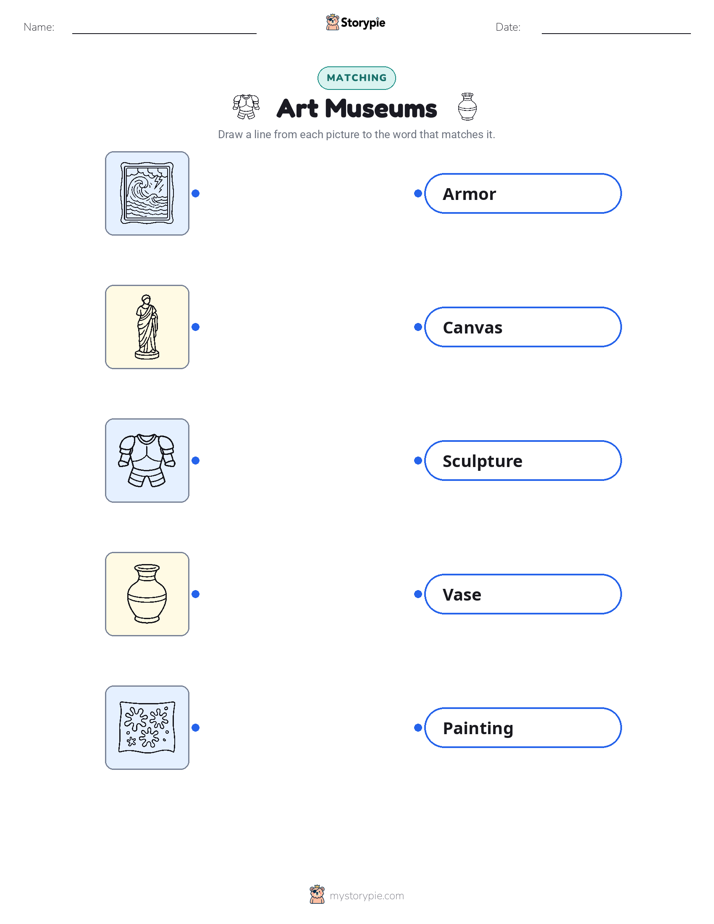
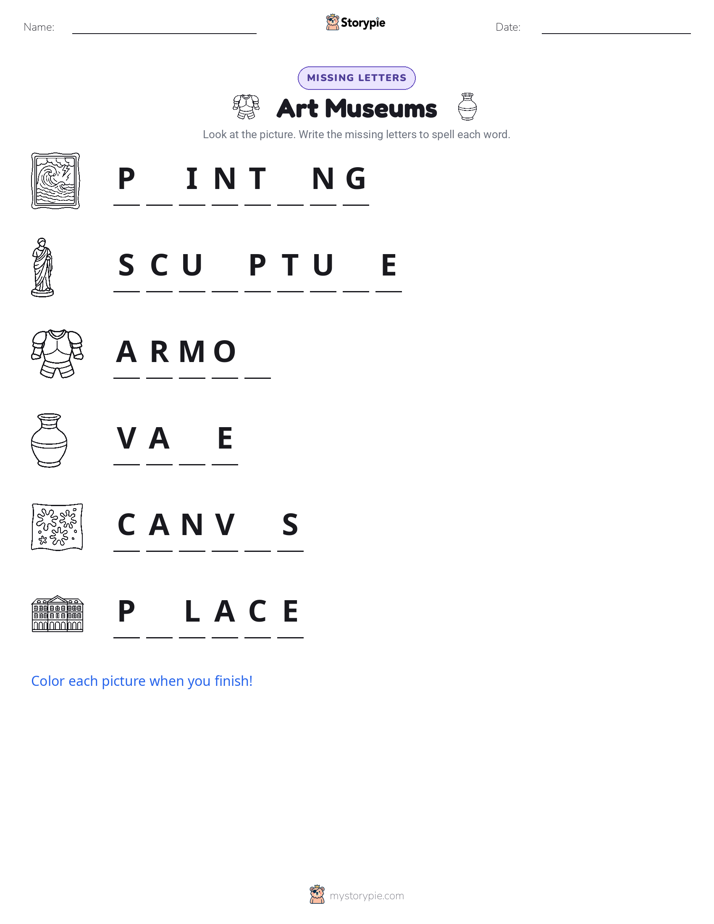
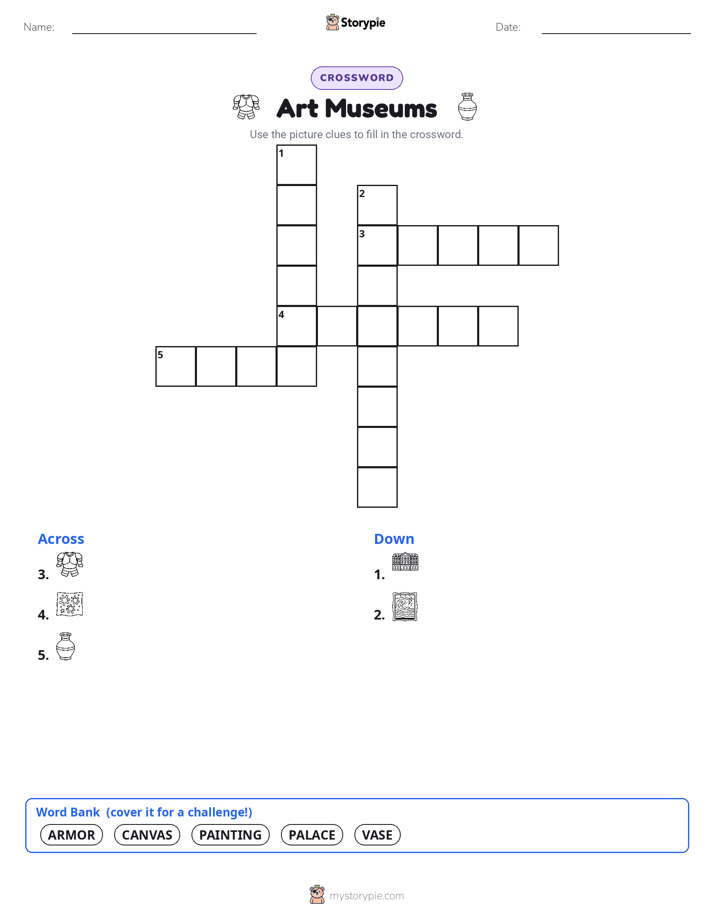
- Printable worksheets & coloring pages

Why Storypie for Schools
Students engaged. Prep in seconds. Evenings back to you.
- Worksheets & Quizzes
- Classroom Management
- Formative Assessment
- Custom Curriculum & Lesson Plans
- 27 Languages

Why Storypie for Homeschool
Curriculum done. They'll ask for more. Hours back in your day.
- Worksheet Generator
- First-Person Audio Stories
- Built-in Comprehension Quizzes
- Custom Curriculum & Lesson Plans
- Print & Go Activities