English

Asteroids
Asteroids are rocky, airless objects that orbit the Sun but are too small to be called planets.
Reads at Grades K-2 Listens at K–3
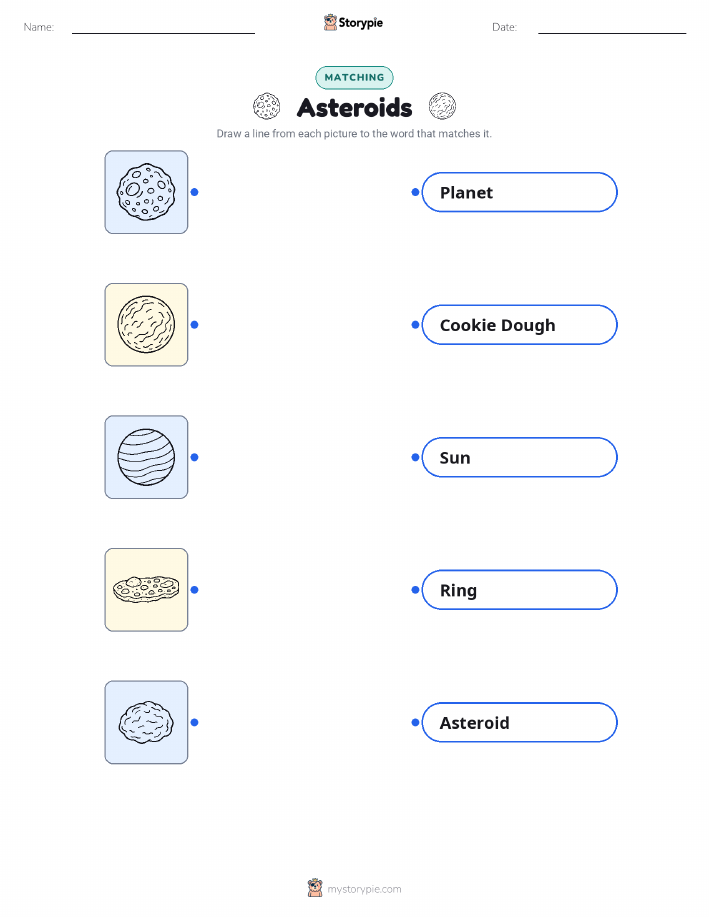
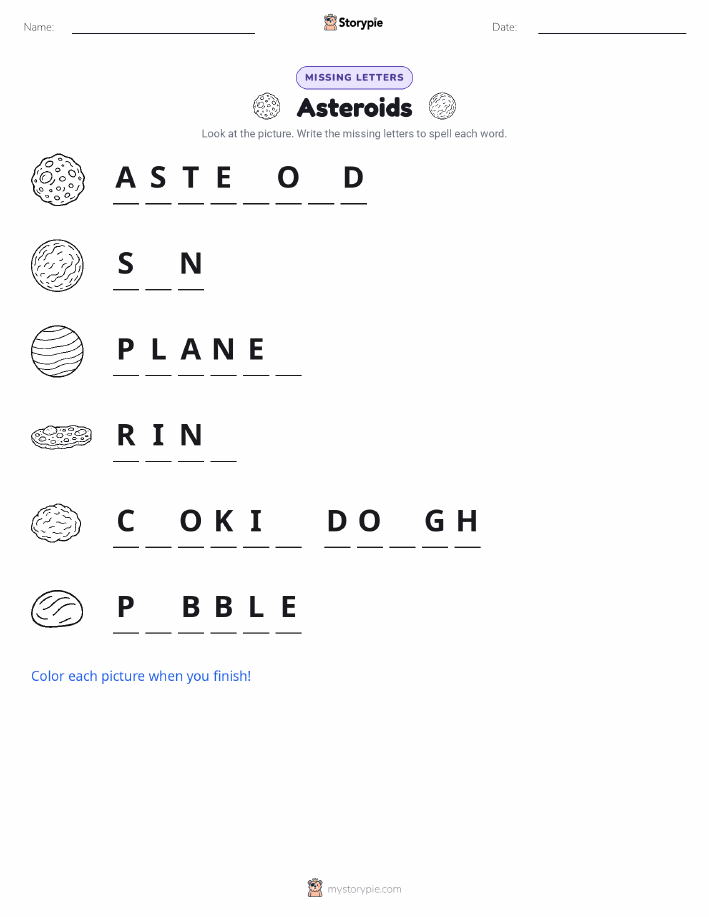
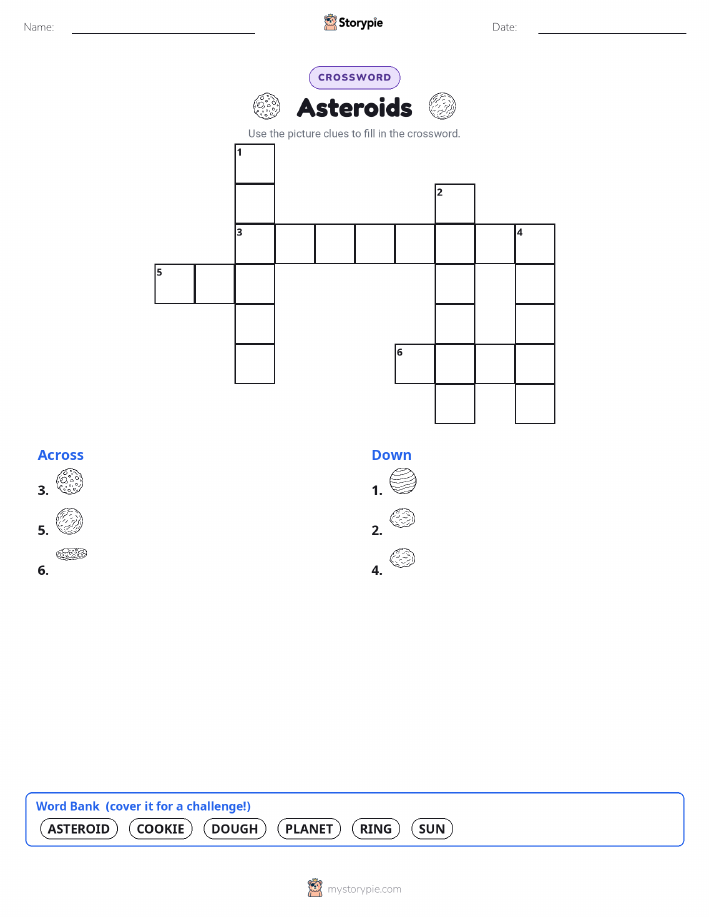
Print & create
Answer keys·No prep·Free with an account
28 worksheets · answer keys · full story · quiz · Ages 6-8 · CEFR A2
Plus adds 279,000+ more stories in 27 languages, audio for every one, and printables for all of them.
Just want Asteroids?
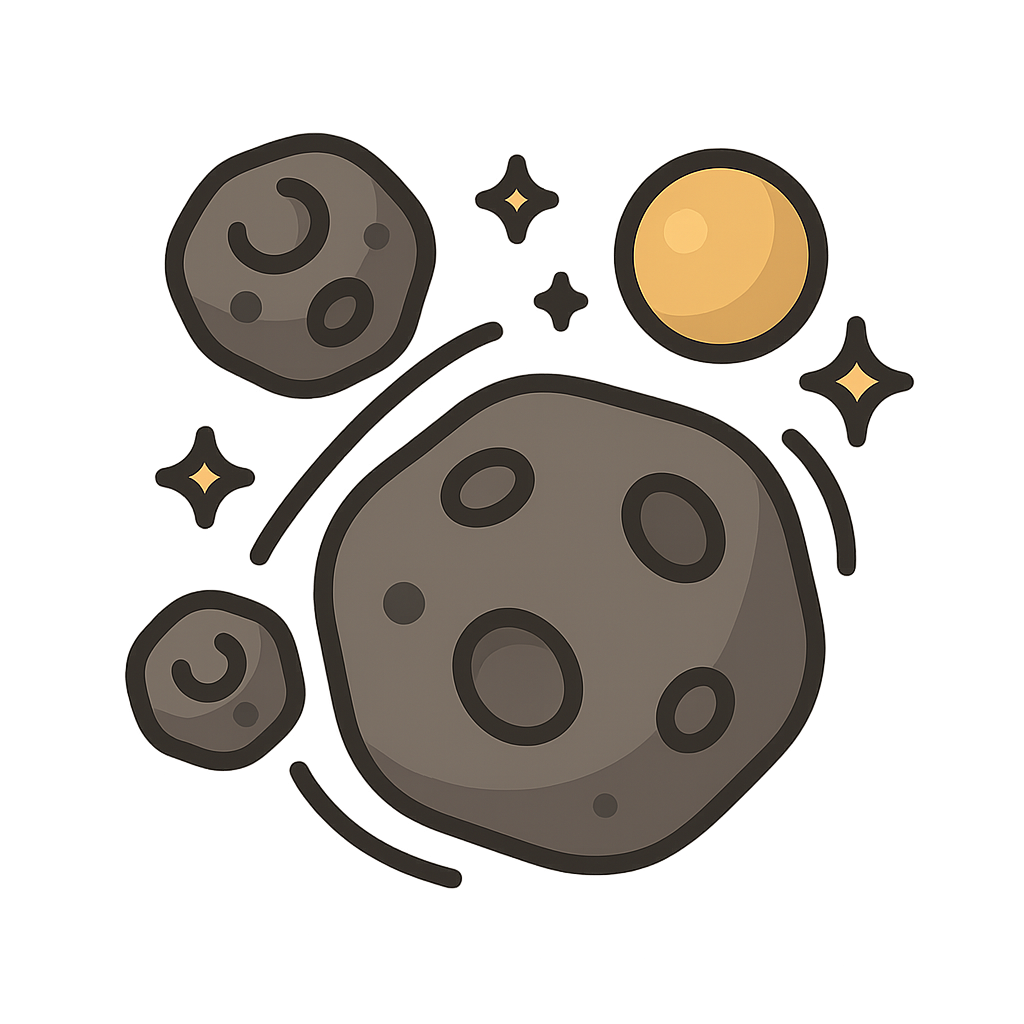
Hello there. You might not see me, but I see you. I'm a big, bumpy space rock, and I spend my days tumbling and twirling through the quiet, sparkly darkness of space. It’s pretty fun. I’m not alone, though. I have millions and millions of brothers and sisters, and we all live together in a giant, rocky ring. Our neighborhood is tucked right between the big red planet, Mars, and the super-giant planet with the pretty stripes, Jupiter. We’re like the leftover cookie dough from when all the planets in your solar system were being made, a super, super long time ago. We never quite baked into a full planet, but that's okay. We think being a cosmic pebble is a very important job. We zoom and zip and sometimes bump into each other, playing a slow-motion game of tag that has lasted for billions of years.
For a very long time, people on Earth didn't even know we were out here. They could see the big planets shining like bright lights, but we were too small and too far away to notice. It was like we were playing a giant game of hide-and-seek. But then, one chilly night on January 1st, 1801, an astronomer in Italy named Giuseppe Piazzi was looking through his telescope. He was searching the sky when he saw something new. A tiny dot of light. It was one of my biggest family members, a giant round asteroid named Ceres. At first, he got so excited and shouted, "I found a new planet!". But soon, his friends started finding more of us, all hanging out in the same part of the sky. They realized we weren't big enough to be planets. We were something else entirely. Since we looked like little stars twinkling through their telescopes, they gave us a special name. They called us Asteroids, which is a big word that means "star-like". And that's me. I'm an Asteroid, and I was so happy you finally found us.
The Story of the Asteroids
Hello there. You might not see me, but I see you. I'm a big, bumpy space rock, and I spend my days tumbling and twirling through the quiet, sparkly darkness of space. It’s pretty fun. I’m not alone, though. I have millions and millions of brothers and sisters, and we all live together in a giant, rocky ring. Our neighborhood is tucked right between the big red planet, Mars, and the super-giant planet with the pretty stripes, Jupiter. We’re like the leftover cookie dough from when all the planets in your solar system were being made, a super, super long time ago. We never quite baked into a full planet, but that's okay. We think being a cosmic pebble is a very important job. We zoom and zip and sometimes bump into each other, playing a slow-motion game of tag that has lasted for billions of years.
For a very long time, people on Earth didn't even know we were out here. They could see the big planets shining like bright lights, but we were too small and too far away to notice. It was like we were playing a giant game of hide-and-seek. But then, one chilly night on January 1st, 1801, an astronomer in Italy named Giuseppe Piazzi was looking through his telescope. He was searching the sky when he saw something new. A tiny dot of light. It was one of my biggest family members, a giant round asteroid named Ceres. At first, he got so excited and shouted, "I found a new planet!". But soon, his friends started finding more of us, all hanging out in the same part of the sky. They realized we weren't big enough to be planets. We were something else entirely. Since we looked like little stars twinkling through their telescopes, they gave us a special name. They called us Asteroids, which is a big word that means "star-like". And that's me. I'm an Asteroid, and I was so happy you finally found us.
So, why are we so special? Well, because we are so, so old, we are like cosmic time capsules. Imagine you buried a treasure box filled with your favorite toys to find years later. We are kind of like that, but for space. We hold all the secret ingredients and rocky recipes that built Earth and all the other planets. Scientists on Earth are super curious about us. They think we are fascinating. They build amazing robot explorers, called space probes, and send them all the way out to our neighborhood to visit. These brave robots take lots of pictures and even use a little scoop to collect some of our space dust to bring back home. By studying our dust and rocks, you can learn about where your amazing world came from. We might just be tumbling rocks, but we hold the ancient stories of the stars and the secret history of your home. We love watching you learn and explore, and we'll always be out here, waiting for your next visit and inspiring you to dream big and reach for the stars.
Wow facts
About
Asteroids are rocky, airless objects that orbit the Sun but are too small to be called planets. They are ancient remnants from the formation of our solar system, primarily found in the asteroid belt between Mars and Jupiter.
Take a Quiz
Question 1 of 4
Who was the first person to discover an asteroid?
Explore next

Want to do even more?
Go beyond exploring. Unlock tools that turn every story into real learning.

Storypie Plus for families
Full stories, quizzes, and printables. Nights and car rides, sorted.
- Unlimited audio stories
- Create Mode: your child stars in the story
- Offline downloads
- Printable worksheets & coloring pages

Why Storypie for Schools
Students engaged. Prep in seconds. Evenings back to you.
- Worksheets & Quizzes
- Classroom Management
- Formative Assessment
- Custom Curriculum & Lesson Plans
- 27 Languages

Why Storypie for Homeschool
Curriculum done. They'll ask for more. Hours back in your day.
- Worksheet Generator
- First-Person Audio Stories
- Built-in Comprehension Quizzes
- Custom Curriculum & Lesson Plans
- Print & Go Activities