English


Atmospheric Pressure
Atmospheric pressure is the force exerted by the weight of the air in the Earth's atmosphere.
Reads at Grades 6–8 Listens at Grades 4–8
Print & create
Answer keys·No prep·Free with an account
28 worksheets · answer keys · full story · quiz · Ages 10-12 · CEFR B2
Plus adds 208,000+ more stories in 27 languages, audio for every one, and printables for all of them.
Just want Atmospheric Pressure?

Have you ever felt a little pop in your ears as you drive up a steep hill, or noticed how a bag of chips puffs up like a balloon during a flight. That’s me, making my presence known. I am the reason you can sip your favorite drink through a straw, creating a little pocket of low pressure that lets me push the liquid up to you. I am the invisible guard that keeps our precious air from drifting away into the cold, silent emptiness of space. For most of human history, you lived and breathed within me, but you never knew I was there, a constant, gentle weight on everything. Think of me as a vast, invisible blanket, woven from countless tiny air particles, draped over the entire planet from the highest mountain peak to the deepest valley. I am the weight of the air all around you. I am Atmospheric Pressure.
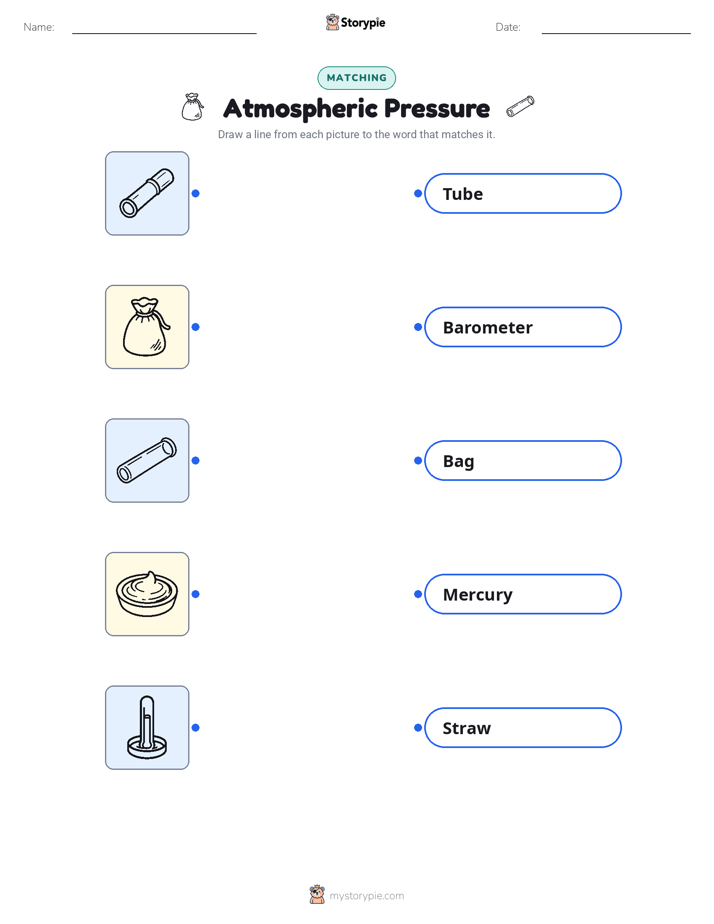
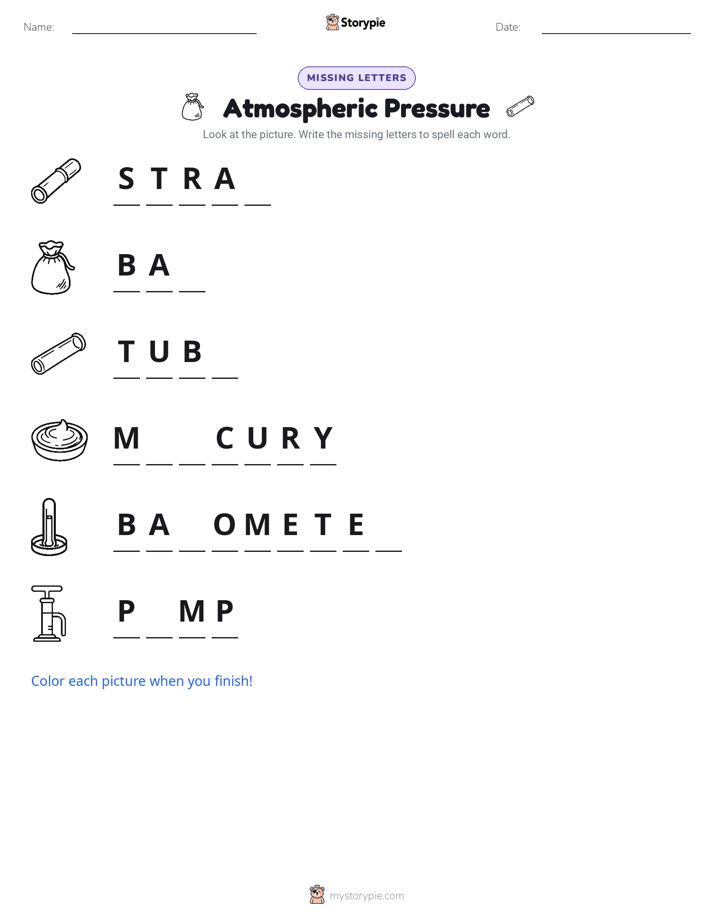
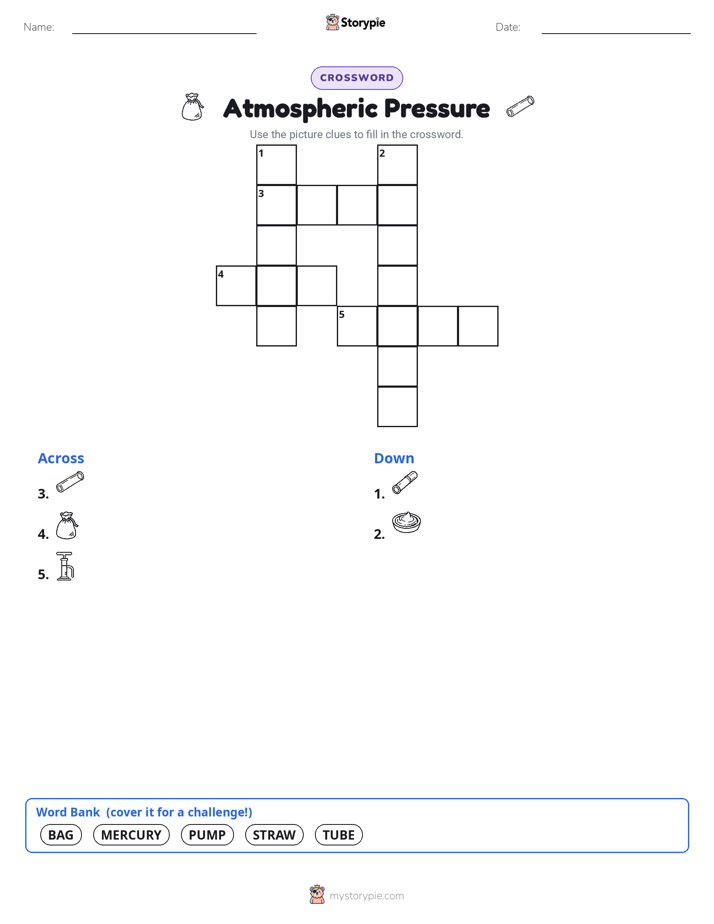
For more than a thousand years, some of the most brilliant minds on Earth believed something that simply wasn't true. The ancient Greek philosopher Aristotle taught that nature hated empty spaces, a concept they called 'horror vacui,' which means 'the horror of the void.' They were convinced that a true vacuum, a place with absolutely nothing in it, was impossible. Nature, they said, would always rush in to fill any empty space. This idea started to crack in the 1640s. In Italy, hardworking miners faced a baffling problem. They used pumps to draw water out of their mine shafts, but no matter how powerful their pumps were, they could never lift the water higher than about 10 meters. Why did it stop. The old ideas offered no real answer. This mystery caught the attention of a thoughtful scientist named Evangelista Torricelli. He had been a student of the great Galileo, and like his teacher, he wasn't satisfied with old answers that didn't fit the facts. In 1643, he devised a brilliant experiment. He took a long glass tube, sealed at one end, and filled it to the brim with mercury, a liquid metal much heavier than water. Placing a finger over the open end, he carefully turned the tube upside down and submerged the opening in a dish of more mercury. When he removed his finger, something amazing happened. The mercury in the tube didn't all rush out. It dropped just a little, leaving a space at the top of the sealed tube. This was the first time a sustained vacuum had been created by humans. Torricelli realized that it was my weight—the pressure of the air pushing down on the surface of the mercury in the open dish—that was holding the heavy column of mercury up inside the tube.
The Invisible Blanket
Have you ever felt a little pop in your ears as you drive up a steep hill, or noticed how a bag of chips puffs up like a balloon during a flight. That’s me, making my presence known. I am the reason you can sip your favorite drink through a straw, creating a little pocket of low pressure that lets me push the liquid up to you. I am the invisible guard that keeps our precious air from drifting away into the cold, silent emptiness of space. For most of human history, you lived and breathed within me, but you never knew I was there, a constant, gentle weight on everything. Think of me as a vast, invisible blanket, woven from countless tiny air particles, draped over the entire planet from the highest mountain peak to the deepest valley. I am the weight of the air all around you. I am Atmospheric Pressure.
For more than a thousand years, some of the most brilliant minds on Earth believed something that simply wasn't true. The ancient Greek philosopher Aristotle taught that nature hated empty spaces, a concept they called 'horror vacui,' which means 'the horror of the void.' They were convinced that a true vacuum, a place with absolutely nothing in it, was impossible. Nature, they said, would always rush in to fill any empty space. This idea started to crack in the 1640s. In Italy, hardworking miners faced a baffling problem. They used pumps to draw water out of their mine shafts, but no matter how powerful their pumps were, they could never lift the water higher than about 10 meters. Why did it stop. The old ideas offered no real answer. This mystery caught the attention of a thoughtful scientist named Evangelista Torricelli. He had been a student of the great Galileo, and like his teacher, he wasn't satisfied with old answers that didn't fit the facts. In 1643, he devised a brilliant experiment. He took a long glass tube, sealed at one end, and filled it to the brim with mercury, a liquid metal much heavier than water. Placing a finger over the open end, he carefully turned the tube upside down and submerged the opening in a dish of more mercury. When he removed his finger, something amazing happened. The mercury in the tube didn't all rush out. It dropped just a little, leaving a space at the top of the sealed tube. This was the first time a sustained vacuum had been created by humans. Torricelli realized that it was my weight—the pressure of the air pushing down on the surface of the mercury in the open dish—that was holding the heavy column of mercury up inside the tube.
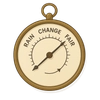
Torricelli's discovery sent ripples through the scientific world. In France, a brilliant thinker and scientist named Blaise Pascal heard about the experiment and had a logical thought. If I was really the weight of a 'sea of air,' as Torricelli called it, then surely I must be lighter, or less dense, at the top of a high mountain than at the bottom. To test this, Pascal planned a clever experiment. On September 19th, 1648, he asked his brother-in-law, Florin Périer, to perform the task. Périer carefully carried one of Torricelli's mercury barometers up the steep slopes of the Puy de Dôme mountain in central France. Just as Pascal had predicted, the column of mercury in the tube dropped lower and lower the higher he climbed. The blanket of air was thinner up there, so I couldn't push as hard. This proved that I had weight and that my strength changed with altitude. But perhaps the most dramatic demonstration of my power came from a German scientist and mayor named Otto von Guericke. In the city of Magdeburg in 1654, he wanted to show the world just how strong I could be. He crafted two large, perfectly fitting copper hemispheres, like the two halves of a giant metal ball. He placed them together and then used a pump he had invented to suck all the air out from inside, creating a vacuum. With nothing inside to push out, I was pressing in on the spheres from all sides with immense force. To prove it, von Guericke hitched two teams of horses, one to each hemisphere, and had them pull with all their might in opposite directions. The horses strained and pulled, but they could not separate the spheres. It was as if they were glued together by an invisible giant. Only when von Guericke opened a valve and let the air rush back inside did the two halves fall apart with a gentle clank. He had shown everyone my incredible, unseen strength.
My story didn't end in the 17th century. Today, understanding me is essential to your daily life. When a weather forecaster talks about a 'high-pressure system,' they're talking about me pressing down a bit more firmly, usually bringing clear skies and calm weather. A 'low-pressure system' means I'm a bit lighter, which can lead to clouds and storms. I'm the reason airplanes can soar through the sky. The clever shape of their wings makes the air move faster over the top, creating lower pressure there and higher pressure below, which lifts the plane up. I am also the silent force that makes a suction cup stick to a smooth window—it’s not suction pulling it, but me pushing it firmly against the glass from the outside. I am more than just a scientific principle. I am your everyday guide, a constant but unseen companion. By learning my secrets, humans have learned to forecast storms, travel the world in flying machines, and even build spacecraft that can leave my protective blanket behind to explore the stars. I am a reminder that some of the most powerful forces in the universe are the ones you cannot see, and there is always another layer of mystery waiting to be uncovered.
Wow facts
About
Atmospheric pressure is the force exerted by the weight of the air in the Earth's atmosphere. It was first accurately measured in the 17th century and is a fundamental concept in physics and meteorology.
Take a Quiz
Question 1 of 5
In your own words, what did Evangelista Torricelli's experiment with the mercury tube demonstrate?
Explore next





Want to do even more?
Go beyond exploring. Unlock tools that turn every story into real learning.

Storypie Plus for families
Full stories, quizzes, and printables. Nights and car rides, sorted.
- Unlimited audio stories
- Create Mode: your child stars in the story
- Offline downloads
- Printable worksheets & coloring pages

Why Storypie for Schools
Students engaged. Prep in seconds. Evenings back to you.
- Worksheets & Quizzes
- Classroom Management
- Formative Assessment
- Custom Curriculum & Lesson Plans
- 27 Languages

Why Storypie for Homeschool
Curriculum done. They'll ask for more. Hours back in your day.
- Worksheet Generator
- First-Person Audio Stories
- Built-in Comprehension Quizzes
- Custom Curriculum & Lesson Plans
- Print & Go Activities