English

Meteorology
Meteorology is the scientific study of the atmosphere, focusing on weather processes and forecasting.
Reads at Grades 3–5 Listens at Grades 1–5
Print & create
Answer keys·No prep·Free with an account
28 worksheets · answer keys · full story · quiz · Ages 8-10 · CEFR B1
Plus adds 102,000+ more stories in 27 languages, audio for every one, and printables for all of them.
Just want Meteorology?
I am the reason you check the sky before a picnic and wear a warm coat in winter. I paint sunrises with brilliant colors and sometimes get grumpy, sending thunderstorms to rattle your windows. For thousands of years, you’ve looked up and wondered about me. Long ago, around 650 BCE, clever sky-watchers in a place called Babylonia would track my cloudy moods to know the best times to plant their crops. They would write down when it rained and when it was sunny, trying to find my patterns. Can you imagine trying to guess the weather with no help at all. They didn't know my name, but they knew I was important. I am the story of the air all around you, the secret language of the clouds, and the science of the sky. I am Meteorology.
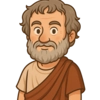
For a long time, my secrets were a mystery. People told stories about gods in the clouds to explain my thunderous roars and gentle rains. Then, a thoughtful man in ancient Greece named Aristotle wrote a book all about me around 340 BCE. He called it Meteorologica, which is how I got my name. He was one of the first to try and understand me with science, not just stories. But to really know me, you needed special tools. It took many centuries, but brilliant inventors created them. In the late 16th century, a man named Galileo Galilei helped develop the thermometer to measure how hot or cold I was feeling. Now you could tell if a day was just a little warm or very hot. Then, in 1643, Evangelista Torricelli invented the barometer, a clever device to measure the weight of the air, which you call air pressure. It told people when a storm might be coming because I often get heavy and press down before a big rain. A little later, people figured out how to measure the water in the air, or humidity. These inventions were like giving you superpowers to see and measure my invisible forces for the very first time.
The Secret Story of the Sky
I am the reason you check the sky before a picnic and wear a warm coat in winter. I paint sunrises with brilliant colors and sometimes get grumpy, sending thunderstorms to rattle your windows. For thousands of years, you’ve looked up and wondered about me. Long ago, around 650 BCE, clever sky-watchers in a place called Babylonia would track my cloudy moods to know the best times to plant their crops. They would write down when it rained and when it was sunny, trying to find my patterns. Can you imagine trying to guess the weather with no help at all. They didn't know my name, but they knew I was important. I am the story of the air all around you, the secret language of the clouds, and the science of the sky. I am Meteorology.
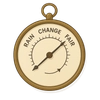
For a long time, my secrets were a mystery. People told stories about gods in the clouds to explain my thunderous roars and gentle rains. Then, a thoughtful man in ancient Greece named Aristotle wrote a book all about me around 340 BCE. He called it Meteorologica, which is how I got my name. He was one of the first to try and understand me with science, not just stories. But to really know me, you needed special tools. It took many centuries, but brilliant inventors created them. In the late 16th century, a man named Galileo Galilei helped develop the thermometer to measure how hot or cold I was feeling. Now you could tell if a day was just a little warm or very hot. Then, in 1643, Evangelista Torricelli invented the barometer, a clever device to measure the weight of the air, which you call air pressure. It told people when a storm might be coming because I often get heavy and press down before a big rain. A little later, people figured out how to measure the water in the air, or humidity. These inventions were like giving you superpowers to see and measure my invisible forces for the very first time.
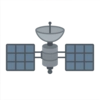
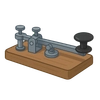
Once you could measure me, you wanted to share what you learned. What good is knowing a storm is coming if you can't warn the next town. The invention of the telegraph in the 1830s was a game-changer. Suddenly, a weather report from one town could be sent to another in minutes. This led to the very first weather maps in the 1850s, connecting the dots to show my patterns across the whole country. In the early 1900s, a scientist from Norway named Vilhelm Bjerknes figured out how I move in giant rivers of warm and cold air, which he called fronts. His ideas are still used by weather forecasters today. But the biggest leap came on April 1st, 1960, when the first successful weather satellite, TIROS-1, was launched into space. For the first time, you could see me from above. You could watch massive hurricanes swirl over the ocean and track snowstorms covering entire states. My secrets were finally being revealed on a global scale.
Today, I am part of your daily life. You have powerful computers that can guess what I'll do next and satellites that watch my every move. I help farmers grow your food, pilots fly their planes safely, and help you decide if you need an umbrella for school. I am a giant, beautiful puzzle that stretches from the ground to the highest reaches of the sky. For thousands of years, you have been my best detectives, and you get better at understanding me every day. So the next time you feel the wind on your face or watch a cloud drift by, remember me, Meteorology, and keep looking up. There are still so many wonderful secrets to discover together.
Wow facts
About
Meteorology is the scientific study of the atmosphere, focusing on weather processes and forecasting.
Take a Quiz
Question 1 of 5
In the story, Meteorology says brilliant inventors created tools that were like 'giving you superpowers.' What does this really mean?
Explore next

Want to do even more?
Go beyond exploring. Unlock tools that turn every story into real learning.

Storypie Plus for families
Full stories, quizzes, and printables. Nights and car rides, sorted.
- Unlimited audio stories
- Create Mode: your child stars in the story
- Offline downloads
- Printable worksheets & coloring pages

Why Storypie for Schools
Students engaged. Prep in seconds. Evenings back to you.
- Worksheets & Quizzes
- Classroom Management
- Formative Assessment
- Custom Curriculum & Lesson Plans
- 27 Languages

Why Storypie for Homeschool
Curriculum done. They'll ask for more. Hours back in your day.
- Worksheet Generator
- First-Person Audio Stories
- Built-in Comprehension Quizzes
- Custom Curriculum & Lesson Plans
- Print & Go Activities