English


Baobab Tree
Adansonia, commonly known as the Baobab, is a genus of eight species of long-lived trees native to Madagascar…
Reads at Grades 6–8 Listens at Grades 4–8
Print & create
Answer keys·No prep·Free with an account
28 worksheets · answer keys · full story · quiz · Ages 10-12 · CEFR B2
Plus adds 291,000+ more stories in 27 languages, audio for every one, and printables for all of them.
Just want Baobab Tree?

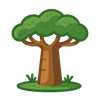
Imagine living for a thousand years, or even two. Imagine your skin is smooth and gray, like an elephant's hide, and your trunk is so wide it would take twenty people holding hands to circle it. Inside this massive trunk, I hold thousands of gallons of water, a life-saving secret in the dry, sun-scorched lands I call home. For most of the year, my branches are bare, twisting and reaching for the heavens like a tangle of gnarled roots. It’s a strange sight, making people say I look as if I’ve been plucked from the ground and shoved back in the wrong way. This is why they sometimes call me 'the upside-down tree.' My branches provide a safe haven for birds to build their nests, and my hollows become cozy homes for bats, lizards, and bush babies. I have watched generations of animals and people live their lives beneath my shade. My family is spread far and wide, with some of us standing tall on the great island of Madagascar, others scattered across the African mainland, and a few even making a home in distant Australia. For centuries, I was a quiet giant, a local landmark, a giver of life. People have called me many things, but you can call me Baobab.
For thousands of years, the people who lived in the lands where I grew knew me well. They understood my worth, using my fruit for food and my bark for rope. The story of how I became known to the wider world was carried by curious travelers exploring the globe. A famous Arab traveler named Ibn Battuta journeyed through Africa in the 14th century and wrote about seeing me in his travel accounts. More than two hundred years later, in 1592, an Italian botanist named Prospero Alpini published a description of my fruit, which he had observed in Egypt. He was fascinated and wrote about this strange, gourd-like pod, calling it 'Bahobab.' But the person who truly introduced me to the world of science was a young, adventurous French botanist named Michel Adanson. In 1749, he traveled to Senegal in West Africa and was awestruck when he saw me. He observed me carefully, measuring my enormous trunk and documenting every detail. He was the first to write a complete scientific description of my entire being, and he proposed calling my family 'Baobab.' However, the famous scientist Carl Linnaeus, who created the system for naming living things, decided to honor Adanson's hard work. In 1759, he officially named my genus 'Adansonia.' It was a great tribute. Scientists later discovered that there are eight different species of me in the Adansonia family, and six of them live only on the island of Madagascar, which makes many believe that is where I first began my long journey.
The Upside-Down Tree
Imagine living for a thousand years, or even two. Imagine your skin is smooth and gray, like an elephant's hide, and your trunk is so wide it would take twenty people holding hands to circle it. Inside this massive trunk, I hold thousands of gallons of water, a life-saving secret in the dry, sun-scorched lands I call home. For most of the year, my branches are bare, twisting and reaching for the heavens like a tangle of gnarled roots. It’s a strange sight, making people say I look as if I’ve been plucked from the ground and shoved back in the wrong way. This is why they sometimes call me 'the upside-down tree.' My branches provide a safe haven for birds to build their nests, and my hollows become cozy homes for bats, lizards, and bush babies. I have watched generations of animals and people live their lives beneath my shade. My family is spread far and wide, with some of us standing tall on the great island of Madagascar, others scattered across the African mainland, and a few even making a home in distant Australia. For centuries, I was a quiet giant, a local landmark, a giver of life. People have called me many things, but you can call me Baobab.
For thousands of years, the people who lived in the lands where I grew knew me well. They understood my worth, using my fruit for food and my bark for rope. The story of how I became known to the wider world was carried by curious travelers exploring the globe. A famous Arab traveler named Ibn Battuta journeyed through Africa in the 14th century and wrote about seeing me in his travel accounts. More than two hundred years later, in 1592, an Italian botanist named Prospero Alpini published a description of my fruit, which he had observed in Egypt. He was fascinated and wrote about this strange, gourd-like pod, calling it 'Bahobab.' But the person who truly introduced me to the world of science was a young, adventurous French botanist named Michel Adanson. In 1749, he traveled to Senegal in West Africa and was awestruck when he saw me. He observed me carefully, measuring my enormous trunk and documenting every detail. He was the first to write a complete scientific description of my entire being, and he proposed calling my family 'Baobab.' However, the famous scientist Carl Linnaeus, who created the system for naming living things, decided to honor Adanson's hard work. In 1759, he officially named my genus 'Adansonia.' It was a great tribute. Scientists later discovered that there are eight different species of me in the Adansonia family, and six of them live only on the island of Madagascar, which makes many believe that is where I first began my long journey.
Today, I am more than just a scientific curiosity. I am a beacon of life, a tree of giving. My fruit pulp, which has a tangy taste like sherbet, is packed with vitamins and is made into refreshing drinks and snacks. The seeds inside my fruit are pressed to create a rich oil that people use to care for their skin and hair. Even my tough, fibrous bark can be carefully harvested without harming me and woven into strong ropes, baskets, and cloth. In many communities across Africa, I am the heart of the village. People gather under my vast branches to hold meetings, tell stories, and celebrate important ceremonies. I am a living landmark, a place of wisdom and connection. But my long life is now facing a new challenge. In the early 21st century, some of my oldest and grandest relatives began to weaken and die, a deep mystery that saddens scientists and local people alike. They suspect that the world is getting warmer and drier, making it harder for even a survivor like me to thrive. Yet, I remain a symbol of resilience and strength. My roots may look like they are in the sky, but my true roots spread wide just beneath the surface, connecting me to the past and future. As long as people care for this planet we all share, I will continue to stand tall, offering shelter, nourishment, and a story of survival for generations to come.
Wow facts
About
Adansonia, commonly known as the Baobab, is a genus of eight species of long-lived trees native to Madagascar, mainland Africa, and Australia, famous for their massive water-storing trunks and cultural significance.
Take a Quiz
Question 1 of 5
What does the word 'resilience' mean, and how does the Baobab show it in the story?
Explore next



Want to do even more?
Go beyond exploring. Unlock tools that turn every story into real learning.
Storypie Plus for families
Full stories, quizzes, and printables. Nights and car rides, sorted.
- Unlimited audio stories
- Create Mode: your child stars in the story
- Offline downloads
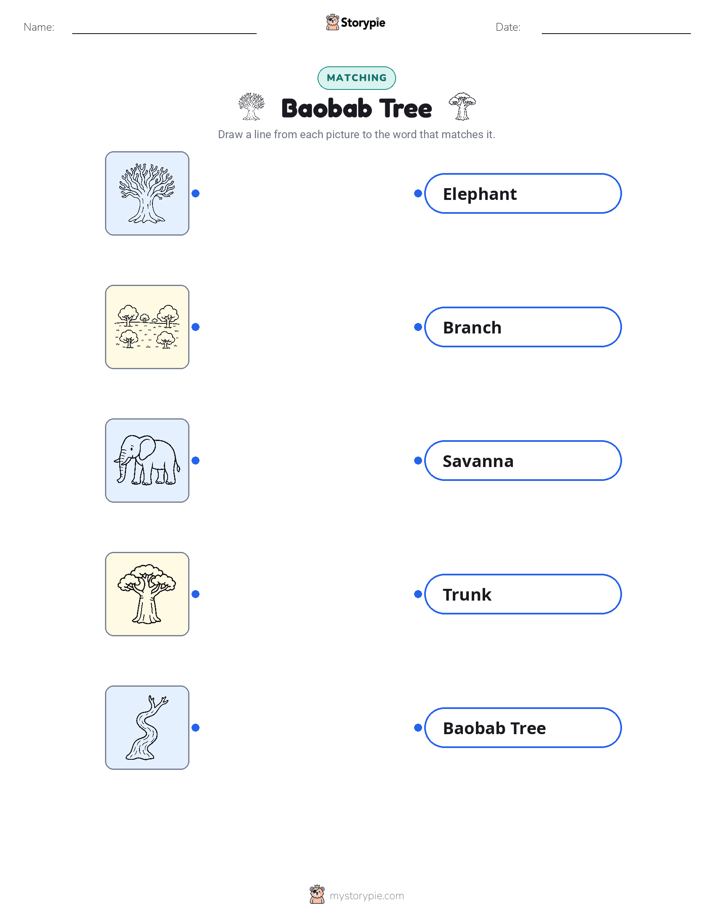
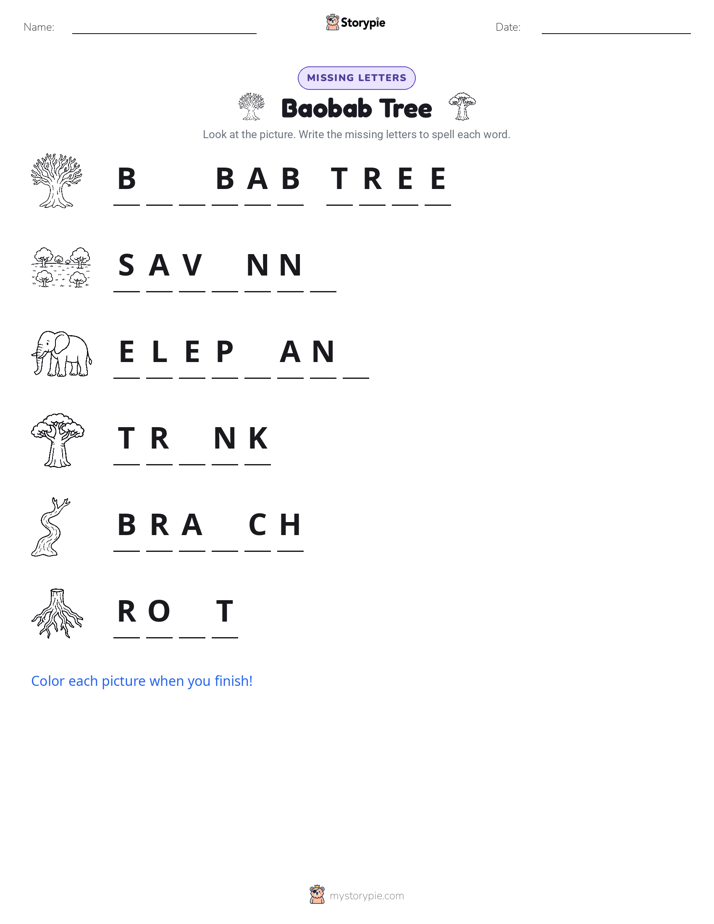
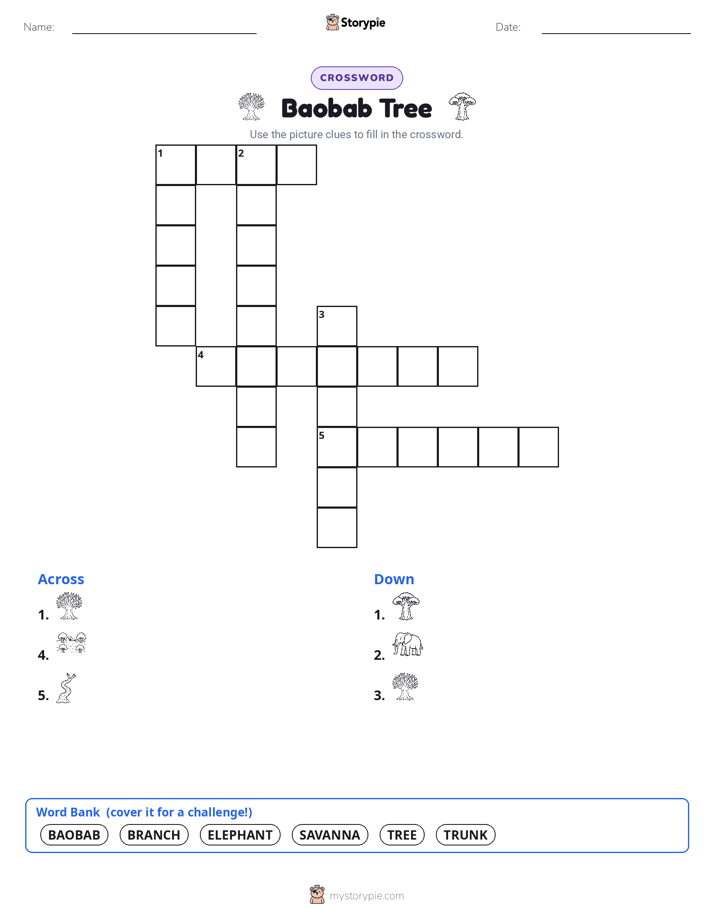
- Printable worksheets & coloring pages

Why Storypie for Schools
Students engaged. Prep in seconds. Evenings back to you.
- Worksheets & Quizzes
- Classroom Management
- Formative Assessment
- Custom Curriculum & Lesson Plans
- 27 Languages

Why Storypie for Homeschool
Curriculum done. They'll ask for more. Hours back in your day.
- Worksheet Generator
- First-Person Audio Stories
- Built-in Comprehension Quizzes
- Custom Curriculum & Lesson Plans
- Print & Go Activities