English

Baobab Tree
The Baobab is a genus of long-lived trees native to Africa, Madagascar, and Australia…
Reads at Grades 3–5 Listens at Grades 1–5
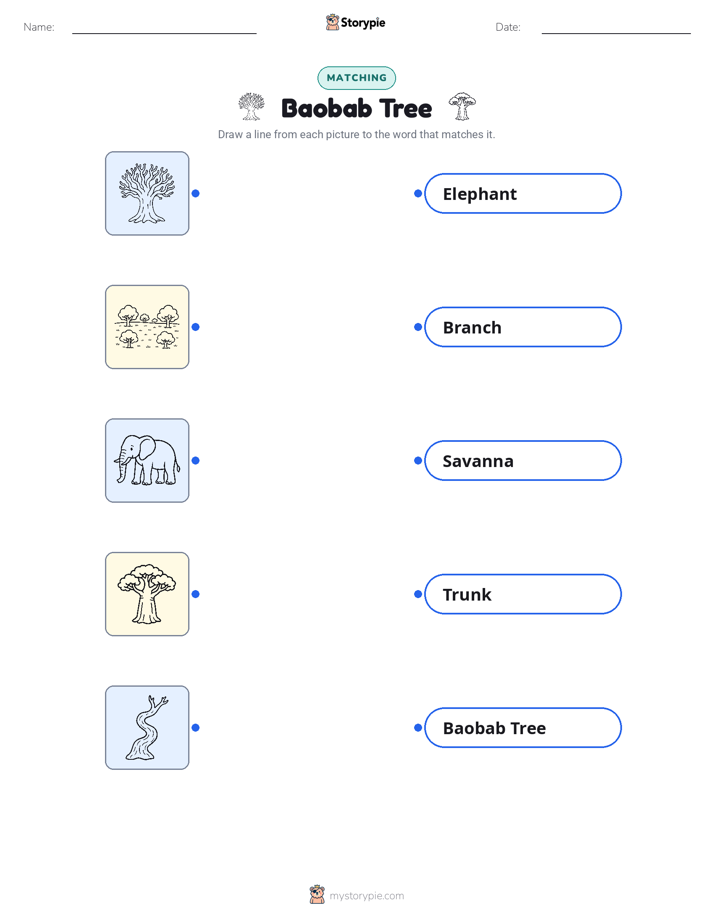
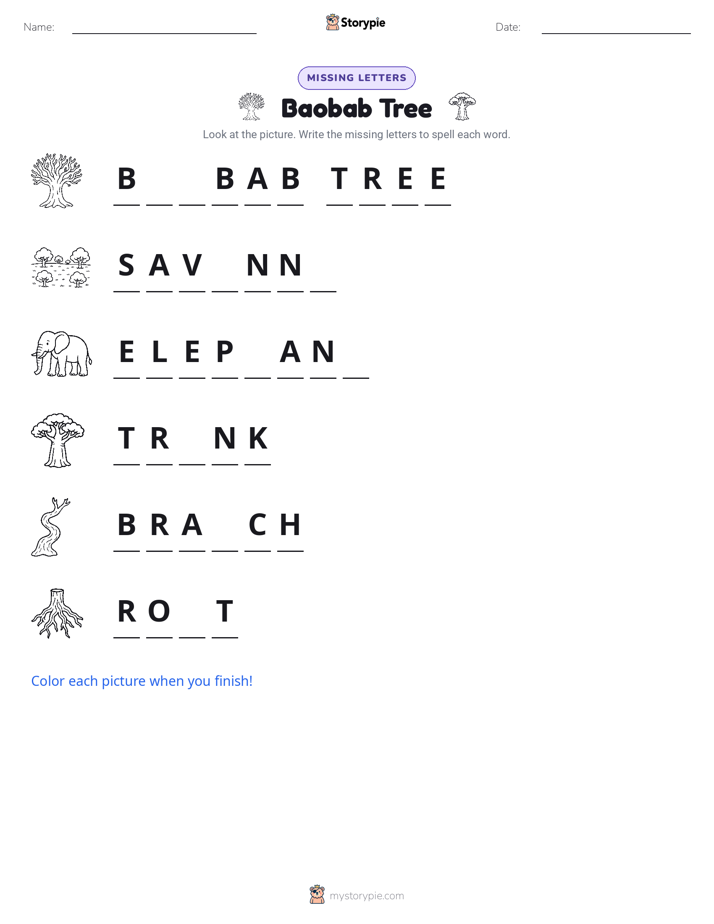
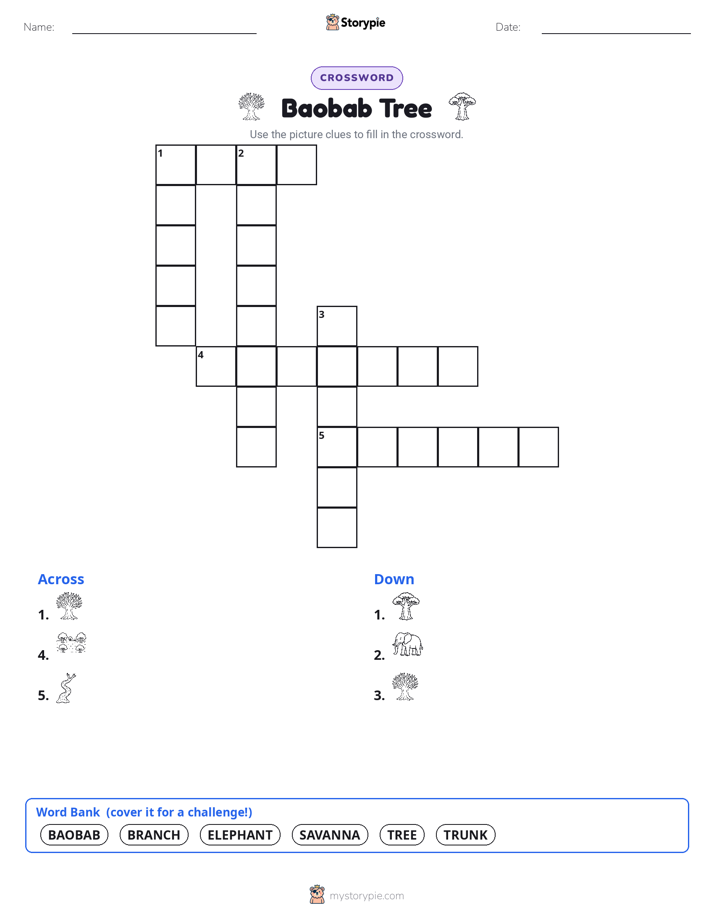
Print & create
Answer keys·No prep·Free with an account
28 worksheets · answer keys · full story · quiz · Ages 8-10 · CEFR B1
Plus adds 208,000+ more stories in 27 languages, audio for every one, and printables for all of them.
Just want Baobab Tree?
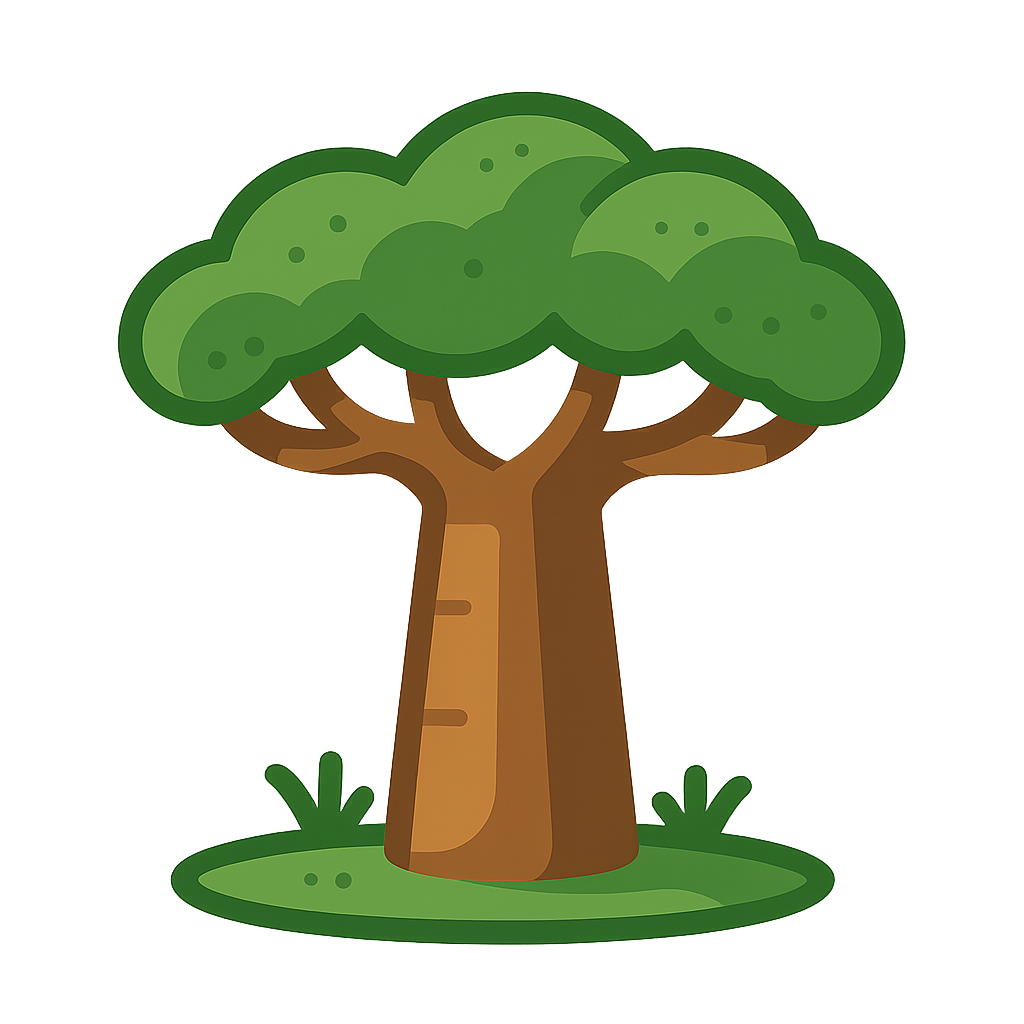
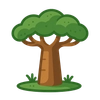
Imagine a tree so wide it would take ten of your friends holding hands to hug it all the way around. My trunk is thick and smooth, almost like an elephant’s skin, and if you look up, you might get a little confused. My branches don't spread out with lots of little leaves like most trees you know. Instead, they are thick and twisty, reaching for the clouds like gnarled roots digging into the sky. That’s why some people who see me for the first time call me the 'Upside-Down Tree.' I’ve stood here for a very long time, watching families grow for hundreds, sometimes even thousands, of years, offering my shade from the hot sun. I have a secret power, too. I can store thousands of gallons of water inside my huge trunk, just like a giant water bottle, which helps me survive when the land is dry and thirsty. I am more than just wood and leaves; I am a landmark, a gathering place for communities, and a keeper of ancient stories whispered on the wind. I am the Baobab, but many people know me as the Tree of Life.
My story is as old as the lands I grow in. For thousands of years, I have been a friend to the people of Africa, Madagascar, and Australia. Can you imagine a world without grocery stores or hospitals. For many people, I was both. They carefully peeled my bark to make strong rope and soft cloth, and they used my leaves to make medicines for fevers and aches. My fruit, which looks like a fuzzy, gourd-like pod, is packed with Vitamin C, and its powdery pulp tastes like a tangy treat. Children would crack it open and eat it like candy. I was a shelter from storms, a community center where elders told stories, and a sacred place for ceremonies. Some of my oldest relatives have been standing for over 2,000 years, long before the famous Roman Empire even existed. For a long, long time, my story was known only to the people who lived near me. Then, in the 1750s, a French botanist named Michel Adanson was exploring in Senegal, Africa. When he saw me, he was so amazed by my size and strange shape that he wrote all about me in his books. He even gave my family the scientific name, 'Adansonia,' in his honor. Scientists now know there are nine different species of me. Six of my cousins live only on the island of Madagascar, two live across mainland Africa, and one special cousin lives all the way in Australia. How did it get there. Many scientists believe that millions of years ago, my tough seeds floated on ocean currents all the way from Africa to a new home.
The Tree of Life
Imagine a tree so wide it would take ten of your friends holding hands to hug it all the way around. My trunk is thick and smooth, almost like an elephant’s skin, and if you look up, you might get a little confused. My branches don't spread out with lots of little leaves like most trees you know. Instead, they are thick and twisty, reaching for the clouds like gnarled roots digging into the sky. That’s why some people who see me for the first time call me the 'Upside-Down Tree.' I’ve stood here for a very long time, watching families grow for hundreds, sometimes even thousands, of years, offering my shade from the hot sun. I have a secret power, too. I can store thousands of gallons of water inside my huge trunk, just like a giant water bottle, which helps me survive when the land is dry and thirsty. I am more than just wood and leaves; I am a landmark, a gathering place for communities, and a keeper of ancient stories whispered on the wind. I am the Baobab, but many people know me as the Tree of Life.
My story is as old as the lands I grow in. For thousands of years, I have been a friend to the people of Africa, Madagascar, and Australia. Can you imagine a world without grocery stores or hospitals. For many people, I was both. They carefully peeled my bark to make strong rope and soft cloth, and they used my leaves to make medicines for fevers and aches. My fruit, which looks like a fuzzy, gourd-like pod, is packed with Vitamin C, and its powdery pulp tastes like a tangy treat. Children would crack it open and eat it like candy. I was a shelter from storms, a community center where elders told stories, and a sacred place for ceremonies. Some of my oldest relatives have been standing for over 2,000 years, long before the famous Roman Empire even existed. For a long, long time, my story was known only to the people who lived near me. Then, in the 1750s, a French botanist named Michel Adanson was exploring in Senegal, Africa. When he saw me, he was so amazed by my size and strange shape that he wrote all about me in his books. He even gave my family the scientific name, 'Adansonia,' in his honor. Scientists now know there are nine different species of me. Six of my cousins live only on the island of Madagascar, two live across mainland Africa, and one special cousin lives all the way in Australia. How did it get there. Many scientists believe that millions of years ago, my tough seeds floated on ocean currents all the way from Africa to a new home.
Today, I continue to play a very important role in the world. I am still a vital part of my environment, providing homes for barn owls, swooping bats that pollinate my flowers at night, and countless insects that buzz around my branches. My life is connected to so many others. In recent years, people from all over the world have discovered the power of my fruit, calling it a 'superfood' because it is so full of good things for your body. But I also face new challenges. The world is getting warmer, and the rains don't always come when they used to, which makes it harder for some of my younger family members to grow strong. Even so, I am a symbol of strength, patience, and community. I show everyone that it’s possible to thrive even in the toughest conditions. I hope I can inspire you to be like me: to stand tall, to be a source of help and comfort to others, and to hold onto the stories that make you who you are. I am a living piece of history, always growing, always watching, and always here to inspire.
Wow facts
About
The Baobab is a genus of long-lived trees native to Africa, Madagascar, and Australia, famous for its massive water-storing trunk and cultural significance as the 'Tree of Life.'
Take a Quiz
Question 1 of 5
Why is the Baobab sometimes called the 'Upside-Down Tree'?
Explore next

Want to do even more?
Go beyond exploring. Unlock tools that turn every story into real learning.

Storypie Plus for families
Full stories, quizzes, and printables. Nights and car rides, sorted.
- Unlimited audio stories
- Create Mode: your child stars in the story
- Offline downloads
- Printable worksheets & coloring pages

Why Storypie for Schools
Students engaged. Prep in seconds. Evenings back to you.
- Worksheets & Quizzes
- Classroom Management
- Formative Assessment
- Custom Curriculum & Lesson Plans
- 27 Languages

Why Storypie for Homeschool
Curriculum done. They'll ask for more. Hours back in your day.
- Worksheet Generator
- First-Person Audio Stories
- Built-in Comprehension Quizzes
- Custom Curriculum & Lesson Plans
- Print & Go Activities