English

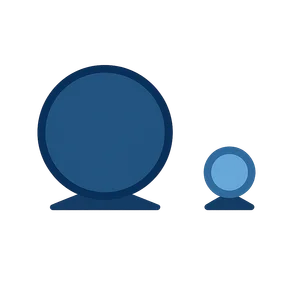
Big and Small: Comparing Size
The fundamental concept of comparing size, scale, and magnitude…
Reads at Grades K-2 Listens at K–3
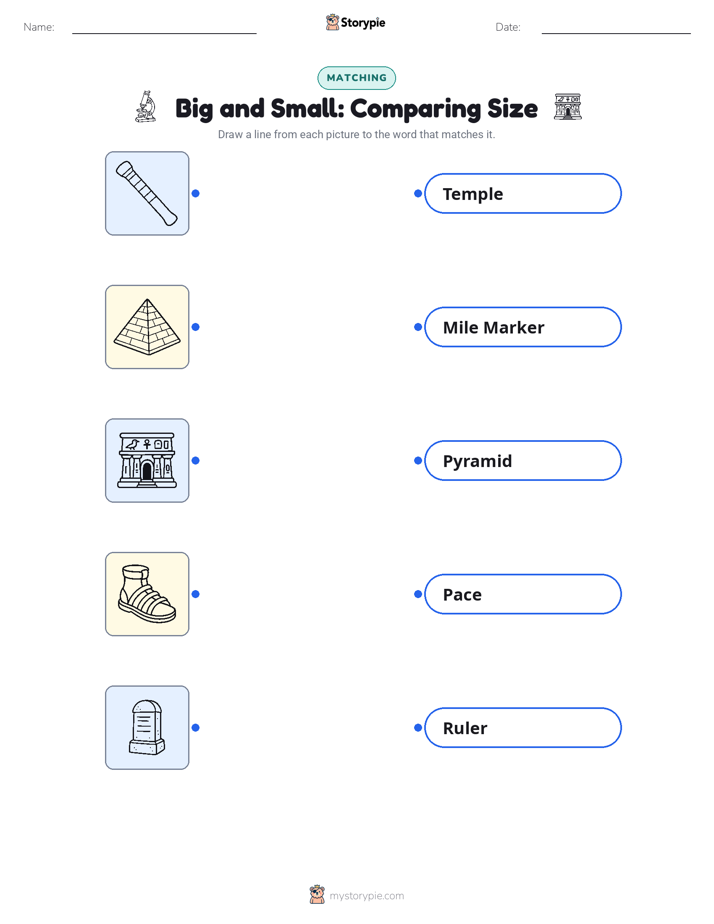
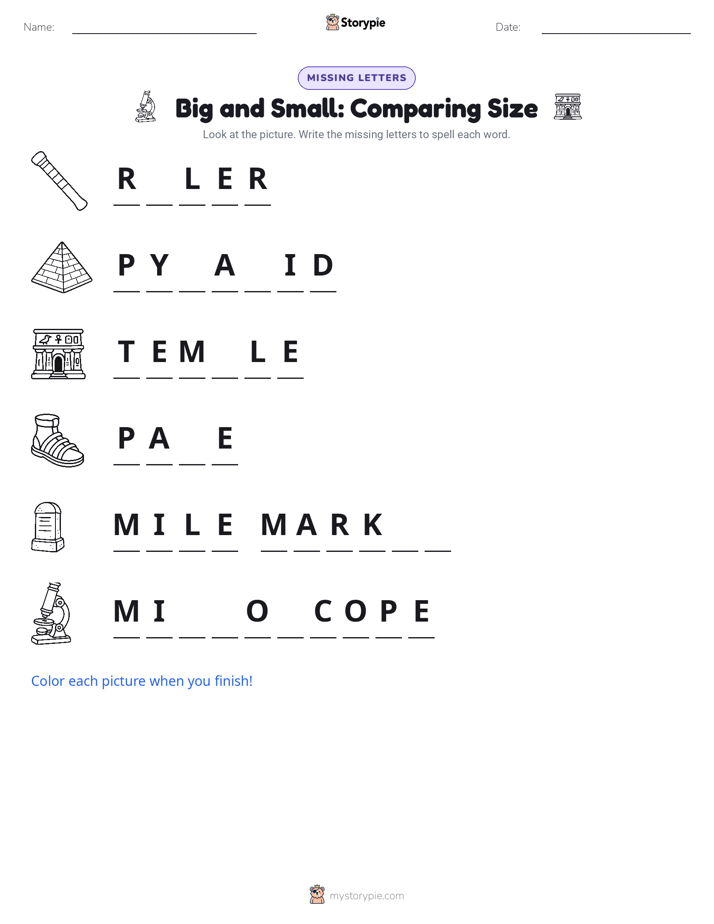
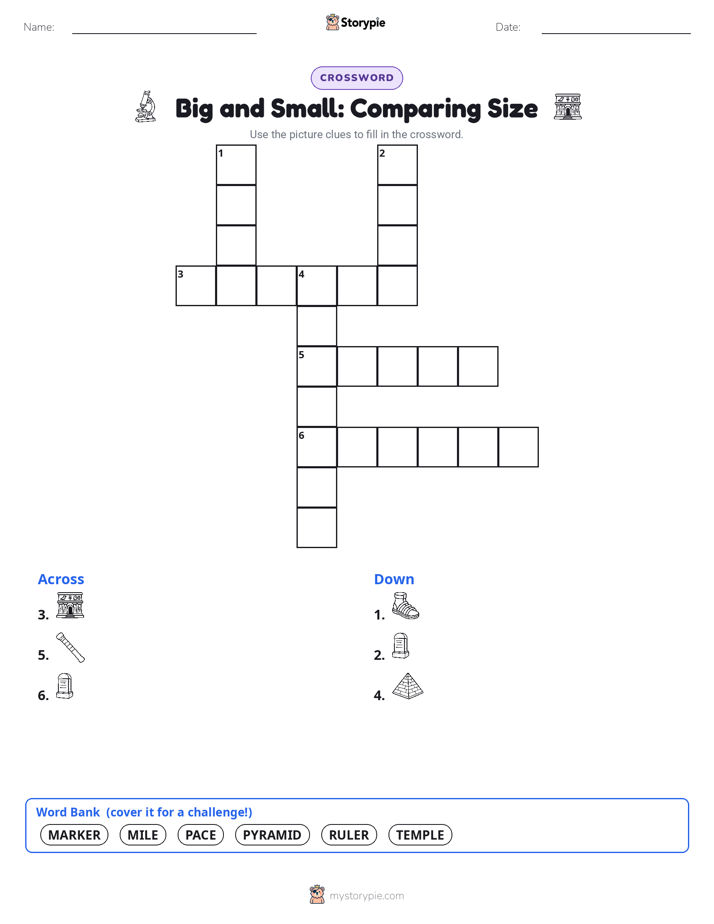
Print & create
Answer keys·No prep·Free with an account
28 worksheets · answer keys · full story · quiz · Ages 6-8 · CEFR A2
Plus adds 244,000+ more stories in 27 languages, audio for every one, and printables for all of them.
Just want Big and Small: Comparing Size?

Have you ever held a tiny, red ladybug with black spots as it tickled your palm. Now, have you looked all the way up at a giant, rough-barked tree that seems to touch the clouds. Think of a fluffy, little puppy that can curl up in your lap, and then picture a huge elephant with floppy ears and a long trunk that could spray water high into the air. The world is full of amazing opposites, things that are teeny-tiny and things that are super-duper big. Have you ever wondered how we know which is which. That's where I come in. I help you see the difference. I am the idea of Big and Small. I am how you Compare Size.
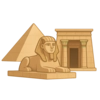
For a very, very long time, people didn't have rulers or measuring tapes. So, what did they do when they needed to know how big something was. They used the handiest tools they had: their own bodies. Way back around 3000 BCE, in a sunny land called Egypt, people were building enormous, pointy buildings called pyramids. To make sure the walls were straight and the blocks fit just right, the ancient Egyptians used a special measurement. They measured from a person's elbow all the way to the tip of their middle finger and called it a 'cubit'. It was a great idea that helped them build some of the biggest structures in the world. But they soon discovered a tricky problem. What happens if the builder has very long arms, but his helper has short arms. Their cubits would be different sizes. That could make a wall wobbly. People all over the world realized they needed a way to measure things that would be the exact same for everybody, no matter how tall or small they were. So, they started creating tools. Finally, in the 1790s, some very smart people in a country called France invented a fantastic system. They called it the metric system. They created units like the 'meter' and the 'centimeter' that were always the same length. A centimeter in France was the same as a centimeter in Egypt or anywhere else. Now, everyone could speak the same language of size.
The Story of Big and Small
Have you ever held a tiny, red ladybug with black spots as it tickled your palm. Now, have you looked all the way up at a giant, rough-barked tree that seems to touch the clouds. Think of a fluffy, little puppy that can curl up in your lap, and then picture a huge elephant with floppy ears and a long trunk that could spray water high into the air. The world is full of amazing opposites, things that are teeny-tiny and things that are super-duper big. Have you ever wondered how we know which is which. That's where I come in. I help you see the difference. I am the idea of Big and Small. I am how you Compare Size.
For a very, very long time, people didn't have rulers or measuring tapes. So, what did they do when they needed to know how big something was. They used the handiest tools they had: their own bodies. Way back around 3000 BCE, in a sunny land called Egypt, people were building enormous, pointy buildings called pyramids. To make sure the walls were straight and the blocks fit just right, the ancient Egyptians used a special measurement. They measured from a person's elbow all the way to the tip of their middle finger and called it a 'cubit'. It was a great idea that helped them build some of the biggest structures in the world. But they soon discovered a tricky problem. What happens if the builder has very long arms, but his helper has short arms. Their cubits would be different sizes. That could make a wall wobbly. People all over the world realized they needed a way to measure things that would be the exact same for everybody, no matter how tall or small they were. So, they started creating tools. Finally, in the 1790s, some very smart people in a country called France invented a fantastic system. They called it the metric system. They created units like the 'meter' and the 'centimeter' that were always the same length. A centimeter in France was the same as a centimeter in Egypt or anywhere else. Now, everyone could speak the same language of size.
You might not use a cubit anymore, but you still use me every single day. I'm there with you when you carefully stack your blocks to see who can build the tallest tower before it topples over. I'm in the kitchen with you when you follow a recipe that calls for a big cup of flour but only a tiny pinch of salt. When you go to the store, I'm the one who helps you and your parents find shoes that aren't too big or too small, but are just the right size to let you run and play comfortably. I help you make sense of the wonderful world around you, from the tiniest grain of sand on the beach to the biggest, brightest star in the night sky. I give you a way to explore, create, and understand your place in it all.
Wow facts
About
The fundamental concept of comparing size, scale, and magnitude, which forms the basis of measurement and helps us understand the world from the microscopic to the cosmic.
Take a Quiz
Question 1 of 4
Why was using an arm's length, or a 'cubit', a tricky way to measure things?
Explore next





Want to do even more?
Go beyond exploring. Unlock tools that turn every story into real learning.

Storypie Plus for families
Full stories, quizzes, and printables. Nights and car rides, sorted.
- Unlimited audio stories
- Create Mode: your child stars in the story
- Offline downloads
- Printable worksheets & coloring pages

Why Storypie for Schools
Students engaged. Prep in seconds. Evenings back to you.
- Worksheets & Quizzes
- Classroom Management
- Formative Assessment
- Custom Curriculum & Lesson Plans
- 27 Languages

Why Storypie for Homeschool
Curriculum done. They'll ask for more. Hours back in your day.
- Worksheet Generator
- First-Person Audio Stories
- Built-in Comprehension Quizzes
- Custom Curriculum & Lesson Plans
- Print & Go Activities