English

Camouflage
Camouflage is the use of coloration or patterns to conceal or disguise by blending in with the surrounding…
Reads at Grades 3–5 Listens at Grades 1–5
Print & create
Answer keys·No prep·Free with an account
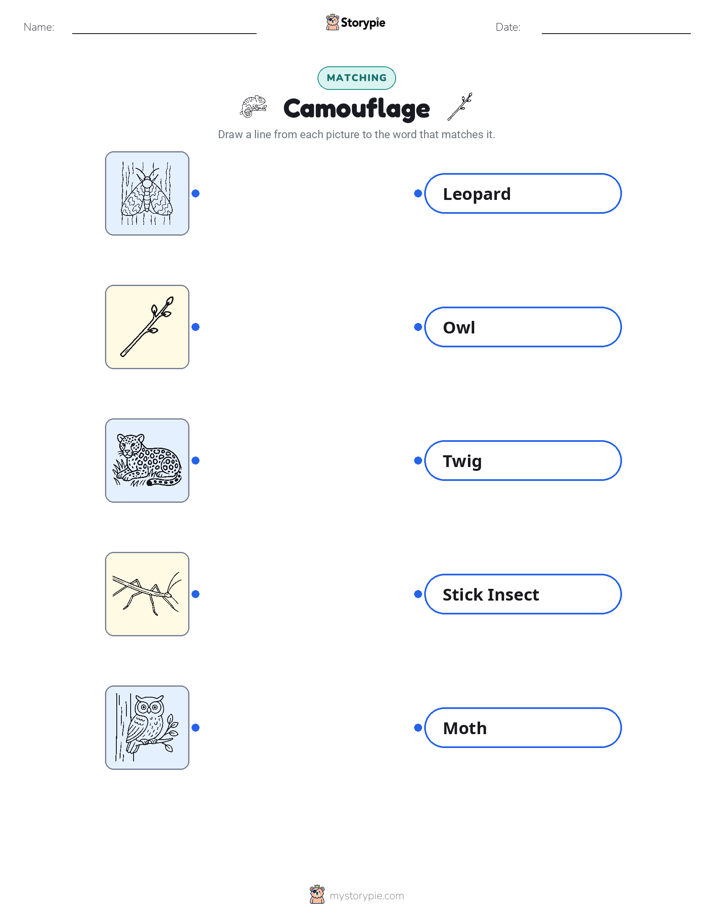
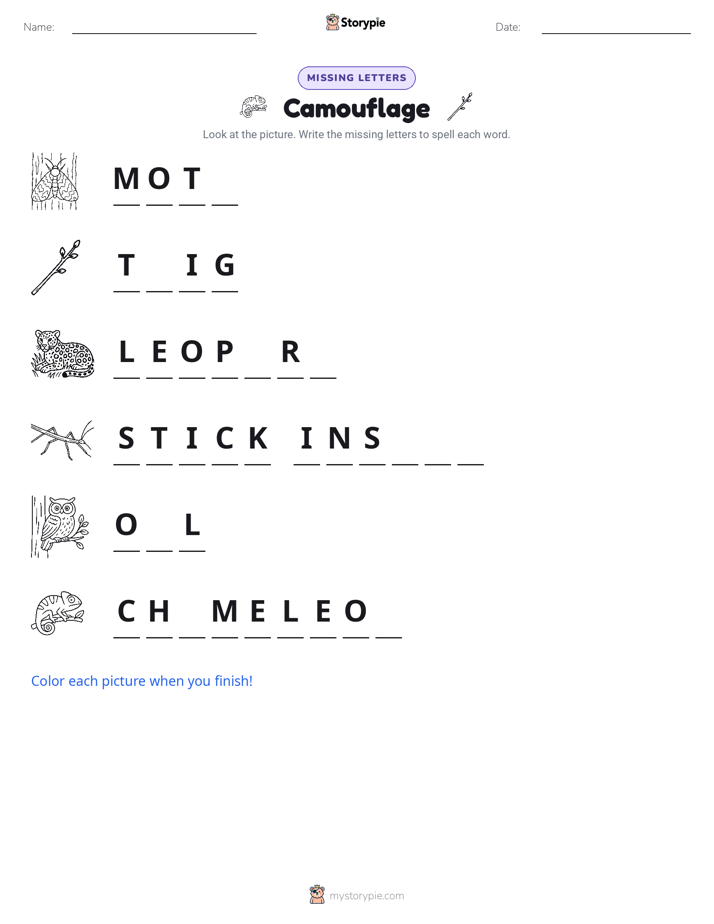
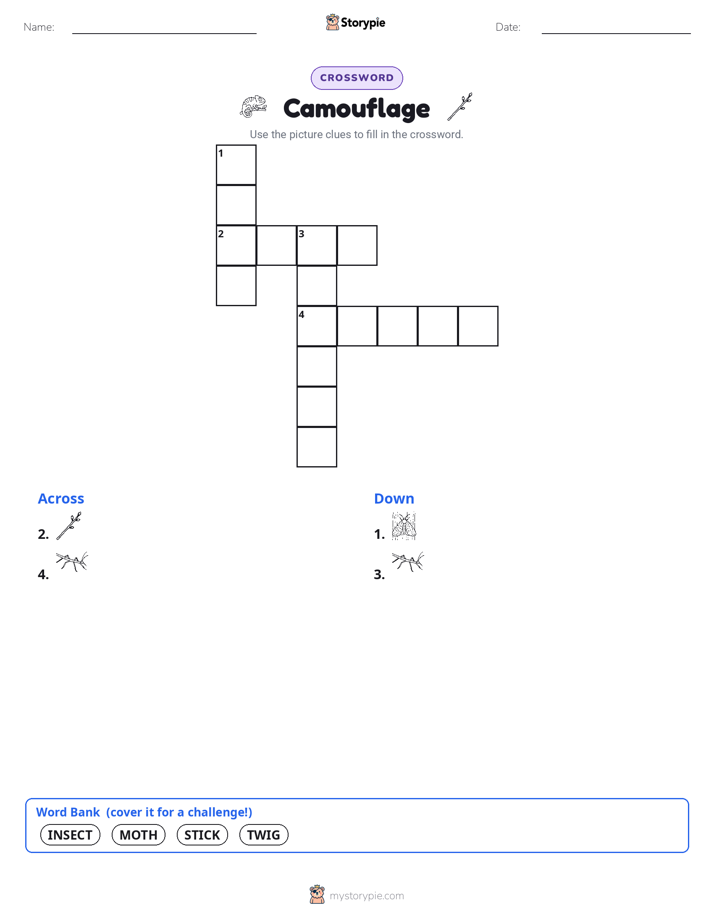
28 worksheets · answer keys · full story · quiz · Ages 8-10 · CEFR B1
Plus adds 164,000+ more stories in 27 languages, audio for every one, and printables for all of them.
Just want Camouflage?

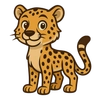
Have you ever felt like you were invisible? Like you could blend into the background so perfectly that no one would even know you were there? I give that superpower to animals every single day. I am the pattern on a leopard’s coat that looks just like sunlight dappling through leaves. I am the bumpy, brown color of a toad that makes it disappear on the forest floor, and the snowy white fur of a polar bear that vanishes in a blizzard. For millions of years, I have been nature’s greatest secret, helping creatures stay safe from predators or sneak up on their next meal. I am the art of not being seen, the magic of matching your surroundings. People didn’t invent me; they learned about me by watching the clever animals I help protect. They saw how a stick insect could vanish on a branch and how a flounder could disappear into the sandy seafloor. Can you imagine how many secrets nature holds? Humans looked closely and wondered if they could borrow my trick. Hello, I’m Camouflage.
For a very long time, humans didn’t use me for fighting. In fact, soldiers did the opposite. They wore incredibly bright uniforms—like the famous red coats of the British army—so they could be seen easily and look impressive on the battlefield. It was a sign of discipline and bravery to march in neat, colorful lines. But as weapons like rifles became powerful enough to shoot accurately from far away, being easy to see became very, very dangerous. Standing out was no longer brave; it was a huge risk. Around the 1850s, British soldiers serving in India noticed how hard it was to see local people and animals against the dusty ground. They had a clever idea and started dyeing their white uniforms with tea, mud, and spices to create a dusty, yellowish-brown color they called 'khaki,' which means 'dust-colored' in the local language. It was a huge change. For the first time, large groups of soldiers were trying to blend in instead of stand out. They were finally learning the lesson that animals had known all along: sometimes, the best way to be strong is to be unseen.
The Art of Blending In
Have you ever felt like you were invisible? Like you could blend into the background so perfectly that no one would even know you were there? I give that superpower to animals every single day. I am the pattern on a leopard’s coat that looks just like sunlight dappling through leaves. I am the bumpy, brown color of a toad that makes it disappear on the forest floor, and the snowy white fur of a polar bear that vanishes in a blizzard. For millions of years, I have been nature’s greatest secret, helping creatures stay safe from predators or sneak up on their next meal. I am the art of not being seen, the magic of matching your surroundings. People didn’t invent me; they learned about me by watching the clever animals I help protect. They saw how a stick insect could vanish on a branch and how a flounder could disappear into the sandy seafloor. Can you imagine how many secrets nature holds? Humans looked closely and wondered if they could borrow my trick. Hello, I’m Camouflage.
For a very long time, humans didn’t use me for fighting. In fact, soldiers did the opposite. They wore incredibly bright uniforms—like the famous red coats of the British army—so they could be seen easily and look impressive on the battlefield. It was a sign of discipline and bravery to march in neat, colorful lines. But as weapons like rifles became powerful enough to shoot accurately from far away, being easy to see became very, very dangerous. Standing out was no longer brave; it was a huge risk. Around the 1850s, British soldiers serving in India noticed how hard it was to see local people and animals against the dusty ground. They had a clever idea and started dyeing their white uniforms with tea, mud, and spices to create a dusty, yellowish-brown color they called 'khaki,' which means 'dust-colored' in the local language. It was a huge change. For the first time, large groups of soldiers were trying to blend in instead of stand out. They were finally learning the lesson that animals had known all along: sometimes, the best way to be strong is to be unseen.
My biggest job started during a huge conflict called World War I, which began in 1914. By then, the old, colorful uniforms were gone, but soldiers, tents, and big cannons were still easy targets for enemies flying in airplanes or looking through binoculars. The battlefields were full of mud and trenches, and staying hidden meant staying alive. In 1915, the French army had a brilliant idea. They created a special unit and asked a team of artists, led by a painter named Lucien-Victor Guirand de Scévola, to help them hide. These artists, called 'camoufleurs,' used their knowledge of color, light, and shadow to paint everything from helmets to trucks with splotches of green, brown, and black. They made giant nets to cover cannons and observation posts, making them look like part of the landscape. The French called this new art 'camouflage.' Soon, other countries were doing it too. I even went to sea. In 1917, a British artist named Norman Wilkinson invented 'Dazzle' camouflage for ships. He painted them with wild stripes and zig-zags, not to hide them, but to confuse enemies so they couldn't tell how fast or which way the ship was going. It was a clever trick to fool their eyes.
Today, I am more creative than ever. I have evolved from simple colors and painted splotches to something much more advanced. Soldiers have special patterns designed by computers with tiny pixels that break up their shape and help them blend into deserts, forests, and even snowy mountains. But my work isn't just for the military anymore. I've become a helpful tool for people who love nature. Wildlife photographers and scientists wear my patterns to get close to shy animals without disturbing them, allowing them to capture amazing pictures and learn new things. I’ve even jumped into the world of fashion, where you can find my patterns on backpacks, jackets, and hats as a cool style. I am a reminder that the natural world is full of amazing ideas just waiting to be discovered. I show how observing carefully and understanding your environment can be a kind of superpower. Whether I’m helping a tiny frog hide on a leaf or a scientist study a rare bird, I am the beautiful art of blending in, a quiet secret that is all around you.
Wow facts
About
Camouflage is the use of coloration or patterns to conceal or disguise by blending in with the surrounding environment, a technique used by both animals in nature and humans, especially in military contexts.
Take a Quiz
Question 1 of 5
In the story, the British army dyed their uniforms a color called 'khaki.' What does the word 'khaki' describe?
Explore next





Want to do even more?
Go beyond exploring. Unlock tools that turn every story into real learning.

Storypie Plus for families
Full stories, quizzes, and printables. Nights and car rides, sorted.
- Unlimited audio stories
- Create Mode: your child stars in the story
- Offline downloads
- Printable worksheets & coloring pages

Why Storypie for Schools
Students engaged. Prep in seconds. Evenings back to you.
- Worksheets & Quizzes
- Classroom Management
- Formative Assessment
- Custom Curriculum & Lesson Plans
- 27 Languages

Why Storypie for Homeschool
Curriculum done. They'll ask for more. Hours back in your day.
- Worksheet Generator
- First-Person Audio Stories
- Built-in Comprehension Quizzes
- Custom Curriculum & Lesson Plans
- Print & Go Activities