English

Capture the Flag
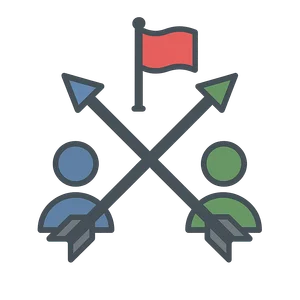
Capture the Flag is a traditional outdoor game where two teams each have a flag…
Reads at Grades 6–8 Listens at Grades 4–8
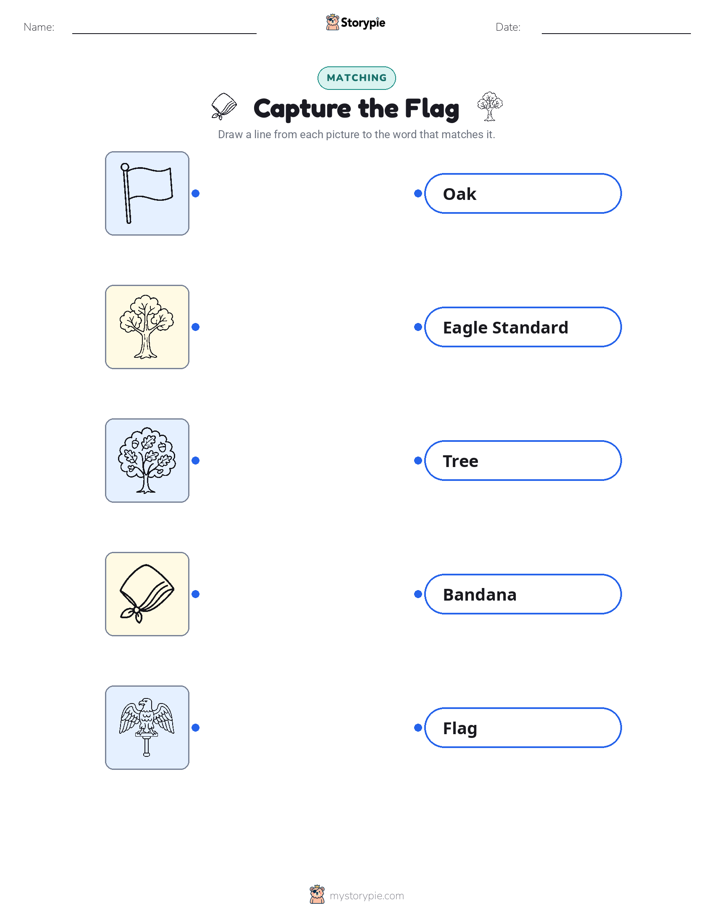
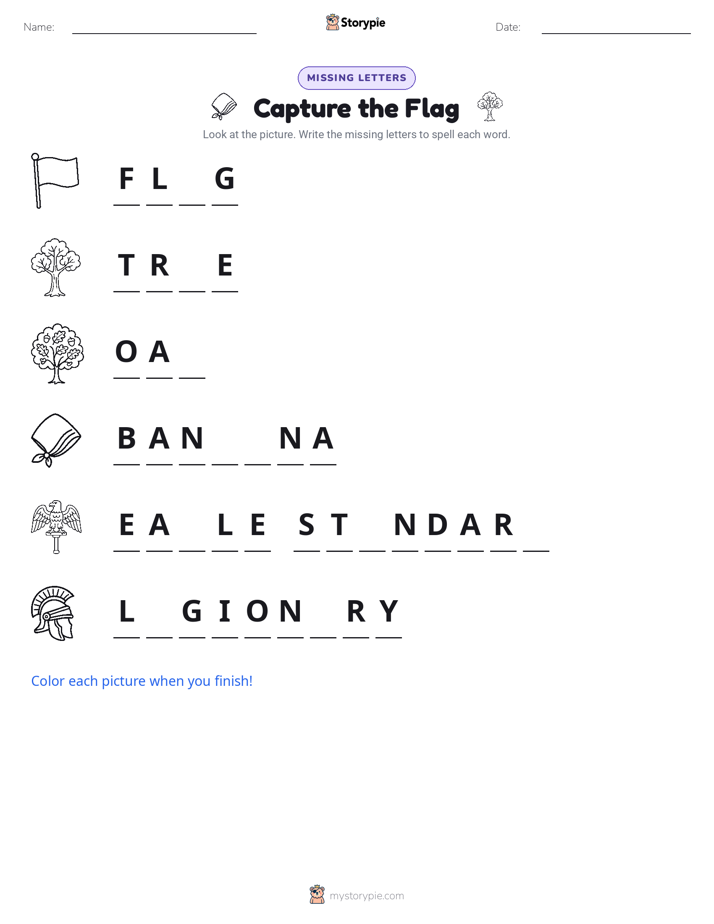
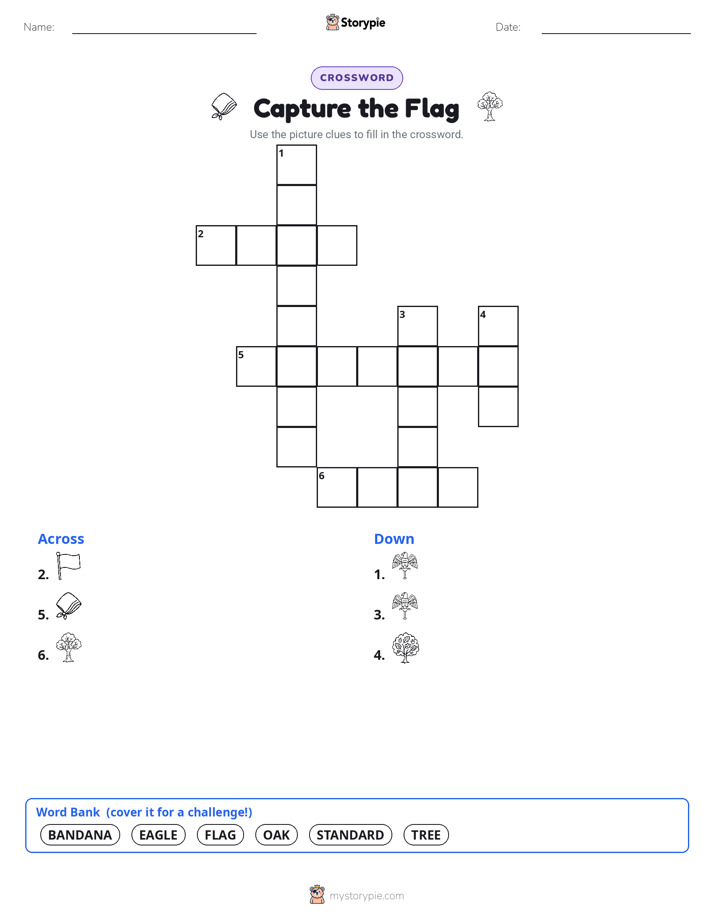
Print & create
Answer keys·No prep·Free with an account
28 worksheets · answer keys · full story · quiz · Ages 10-12 · CEFR B2
Plus adds 244,000+ more stories in 27 languages, audio for every one, and printables for all of them.
Just want Capture the Flag?

The sun dips below the trees, casting long, spooky shadows across the field. Your heart thumps against your ribs like a drum, a steady rhythm of anticipation and excitement. You crouch low behind a thick oak tree, its rough bark pressing into your back, trying to make yourself invisible. Your territory is behind you, and somewhere within it, your team's most precious treasure is hidden. But your eyes are fixed on the other side, on the enemy's land. Your mission is clear: sneak past their guards, find their prize, and bring it back without getting caught. Every rustle of leaves, every snap of a twig sends a jolt through you. Is it a friend or a foe? You communicate with your teammates through silent signals—a nod, a pointed finger, a shared, determined glance. The tension is a wire pulled tight, ready to snap at any moment. Then, a sudden dash. A chase. A triumphant shout echoes through the twilight as the prize is seized and the finish line is crossed. That thrilling moment, that perfect blend of strategy, stealth, and speed? That’s me. I am the exciting, heart-pounding game of Capture the Flag.
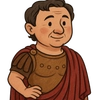
Though you know me as a game, my spirit is ancient, forged in the heat of real battles and the seriousness of military missions. To understand my true beginnings, you must travel back in time, over two thousand years ago, to the disciplined world of the Roman Empire. Imagine legions of soldiers marching across continents, their sandals kicking up dust on roads they built themselves. Above them, held high on a pole, glittered a golden eagle with its wings outstretched. This was the aquila, their eagle standard. It was more than just a symbol; it was the soul of their legion. It represented their strength, their loyalty to Rome, and the favor of their gods. For a Roman soldier, protecting the aquila was their most sacred duty. In the chaos of battle, enemies would fight ferociously to break through the Roman lines and seize it. Capturing an enemy’s standard was the ultimate victory, a way of saying, “We have broken your spirit.” Losing their aquila, on the other hand, was the ultimate disgrace for a Roman legion. It was such a profound dishonor that entire legions were sometimes disbanded in shame, and they would go to extraordinary lengths, fighting dangerous campaigns just to recover a lost eagle. So you see, long before I was about colorful bandanas in a park, I was about life, death, and the very honor of an army. I was not a game then, but a deadly serious contest where the flag was the heart of the fight.
I Am Capture the Flag
The sun dips below the trees, casting long, spooky shadows across the field. Your heart thumps against your ribs like a drum, a steady rhythm of anticipation and excitement. You crouch low behind a thick oak tree, its rough bark pressing into your back, trying to make yourself invisible. Your territory is behind you, and somewhere within it, your team's most precious treasure is hidden. But your eyes are fixed on the other side, on the enemy's land. Your mission is clear: sneak past their guards, find their prize, and bring it back without getting caught. Every rustle of leaves, every snap of a twig sends a jolt through you. Is it a friend or a foe? You communicate with your teammates through silent signals—a nod, a pointed finger, a shared, determined glance. The tension is a wire pulled tight, ready to snap at any moment. Then, a sudden dash. A chase. A triumphant shout echoes through the twilight as the prize is seized and the finish line is crossed. That thrilling moment, that perfect blend of strategy, stealth, and speed? That’s me. I am the exciting, heart-pounding game of Capture the Flag.
Though you know me as a game, my spirit is ancient, forged in the heat of real battles and the seriousness of military missions. To understand my true beginnings, you must travel back in time, over two thousand years ago, to the disciplined world of the Roman Empire. Imagine legions of soldiers marching across continents, their sandals kicking up dust on roads they built themselves. Above them, held high on a pole, glittered a golden eagle with its wings outstretched. This was the aquila, their eagle standard. It was more than just a symbol; it was the soul of their legion. It represented their strength, their loyalty to Rome, and the favor of their gods. For a Roman soldier, protecting the aquila was their most sacred duty. In the chaos of battle, enemies would fight ferociously to break through the Roman lines and seize it. Capturing an enemy’s standard was the ultimate victory, a way of saying, “We have broken your spirit.” Losing their aquila, on the other hand, was the ultimate disgrace for a Roman legion. It was such a profound dishonor that entire legions were sometimes disbanded in shame, and they would go to extraordinary lengths, fighting dangerous campaigns just to recover a lost eagle. So you see, long before I was about colorful bandanas in a park, I was about life, death, and the very honor of an army. I was not a game then, but a deadly serious contest where the flag was the heart of the fight.
For centuries, I remained on the battlefield, a brutal reality of warfare. But as time marched on, military leaders began to wonder if they could capture my strategic essence without the actual danger. In the 19th century, in places like Prussia, brilliant military thinkers developed something called 'Kriegsspiel', which literally means 'war game'. These weren't video games; they were incredibly detailed simulations played on massive maps with tiny blocks representing cavalry, infantry, and artillery. Officers would spend hours huddled over these maps, planning attacks, defending territory, and trying to outmaneuver their opponents. The goal was to train their minds for the complexities of a real battle, to learn how to think two steps ahead. They were capturing the strategic heart of my ancient form. Then, a man came along who saw my potential not just for soldiers, but for young people. His name was Robert Baden-Powell, a British Army officer who was a master of scouting and reconnaissance. He knew how to move unseen, how to track an enemy, and how to work with a small team to achieve a big objective. After he became a national hero, he wanted to share these skills with boys back home, but not to train them for war. He wanted to teach them resourcefulness, observation, and character. On February 1st, 1908, he published a handbook that would change everything: 'Scouting for Boys.' In its pages, he laid out the foundation for the Boy Scout movement. He filled it with exciting games and challenges based on his own military experiences. He took the high-stakes mission of sneaking into an enemy camp and turned it into a thrilling outdoor activity. He gave you a territory to defend and a flag to protect, teaching lessons of teamwork, stealth, and leadership in the most enjoyable way possible. Thanks to Baden-Powell, I left the exclusive world of military strategy and ran free into campgrounds, parks, and backyards all over the globe, becoming the game you know today.
Today, I live a double life, and I couldn't be happier about it. You can find me in my classic form, where the feeling of grass is under your feet and the wind is in your hair. I am the main event at summer camps, the highlight of a school field day, and the go-to game for a birthday party in the park. The thrill of sprinting across that dividing line, your team’s cheers pushing you forward, is as real as ever. But I also discovered a whole new world, a universe made of light and code. In the 1990s, I made a huge leap into the digital realm. Video game designers realized my perfect balance of offense and defense was ideal for multiplayer action. In pioneering games like 'Quake,' players formed teams and battled in virtual arenas to grab each other's digital flags. Suddenly, you could team up with friends from across the city or even across the ocean, planning your strategies through headsets. Whether you're dodging a friend behind a real tree or an opponent's laser blast in a digital castle, my essence remains unchanged. I am a test of wits and a trial of teamwork. I teach you when to lead a charge and when to hang back and defend. I show you that a well-executed plan with your friends is more powerful than one person’s speed alone. I am more than just a way to pass the time; I am a lesson in cooperation, strategy, and friendship, wrapped in the pure joy of a game well played.
Wow facts
About
Capture the Flag is a traditional outdoor game where two teams each have a flag, with the objective being to capture the other team's flag from their base and bring it back to one's own.
Take a Quiz
Question 1 of 5
The story mentions the Roman *aquila*. What does the prefix 'aqua-' or 'aqui-' often relate to, and how is that different from the meaning of *aquila*?
Explore next





Want to do even more?
Go beyond exploring. Unlock tools that turn every story into real learning.

Storypie Plus for families
Full stories, quizzes, and printables. Nights and car rides, sorted.
- Unlimited audio stories
- Create Mode: your child stars in the story
- Offline downloads
- Printable worksheets & coloring pages

Why Storypie for Schools
Students engaged. Prep in seconds. Evenings back to you.
- Worksheets & Quizzes
- Classroom Management
- Formative Assessment
- Custom Curriculum & Lesson Plans
- 27 Languages

Why Storypie for Homeschool
Curriculum done. They'll ask for more. Hours back in your day.
- Worksheet Generator
- First-Person Audio Stories
- Built-in Comprehension Quizzes
- Custom Curriculum & Lesson Plans
- Print & Go Activities