English

Caste System in India
The Caste System is a traditional social hierarchy in India that divides people into ranked groups based on…
Reads at Grades 3–5 Listens at Grades 1–5
Print & create
Answer keys·No prep·Free with an account
28 worksheets · answer keys · full story · quiz · Ages 8-10 · CEFR B1
Plus adds 102,000+ more stories in 27 languages, audio for every one, and printables for all of them.
Just want Caste System in India?
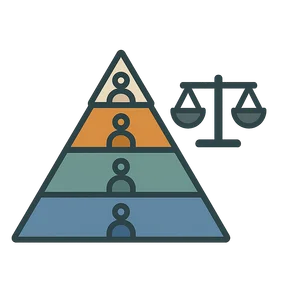
Can you imagine being born onto an invisible ladder. This ladder is so powerful that it decides what job you will do when you grow up, who your friends will be, and even who you are allowed to share a meal with. You can’t see this ladder, but everyone knows it is there, and for thousands of years, it was the most important thing in many people's lives. It told them where they belonged, from the highest rung to the very lowest, and it was almost impossible to move. I am that invisible ladder. I am a set of rules that organized society in India for a very long time, and my name is the Caste System.
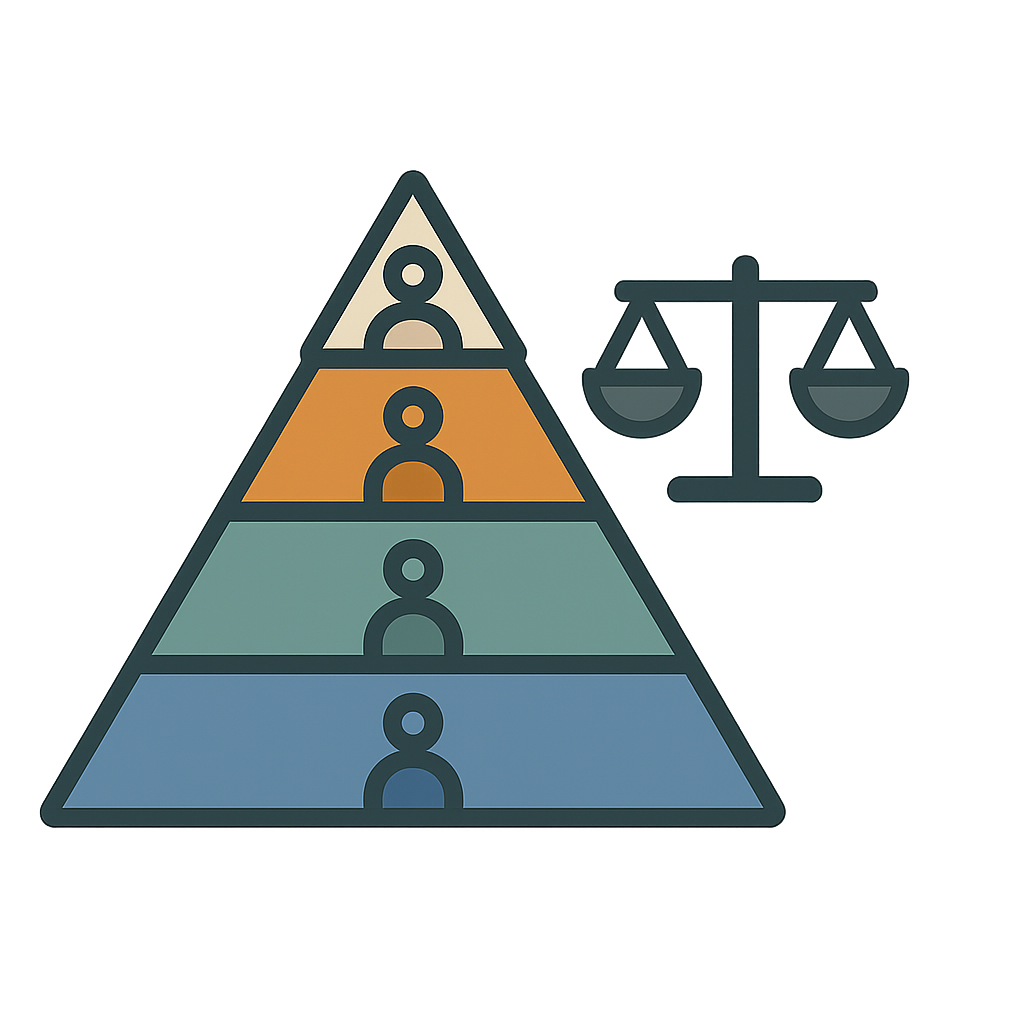
I wasn't built in a single day. My first ideas began to take shape a very long time ago, over 3,000 years, in fact, around 1500 BCE in ancient India. People were trying to figure out how to organize their world, so they thought of society as being like a person. At the top, like the head that does the thinking, were the priests and teachers, called Brahmins. They were the ones who studied and taught others. Next came the arms, strong and protective, who were the warriors and rulers called Kshatriyas. They defended the kingdom. The legs, which support the body, were the merchants and farmers, known as Vaishyas, who kept society running with trade and food. And finally, the feet, which do all the hard work, were the laborers and workers, called the Shudras. These ideas were written down in ancient holy books, like one called the Rigveda, and it was how people first started to understand their place in the world.
The Invisible Ladder
Can you imagine being born onto an invisible ladder. This ladder is so powerful that it decides what job you will do when you grow up, who your friends will be, and even who you are allowed to share a meal with. You can’t see this ladder, but everyone knows it is there, and for thousands of years, it was the most important thing in many people's lives. It told them where they belonged, from the highest rung to the very lowest, and it was almost impossible to move. I am that invisible ladder. I am a set of rules that organized society in India for a very long time, and my name is the Caste System.
I wasn't built in a single day. My first ideas began to take shape a very long time ago, over 3,000 years, in fact, around 1500 BCE in ancient India. People were trying to figure out how to organize their world, so they thought of society as being like a person. At the top, like the head that does the thinking, were the priests and teachers, called Brahmins. They were the ones who studied and taught others. Next came the arms, strong and protective, who were the warriors and rulers called Kshatriyas. They defended the kingdom. The legs, which support the body, were the merchants and farmers, known as Vaishyas, who kept society running with trade and food. And finally, the feet, which do all the hard work, were the laborers and workers, called the Shudras. These ideas were written down in ancient holy books, like one called the Rigveda, and it was how people first started to understand their place in the world.
For many centuries, those four big steps were the main way people thought about me. But as time went on, my rules grew much more detailed and strict. A book called the Manusmriti, which was written sometime between the 2nd century BCE and the 2nd century CE, laid out hundreds of laws that made my ladder very rigid. The four main groups, the varnas, split into thousands of smaller groups called jatis. Your jati was usually tied to a specific job your family had done for generations, like being a potter, a weaver, or a barber. The most important rule was that you were born into your jati, and you had to stay there for your whole life. I also created a very sad situation. Some people were considered to be completely outside of my system, below the lowest rung. They were called 'Dalits' or 'Untouchables' and were treated very unfairly, which caused a great deal of pain and sorrow.
After I had been in place for thousands of years, people began to look at my ladder and ask, “Is this fair.”. Brave leaders started to challenge my rules. A man named Dr. B.R. Ambedkar, who was born into the Dalit community and experienced my unfairness firsthand, became a powerful voice for change. He argued that where you were born shouldn't decide how you were treated. Another famous leader, Mahatma Gandhi, also worked to unite people and end the cruel treatment of those at the bottom of my ladder. When India finally became an independent country, it was time for a new beginning. On January 26th, 1950, a new set of rules for the country, the Constitution of India, was adopted. It officially outlawed any discrimination based on caste and made the practice of 'untouchability' illegal. It was a giant step toward taking my old, unfair ladder down for good.
Today, I am no longer the law of the land in India. But after thousands of years, my shadow can sometimes still be seen in the way people think or act. The good news is that people are working hard to build something new in my place. Instead of an invisible ladder that separates everyone, they are trying to build a circle, where everyone can stand together as equals, holding hands. They are teaching a new lesson: what matters most isn't the group you are born into. What truly matters is the kindness you show, the dreams you chase, and the way you help others. That is the idea that truly connects everyone, building a world that is much stronger and more beautiful than any ladder.
Wow facts
About
The Caste System is a traditional social hierarchy in India that divides people into ranked groups based on their heredity and occupation, with origins tracing back over 3,000 years.
Take a Quiz
Question 1 of 5
The story says the Caste System's rules became more 'rigid'. What is another word for rigid?
Explore next






Want to do even more?
Go beyond exploring. Unlock tools that turn every story into real learning.

Storypie Plus for families
Full stories, quizzes, and printables. Nights and car rides, sorted.
- Unlimited audio stories
- Create Mode: your child stars in the story
- Offline downloads
- Printable worksheets & coloring pages

Why Storypie for Schools
Students engaged. Prep in seconds. Evenings back to you.
- Worksheets & Quizzes
- Classroom Management
- Formative Assessment
- Custom Curriculum & Lesson Plans
- 27 Languages

Why Storypie for Homeschool
Curriculum done. They'll ask for more. Hours back in your day.
- Worksheet Generator
- First-Person Audio Stories
- Built-in Comprehension Quizzes
- Custom Curriculum & Lesson Plans
- Print & Go Activities