English

Caste System in India
The Caste System is a traditional social hierarchy in India that divides people into ranked groups based on…
Reads at Grades 6–8 Listens at Grades 4–8
Print & create
Answer keys·No prep·Free with an account
28 worksheets · answer keys · full story · quiz · Ages 10-12 · CEFR B2
Plus adds 102,000+ more stories in 27 languages, audio for every one, and printables for all of them.
Just want Caste System in India?
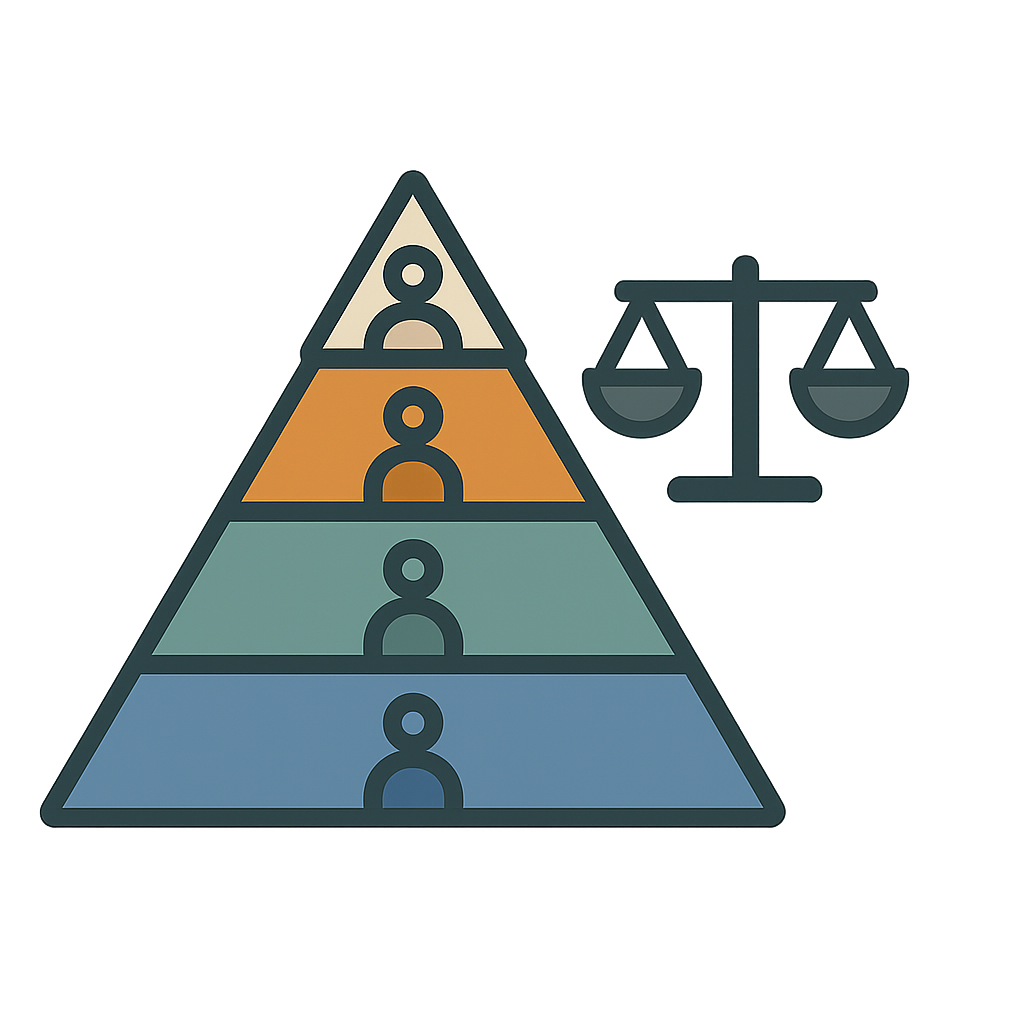
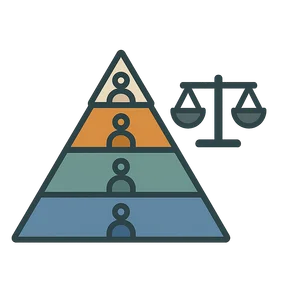
Hello there. You don’t know my name yet, but you’ve felt ideas like me before. I am an idea about where everyone belongs in a community. Imagine a giant building with four main floors. For thousands of years on the Indian subcontinent, I told people that the family you were born into decided which floor you would live on for your entire life. Long, long ago, during what historians call the Vedic Period, around 1500 BCE, people began writing down songs and poems about how society should be organized. In a famous text called the Rigveda, they described a society divided into four groups, called 'varnas.' At the very top were the Brahmins—the priests and teachers. Below them were the Kshatriyas, the rulers and warriors who protected everyone. Next came the Vaishyas, the farmers and merchants who traded goods. And on the bottom floor were the Shudras, who served the other three groups. This was the beginning of me. People called this idea the Varna system, but over time, I would become much more complicated, and you would come to know me as the Caste System.
As centuries passed, I grew from a simple four-floor idea into a skyscraper with thousands of separate rooms. Between 200 BCE and 200 CE, a book called the Manusmriti, or the Laws of Manu, was written. It was like a detailed instruction manual for society, and it made my rules much stricter. I wasn't just about four big groups anymore. I divided people into thousands of smaller communities called 'jatis,' which were often based on a person's specific job. If your father was a potter, you would be a potter. If your mother was a weaver, you would be a weaver. I decided who you could marry, who you could share a meal with, and even where you could live. For many, I provided a sense of community and belonging. But for others, I created great hardship. There was a group of people who were considered outside of my four floors entirely. They were called 'Untouchables,' or Dalits, as they are known today. They were given the jobs that were considered unclean, and they faced terrible discrimination. They were often forced to live separately and were not allowed to use the same wells or enter the same temples as others. For them, I was not a building of order, but a wall that locked them out.
The Story of the Caste System
Hello there. You don’t know my name yet, but you’ve felt ideas like me before. I am an idea about where everyone belongs in a community. Imagine a giant building with four main floors. For thousands of years on the Indian subcontinent, I told people that the family you were born into decided which floor you would live on for your entire life. Long, long ago, during what historians call the Vedic Period, around 1500 BCE, people began writing down songs and poems about how society should be organized. In a famous text called the Rigveda, they described a society divided into four groups, called 'varnas.' At the very top were the Brahmins—the priests and teachers. Below them were the Kshatriyas, the rulers and warriors who protected everyone. Next came the Vaishyas, the farmers and merchants who traded goods. And on the bottom floor were the Shudras, who served the other three groups. This was the beginning of me. People called this idea the Varna system, but over time, I would become much more complicated, and you would come to know me as the Caste System.
As centuries passed, I grew from a simple four-floor idea into a skyscraper with thousands of separate rooms. Between 200 BCE and 200 CE, a book called the Manusmriti, or the Laws of Manu, was written. It was like a detailed instruction manual for society, and it made my rules much stricter. I wasn't just about four big groups anymore. I divided people into thousands of smaller communities called 'jatis,' which were often based on a person's specific job. If your father was a potter, you would be a potter. If your mother was a weaver, you would be a weaver. I decided who you could marry, who you could share a meal with, and even where you could live. For many, I provided a sense of community and belonging. But for others, I created great hardship. There was a group of people who were considered outside of my four floors entirely. They were called 'Untouchables,' or Dalits, as they are known today. They were given the jobs that were considered unclean, and they faced terrible discrimination. They were often forced to live separately and were not allowed to use the same wells or enter the same temples as others. For them, I was not a building of order, but a wall that locked them out.
Even from my earliest days, there were wise people who questioned whether I was fair. Around the 5th century BCE, a teacher named Siddhartha Gautama, who became known as the Buddha, taught that a person’s goodness came from their actions, not the family they were born into. He and many other thinkers challenged my rules. For a long time, though, I remained very powerful. But in the 19th and 20th centuries, a powerful movement for change began to grow. Many brave reformers argued that I was holding India back and causing great suffering. One of the most important voices belonged to a man named B.R. Ambedkar. He was born into a Dalit family in 1891 and experienced my harshest rules firsthand. He was brilliant and studied hard, earning advanced degrees from universities in America and England. When he returned to India, he dedicated his life to fighting for the rights of all people who were treated unfairly by me. He believed that for India to be truly free and modern, it had to break free from my chains.
When India gained its independence in 1947, its new leaders had a chance to build a new kind of society. B.R. Ambedkar became the main architect of India’s new rulebook—the Constitution of India. When it was adopted on January 26th, 1950, it declared that everyone was equal. It officially outlawed discrimination based on caste and made the practice of 'untouchability' illegal. My time as the official rulebook for society was over. The new idea, written into the laws of the land, was that your future should be determined by your dreams and hard work, not by the circumstances of your birth. Of course, getting rid of an idea that has been around for thousands of years isn't easy. My shadow still lingers, and people in India are still working hard to overcome old prejudices and ensure that the promise of equality becomes real for everyone. Understanding my story—both the order I created and the pain I caused—is important. It helps people see why fairness, justice, and kindness are so vital. It reminds us all that we have the power to challenge unfair ideas and build a world where every single person is respected, valued, and free to choose their own path.
Wow facts
About
The Caste System is a traditional social hierarchy in India that divides people into ranked groups based on their heredity and occupation, with origins tracing back over 3,000 years.
Take a Quiz
Question 1 of 5
Who was B.R. Ambedkar, and what motivated him to fight against the Caste System?
Explore next






Want to do even more?
Go beyond exploring. Unlock tools that turn every story into real learning.

Storypie Plus for families
Full stories, quizzes, and printables. Nights and car rides, sorted.
- Unlimited audio stories
- Create Mode: your child stars in the story
- Offline downloads
- Printable worksheets & coloring pages

Why Storypie for Schools
Students engaged. Prep in seconds. Evenings back to you.
- Worksheets & Quizzes
- Classroom Management
- Formative Assessment
- Custom Curriculum & Lesson Plans
- 27 Languages

Why Storypie for Homeschool
Curriculum done. They'll ask for more. Hours back in your day.
- Worksheet Generator
- First-Person Audio Stories
- Built-in Comprehension Quizzes
- Custom Curriculum & Lesson Plans
- Print & Go Activities