English

Cherokee Nation
The Cherokee Nation is a sovereign tribal government of the Cherokee people…
Reads at Grades 3–5 Listens at Grades 1–5
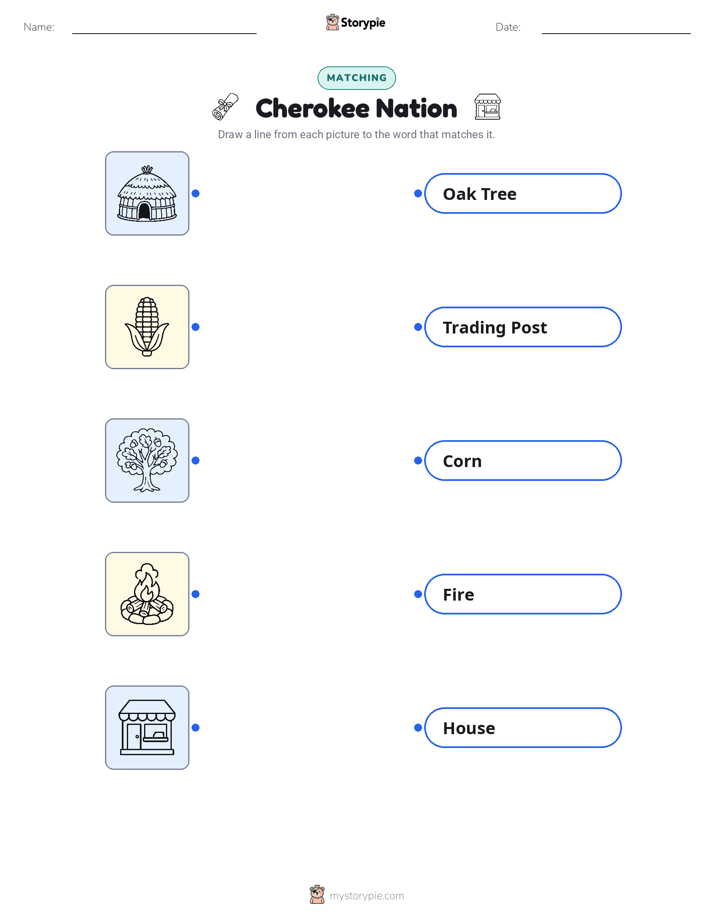
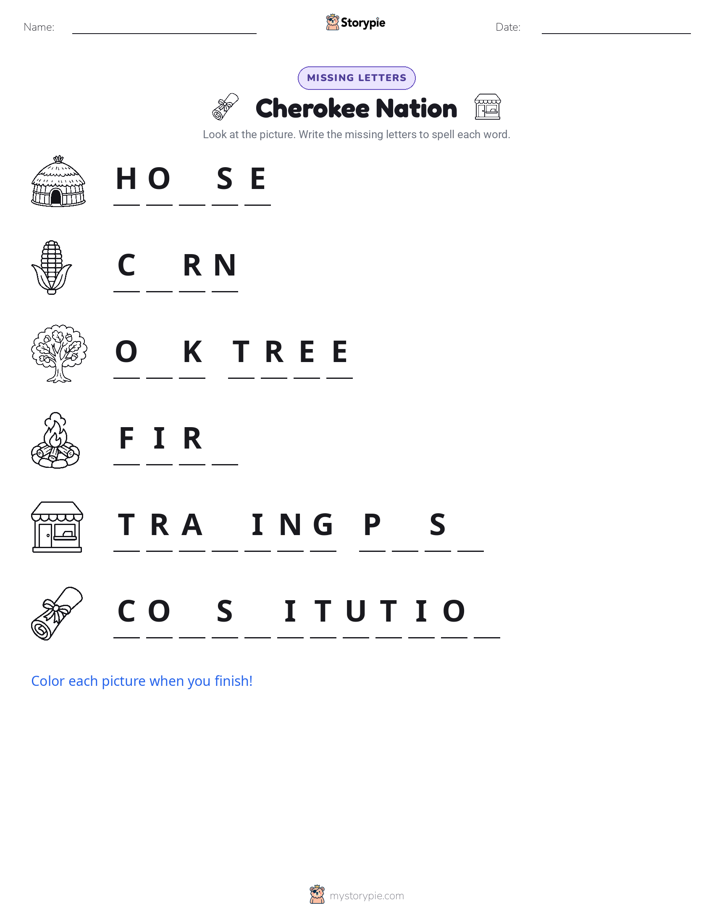
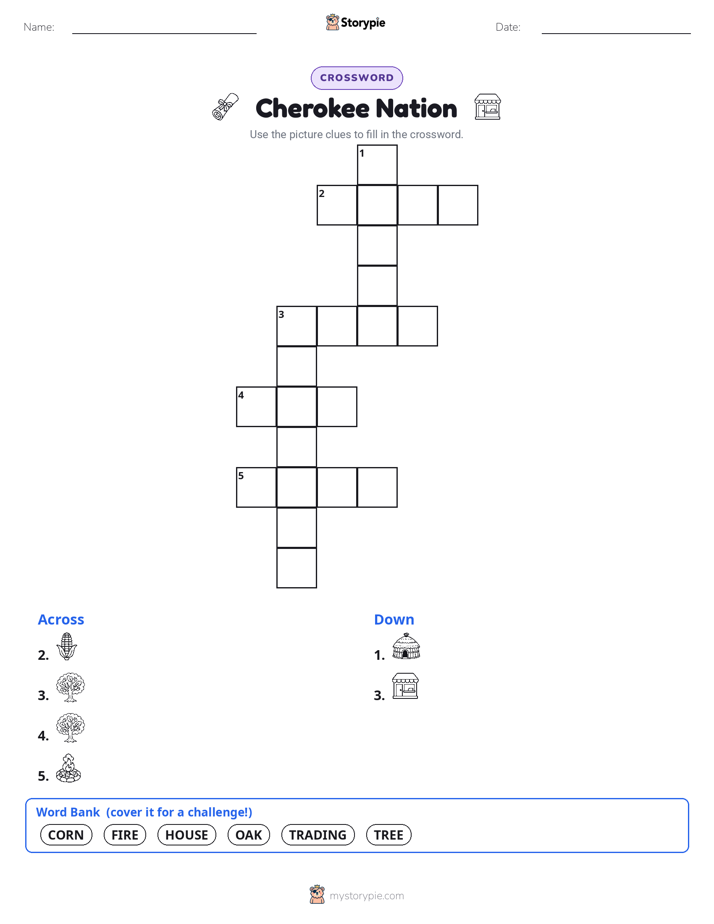
Print & create
Answer keys·No prep·Free with an account
28 worksheets · answer keys · full story · quiz · Ages 8-10 · CEFR B1
Plus adds 102,000+ more stories in 27 languages, audio for every one, and printables for all of them.
Just want Cherokee Nation?
Before you knew me by my modern name, I was a feeling, a community living among the misty mountains and green valleys of what you now call the southeastern United States. Imagine a huge family, where every person knows their place and belongs to a clan passed down from their mother. For thousands of years, my people thrived, learning the secrets of the rivers and forests. We built towns with impressive mounds, farmed the rich soil with corn, beans, and squash, and our lives were guided by ceremonies and stories shared around the fire. I am that family, that connection to the land and to each other, a society built on balance and respect for nature. In my own language, I am called Tsalagi, which means 'the Principal People'. In English, you know me as the Cherokee Nation.
For a long time, our laws, stories, and history were kept alive in our memories and spoken from one generation to the next. But then, a brilliant man named Sequoyah saw how other people used marks on paper to share ideas across great distances and through time. He thought, 'Why can't we do that?'. He spent more than ten years, working tirelessly, to create a special way for us to write our own language. In 1821, he finished his masterpiece: the Cherokee Syllabary. It was not an alphabet like yours, but a set of 85 unique symbols, with each one standing for a sound in our language. Suddenly, my people could read and write. It was so easy to learn that soon, almost everyone was literate. This powerful tool changed everything. We created our own government with a written constitution in 1827 and started our own newspaper, the Cherokee Phoenix, on February 21st, 1828, printed in both English and Cherokee. I was so proud to have my voice written down for all to see.
I Am the Cherokee Nation
Before you knew me by my modern name, I was a feeling, a community living among the misty mountains and green valleys of what you now call the southeastern United States. Imagine a huge family, where every person knows their place and belongs to a clan passed down from their mother. For thousands of years, my people thrived, learning the secrets of the rivers and forests. We built towns with impressive mounds, farmed the rich soil with corn, beans, and squash, and our lives were guided by ceremonies and stories shared around the fire. I am that family, that connection to the land and to each other, a society built on balance and respect for nature. In my own language, I am called Tsalagi, which means 'the Principal People'. In English, you know me as the Cherokee Nation.
For a long time, our laws, stories, and history were kept alive in our memories and spoken from one generation to the next. But then, a brilliant man named Sequoyah saw how other people used marks on paper to share ideas across great distances and through time. He thought, 'Why can't we do that?'. He spent more than ten years, working tirelessly, to create a special way for us to write our own language. In 1821, he finished his masterpiece: the Cherokee Syllabary. It was not an alphabet like yours, but a set of 85 unique symbols, with each one standing for a sound in our language. Suddenly, my people could read and write. It was so easy to learn that soon, almost everyone was literate. This powerful tool changed everything. We created our own government with a written constitution in 1827 and started our own newspaper, the Cherokee Phoenix, on February 21st, 1828, printed in both English and Cherokee. I was so proud to have my voice written down for all to see.
But our success made others want our land even more. The United States government, with President Andrew Jackson, passed a law called the Indian Removal Act on May 28th, 1830. This law was designed to force us from our ancestral homes, the land we had lived on for centuries. Our great leader, Principal Chief John Ross, fought hard to protect us using words and laws, taking our case all the way to the Supreme Court. He believed in justice, but it was not enough. In the fall of 1838, soldiers came and forced thousands of my people to leave everything behind. We walked for months through the freezing cold and snow, on a journey so sad and difficult that it became known as the Trail of Tears. So many of our elders, children, and loved ones did not survive the hunger and sickness. It was the hardest time in my long life, but even in our darkest moment, we held onto our spirit and our will to survive as a people.
After that long, sorrowful journey, we arrived in a new place called Indian Territory, which is now part of Oklahoma. We had to start over, but we did it together. With the strength that had carried us through the hardships, we rebuilt our homes, our schools, and our government. We never gave up. Today, I am stronger than ever. I am a sovereign nation with my own laws, leaders, and citizens. We ratified a new constitution in 1975 to guide our modern government, which continues to serve my people. My people are doctors, artists, teachers, and leaders who work to make the world a better place. We still speak our language, practice our traditions, and tell our stories. My journey has been long and sometimes filled with sorrow, but it is also a story of incredible strength, resilience, and hope. I am the Cherokee Nation, and I am proud to be still here, honoring my past and building a bright future.
Wow facts
About
The Cherokee Nation is a sovereign tribal government of the Cherokee people, originally from the Southeastern Woodlands of the United States, known for its rich history, sophisticated culture, and resilience.
Take a Quiz
Question 1 of 5
What is the Cherokee Syllabary, which Sequoyah completed in 1821?
Explore next


Want to do even more?
Go beyond exploring. Unlock tools that turn every story into real learning.

Storypie Plus for families
Full stories, quizzes, and printables. Nights and car rides, sorted.
- Unlimited audio stories
- Create Mode: your child stars in the story
- Offline downloads
- Printable worksheets & coloring pages

Why Storypie for Schools
Students engaged. Prep in seconds. Evenings back to you.
- Worksheets & Quizzes
- Classroom Management
- Formative Assessment
- Custom Curriculum & Lesson Plans
- 27 Languages

Why Storypie for Homeschool
Curriculum done. They'll ask for more. Hours back in your day.
- Worksheet Generator
- First-Person Audio Stories
- Built-in Comprehension Quizzes
- Custom Curriculum & Lesson Plans
- Print & Go Activities