English

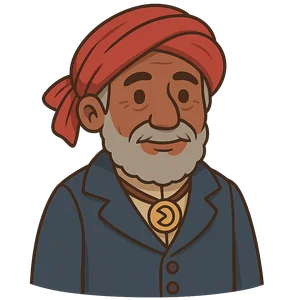
Sequoyah
Sequoyah was a Cherokee polymath who, in 1821, completed his independent creation of the Cherokee syllabary…
Reads at Grades 3–5 Listens at Grades 1–5
Print & create
Answer keys·No prep·Free with an account
28 worksheets · answer keys · full story · quiz · Ages 8-10 · CEFR B1
Plus adds 244,000+ more stories in 27 languages, audio for every one, and printables for all of them.
Just want Sequoyah?
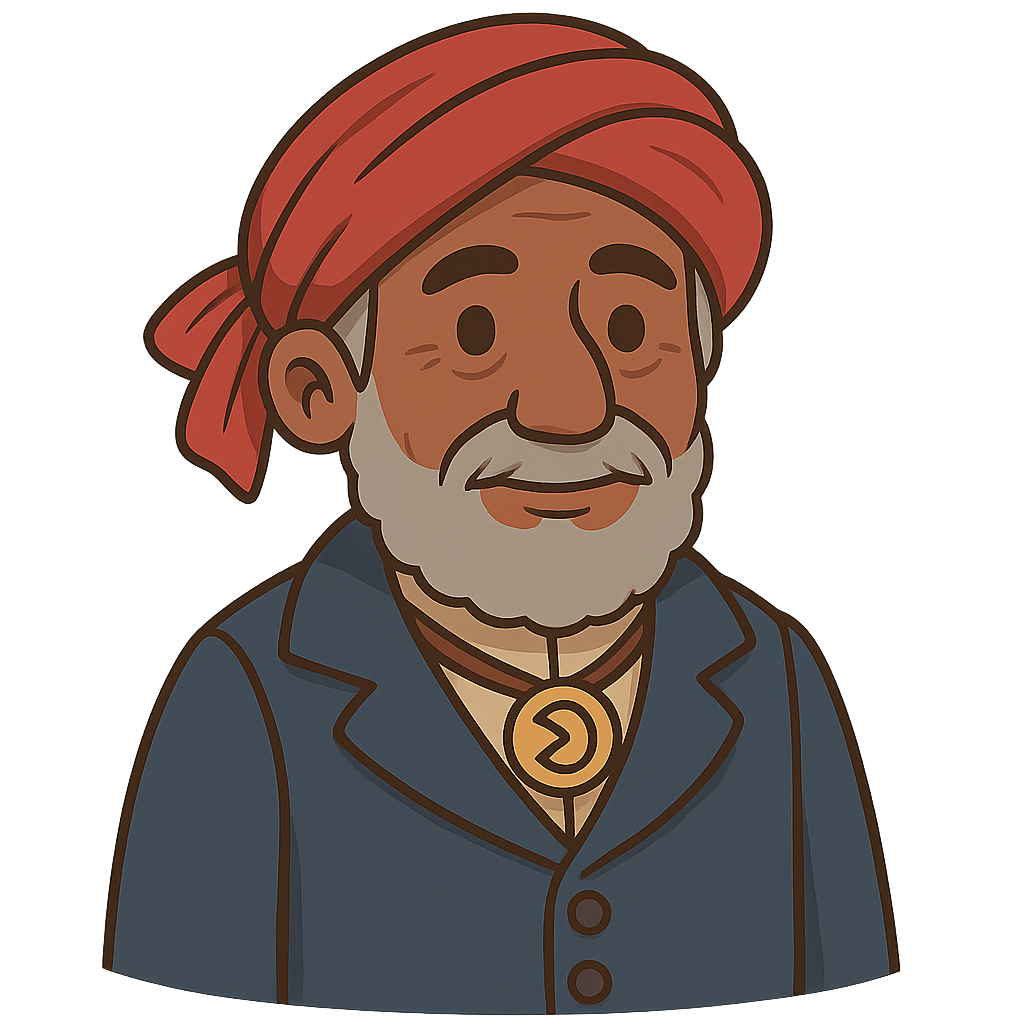
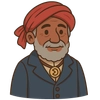
My name is Sequoyah, and I want to tell you my story. I was born around the year 1770 in a village called Tuskegee, which was in the heart of the Cherokee Nation. Growing up, I did not go to a school like you might know. Instead, I learned important skills from my mother and my people. I learned how to be a good hunter, tracking animals in the forest. I also became a silversmith, which means I learned to shape silver into beautiful and useful objects. While I was skilled with my hands, I never learned to read or write the English language. I could speak, but the world of written words was a mystery to me. My knowledge came from listening, watching, and doing, just as it had for my Cherokee ancestors for many generations.
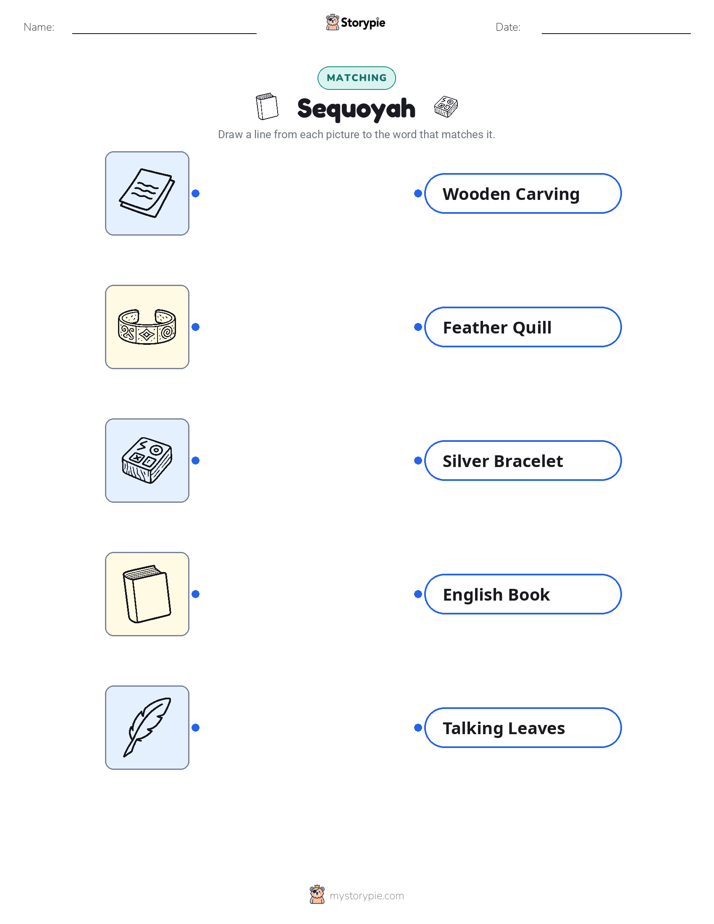
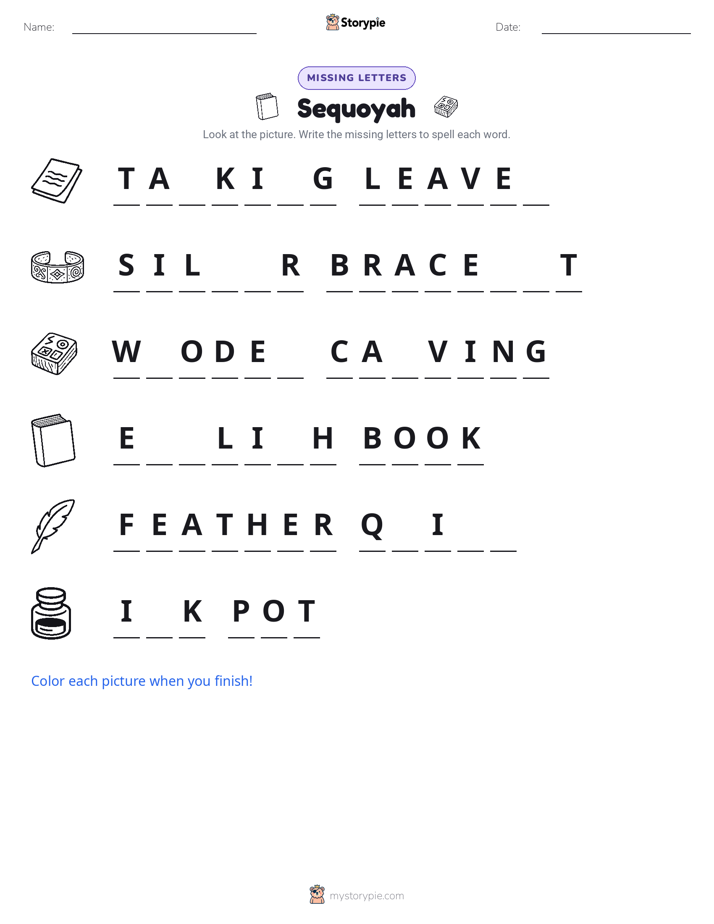
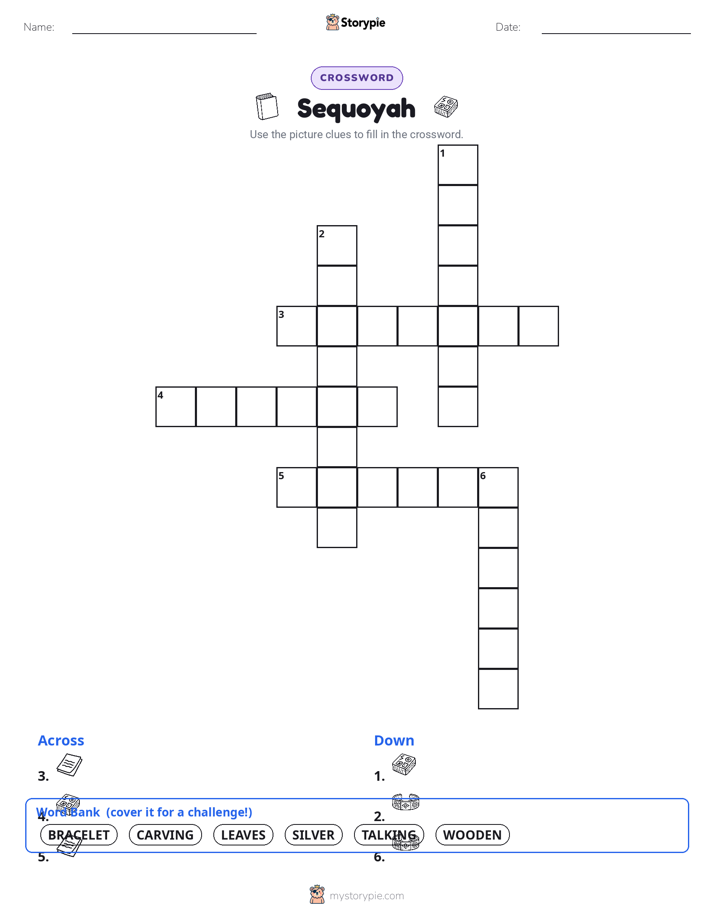
As I grew older, I saw more American soldiers and settlers. They carried books and papers with them, and I watched them stare at the pages and then speak the words that were written there. To me, these papers were like magic. I called them 'talking leaves.' I was amazed at how these people could send their thoughts across long distances on a piece of paper or save their most important ideas for others to read long after they were gone. Around the year 1809, a powerful idea took root in my mind. I thought, the Cherokee people are a great nation. We have our own language, our own stories, and our own wisdom. We needed our own talking leaves. I decided that I would be the one to create a way for us to write our own Cherokee language.
This was not an easy task. In fact, it was very difficult and took me more than ten years to complete. Many people in my community, and even some of my friends, thought I was wasting my time on a foolish dream. They could not understand what I was trying to do. At first, I tried to create a different symbol for every single word in our language. I worked for a long time on this idea, but I soon realized it was impossible. There were just too many words. I felt discouraged, but I did not give up. Then, I had a breakthrough. I listened carefully to the way my people spoke. I realized that our words were made up of different sounds, or syllables. Instead of a symbol for every word, what if I made a symbol for every sound? This was the key. In 1821, after years of patient work, I finished my set of 85 symbols. The very first person I taught my new syllabary to was my clever daughter, Ayokeh.
Sequoyah: The Man Who Gave His People a Written Language
My name is Sequoyah, and I want to tell you my story. I was born around the year 1770 in a village called Tuskegee, which was in the heart of the Cherokee Nation. Growing up, I did not go to a school like you might know. Instead, I learned important skills from my mother and my people. I learned how to be a good hunter, tracking animals in the forest. I also became a silversmith, which means I learned to shape silver into beautiful and useful objects. While I was skilled with my hands, I never learned to read or write the English language. I could speak, but the world of written words was a mystery to me. My knowledge came from listening, watching, and doing, just as it had for my Cherokee ancestors for many generations.
As I grew older, I saw more American soldiers and settlers. They carried books and papers with them, and I watched them stare at the pages and then speak the words that were written there. To me, these papers were like magic. I called them 'talking leaves.' I was amazed at how these people could send their thoughts across long distances on a piece of paper or save their most important ideas for others to read long after they were gone. Around the year 1809, a powerful idea took root in my mind. I thought, the Cherokee people are a great nation. We have our own language, our own stories, and our own wisdom. We needed our own talking leaves. I decided that I would be the one to create a way for us to write our own Cherokee language.
This was not an easy task. In fact, it was very difficult and took me more than ten years to complete. Many people in my community, and even some of my friends, thought I was wasting my time on a foolish dream. They could not understand what I was trying to do. At first, I tried to create a different symbol for every single word in our language. I worked for a long time on this idea, but I soon realized it was impossible. There were just too many words. I felt discouraged, but I did not give up. Then, I had a breakthrough. I listened carefully to the way my people spoke. I realized that our words were made up of different sounds, or syllables. Instead of a symbol for every word, what if I made a symbol for every sound? This was the key. In 1821, after years of patient work, I finished my set of 85 symbols. The very first person I taught my new syllabary to was my clever daughter, Ayokeh.
In 1821, I knew it was time to share my invention with the leaders of the Cherokee Nation. At first, they were not sure it would work. They were skeptical and wanted proof. To test my creation, they sent me away from the room so I could not hear them. Then, they gave a message to my daughter, Ayokeh. When I was brought back, she wrote the message down using the symbols I had created. I looked at the symbols she had written and read the message back to them perfectly, word for word. The leaders were amazed. They finally understood the power of what I had made. In 1825, the Cherokee Nation officially adopted my syllabary as our way of writing. Soon, thousands of Cherokee people could read and write for the first time. In 1828, we even started our own newspaper, the Cherokee Phoenix, printed in both English and our own Cherokee language.
I spent the rest of my life working to help our people. I lived to be about 73 years old, passing away in August of 1843 while I was on a journey. My greatest joy came from knowing that I had given my people a powerful gift—the ability to read and write their own language. Today, the Cherokee syllabary is still used, keeping our traditions, stories, and language alive for new generations. My name is also honored in the giant sequoia trees of California. They are some of the tallest and strongest trees in the world, and they stand as a reminder of a people who have the power of their own words.
Wow facts
About
Sequoyah was a Cherokee polymath who, in 1821, completed his independent creation of the Cherokee syllabary, a writing system that allowed the Cherokee Nation to become literate in their own language.
Take a Quiz
Question 1 of 5
Why did Sequoyah call the settlers' books and letters 'talking leaves'?
Explore next

Want to do even more?
Go beyond exploring. Unlock tools that turn every story into real learning.

Storypie Plus for families
Full stories, quizzes, and printables. Nights and car rides, sorted.
- Unlimited audio stories
- Create Mode: your child stars in the story
- Offline downloads
- Printable worksheets & coloring pages

Why Storypie for Schools
Students engaged. Prep in seconds. Evenings back to you.
- Worksheets & Quizzes
- Classroom Management
- Formative Assessment
- Custom Curriculum & Lesson Plans
- 27 Languages

Why Storypie for Homeschool
Curriculum done. They'll ask for more. Hours back in your day.
- Worksheet Generator
- First-Person Audio Stories
- Built-in Comprehension Quizzes
- Custom Curriculum & Lesson Plans
- Print & Go Activities