English

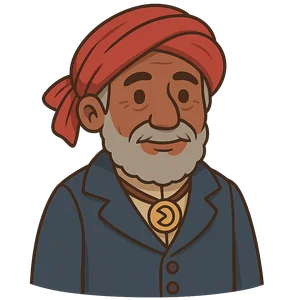
Sequoyah
Sequoyah was a Cherokee polymath who, in 1821, completed his independent creation of the Cherokee syllabary…
Reads at Grades 6–8 Listens at Grades 4–8
Print & create
Answer keys·No prep·Free with an account
28 worksheets · answer keys · full story · quiz · Ages 10-12 · CEFR B2
Plus adds 244,000+ more stories in 27 languages, audio for every one, and printables for all of them.
Just want Sequoyah?
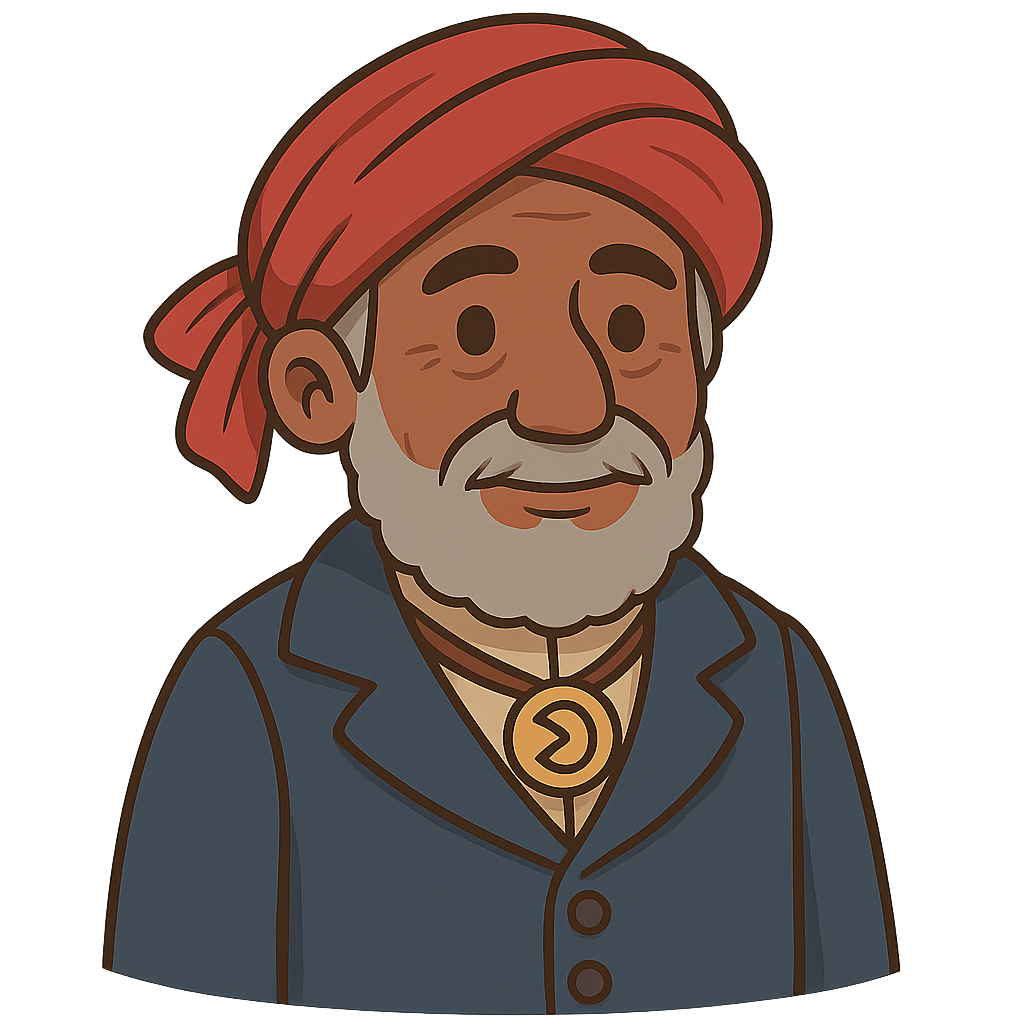
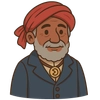
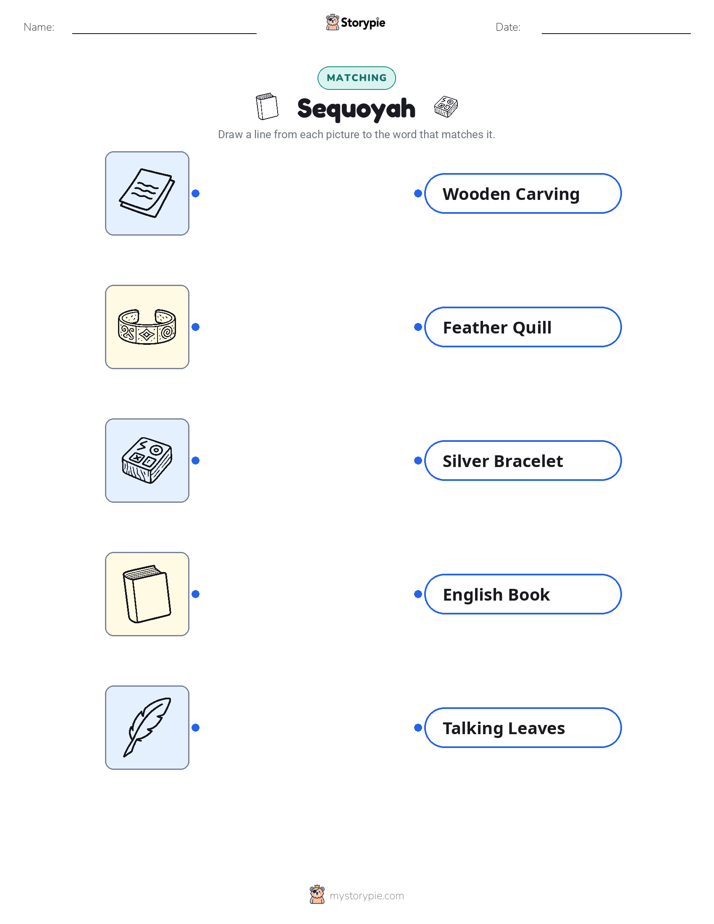
Hello, my name is Sequoyah. I want to tell you the story of my life and how I created a written language for my people, the Cherokee. I was born around the year 1770 in our village of Tuskegee. My mother's name was Wut-teh, and she was a respected member of our tribe. As I grew, I did not learn to read or write, as that was not part of our culture at the time. Instead, I became a skilled silversmith, crafting beautiful objects from silver, and I also worked as a trader. My life changed when I began to notice the American soldiers and settlers. They carried folded pieces of paper that they called letters. To us, they looked like “talking leaves” because they could send messages across great distances without speaking a word. Around 1813, I served as a warrior in the Creek War, and I saw firsthand the power of these talking leaves. The soldiers could coordinate their plans and share secret information through writing. I realized then that this was a special kind of power, and I became determined to create something just as powerful for the Cherokee people.
I began my work around 1809, and it was a long and lonely journey. Many of my friends and neighbors did not understand what I was doing. They thought I was wasting my time on a foolish project, and some even whispered that I was practicing bad magic. The lack of support was difficult, and at one point, my own wife burned my first set of wooden characters, believing they were worthless trinkets. My first idea for the writing system was to create a different symbol for every single word in our Cherokee language. I spent a year carving thousands of tiny symbols, but I soon realized this was an impossible task. There were simply too many words, and no one would ever be able to memorize them all. I felt discouraged, but I refused to give up. The great breakthrough came when I had a new idea. Instead of focusing on words, I began listening to the sounds that made up our words. I realized that all our words were created from a smaller, repeating set of sounds, which are called syllables. This discovery changed everything and put me on the right path. Throughout this difficult time, one person always believed in me: my young daughter, Ayokeh. She watched me work and became the very first student of my new system.
Sequoyah: The Man Who Gave His People a Written Language
Hello, my name is Sequoyah. I want to tell you the story of my life and how I created a written language for my people, the Cherokee. I was born around the year 1770 in our village of Tuskegee. My mother's name was Wut-teh, and she was a respected member of our tribe. As I grew, I did not learn to read or write, as that was not part of our culture at the time. Instead, I became a skilled silversmith, crafting beautiful objects from silver, and I also worked as a trader. My life changed when I began to notice the American soldiers and settlers. They carried folded pieces of paper that they called letters. To us, they looked like “talking leaves” because they could send messages across great distances without speaking a word. Around 1813, I served as a warrior in the Creek War, and I saw firsthand the power of these talking leaves. The soldiers could coordinate their plans and share secret information through writing. I realized then that this was a special kind of power, and I became determined to create something just as powerful for the Cherokee people.
I began my work around 1809, and it was a long and lonely journey. Many of my friends and neighbors did not understand what I was doing. They thought I was wasting my time on a foolish project, and some even whispered that I was practicing bad magic. The lack of support was difficult, and at one point, my own wife burned my first set of wooden characters, believing they were worthless trinkets. My first idea for the writing system was to create a different symbol for every single word in our Cherokee language. I spent a year carving thousands of tiny symbols, but I soon realized this was an impossible task. There were simply too many words, and no one would ever be able to memorize them all. I felt discouraged, but I refused to give up. The great breakthrough came when I had a new idea. Instead of focusing on words, I began listening to the sounds that made up our words. I realized that all our words were created from a smaller, repeating set of sounds, which are called syllables. This discovery changed everything and put me on the right path. Throughout this difficult time, one person always believed in me: my young daughter, Ayokeh. She watched me work and became the very first student of my new system.
With my new understanding of syllables, I began to design my writing system, which is now called a syllabary. I found books written in English, Greek, and Hebrew, and though I could not read them or know what sounds their letters made, I was inspired by their shapes. I borrowed and adapted some of their shapes, but I gave them completely new meanings that matched the sounds of our Cherokee language. After more than ten years of dedicated work, I had created a system of 85 distinct symbols, one for each syllable in our language. In 1821, I was finally ready to present my invention to the Cherokee leaders. They were skeptical, of course, so I proposed a test to prove that my syllabary worked. The leaders gave me a message, which I wrote down using my new symbols. Then, they brought my daughter Ayokeh into the room. She had been outside and had not heard the message. I handed her the paper, and she read the message back to the leaders perfectly. They were completely astonished. In that moment, they understood that our people finally had our own way to write and read.
My syllabary had an incredible impact on the Cherokee Nation. The leaders officially adopted it as our writing system in 1825, and something amazing began to happen. Because the syllabary was designed specifically for our language, it was easy to learn. In just a few years, thousands of Cherokee people became literate, learning to read and write for the first time in their lives. This new skill was powerful. It allowed us to write down our ancient stories, preserve our sacred traditions, and record our laws for future generations. One of the most important milestones was the creation of our own newspaper, the 'Cherokee Phoenix'. The first issue was printed on February 21st, 1828. It was published in both English and Cherokee, using my syllabary, which meant that everyone in our nation could stay informed about important events. Our ability to communicate in writing strengthened us as a people and helped us navigate a changing world.
In my later years, I traveled west to teach the syllabary to Cherokee groups that had moved to places like Arkansas. My greatest hope was that a shared written language would unite all of our people, no matter where they lived. It was during one of these journeys, while I was searching for a lost band of Cherokee believed to be in Mexico, that my life's work came to an end in August of 1843. I lived to be around 73 years old. My creation did not end with me. The syllabary is still used today and remains a vital and living part of Cherokee culture. To honor my contribution, the giant, strong sequoia trees of California were named after me. My story is a reminder that a single person with a determined spirit and a powerful idea can change the world for their people.
Wow facts
About
Sequoyah was a Cherokee polymath who, in 1821, completed his independent creation of the Cherokee syllabary, a writing system that allowed the Cherokee Nation to become literate in their own language.
Take a Quiz
Question 1 of 5
What was the 'breakthrough' that helped Sequoyah finally create his writing system?
Explore next


Want to do even more?
Go beyond exploring. Unlock tools that turn every story into real learning.

Storypie Plus for families
Full stories, quizzes, and printables. Nights and car rides, sorted.
- Unlimited audio stories
- Create Mode: your child stars in the story
- Offline downloads
- Printable worksheets & coloring pages

Why Storypie for Schools
Students engaged. Prep in seconds. Evenings back to you.
- Worksheets & Quizzes
- Classroom Management
- Formative Assessment
- Custom Curriculum & Lesson Plans
- 27 Languages

Why Storypie for Homeschool
Curriculum done. They'll ask for more. Hours back in your day.
- Worksheet Generator
- First-Person Audio Stories
- Built-in Comprehension Quizzes
- Custom Curriculum & Lesson Plans
- Print & Go Activities