English

Climate Zones of the World
A system for classifying the world's climates into distinct regions based on long-term patterns of…
Reads at Grades 6–8 Listens at Grades 4–8
Print & create
Answer keys·No prep·Free with an account
28 worksheets · answer keys · full story · quiz · Ages 10-12 · CEFR B2
Plus adds 244,000+ more stories in 27 languages, audio for every one, and printables for all of them.
Just want Climate Zones of the World?
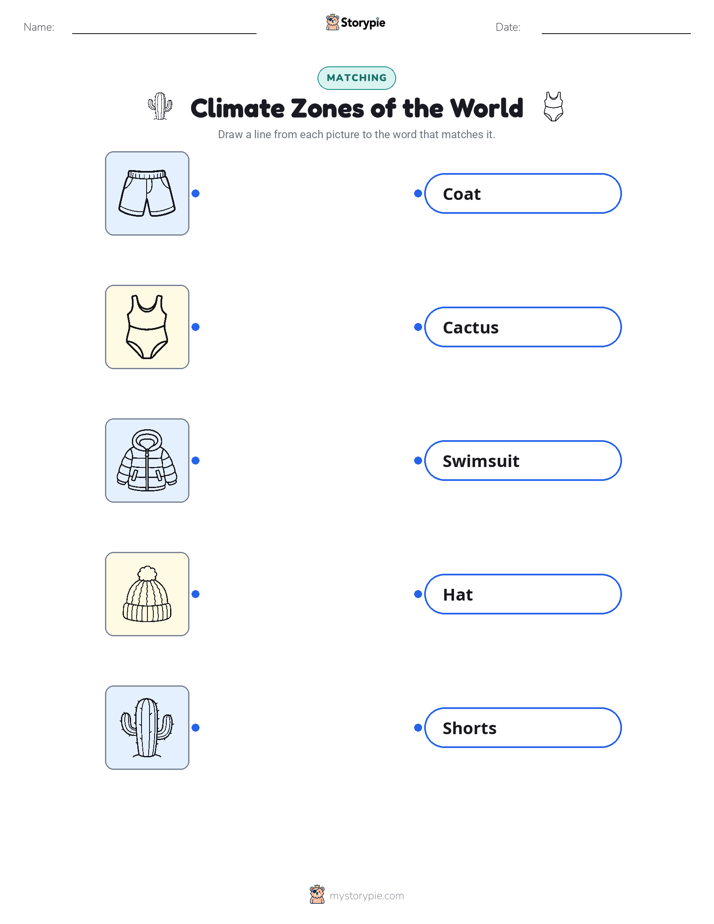
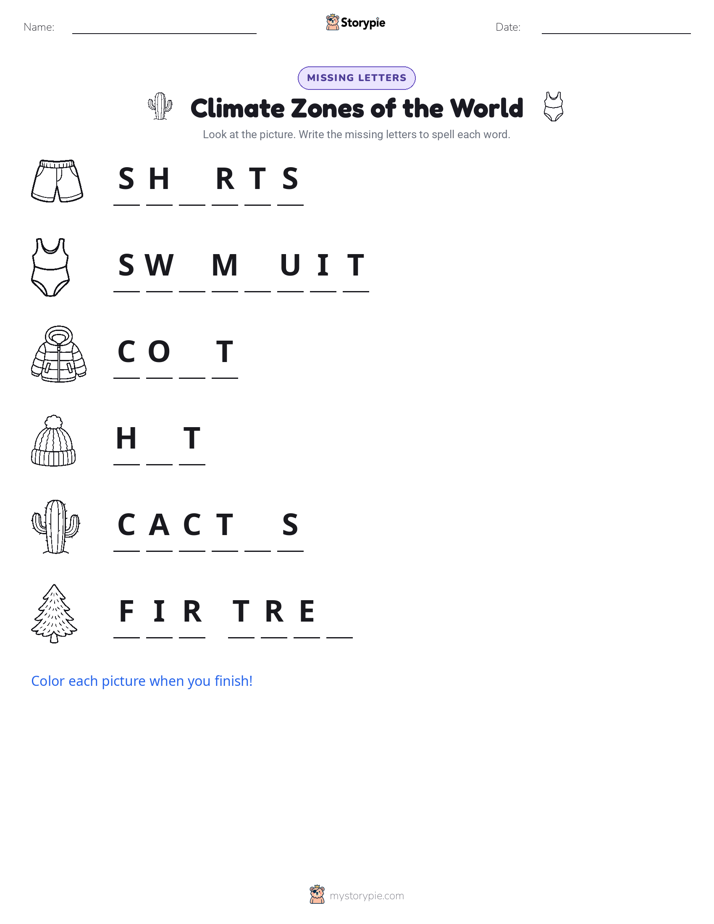
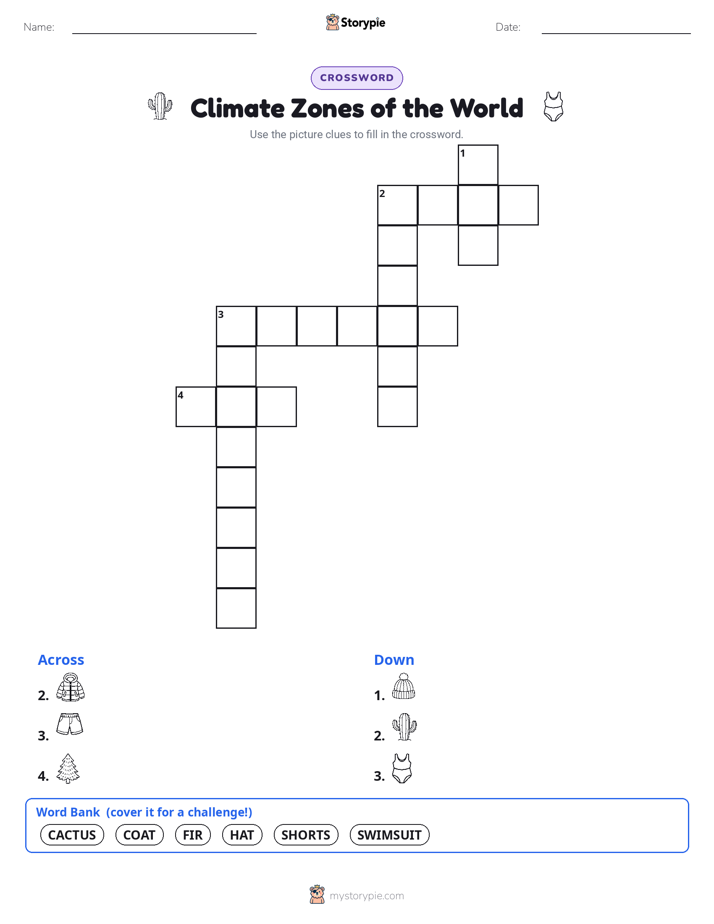
I am the reason you might pack shorts and a swimsuit for a trip to Brazil, but a thick, puffy coat and woolly hat for a visit to northern Canada. I am the invisible force that tells a cactus to grow in a sun-baked desert and a towering fir tree to thrive in a snowy forest. I paint the world in broad stripes of weather—some are steamy and wet, others are chilly and dry, and many are comfortably in between. Before people knew my name, they felt me in the air they breathed and saw me in the plants that grew around them. They knew that traveling north or south could feel like entering a whole new world, governed by different rules of sun and rain. They could feel my presence in the length of the seasons and the power of the storms. I am the planet's grand design for weather, the underlying pattern that shapes ecosystems and cultures. I am the Climate Zones of the World.
For thousands of years, people tried to understand my patterns. The ancient Greeks were some of the first to draw a map of me, though it was very simple. Around the 4th century BCE, a brilliant thinker named Aristotle looked at how the sun's rays hit the Earth at different angles. He imagined the world was divided into three types of zones based on this. He described a fiery 'torrid' zone near the equator that he believed was scorched and uninhabitable, two frozen 'frigid' zones at the very top and bottom of the world, and two mild 'temperate' zones nestled in between where most people lived. For a long time, this was the best map anyone had of me. But as explorers began sailing across vast oceans between the 15th and 17th centuries, their ships carried them into parts of my map that Aristotle could only guess about. They discovered that my reality was far more complex. They found lush, rainy jungles teeming with life right in the heart of the 'torrid' zone and vast, dry deserts in the 'temperate' zones. Their journeys proved that I was more than just bands of hot and cold based on the sun; I was also sculpted by towering mountain ranges, powerful ocean currents, and swirling global winds.
A Map Made of Weather
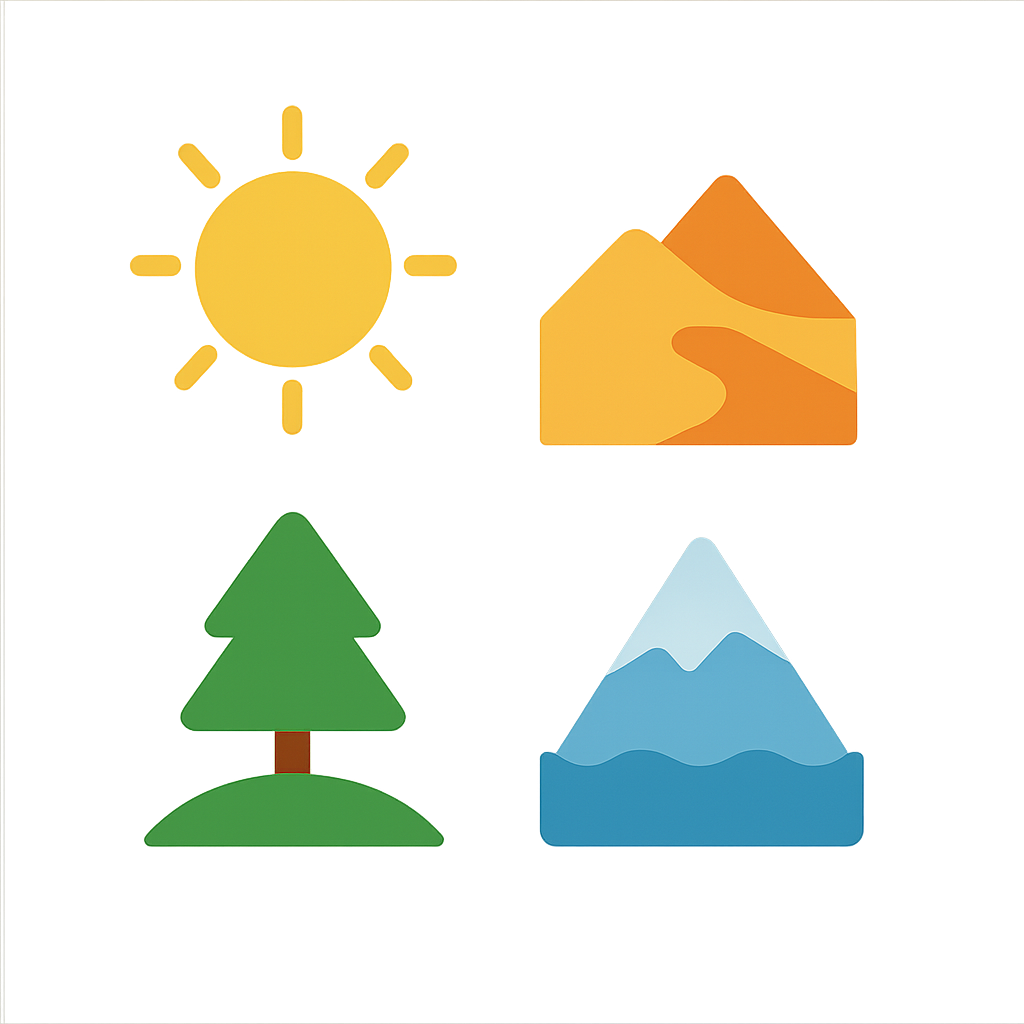
I am the reason you might pack shorts and a swimsuit for a trip to Brazil, but a thick, puffy coat and woolly hat for a visit to northern Canada. I am the invisible force that tells a cactus to grow in a sun-baked desert and a towering fir tree to thrive in a snowy forest. I paint the world in broad stripes of weather—some are steamy and wet, others are chilly and dry, and many are comfortably in between. Before people knew my name, they felt me in the air they breathed and saw me in the plants that grew around them. They knew that traveling north or south could feel like entering a whole new world, governed by different rules of sun and rain. They could feel my presence in the length of the seasons and the power of the storms. I am the planet's grand design for weather, the underlying pattern that shapes ecosystems and cultures. I am the Climate Zones of the World.
For thousands of years, people tried to understand my patterns. The ancient Greeks were some of the first to draw a map of me, though it was very simple. Around the 4th century BCE, a brilliant thinker named Aristotle looked at how the sun's rays hit the Earth at different angles. He imagined the world was divided into three types of zones based on this. He described a fiery 'torrid' zone near the equator that he believed was scorched and uninhabitable, two frozen 'frigid' zones at the very top and bottom of the world, and two mild 'temperate' zones nestled in between where most people lived. For a long time, this was the best map anyone had of me. But as explorers began sailing across vast oceans between the 15th and 17th centuries, their ships carried them into parts of my map that Aristotle could only guess about. They discovered that my reality was far more complex. They found lush, rainy jungles teeming with life right in the heart of the 'torrid' zone and vast, dry deserts in the 'temperate' zones. Their journeys proved that I was more than just bands of hot and cold based on the sun; I was also sculpted by towering mountain ranges, powerful ocean currents, and swirling global winds.
Everything changed when a dedicated scientist decided to give me a proper name and identity. He was a German-Russian scientist named Wladimir Köppen, and he spent much of his life studying me. In 1884, he published his first map, but he knew it wasn't perfect and kept working on it for decades. Köppen was a botanist—a plant scientist—as well as a climatologist, so he had a brilliant idea: the best way to understand me was to look at the plants that grew in different places. After all, plants don’t pack a suitcase; they have to survive in the weather they’re given, year after year. Their survival is the ultimate proof of an area's long-term weather patterns. Köppen created a system of letters to give my different zones clear, scientific names that anyone could understand. He called the hot, steamy, and rainy places 'A' for tropical. The dry, desert-like areas became 'B' for arid. The comfortable, mild-weather places with distinct seasons, like in much of Europe and North America, he labeled 'C' for temperate. The zones with very cold winters and warm or cool summers became 'D' for continental, and the iciest, coldest parts of the world near the poles were 'E' for polar. He published his most complete version of me with another scientist, Rudolf Geiger, in 1928, creating a detailed map that scientists still use and build upon today. His work gave everyone a shared, logical language to talk about me.
Today, understanding me is more important than ever. I help farmers know which crops will grow best in their fields and when they should plant them to get the best harvest. I help architects and engineers design buildings that stay cool in hot climates and warm in cold ones, saving energy and keeping people comfortable. When you hear a weather forecast predicting a hurricane or a heatwave, the long-term patterns they study to make those predictions—that’s me. I am the background story for every sunny day, every snowstorm, and every rainy afternoon. Most importantly, I show you the incredible diversity of our planet. From the humid Amazon rainforest to the frozen Siberian tundra, each of my zones is a unique home to amazing plants, animals, and human cultures that have adapted to live there. By understanding me, you understand how interconnected our world is and how important it is to protect every special corner of it. I am a map of our planet's beautiful, varied, and wonderful character, and I am here to help you explore and appreciate it.
Wow facts
About
A system for classifying the world's climates into distinct regions based on long-term patterns of temperature, precipitation, and native vegetation.
Take a Quiz
Question 1 of 5
In your own words, describe how human understanding of climate zones changed from Aristotle's time to Wladimir Köppen's time.
Explore next





Want to do even more?
Go beyond exploring. Unlock tools that turn every story into real learning.

Storypie Plus for families
Full stories, quizzes, and printables. Nights and car rides, sorted.
- Unlimited audio stories
- Create Mode: your child stars in the story
- Offline downloads
- Printable worksheets & coloring pages

Why Storypie for Schools
Students engaged. Prep in seconds. Evenings back to you.
- Worksheets & Quizzes
- Classroom Management
- Formative Assessment
- Custom Curriculum & Lesson Plans
- 27 Languages

Why Storypie for Homeschool
Curriculum done. They'll ask for more. Hours back in your day.
- Worksheet Generator
- First-Person Audio Stories
- Built-in Comprehension Quizzes
- Custom Curriculum & Lesson Plans
- Print & Go Activities