English

Climate Zones of the World
A system for classifying the world's climates into distinct regions based on long-term patterns of…
Reads at Grades 3–5 Listens at Grades 1–5
Print & create
Answer keys·No prep·Free with an account
28 worksheets · answer keys · full story · quiz · Ages 8-10 · CEFR B1
Plus adds 244,000+ more stories in 27 languages, audio for every one, and printables for all of them.
Just want Climate Zones of the World?
Can you feel me in the air around you. In some places, I am like a warm, wet hug that never lets go. The air is thick and sticky, and you can hear the chatter of monkeys and the squawk of colorful birds from high up in the leafy green trees. In other places, I am like a blast from a hot oven. The sun beats down on endless waves of sand, and the air is so dry it tickles your nose. Here, silent camels sway as they walk, their long lashes protecting them from the wind. And in yet another corner of the world, I am a sharp, biting cold that stings your cheeks and turns your breath into a little white cloud. Fluffy polar bears tread carefully on sheets of glittering ice, searching for their next meal in the freezing water. I decide whether you will spend your afternoon building a snowman or a sandcastle, whether you wear shorts or a thick, woolly coat. I am an invisible force, a giant patchwork blanket covering the entire Earth, and every patch is different. You have felt me your whole life, but you might not know my name. I am the world's Climate Zones.
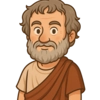
For thousands of years, people tried to understand me. They knew that some places were hot and some were cold, but they could only guess what the rest of the world was like. The ancient Greeks, way back in the 5th century BCE, had a simple idea. They imagined the world in three neat slices. In the middle, near the equator, was the 'torrid' zone, which they believed was too hot for anyone to live in. At the very top and bottom of the world were the 'frigid' zones, frozen and empty. And in between. That was their home, the 'temperate' zone, which they thought was just right. A famous philosopher named Aristotle wrote all about this idea around 350 BCE, and for a very, very long time, that’s how most people pictured me. But I knew I was so much more than just three simple slices. Then, brave sailors and explorers began sailing across vast oceans during the Age of Exploration. They visited the 'torrid' zone and discovered it wasn't an empty wasteland, but was bursting with lush rainforests and incredible animals. They sailed toward the 'frigid' zones and found people and creatures cleverly adapted to the cold. They realized I wasn't simple at all; I was a wonderfully complicated and beautiful pattern. It was time for someone to draw a better map of me. That hero was a brilliant scientist from Germany named Wladimir Köppen. In 1884, he decided he would be the one to finally map me properly. He didn't just look at how far a place was from the equator. He looked at what really grew there. He asked, "What kinds of trees live here. How much rain falls. How much snow." He created a clever system using letters, like a secret code. 'A' was for tropical places, like those humid rainforests. 'B' was for dry deserts. On June 28th, 1918, he published a new version of his map, and it's the system that scientists still use as a starting point today to understand my many different faces.
The World's Many Personalities
Can you feel me in the air around you. In some places, I am like a warm, wet hug that never lets go. The air is thick and sticky, and you can hear the chatter of monkeys and the squawk of colorful birds from high up in the leafy green trees. In other places, I am like a blast from a hot oven. The sun beats down on endless waves of sand, and the air is so dry it tickles your nose. Here, silent camels sway as they walk, their long lashes protecting them from the wind. And in yet another corner of the world, I am a sharp, biting cold that stings your cheeks and turns your breath into a little white cloud. Fluffy polar bears tread carefully on sheets of glittering ice, searching for their next meal in the freezing water. I decide whether you will spend your afternoon building a snowman or a sandcastle, whether you wear shorts or a thick, woolly coat. I am an invisible force, a giant patchwork blanket covering the entire Earth, and every patch is different. You have felt me your whole life, but you might not know my name. I am the world's Climate Zones.
For thousands of years, people tried to understand me. They knew that some places were hot and some were cold, but they could only guess what the rest of the world was like. The ancient Greeks, way back in the 5th century BCE, had a simple idea. They imagined the world in three neat slices. In the middle, near the equator, was the 'torrid' zone, which they believed was too hot for anyone to live in. At the very top and bottom of the world were the 'frigid' zones, frozen and empty. And in between. That was their home, the 'temperate' zone, which they thought was just right. A famous philosopher named Aristotle wrote all about this idea around 350 BCE, and for a very, very long time, that’s how most people pictured me. But I knew I was so much more than just three simple slices. Then, brave sailors and explorers began sailing across vast oceans during the Age of Exploration. They visited the 'torrid' zone and discovered it wasn't an empty wasteland, but was bursting with lush rainforests and incredible animals. They sailed toward the 'frigid' zones and found people and creatures cleverly adapted to the cold. They realized I wasn't simple at all; I was a wonderfully complicated and beautiful pattern. It was time for someone to draw a better map of me. That hero was a brilliant scientist from Germany named Wladimir Köppen. In 1884, he decided he would be the one to finally map me properly. He didn't just look at how far a place was from the equator. He looked at what really grew there. He asked, "What kinds of trees live here. How much rain falls. How much snow." He created a clever system using letters, like a secret code. 'A' was for tropical places, like those humid rainforests. 'B' was for dry deserts. On June 28th, 1918, he published a new version of his map, and it's the system that scientists still use as a starting point today to understand my many different faces.
Wladimir Köppen’s work helped everyone see me clearly, and today, understanding me is more important than ever. I am the reason farmers know they can grow juicy oranges in sunny places and hardy potatoes in cooler ones. I explain why some people build houses with thick walls to stay cool, while others build homes with steep roofs so the heavy snow can slide right off. I am a guide that helps us understand the amazing variety of life on our planet. When you learn about me, you learn why a tiny, tough flower can survive in a dry desert and why a gigantic, leafy tree can only grow in a wet jungle. I am a map of our planet's many wonderful personalities. By understanding me, scientists can see how our world is changing. They can work to protect the homes of the polar bears in the cold zones and the monkeys in the warm zones. I show that even though the weather is very different from place to place, we are all connected, living together under my colorful, invisible blanket on one amazing planet.
Wow facts
About
A system for classifying the world's climates into distinct regions based on long-term patterns of temperature, precipitation, and native vegetation.
Take a Quiz
Question 1 of 5
The story says, 'I am a map of our planet's many wonderful personalities.' What does this sentence mean?
Explore next



Want to do even more?
Go beyond exploring. Unlock tools that turn every story into real learning.

Storypie Plus for families
Full stories, quizzes, and printables. Nights and car rides, sorted.
- Unlimited audio stories
- Create Mode: your child stars in the story
- Offline downloads
- Printable worksheets & coloring pages

Why Storypie for Schools
Students engaged. Prep in seconds. Evenings back to you.
- Worksheets & Quizzes
- Classroom Management
- Formative Assessment
- Custom Curriculum & Lesson Plans
- 27 Languages

Why Storypie for Homeschool
Curriculum done. They'll ask for more. Hours back in your day.
- Worksheet Generator
- First-Person Audio Stories
- Built-in Comprehension Quizzes
- Custom Curriculum & Lesson Plans
- Print & Go Activities