English

Composting
Composting is the managed process of recycling organic matter, such as leaves and food scraps…
Reads at Grades K-2 Listens at K–3
Print & create
Answer keys·No prep·Free with an account
28 worksheets · answer keys · full story · quiz · Ages 6-8 · CEFR A2
Plus adds 244,000+ more stories in 27 languages, audio for every one, and printables for all of them.
Just want Composting?
I start as a pile of leftovers. Maybe an apple core you couldn't finish, some crunchy brown leaves from the yard, or even some very helpful wiggly worms. I get all mixed together in a big pile or a special bin, and then the magic begins. I start to get warm and cozy, like a secret recipe cooking in a special kitchen. Slowly, so slowly, all the different pieces break down and change. They stop being scraps and turn into something new. I become dark, crumbly, and sweet-smelling, just like the floor of a forest after a gentle rain. My name is Composting, and my special job is to turn your old food and yard bits into a super-food treasure for the garden. I am nature's way of recycling.
I am not a new idea. In fact, I'm as old as the earth itself. Long, long before people had grocery stores or even big farms, nature was already using me to keep the forests healthy. Then, people started to notice my magic. In a faraway land called Mesopotamia, as far back as 12,000 BCE, clever farmers learned that mixing old plants and animal poop into their soil made their crops grow much bigger and tastier. It was their secret to a good meal. Many years later, the ancient Romans, around the 1st century CE, wrote down instructions about me in books. They explained how to pile up waste from their farms and kitchens to create rich soil for their beautiful gardens. Many Native American tribes also knew my secrets. They would often bury fish along with their seeds for corn and squash, giving the new plants a nutritious meal to help them grow strong and tall right from the start.
The Story of Composting
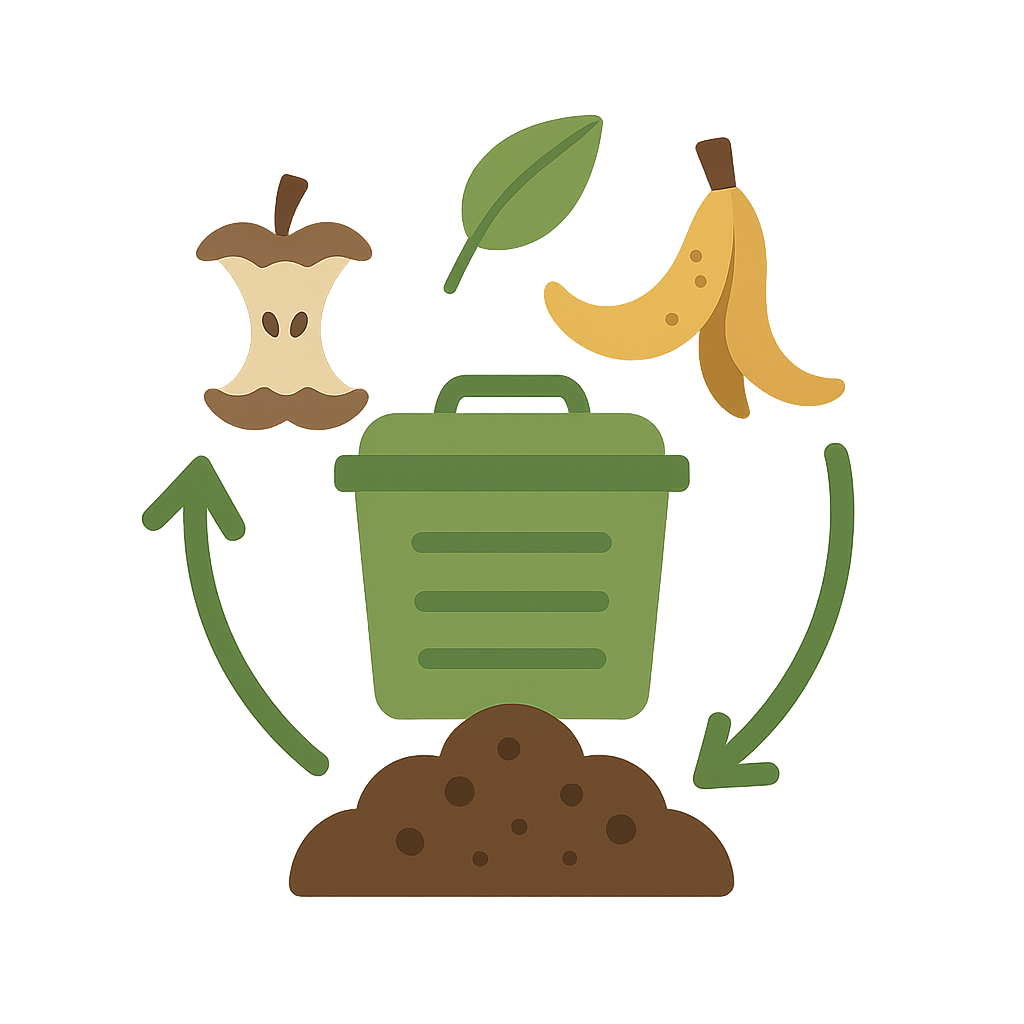
I start as a pile of leftovers. Maybe an apple core you couldn't finish, some crunchy brown leaves from the yard, or even some very helpful wiggly worms. I get all mixed together in a big pile or a special bin, and then the magic begins. I start to get warm and cozy, like a secret recipe cooking in a special kitchen. Slowly, so slowly, all the different pieces break down and change. They stop being scraps and turn into something new. I become dark, crumbly, and sweet-smelling, just like the floor of a forest after a gentle rain. My name is Composting, and my special job is to turn your old food and yard bits into a super-food treasure for the garden. I am nature's way of recycling.
I am not a new idea. In fact, I'm as old as the earth itself. Long, long before people had grocery stores or even big farms, nature was already using me to keep the forests healthy. Then, people started to notice my magic. In a faraway land called Mesopotamia, as far back as 12,000 BCE, clever farmers learned that mixing old plants and animal poop into their soil made their crops grow much bigger and tastier. It was their secret to a good meal. Many years later, the ancient Romans, around the 1st century CE, wrote down instructions about me in books. They explained how to pile up waste from their farms and kitchens to create rich soil for their beautiful gardens. Many Native American tribes also knew my secrets. They would often bury fish along with their seeds for corn and squash, giving the new plants a nutritious meal to help them grow strong and tall right from the start.
For thousands of years, I was a simple trick that smart gardeners and farmers used to help their plants. But then, people started to study me with science. In the 1920s, a scientist from England named Sir Albert Howard was working in India when he watched me very closely. He figured out my perfect recipe. He saw that mixing 'green' things like fresh grass clippings with 'brown' things like dry leaves and twigs helped me work faster and better. He taught people how to help me make my magic happen more quickly. A little while later, in the 1940s, a man in America named J.I. Rodale was so excited about me that he started a magazine. He told everyone how amazing I was for their gardens. He helped people all across the country see that I could make their soil healthy and their vegetables delicious without using any yucky chemicals.
Today, I am more important than ever. When you put your banana peels and eggshells into a special compost bin instead of the regular trash can, you are helping me do my best work. You help keep extra trash from piling up in big landfills, which is great for our planet. You also help feed the earth, giving back all the good stuff so new plants can grow. Every time you help me, you are turning yesterday’s forgotten scraps into tomorrow’s juicy strawberries, crunchy carrots, and bright, happy flowers. You become a garden magician, proving that with a little bit of help and patience, nothing is ever truly wasted.
Wow facts
About
Composting is the managed process of recycling organic matter, such as leaves and food scraps, into a rich soil amendment called compost.
Take a Quiz
Question 1 of 4
Why was J.I. Rodale so excited about composting in the 1940s?
Explore next




Want to do even more?
Go beyond exploring. Unlock tools that turn every story into real learning.

Storypie Plus for families
Full stories, quizzes, and printables. Nights and car rides, sorted.
- Unlimited audio stories
- Create Mode: your child stars in the story
- Offline downloads
- Printable worksheets & coloring pages

Why Storypie for Schools
Students engaged. Prep in seconds. Evenings back to you.
- Worksheets & Quizzes
- Classroom Management
- Formative Assessment
- Custom Curriculum & Lesson Plans
- 27 Languages

Why Storypie for Homeschool
Curriculum done. They'll ask for more. Hours back in your day.
- Worksheet Generator
- First-Person Audio Stories
- Built-in Comprehension Quizzes
- Custom Curriculum & Lesson Plans
- Print & Go Activities