English

Conductors and Insulators
Conductors and Insulators are fundamental principles of electricity…
Reads at Grades 6–8 Listens at Grades 4–8
Print & create
Answer keys·No prep·Free with an account
28 worksheets · answer keys · full story · quiz · Ages 10-12 · CEFR B2
Plus adds 244,000+ more stories in 27 languages, audio for every one, and printables for all of them.
Just want Conductors and Insulators?
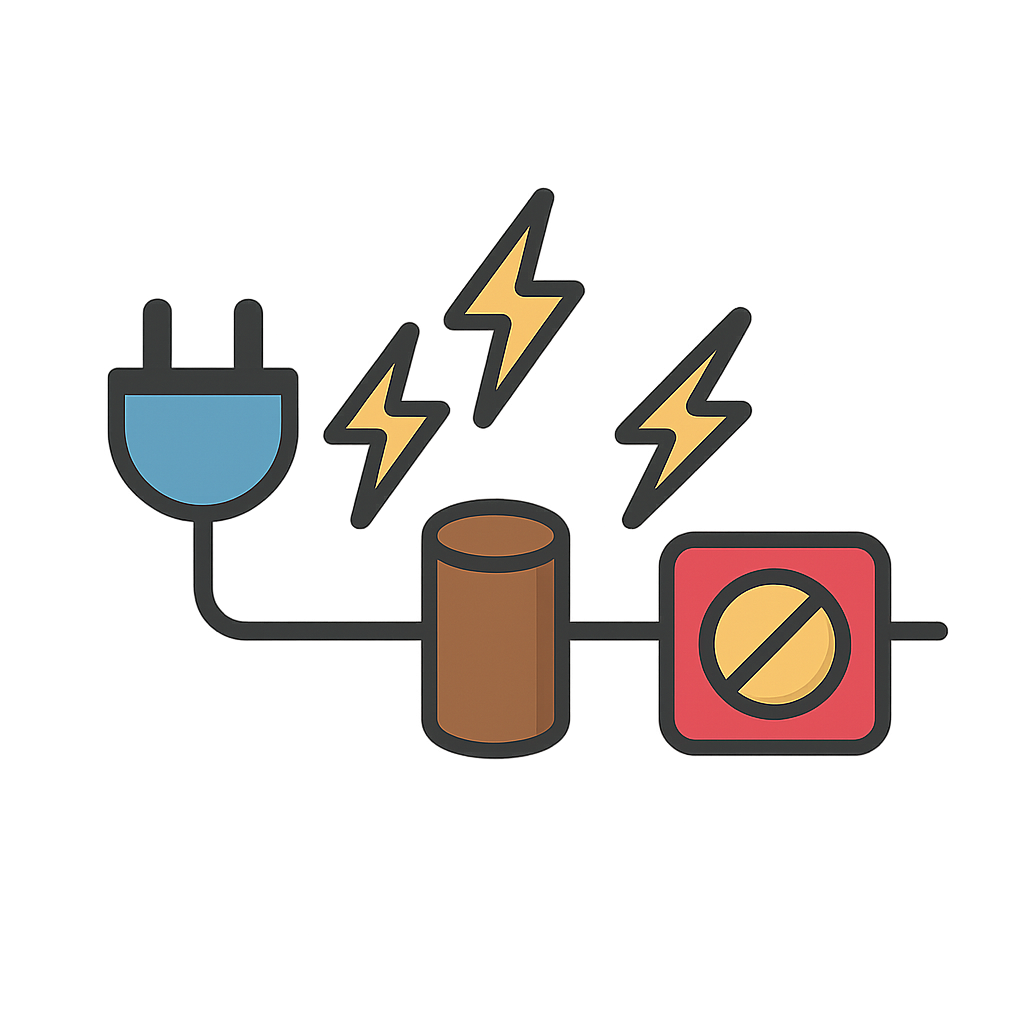
Imagine a world brimming with an invisible, zipping energy. It crackles in the sky during a storm and sleeps silently within the objects all around you. For thousands of years, humans saw glimpses of this power but couldn't grasp its rules. They needed a guide, a rule-maker to show them how to use it. That's where I come in. I am like two things at once: a super-fast highway that lets tiny zaps of energy race along a path, and also a super-strong wall that tells that same energy exactly where to stop. Think about your phone charger. I am the metal inside the wire, creating a perfect road for electricity to travel from the wall to your device. At the same time, I am the plastic coating on the outside, a sturdy barrier that keeps the energy contained so it's safe for you to touch. I am the lightning rod that offers a safe path for a powerful bolt to travel to the ground, but I am also the material of your house that stops that same bolt from rushing inside. I am the secret to control, the principle of flow and stop. I am the twin ideas that work together: I am Conductors and Insulators.
My story begins not with a crash of lightning, but with a quiet observation in ancient Greece. Around 600 BCE, a thoughtful man named Thales of Miletus was examining a piece of amber, a fossilized tree resin the Greeks called 'elektron.' He rubbed it with a piece of wool and noticed something magical happen. The amber suddenly had the power to pull tiny, light objects toward it, like feathers and bits of straw. He had discovered static electricity, the first tiny spark of understanding my existence. For over two thousand years, this remained little more than a curious trick, a party amusement. Then, in the year 1600, an English doctor to the queen named William Gilbert decided to study this strange force seriously. He spent years rubbing different materials and documenting their effects. He was the one who gave the phenomenon its name, calling it 'electricity' after that Greek word for amber. He discovered a whole family of materials that could hold a static charge, but the deeper mystery remained. No one yet understood the rules of the road. Why could this strange energy travel through some things, but not others?
The Silent Guide of Power
Imagine a world brimming with an invisible, zipping energy. It crackles in the sky during a storm and sleeps silently within the objects all around you. For thousands of years, humans saw glimpses of this power but couldn't grasp its rules. They needed a guide, a rule-maker to show them how to use it. That's where I come in. I am like two things at once: a super-fast highway that lets tiny zaps of energy race along a path, and also a super-strong wall that tells that same energy exactly where to stop. Think about your phone charger. I am the metal inside the wire, creating a perfect road for electricity to travel from the wall to your device. At the same time, I am the plastic coating on the outside, a sturdy barrier that keeps the energy contained so it's safe for you to touch. I am the lightning rod that offers a safe path for a powerful bolt to travel to the ground, but I am also the material of your house that stops that same bolt from rushing inside. I am the secret to control, the principle of flow and stop. I am the twin ideas that work together: I am Conductors and Insulators.
My story begins not with a crash of lightning, but with a quiet observation in ancient Greece. Around 600 BCE, a thoughtful man named Thales of Miletus was examining a piece of amber, a fossilized tree resin the Greeks called 'elektron.' He rubbed it with a piece of wool and noticed something magical happen. The amber suddenly had the power to pull tiny, light objects toward it, like feathers and bits of straw. He had discovered static electricity, the first tiny spark of understanding my existence. For over two thousand years, this remained little more than a curious trick, a party amusement. Then, in the year 1600, an English doctor to the queen named William Gilbert decided to study this strange force seriously. He spent years rubbing different materials and documenting their effects. He was the one who gave the phenomenon its name, calling it 'electricity' after that Greek word for amber. He discovered a whole family of materials that could hold a static charge, but the deeper mystery remained. No one yet understood the rules of the road. Why could this strange energy travel through some things, but not others?
That question puzzled scientists for another century, until a brilliant and persistent English scientist named Stephen Gray finally found the answer. In the 1720s, Gray was fascinated by what he called the 'electric virtue.' Around the year 1729, he conducted a series of groundbreaking experiments. He would rub a long glass tube to build up a static charge and then touch different materials to it to see if the 'virtue' would travel. His most famous experiment was an incredible sight. He suspended a long hemp cord, hundreds of feet long, across his laboratory using loops of silk thread. He charged his glass tube at one end of the cord and had his friend hold a piece of gold leaf at the other. To their astonishment, the gold leaf danced and fluttered. The charge had traveled the entire length of the cord. The silk threads, he realized, were holding the electricity in. Then came the breakthrough moment. He tried the experiment again, but this time he suspended the hemp cord with thin metal wires. When he charged the cord, nothing happened at the other end. The charge had vanished. In that instant, I was truly understood. Gray realized that some materials, like the hemp cord and the metal wires, let electricity flow freely. These were the highways, which he called conductors. Others, like the silk threads and the glass tube, stopped the flow completely. These were the walls, which he called insulators. For the first time, the world's materials were sorted into my two teams.
Stephen Gray's discovery that he could separate materials into conductors and insulators opened the floodgates for innovation. Suddenly, people didn't just have to observe electricity; they could guide it. This new understanding led to one of the most legendary experiments in science. On a stormy day in June of 1752, Benjamin Franklin flew a kite with a metal key tied near the bottom of the string. He used my principles perfectly to prove that lightning was a form of electricity. The wet hemp string of the kite acted as a conductor, creating a pathway for the electrical charge from the storm clouds to travel down to the key. But Franklin stayed safe because he held the kite string by a dry silk ribbon, a trusty insulator that stopped the powerful charge from reaching his body. A few decades later, an Italian physicist named Alessandro Volta took the next giant leap. In 1800, he used his knowledge of my conductor team to build the world's first battery. By stacking discs of two different conducting metals, copper and zinc, and separating them with cloth soaked in salty water, he created the 'voltaic pile.' This brilliant device produced a steady, reliable flow of electricity for the very first time, something static charges could never do. The modern electrical age had begun, all because people finally understood how to use me to create a controlled path.
Today, I am everywhere, silently and safely powering your world. Look around you. The copper wires hidden inside the walls of your home are my conductor pathways, bringing the energy needed to power your lights, your television, and your computer. The colorful plastic and rubber coatings on every single electrical cord are my insulator shields, protecting you and your family from dangerous shocks. My partnership is what makes our electrical world possible. Inside your smartphone, my principles operate on a microscopic scale. Tiny pathways of silicon can be made to act as both conductors and insulators, switching on and off billions of time per second to direct the flow of information that allows you to talk to friends, play games, and learn about the world. I am the fundamental rulebook for electricity, the silent guide that makes modern life possible. By understanding me—by learning how to let energy flow and how to make it stop—humanity has learned to build cities of light, to connect with people across the globe, and to turn the most brilliant and imaginative ideas into reality.
Wow facts
About
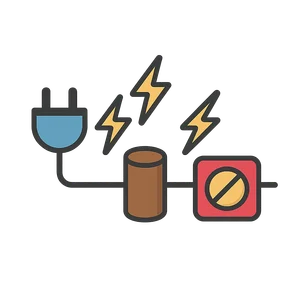
Conductors and Insulators are fundamental principles of electricity, describing materials that either allow electric current to flow freely (conductors) or block its flow (insulators). This duality is essential for controlling and safely using electricity.
Take a Quiz
Question 1 of 5
What is the main idea of this story?
Explore next



Want to do even more?
Go beyond exploring. Unlock tools that turn every story into real learning.

Storypie Plus for families
Full stories, quizzes, and printables. Nights and car rides, sorted.
- Unlimited audio stories
- Create Mode: your child stars in the story
- Offline downloads
- Printable worksheets & coloring pages

Why Storypie for Schools
Students engaged. Prep in seconds. Evenings back to you.
- Worksheets & Quizzes
- Classroom Management
- Formative Assessment
- Custom Curriculum & Lesson Plans
- 27 Languages

Why Storypie for Homeschool
Curriculum done. They'll ask for more. Hours back in your day.
- Worksheet Generator
- First-Person Audio Stories
- Built-in Comprehension Quizzes
- Custom Curriculum & Lesson Plans
- Print & Go Activities