English

Copyright and Giving Credit
Copyright is a legal concept that gives the creator of an original work exclusive rights to its use and…
Reads at Grades 3–5 Listens at Grades 1–5
Print & create
Answer keys·No prep·Free with an account
28 worksheets · answer keys · full story · quiz · Ages 8-10 · CEFR B1
Plus adds 244,000+ more stories in 27 languages, audio for every one, and printables for all of them.
Just want Copyright and Giving Credit?
Have you ever drawn a picture so special you wanted to keep it forever? Or maybe you hummed a little tune that came right out of your own head, a song that was all yours. It’s a wonderful feeling, isn't it? The feeling that says, 'I made this. This came from me.'. It makes you want to wrap your creation in a big, invisible hug to keep it safe. For a long, long time, I was just that feeling. I was the quiet whisper of pride in a creator's heart, the secret wish that their special idea would always be theirs. I didn't have a name yet, but I was there, waiting for the world to realize just how important it was to protect amazing new ideas.
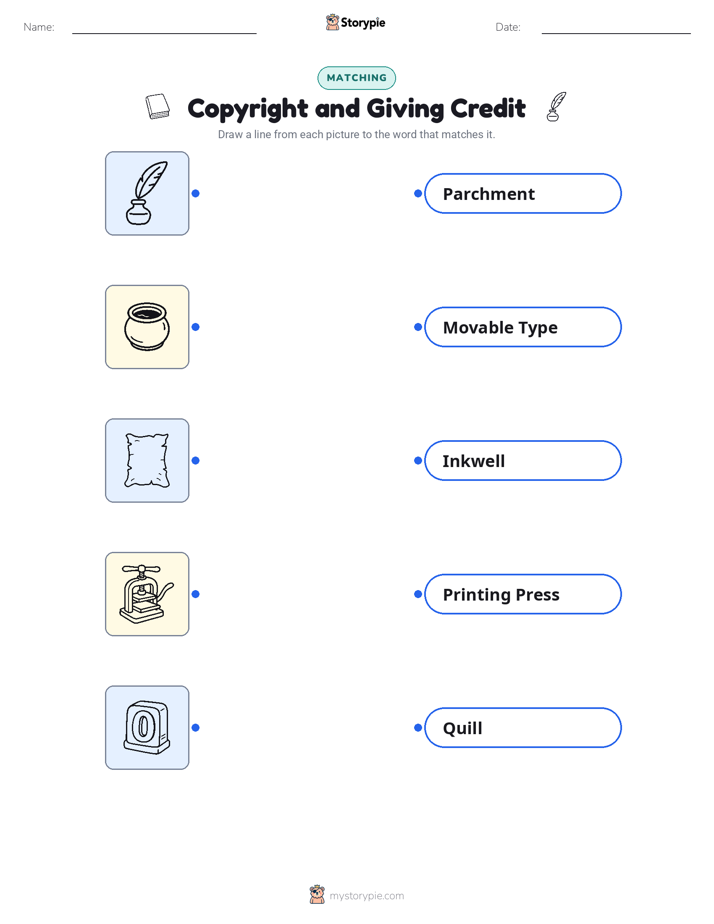
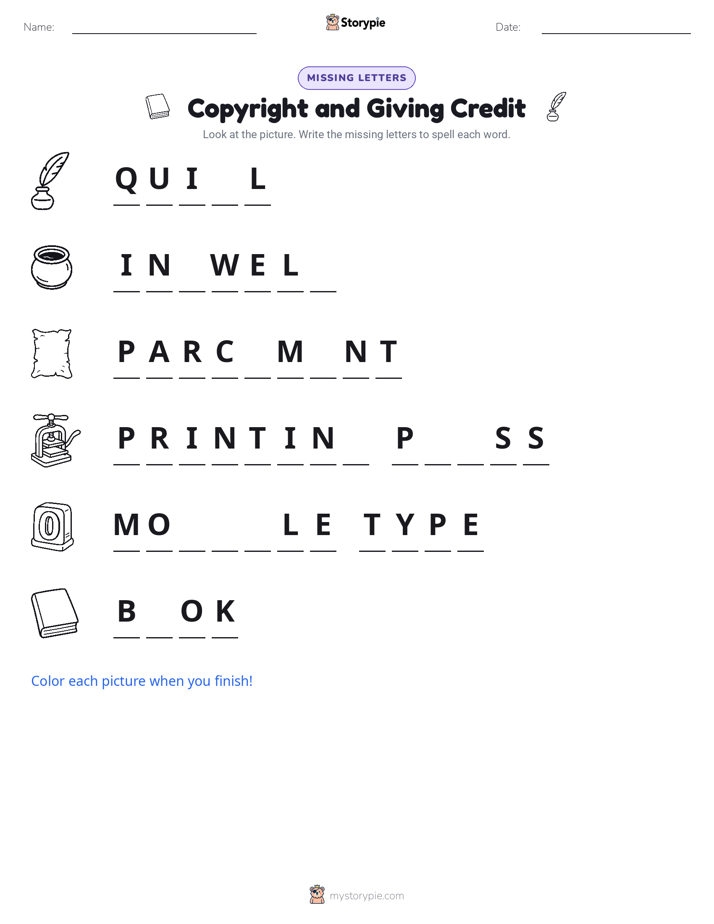
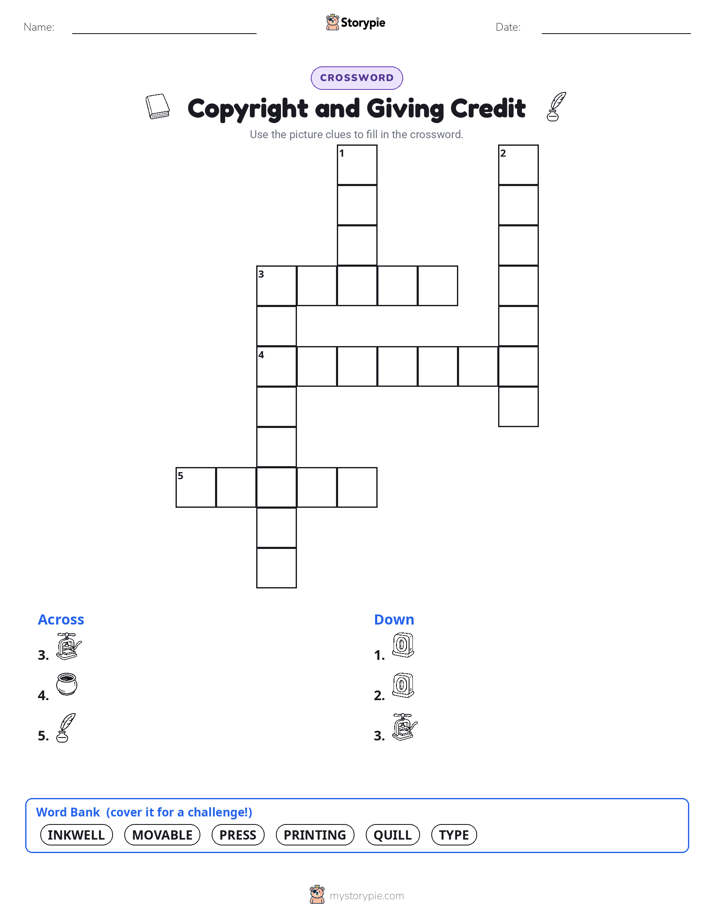
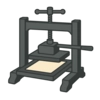
For most of history, sharing stories and knowledge was a very slow process. If you loved a book and wanted your own copy, someone had to sit down with a quill and ink and write out every single word by hand. It could take months, or even years, to make just one copy. Can you imagine that? But then, around the year 1440, a clever inventor named Johannes Gutenberg created something that would change the world: the printing press. It was a magnificent machine that could make hundreds of copies of a book in the time it used to take to make one. Suddenly, books and ideas could travel faster and farther than ever before. It was an exciting time, but it also created a huge problem. Now, anyone with a printing press could take an author's story, print it, and sell it for a profit without ever asking for permission. The original writers, the people who had spent so much time creating the stories, got nothing. I knew something had to be done to make things fair.
The Idea Guardian
Have you ever drawn a picture so special you wanted to keep it forever? Or maybe you hummed a little tune that came right out of your own head, a song that was all yours. It’s a wonderful feeling, isn't it? The feeling that says, 'I made this. This came from me.'. It makes you want to wrap your creation in a big, invisible hug to keep it safe. For a long, long time, I was just that feeling. I was the quiet whisper of pride in a creator's heart, the secret wish that their special idea would always be theirs. I didn't have a name yet, but I was there, waiting for the world to realize just how important it was to protect amazing new ideas.
For most of history, sharing stories and knowledge was a very slow process. If you loved a book and wanted your own copy, someone had to sit down with a quill and ink and write out every single word by hand. It could take months, or even years, to make just one copy. Can you imagine that? But then, around the year 1440, a clever inventor named Johannes Gutenberg created something that would change the world: the printing press. It was a magnificent machine that could make hundreds of copies of a book in the time it used to take to make one. Suddenly, books and ideas could travel faster and farther than ever before. It was an exciting time, but it also created a huge problem. Now, anyone with a printing press could take an author's story, print it, and sell it for a profit without ever asking for permission. The original writers, the people who had spent so much time creating the stories, got nothing. I knew something had to be done to make things fair.
People began to realize that the creators of wonderful things needed protection. It wasn't fair that their hard work could be taken so easily. So, they decided to give me a real job and a real name. On April 10th, 1710, a very important law was passed in Great Britain. It was called the Statute of Anne, and it was the first time I was officially recognized. Hello. I am Copyright. This new law said that the author of a book, not the person who owned the printing press, had the special right to decide who could make copies. This right lasted for 14 years, and it could be renewed. It was a revolutionary idea. The idea was so good that it started to spread across the ocean. The brand-new United States of America wanted to protect its creative thinkers, too. On May 31st, 1790, the United States passed its very first copyright law, giving protection to authors of books, but also to the makers of maps and charts who helped people explore the new country.
As time went on, people found incredible new ways to be creative, and I had to grow and learn right along with them. I started as a protector of books, but soon I was also looking after beautiful photographs, toe-tapping songs, and thrilling movies that flickered on giant screens. When computers were invented, I even learned to protect the clever software that makes them work. But a new problem appeared. What happened if a song written in France was copied and sold in America without permission? Creators needed protection not just in their own countries, but all over the world. So, many countries decided to work together. On September 9th, 1886, they held a big meeting and created something called the Berne Convention. It was a promise between countries to respect each other’s creators. I had become a global guardian for ideas, helping to make the world a fairer place for artists, inventors, and storytellers everywhere.
So what do I do today? I'm still here, working hard to protect creators. You might have even worked with me without knowing it. When your teacher asks you to 'give credit' or 'cite your sources' for a school project, you are showing me respect. By listing where you found your information or pictures, you are giving a nod to the original creator and acknowledging their hard work. I make sure that people who have brilliant ideas can share them with the world, knowing that their work is protected. This encourages more people to write amazing books, compose beautiful music, and invent things that change our lives. Now it's your turn. Go out and create something wonderful. Draw, write, sing, build. Do it with all your heart, and know that your ideas are valuable and deserve to be respected, all thanks to me, Copyright.
Wow facts
About
Copyright is a legal concept that gives the creator of an original work exclusive rights to its use and distribution, usually for a limited time. It is a form of intellectual property protection designed to encourage creativity.
Take a Quiz
Question 1 of 5
According to the story, what problem did Johannes Gutenberg's printing press create for authors?
Explore next


Want to do even more?
Go beyond exploring. Unlock tools that turn every story into real learning.

Storypie Plus for families
Full stories, quizzes, and printables. Nights and car rides, sorted.
- Unlimited audio stories
- Create Mode: your child stars in the story
- Offline downloads
- Printable worksheets & coloring pages

Why Storypie for Schools
Students engaged. Prep in seconds. Evenings back to you.
- Worksheets & Quizzes
- Classroom Management
- Formative Assessment
- Custom Curriculum & Lesson Plans
- 27 Languages

Why Storypie for Homeschool
Curriculum done. They'll ask for more. Hours back in your day.
- Worksheet Generator
- First-Person Audio Stories
- Built-in Comprehension Quizzes
- Custom Curriculum & Lesson Plans
- Print & Go Activities