English

Copyright and Giving Credit
Copyright is a legal concept that gives the creator of an original work exclusive rights to its use and…
Reads at Grades 6–8 Listens at Grades 4–8
Print & create
Answer keys·No prep·Free with an account
28 worksheets · answer keys · full story · quiz · Ages 10-12 · CEFR B2
Plus adds 244,000+ more stories in 27 languages, audio for every one, and printables for all of them.
Just want Copyright and Giving Credit?
Have you ever felt that spark? The one that happens right before you draw a character no one has ever seen, write a story that came only from your mind, or hum a tune that is uniquely yours. You spend hours, maybe even days, making it just right. When you are finished, a warm feeling of pride spreads through you. You look at your creation and think, 'I made this.' It is a part of you. Now, imagine the opposite. Imagine you see your drawing, your story, your song somewhere else, but with someone else’s name on it. Or maybe they just took it without asking, sharing it as if it were theirs to give away. That feeling stings. It feels unfair, a quiet kind of theft that takes the joy out of your hard work. This is the exact problem I was born to solve. I am the invisible shield that protects your ideas. I am a promise of fairness and respect for your hard work. You can call me Copyright, and my best friend is Giving Credit.
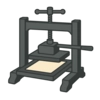
To understand my story, you have to travel back with me, to a time long before computers or even electricity. In those days, books were precious and rare because each one had to be copied by hand, a slow and painstaking process. Then, around the year 1440, a man named Johannes Gutenberg invented the printing press. Suddenly, books could be copied quickly and easily. It was a revolution for knowledge. But this amazing invention created a new kind of chaos. A printer could take an author’s book, print hundreds of copies, and sell them without ever giving the author a single coin. For centuries, kings and governments gave special permissions, or 'privileges,' only to printers, allowing them to control which books were published. The authors, the people who poured their souls into writing the words, were often left with nothing. My real moment to shine arrived in Great Britain. On April 10th, 1710, a law was passed called the Statute of Anne. It was the very first time that the creator—the author—was officially recognized as the true owner of their work. I wasn't just for printers anymore; I was for the dreamers. Soon after, I journeyed across the ocean to a new nation, the United States, and was written into law with the Copyright Act on May 31st, 1790, offering my protection to the authors of books, maps, and charts.
The Invisible Shield
Have you ever felt that spark? The one that happens right before you draw a character no one has ever seen, write a story that came only from your mind, or hum a tune that is uniquely yours. You spend hours, maybe even days, making it just right. When you are finished, a warm feeling of pride spreads through you. You look at your creation and think, 'I made this.' It is a part of you. Now, imagine the opposite. Imagine you see your drawing, your story, your song somewhere else, but with someone else’s name on it. Or maybe they just took it without asking, sharing it as if it were theirs to give away. That feeling stings. It feels unfair, a quiet kind of theft that takes the joy out of your hard work. This is the exact problem I was born to solve. I am the invisible shield that protects your ideas. I am a promise of fairness and respect for your hard work. You can call me Copyright, and my best friend is Giving Credit.
To understand my story, you have to travel back with me, to a time long before computers or even electricity. In those days, books were precious and rare because each one had to be copied by hand, a slow and painstaking process. Then, around the year 1440, a man named Johannes Gutenberg invented the printing press. Suddenly, books could be copied quickly and easily. It was a revolution for knowledge. But this amazing invention created a new kind of chaos. A printer could take an author’s book, print hundreds of copies, and sell them without ever giving the author a single coin. For centuries, kings and governments gave special permissions, or 'privileges,' only to printers, allowing them to control which books were published. The authors, the people who poured their souls into writing the words, were often left with nothing. My real moment to shine arrived in Great Britain. On April 10th, 1710, a law was passed called the Statute of Anne. It was the very first time that the creator—the author—was officially recognized as the true owner of their work. I wasn't just for printers anymore; I was for the dreamers. Soon after, I journeyed across the ocean to a new nation, the United States, and was written into law with the Copyright Act on May 31st, 1790, offering my protection to the authors of books, maps, and charts.
I started small, just looking after words on a page, but the world of human creativity is always expanding, and I had to grow with it. Soon, I learned to protect the notes of a symphony, the colors of a painting, and the captured moment in a photograph. When people began telling stories through stage plays and moving pictures, I was there to protect their scripts and films. As technology leaped forward, I stretched myself even further to cover the complex worlds inside video games and the intricate lines of computer software. But a new challenge appeared: what good was I if I only protected a song in one country but not another? An idea needed a passport. So, a grand meeting was held in the city of Berne, Switzerland. On September 9th, 1886, countries from all over the world came together and created the Berne Convention. It was like a global handshake, a promise that they would all respect and protect each other's creators. My shield was now worldwide. But I also have a limit. I cannot last forever. When my protection on a work expires after a very long time, it enters the 'public domain.' This means it belongs to everyone, a shared treasure for all of humanity to use, remix, and build upon. It is why you can freely read the plays of William Shakespeare or listen to the music of Ludwig van Beethoven.
Then came the biggest change of all: the digital age. With the click of a button, a song, a movie, or a photograph could be copied perfectly and sent to millions of people in seconds. The internet, smartphones, and social media connected the world like never before, but they also made my job incredibly challenging. It became so easy to copy, paste, and share that people sometimes forgot that behind every viral video, every clever meme, and every beautiful digital painting, there is a person. A creator who had that first spark of an idea. To help me navigate this fast-paced world, new rules were needed. In the United States, a law called the Digital Millennium Copyright Act was passed on October 28th, 1998, giving me new tools to protect works in their digital forms. This is also where my best friend, Giving Credit, becomes more important than ever. Even when it is okay to share something, giving credit is how you show respect. It is a digital 'thank you' that points back to the original creator, allowing others to find and appreciate their work. It is the simple act of saying, 'This is who made this wonderful thing.'
My purpose has never been to stop people from sharing ideas or building upon the past. In fact, it is just the opposite. I am here to be your partner in creativity. By making sure that artists, writers, musicians, and inventors are recognized for their work, I create a world where people feel safe and inspired to keep dreaming. I ensure that their hard work can support them, allowing them to dedicate their lives to creating the next amazing thing that will entertain, teach, or move us. So when you have that next brilliant idea, know that I am here, an invisible shield ready to protect it. And when you see something amazing that someone else has made, you can help protect them, too, by giving them the credit they deserve. Together, we build a world where creativity can always shine.
Wow facts
About
Copyright is a legal concept that gives the creator of an original work exclusive rights to its use and distribution, usually for a limited time. It is a form of intellectual property protection designed to encourage creativity.
Take a Quiz
Question 1 of 5
According to the story, what was the main purpose of the Statute of Anne, passed on April 10th, 1710?
Explore next


Want to do even more?
Go beyond exploring. Unlock tools that turn every story into real learning.

Storypie Plus for families
Full stories, quizzes, and printables. Nights and car rides, sorted.
- Unlimited audio stories
- Create Mode: your child stars in the story
- Offline downloads
- Printable worksheets & coloring pages

Why Storypie for Schools
Students engaged. Prep in seconds. Evenings back to you.
- Worksheets & Quizzes
- Classroom Management
- Formative Assessment
- Custom Curriculum & Lesson Plans
- 27 Languages

Why Storypie for Homeschool
Curriculum done. They'll ask for more. Hours back in your day.
- Worksheet Generator
- First-Person Audio Stories
- Built-in Comprehension Quizzes
- Custom Curriculum & Lesson Plans
- Print & Go Activities