English

Cursive Handwriting
Cursive is a style of penmanship in which letters are joined together in a flowing manner…
Reads at Grades 3–5 Listens at Grades 1–5
Print & create
Answer keys·No prep·Free with an account
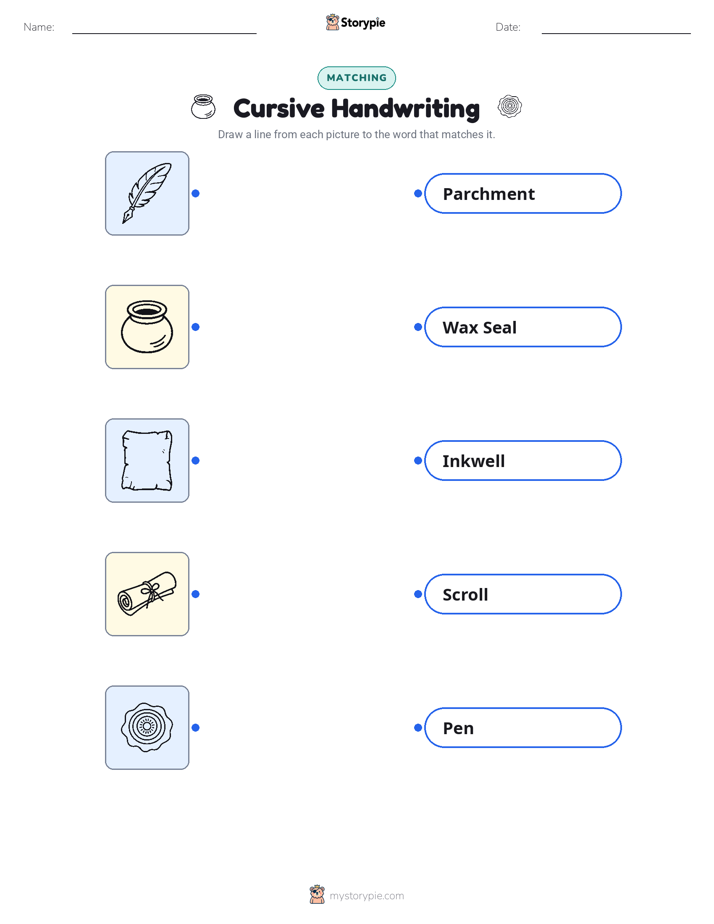
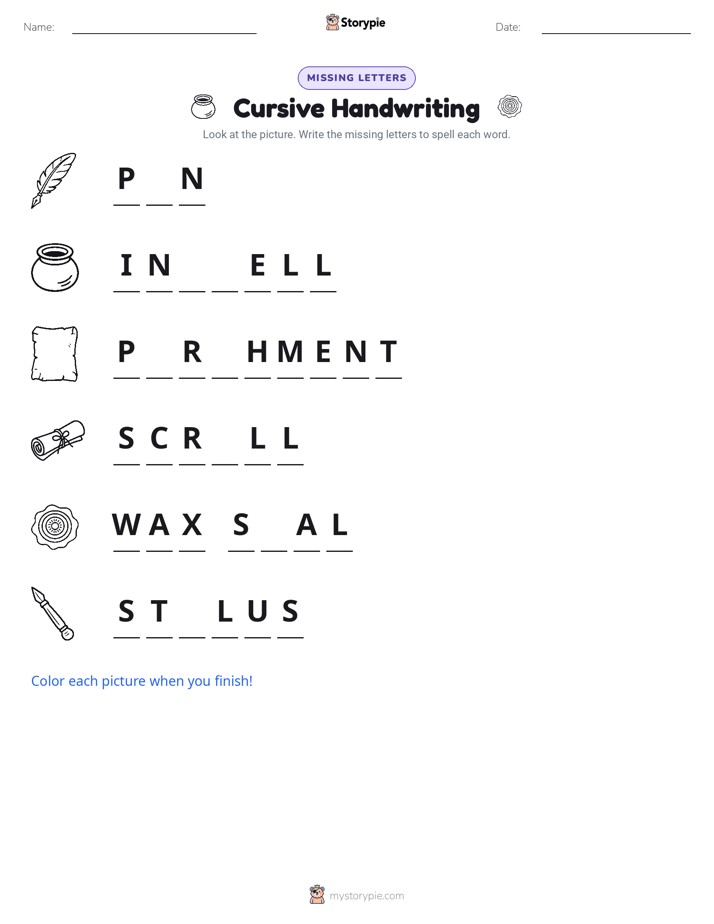
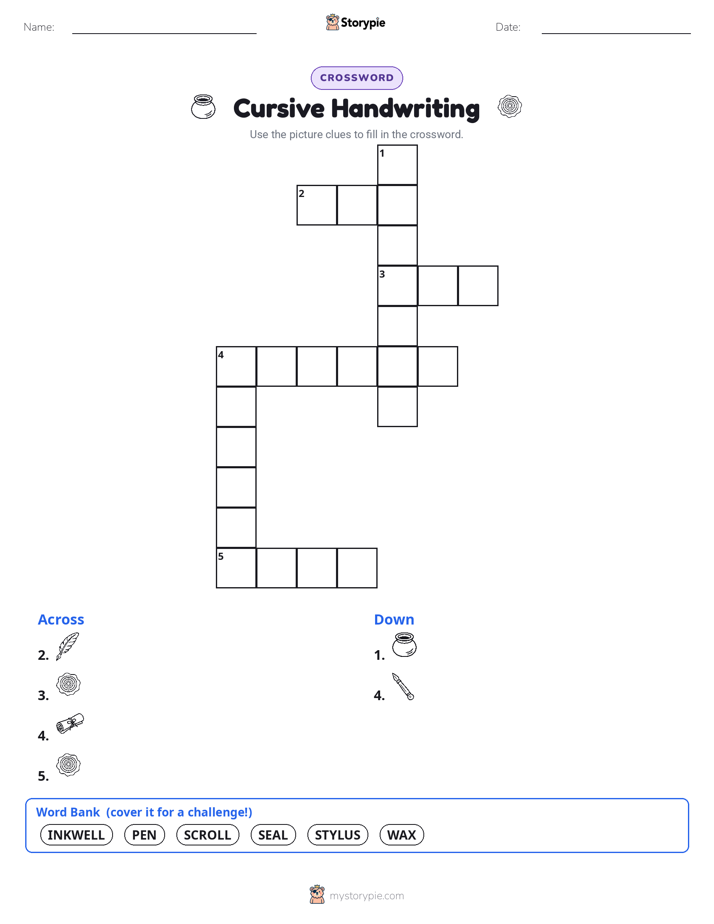
28 worksheets · answer keys · full story · quiz · Ages 8-10 · CEFR B1
Plus adds 244,000+ more stories in 27 languages, audio for every one, and printables for all of them.
Just want Cursive Handwriting?
Before there were keyboards that went click-clack-tap, there was just the quiet scratch of a pen on paper. And that's where I live. I am a secret dance of loops and swirls, a river of ink that flows across the page. Have you ever seen your grandparent’s signature on a birthday card, how all the letters hold hands and swoop together in one long, beautiful line. That’s me. My cousin, Print, is very different. He makes each letter stand up straight and tall, one by one, with little spaces in between. But me. I like to connect things. I turn thoughts into words without ever lifting the pen from the paper, making writing fast and fluid. It’s like ice skating with your pen. What is my name. I am Cursive Handwriting, and I am the special, secret code that makes your writing uniquely yours.
My story began a very, very long time ago, back in the Roman Empire around the 1st century CE. Can you imagine trying to write a shopping list by carving it into stone. It would take forever. People needed a faster way to do business, write letters, and keep records. So, they started connecting their letters on wax tablets, and that’s when I was born. I wasn't very fancy back then, but I was fast and useful. A few hundred years later, during the Middle Ages around the 8th century, I got a bit of a makeover. In quiet monasteries filled with the smell of old books and beeswax candles, monks spent their days copying important texts. They developed a neat and rounded style called Carolingian Minuscule. This new style made me clearer and easier to read, so more people could share stories and knowledge across the land.
The Secret Dance of Cursive
Before there were keyboards that went click-clack-tap, there was just the quiet scratch of a pen on paper. And that's where I live. I am a secret dance of loops and swirls, a river of ink that flows across the page. Have you ever seen your grandparent’s signature on a birthday card, how all the letters hold hands and swoop together in one long, beautiful line. That’s me. My cousin, Print, is very different. He makes each letter stand up straight and tall, one by one, with little spaces in between. But me. I like to connect things. I turn thoughts into words without ever lifting the pen from the paper, making writing fast and fluid. It’s like ice skating with your pen. What is my name. I am Cursive Handwriting, and I am the special, secret code that makes your writing uniquely yours.
My story began a very, very long time ago, back in the Roman Empire around the 1st century CE. Can you imagine trying to write a shopping list by carving it into stone. It would take forever. People needed a faster way to do business, write letters, and keep records. So, they started connecting their letters on wax tablets, and that’s when I was born. I wasn't very fancy back then, but I was fast and useful. A few hundred years later, during the Middle Ages around the 8th century, I got a bit of a makeover. In quiet monasteries filled with the smell of old books and beeswax candles, monks spent their days copying important texts. They developed a neat and rounded style called Carolingian Minuscule. This new style made me clearer and easier to read, so more people could share stories and knowledge across the land.
But I really had my glow-up during a time of art and invention called the Renaissance. In 15th-century Italy, people wanted everything to be beautiful, including their writing. A new, slanted, and very elegant version of me was born, called Italic script. Scholars, artists, and important officials loved this style because it was both speedy and stunning. Then, as I traveled to other parts of the world, I became even fancier. In England during the 17th and 18th centuries, a style called Copperplate became all the rage. Writing masters used special pens with flexible metal tips. When they pressed down, the line would be thick, and when they lifted up, it would be whisper-thin. If you’ve ever seen a picture of the United States Declaration of Independence from July 4th, 1776, you’ve seen this beautiful, formal style of me.
When I crossed the ocean to America, I found a new rhythm inspired by nature itself. In the 1840s, a man named Platt Rogers Spencer watched the smooth, oval shapes of pebbles in a river and the swirling patterns of clouds in the sky. He thought, why can’t handwriting be that graceful. He created a beautiful, flowing style called Spencerian script. It was so lovely that it became the standard way for people in America to write for many years. But as life got faster, people needed an even simpler me. So, around the year 1888, a man named Austin Norman Palmer created the Palmer Method. He taught students to use their whole arm to write, not just their fingers. This made me easier to learn and much faster to write, and for decades, children in classrooms all across the country learned to write with his smooth, practical style.
Today, I share the world with keyboards and touch screens. You can send a message with just a few clicks and taps. But I am still here, and I am still very important. I am the unique signature that proves a document is really yours. I am the warm, personal touch in a handwritten thank-you note that shows someone you truly care. Scientists have even discovered that when you write me, you are connecting different parts of your brain in a special way that helps you learn and remember things. I am more than just letters on a page. I am a piece of history, a form of art, and a wonderful way for you to share your own voice with the world.
Wow facts
About
Cursive is a style of penmanship in which letters are joined together in a flowing manner, generally for the purpose of making writing faster.
Take a Quiz
Question 1 of 5
The story says I had a 'glow-up' during the Renaissance. What does the phrase 'glow-up' mean here?
Explore next



Want to do even more?
Go beyond exploring. Unlock tools that turn every story into real learning.

Storypie Plus for families
Full stories, quizzes, and printables. Nights and car rides, sorted.
- Unlimited audio stories
- Create Mode: your child stars in the story
- Offline downloads
- Printable worksheets & coloring pages

Why Storypie for Schools
Students engaged. Prep in seconds. Evenings back to you.
- Worksheets & Quizzes
- Classroom Management
- Formative Assessment
- Custom Curriculum & Lesson Plans
- 27 Languages

Why Storypie for Homeschool
Curriculum done. They'll ask for more. Hours back in your day.
- Worksheet Generator
- First-Person Audio Stories
- Built-in Comprehension Quizzes
- Custom Curriculum & Lesson Plans
- Print & Go Activities