English

Erosion
Erosion is the natural process where soil, rock…
Reads at Grades 6–8 Listens at Grades 4–8
Print & create
Answer keys·No prep·Free with an account
28 worksheets · answer keys · full story · quiz · Ages 10-12 · CEFR B2
Plus adds 244,000+ more stories in 27 languages, audio for every one, and printables for all of them.
Just want Erosion?
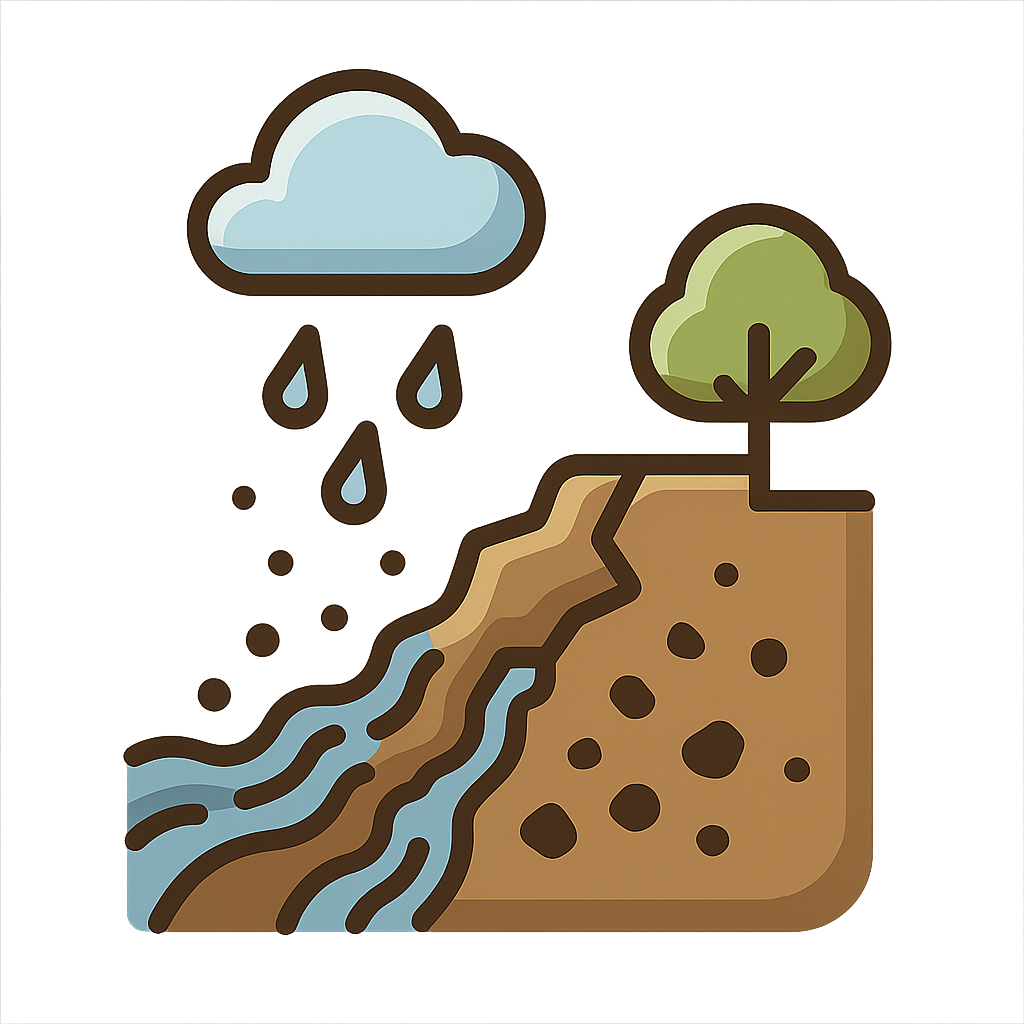
Feel the whisper of wind as it lifts a single grain of sand and carries it across a vast desert, one tiny traveler among billions. That’s me, at my most subtle. Hear the rush of a river tumbling over rocks, smoothing their sharp edges into polished jewels over centuries. That’s me, with my persistent touch. Imagine the immense, groaning weight of a glacier, a frozen river of ice, inching its way down a mountainside, gouging out a deep, U-shaped valley as it moves. That’s me, at my most powerful. For longer than humans can comprehend, I have been the world’s most patient sculptor. I don't use a hammer or a chisel, but my tools are just as effective: the relentless drip of water, the scouring force of wind, the grinding power of ice, and the steady pull of gravity. I work on a timescale that defies clocks and calendars. While you sleep, I am busy painting canyons with stripes of red and gold, stealing tiny particles from one place and depositing them in another. I am the artist who shaped the delicate arches in Utah and the towering sea stacks off the coast of Australia. I crumble mountains into dust and carry that dust to the sea, where it settles to one day become new rock. My work is a cycle of destruction and creation, a slow, deliberate dance that reshapes the face of the planet. I am the reason coastlines retreat and river deltas expand. I see civilizations rise and fall on the very soil I helped to create. I am a force of constant, unstoppable change, a quiet architect of landscapes. People have watched my work for millennia, sometimes with awe, sometimes with fear. They see the evidence of my passing in every rounded pebble and every deep gorge. I am the silent force that proves nothing is permanent, that even the mightiest stone will eventually yield to time and pressure. I am Erosion.
The Planet's Patient Sculptor
Feel the whisper of wind as it lifts a single grain of sand and carries it across a vast desert, one tiny traveler among billions. That’s me, at my most subtle. Hear the rush of a river tumbling over rocks, smoothing their sharp edges into polished jewels over centuries. That’s me, with my persistent touch. Imagine the immense, groaning weight of a glacier, a frozen river of ice, inching its way down a mountainside, gouging out a deep, U-shaped valley as it moves. That’s me, at my most powerful. For longer than humans can comprehend, I have been the world’s most patient sculptor. I don't use a hammer or a chisel, but my tools are just as effective: the relentless drip of water, the scouring force of wind, the grinding power of ice, and the steady pull of gravity. I work on a timescale that defies clocks and calendars. While you sleep, I am busy painting canyons with stripes of red and gold, stealing tiny particles from one place and depositing them in another. I am the artist who shaped the delicate arches in Utah and the towering sea stacks off the coast of Australia. I crumble mountains into dust and carry that dust to the sea, where it settles to one day become new rock. My work is a cycle of destruction and creation, a slow, deliberate dance that reshapes the face of the planet. I am the reason coastlines retreat and river deltas expand. I see civilizations rise and fall on the very soil I helped to create. I am a force of constant, unstoppable change, a quiet architect of landscapes. People have watched my work for millennia, sometimes with awe, sometimes with fear. They see the evidence of my passing in every rounded pebble and every deep gorge. I am the silent force that proves nothing is permanent, that even the mightiest stone will eventually yield to time and pressure. I am Erosion.
For a long time, humans saw my work but didn't truly understand my nature. Early farmers watched in dismay as a fierce rainstorm washed away the precious topsoil from their fields, carrying with it their hopes for a good harvest. They knew something was taking their land, but they saw it as an enemy to be fought, not a process to be understood. It took thinkers with deep curiosity to begin piecing together my story. A Scottish geologist named James Hutton, in the late 18th century, was one of the first. He would stand on the coast of Scotland, watching the waves crash against the cliffs, seeing how I nibbled away at the rock, bit by bit. He saw the new layers of sediment forming and realized something profound: for landscapes this grand to be formed by such slow processes, the Earth had to be incredibly, unimaginably old. He saw that my work was part of a great, continuous cycle. Then came the adventurers, the ones who dared to journey into the heart of my greatest masterpieces. In 1869, a one-armed Civil War veteran and scientist named John Wesley Powell led a daring expedition down the Colorado River. For three months, he and his crew navigated the treacherous rapids through the Grand Canyon. As they traveled, Powell didn't just see a beautiful canyon; he read its history in the layers of rock. He saw millions of years of my patient labor, the river cutting deeper and deeper, exposing a geological timeline for all to see. His journey brought my power into the public imagination like never before. But understanding me became a matter of survival in the 20th century. In the 1930s, on the Great Plains of the United States, a terrible disaster unfolded. Decades of plowing up the native grasses that held the soil in place, combined with a severe drought, left the land vulnerable. When the winds came, they lifted the dry, unprotected soil into the sky, creating monstrous black clouds of dust that blotted out the sun. This was the Dust Bowl. It wasn't my fault alone; it was a devastating lesson in what happens when people ignore the balance I maintain with plants and climate. The disaster drove thousands from their homes and farms. It was a harsh but powerful awakening. In response, the United States government created the Soil Conservation Service on April 27th, 1935. For the first time, there was a national effort to study my ways and teach people how to work with me, not against me. They learned to respect the land, to plant trees as windbreaks, and to use farming methods that kept the soil firmly on the ground, where it belonged.
Today, our relationship is more of a partnership. People have learned that I am neither a friend nor an enemy. I am simply a fundamental process of the Earth, like the turning of the seasons or the rising of the sun. My power to wear down and carry away is balanced by my power to build up and create. The key is understanding this balance. With this knowledge, humans have become much smarter caretakers of the planet. They now use my own principles to protect their communities and environments. On steep hillsides where I might send water rushing down too quickly, they build terraces—step-like platforms that slow the water's flow and allow it to soak into the ground. In areas where forests have been cleared, they plant new trees, a process called reforestation, knowing the roots will act like a net, holding the precious soil in place. Along coastlines, where my waves constantly nibble at the shore, they construct sea walls and nourish beaches with new sand to protect homes and habitats. They are learning to dance with me, rather than trying to stop the music. So do not think of me only as a destructive force. I am also the artist who carves breathtaking arches and sculpts majestic canyons. I am the delivery system that carries rich, fertile silt to river deltas, creating some of the most productive agricultural lands on Earth. I am the patient creator of sandy beaches where you build castles and watch the sunset. My story is written on every landscape. By reading it, by understanding my patience and my power, you can learn to build a more sustainable and resilient world, working with me to protect and shape our beautiful, ever-changing home for generations to come.
Wow facts
About
Erosion is the natural process where soil, rock, and other materials are moved from one place to another by forces like water, wind, and ice, shaping the Earth's surface over time.
Take a Quiz
Question 1 of 5
What is the main problem presented in the story regarding the relationship between humans and Erosion, and how was it resolved?
Explore next





Want to do even more?
Go beyond exploring. Unlock tools that turn every story into real learning.

Storypie Plus for families
Full stories, quizzes, and printables. Nights and car rides, sorted.
- Unlimited audio stories
- Create Mode: your child stars in the story
- Offline downloads
- Printable worksheets & coloring pages

Why Storypie for Schools
Students engaged. Prep in seconds. Evenings back to you.
- Worksheets & Quizzes
- Classroom Management
- Formative Assessment
- Custom Curriculum & Lesson Plans
- 27 Languages

Why Storypie for Homeschool
Curriculum done. They'll ask for more. Hours back in your day.
- Worksheet Generator
- First-Person Audio Stories
- Built-in Comprehension Quizzes
- Custom Curriculum & Lesson Plans
- Print & Go Activities