English

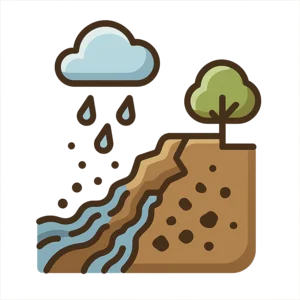
Erosion
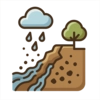
Erosion is the natural process where soil, rock…
Reads at Grades 3–5 Listens at Grades 1–5
 Screen-free speaker. Built for your kids.
No card, no commitment. One email when there is real news, and one click to stop.
Print & create
Answer keys·No prep·Free with an account
28 worksheets · answer keys · full story · quiz · Ages 8-10 · CEFR B1
Plus adds 102,000+ more stories in 27 languages, audio for every one, and printables for all of them.
Just want Erosion?
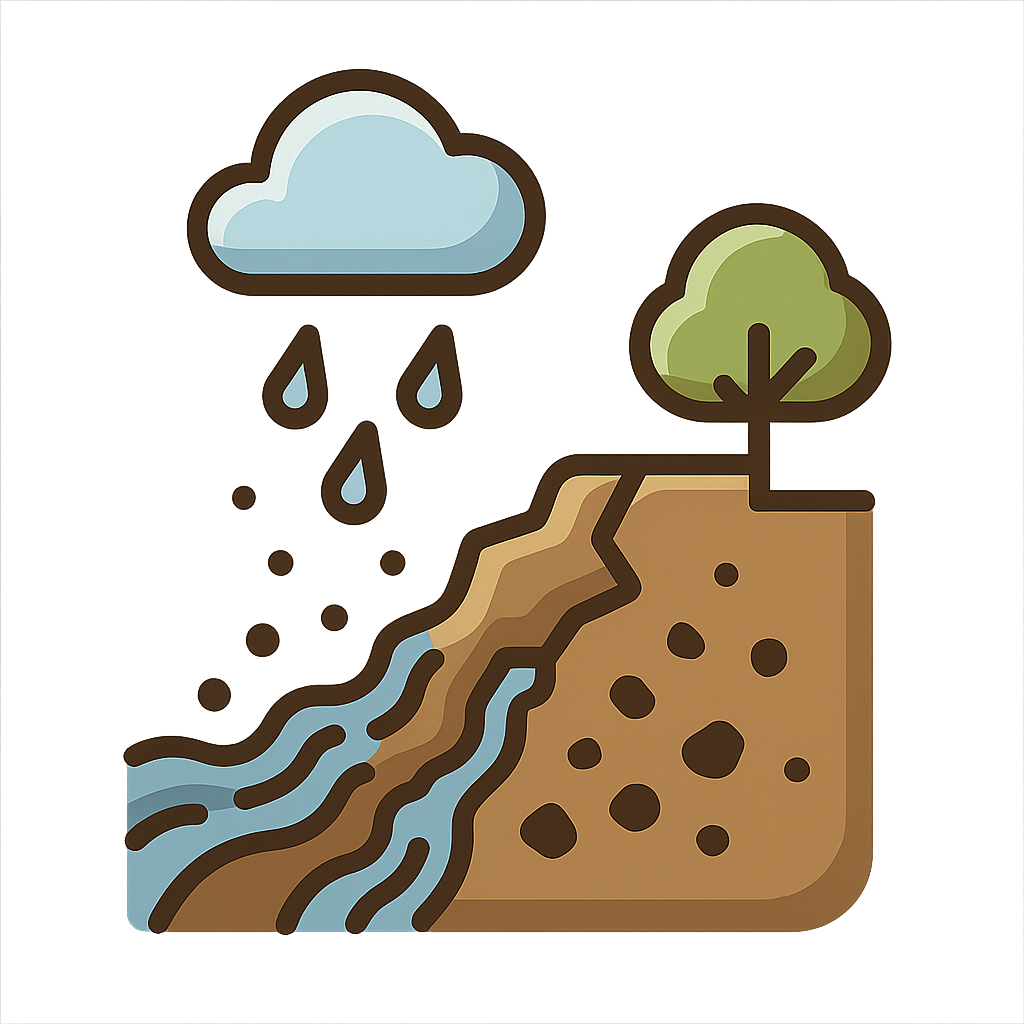
Have you ever stood by a river and watched it flow, wondering how it carved its deep, winding path through the land. Or maybe you've built a magnificent sandcastle on the beach, complete with tall towers and a moat, only to see the creeping waves wash it away, changing the shoreline bit by bit. That’s my handiwork. I am a sculptor, a grand artist, but I don’t use a hammer and chisel. My favorite tools are the wind that whispers through tall grasses and howls across empty plains, and the water that trickles in a tiny stream and roars down a mighty waterfall. I am a master of moving things. I pick up tiny, sparkling grains of sand, little bits of broken rock, and the rich, dark soil that helps plants grow, and I carry them on long journeys from one place to another. I am very, very patient. Over thousands and millions of years, I can perform incredible feats, like carving the gigantic Grand Canyon, revealing layers of colorful rock that tell the Earth’s ancient stories. I also do smaller jobs every single day. When a big storm comes, I might help a little stream become a bit wider, carrying away mud from its banks. I might smooth the sharp edges of a mountain pebble until it’s perfectly round. I am everywhere, all the time, silently and slowly reshaping the world. Can you guess who I am. I am Erosion, and I am always changing the face of the Earth.
For a very long time, people watched me work without truly understanding me. Farmers, especially, knew my power. They would watch with worried eyes as a heavy rainstorm washed away the precious topsoil from their fields, the very soil their crops needed to grow big and strong. It was a quiet struggle, a constant battle to keep the earth in place. Then, in the 1930s, in a part of America called the Great Plains, I showed everyone what I could do when things were out of balance. The land had become very dry after years without enough rain, and the soil was loose and dusty. My powerful partner, the Wind, and I saw our chance. We began to lift the dry, unprotected soil right off the ground. It wasn't just a little dust. We created enormous, rolling clouds of dirt that blotted out the sun. People called this time the Dust Bowl. Imagine a dark wall, a mile high, moving across the prairie, swallowing everything in its path. One day, April 14th, 1935, was so bad that people called it 'Black Sunday.' In the middle of the afternoon, the sky turned as dark as midnight. The dust was so thick you couldn't see your own hand in front of your face. It seeped into houses through every crack, covering furniture, plates, and beds with a thick layer of grit. It was a difficult and frightening time, but it taught people a very important lesson. A man named Hugh Hammond Bennett had been trying to warn people about me for years. He knew that I wasn't evil, but that people needed to farm in smarter ways to protect the land. After seeing the terrible storms of the Dust Bowl, everyone started to listen. Hugh Hammond Bennett helped the government create a special group called the Soil Conservation Service. His job was to travel the country and teach farmers how to work with me, not against me. He was like a soil doctor, showing people how to keep the land healthy and strong so that I couldn't carry it all away. He helped everyone understand that if you take care of the soil, it will take care of you.
The Earth's Sculptor
Have you ever stood by a river and watched it flow, wondering how it carved its deep, winding path through the land. Or maybe you've built a magnificent sandcastle on the beach, complete with tall towers and a moat, only to see the creeping waves wash it away, changing the shoreline bit by bit. That’s my handiwork. I am a sculptor, a grand artist, but I don’t use a hammer and chisel. My favorite tools are the wind that whispers through tall grasses and howls across empty plains, and the water that trickles in a tiny stream and roars down a mighty waterfall. I am a master of moving things. I pick up tiny, sparkling grains of sand, little bits of broken rock, and the rich, dark soil that helps plants grow, and I carry them on long journeys from one place to another. I am very, very patient. Over thousands and millions of years, I can perform incredible feats, like carving the gigantic Grand Canyon, revealing layers of colorful rock that tell the Earth’s ancient stories. I also do smaller jobs every single day. When a big storm comes, I might help a little stream become a bit wider, carrying away mud from its banks. I might smooth the sharp edges of a mountain pebble until it’s perfectly round. I am everywhere, all the time, silently and slowly reshaping the world. Can you guess who I am. I am Erosion, and I am always changing the face of the Earth.
For a very long time, people watched me work without truly understanding me. Farmers, especially, knew my power. They would watch with worried eyes as a heavy rainstorm washed away the precious topsoil from their fields, the very soil their crops needed to grow big and strong. It was a quiet struggle, a constant battle to keep the earth in place. Then, in the 1930s, in a part of America called the Great Plains, I showed everyone what I could do when things were out of balance. The land had become very dry after years without enough rain, and the soil was loose and dusty. My powerful partner, the Wind, and I saw our chance. We began to lift the dry, unprotected soil right off the ground. It wasn't just a little dust. We created enormous, rolling clouds of dirt that blotted out the sun. People called this time the Dust Bowl. Imagine a dark wall, a mile high, moving across the prairie, swallowing everything in its path. One day, April 14th, 1935, was so bad that people called it 'Black Sunday.' In the middle of the afternoon, the sky turned as dark as midnight. The dust was so thick you couldn't see your own hand in front of your face. It seeped into houses through every crack, covering furniture, plates, and beds with a thick layer of grit. It was a difficult and frightening time, but it taught people a very important lesson. A man named Hugh Hammond Bennett had been trying to warn people about me for years. He knew that I wasn't evil, but that people needed to farm in smarter ways to protect the land. After seeing the terrible storms of the Dust Bowl, everyone started to listen. Hugh Hammond Bennett helped the government create a special group called the Soil Conservation Service. His job was to travel the country and teach farmers how to work with me, not against me. He was like a soil doctor, showing people how to keep the land healthy and strong so that I couldn't carry it all away. He helped everyone understand that if you take care of the soil, it will take care of you.
Please don’t think I am a villain. I am not mean or destructive on purpose. I am simply a part of nature’s great cycle, like the rain that falls or the sun that shines. The Dust Bowl taught people that when the land is hurt, I can become a powerful force of destruction. But now that they understand me better, people have become my partners. They have learned clever ways to work with me, to guide my energy so we can create a healthy world together. Can you picture a long line of trees standing tall at the edge of a field. Those are called windbreaks, and they act like a wall to slow down my friend the Wind, so he can’t pick up so much soil. On steep hills, farmers now build step-like fields called terraces. When it rains, the water slows down as it goes from step to step, giving it time to soak into the ground instead of rushing off and taking the soil with it. They also plant special 'cover crops' during the off-season, whose roots act like a net, holding the precious soil in place. I am still out here, sculpting beautiful canyons, shaping sandy beaches, and carving gentle valleys. But now, people are working alongside me. They are learning to protect the fertile soil we all need to grow food and live. By understanding me, Erosion, they are learning how to be better caretakers of our amazing, ever-changing planet.
Wow facts
About
Erosion is the natural process where soil, rock, and other materials are moved from one place to another by forces like water, wind, and ice, shaping the Earth's surface over time.
Take a Quiz
Question 1 of 5
The story says I can perform 'incredible feats.' What does the word 'feats' mean in this sentence?
Explore next




Want to do even more?
Go beyond exploring. Unlock tools that turn every story into real learning.

Storypie Plus for families
Full stories, quizzes, and printables. Nights and car rides, sorted.
- Unlimited audio stories
- Create Mode: your child stars in the story
- Offline downloads
- Printable worksheets & coloring pages

Why Storypie for Schools
Students engaged. Prep in seconds. Evenings back to you.
- Worksheets & Quizzes
- Classroom Management
- Formative Assessment
- Custom Curriculum & Lesson Plans
- 27 Languages

Why Storypie for Homeschool
Curriculum done. They'll ask for more. Hours back in your day.
- Worksheet Generator
- First-Person Audio Stories
- Built-in Comprehension Quizzes
- Custom Curriculum & Lesson Plans
- Print & Go Activities