English

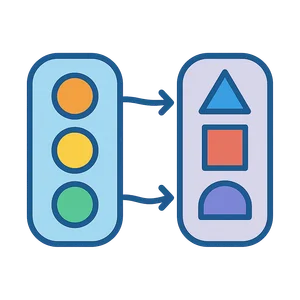
Functions
In mathematics, a function is a rule that relates a set of inputs to a set of possible outputs…
Reads at Grades 6–8 Listens at Grades 4–8
Print & create
Answer keys·No prep·Free with an account
28 worksheets · answer keys · full story · quiz · Ages 10-12 · CEFR B2
Plus adds 244,000+ more stories in 27 languages, audio for every one, and printables for all of them.
Just want Functions?
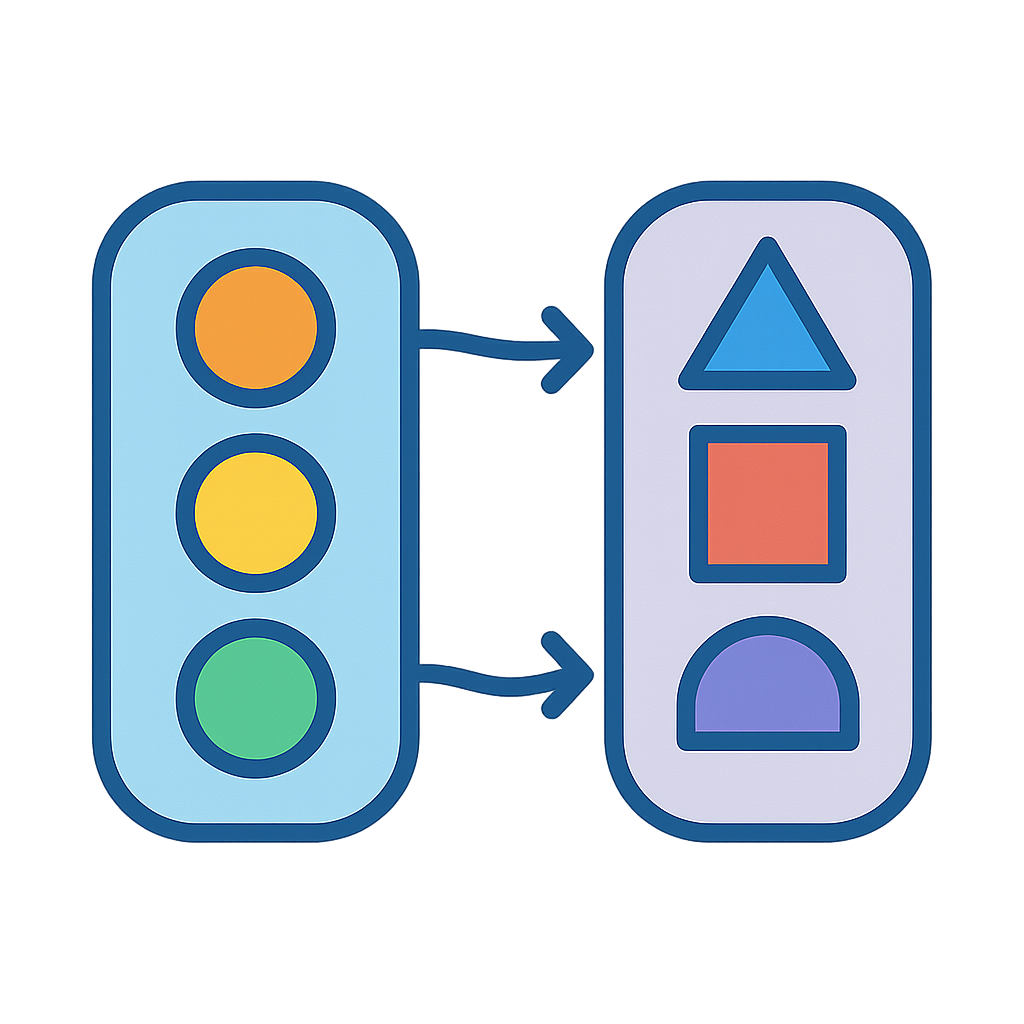
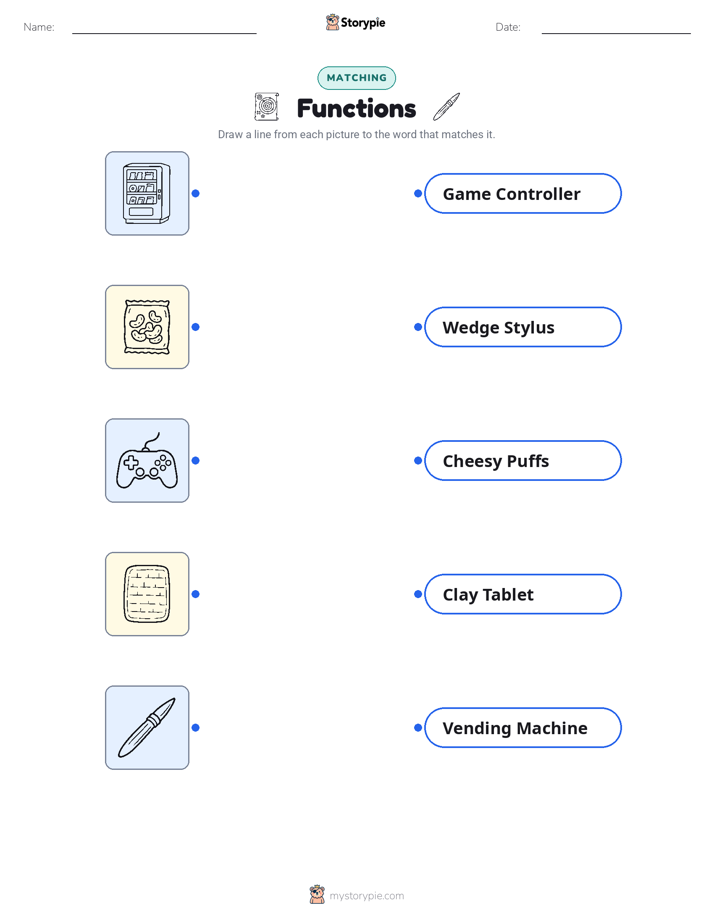
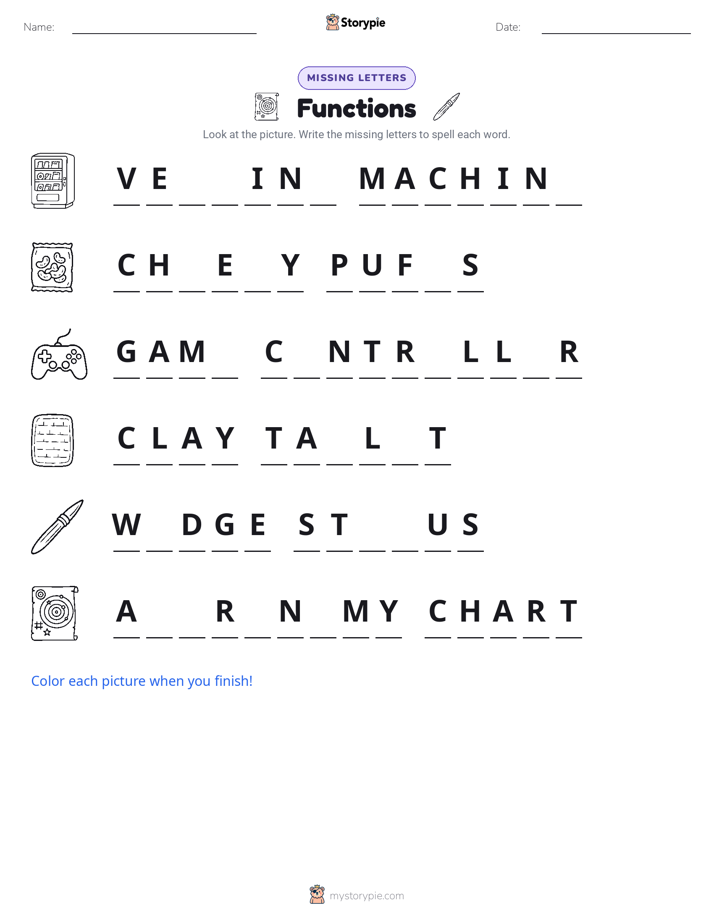
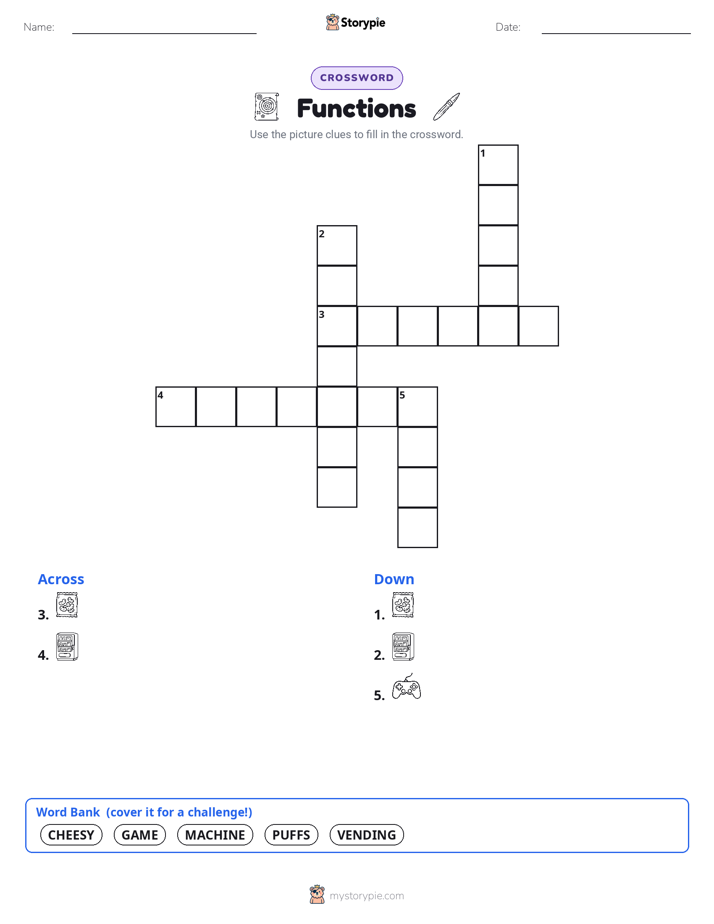
Imagine you are standing in front of a giant, humming vending machine, its glass window filled with colorful snacks. Your eyes land on a bag of cheesy puffs in slot B4. You press the cool, plastic buttons—B, then 4. An electric whir begins, a metal coil turns, and your specific snack tumbles down. It never gives you pretzels by mistake. Now, picture yourself in a video game, controller in hand. You press the jump button, and your character leaps into the air, always reaching the same height, perfect for clearing an obstacle. You press it twice, and they perform a double jump. Your action has a reliable reaction. I am the invisible rulebook that connects your choice to the result. I am the secret partnership that guarantees for every specific cause, there is one, and only one, specific effect. I make the world predictable and allow you to trust that your actions will lead to expected outcomes. Before you ever heard my name, you relied on me every single day. I am the steady, dependable link between one thing and another that makes the universe make sense. My name is Function.
For thousands of years, people used me without giving me a name. My earliest whispers can be found on ancient clay tablets from Babylonia, dating all the way back to around 2000 BCE. Clever scribes would press wedge-shaped marks into damp clay, creating tables of numbers. One column would list a number, and the next would list its square. That was me. The input was the number, and the unique output was its square. I was a silent, reliable partner in their calculations. Centuries later, around 150 CE, the brilliant Greek astronomer Ptolemy used me to map the heavens. He created complex charts that could predict the movements of planets and stars. He would look up a specific day of the year in his table—the input—and it would point him to a specific position in the night sky—the output. Still, people saw me only as a list or a table, a tool for organizing information. It took a very long time for someone to see me not just as data, but as a living idea. That breakthrough came in the 14th century from a French thinker named Nicole Oresme. He did something revolutionary. He began to draw me, creating the very first graphs to show how one quantity could change in relation to another, like how an object’s speed might increase over time. He gave my relationship a visual form.
The Secret Rulebook of the World
Imagine you are standing in front of a giant, humming vending machine, its glass window filled with colorful snacks. Your eyes land on a bag of cheesy puffs in slot B4. You press the cool, plastic buttons—B, then 4. An electric whir begins, a metal coil turns, and your specific snack tumbles down. It never gives you pretzels by mistake. Now, picture yourself in a video game, controller in hand. You press the jump button, and your character leaps into the air, always reaching the same height, perfect for clearing an obstacle. You press it twice, and they perform a double jump. Your action has a reliable reaction. I am the invisible rulebook that connects your choice to the result. I am the secret partnership that guarantees for every specific cause, there is one, and only one, specific effect. I make the world predictable and allow you to trust that your actions will lead to expected outcomes. Before you ever heard my name, you relied on me every single day. I am the steady, dependable link between one thing and another that makes the universe make sense. My name is Function.
For thousands of years, people used me without giving me a name. My earliest whispers can be found on ancient clay tablets from Babylonia, dating all the way back to around 2000 BCE. Clever scribes would press wedge-shaped marks into damp clay, creating tables of numbers. One column would list a number, and the next would list its square. That was me. The input was the number, and the unique output was its square. I was a silent, reliable partner in their calculations. Centuries later, around 150 CE, the brilliant Greek astronomer Ptolemy used me to map the heavens. He created complex charts that could predict the movements of planets and stars. He would look up a specific day of the year in his table—the input—and it would point him to a specific position in the night sky—the output. Still, people saw me only as a list or a table, a tool for organizing information. It took a very long time for someone to see me not just as data, but as a living idea. That breakthrough came in the 14th century from a French thinker named Nicole Oresme. He did something revolutionary. He began to draw me, creating the very first graphs to show how one quantity could change in relation to another, like how an object’s speed might increase over time. He gave my relationship a visual form.
My true coming-of-age party happened in the 17th century, a time buzzing with explosive new ideas. In the 1630s, two incredible mathematicians working separately, René Descartes and Pierre de Fermat, had the same brilliant insight. They discovered a way to connect algebra, the language of equations, with geometry, the world of shapes and lines. This was a game-changer for me. Suddenly, an algebraic rule could be drawn as a picture on a coordinate plane. Every single point on that line or curve was a perfect example of me at work, a specific input (x) paired with its unique output (y). It was a moment of pure clarity. Then, around the year 1673, a German genius named Gottfried Wilhelm Leibniz decided I deserved a proper title. He looked at the work he and another giant of science, Isaac Newton, were doing to invent an astonishing new kind of math called calculus, and he gave me my name: 'function.' Both he and Newton realized they needed me to understand how things change from one moment to the next. In the 18th century, another mathematical superstar, Leonhard Euler, made me even more famous. Around 1748, he gave me my signature calling card, a notation that everyone uses today: f(x). When you see 'f(x) = x + 2,' that is me, proudly announcing my rule to the world.
My definition got one final, crucial polish in the 19th century. Around the year 1837, a mathematician named Peter Gustav Lejeune Dirichlet made my identity crystal clear. He explained that I could be any rule at all, no matter how simple or complex, as long as I followed my one golden principle: each input must have one and only one output. This formal definition made me more powerful and versatile than ever before, allowing me to describe relationships far beyond simple numbers and graphs. Today, I am everywhere, woven into the fabric of your world. I am in the millions of lines of code that run your favorite apps and video games. I am in the scientific models that predict the weather, helping you decide whether to wear a coat. I help animators create the smooth movements of cartoon characters and empower engineers to design strong, safe bridges. I am a fundamental tool for asking 'what if?' and getting a clear, dependable answer. Every time you see a pattern, predict an outcome, or build something new based on a consistent rule, you are using me. I am your partner in curiosity, and together, we can continue to discover and understand the rules that govern the entire universe.
Wow facts
About
In mathematics, a function is a rule that relates a set of inputs to a set of possible outputs, where each input is related to exactly one output.
Take a Quiz
Question 1 of 5
According to the story, what was Nicole Oresme's major breakthrough in the 14th century?
Explore next





Want to do even more?
Go beyond exploring. Unlock tools that turn every story into real learning.

Storypie Plus for families
Full stories, quizzes, and printables. Nights and car rides, sorted.
- Unlimited audio stories
- Create Mode: your child stars in the story
- Offline downloads
- Printable worksheets & coloring pages

Why Storypie for Schools
Students engaged. Prep in seconds. Evenings back to you.
- Worksheets & Quizzes
- Classroom Management
- Formative Assessment
- Custom Curriculum & Lesson Plans
- 27 Languages

Why Storypie for Homeschool
Curriculum done. They'll ask for more. Hours back in your day.
- Worksheet Generator
- First-Person Audio Stories
- Built-in Comprehension Quizzes
- Custom Curriculum & Lesson Plans
- Print & Go Activities