English

Functions
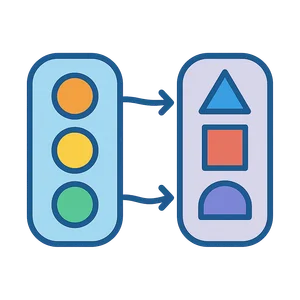
In mathematics, a function is a rule that relates a set of inputs to a set of possible outputs…
Reads at Grades 3–5 Listens at Grades 1–5
Print & create
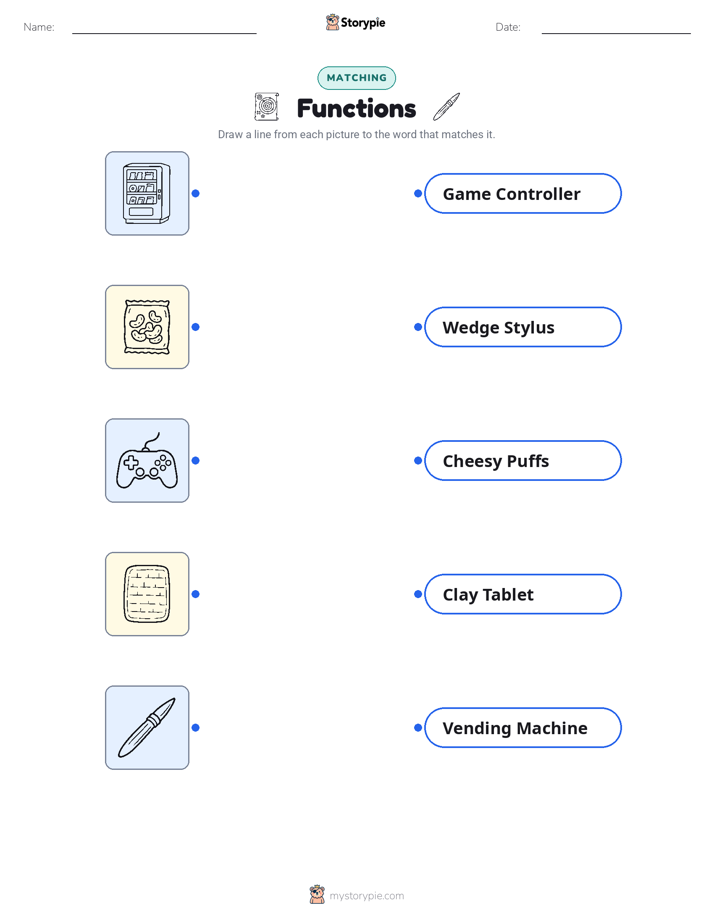
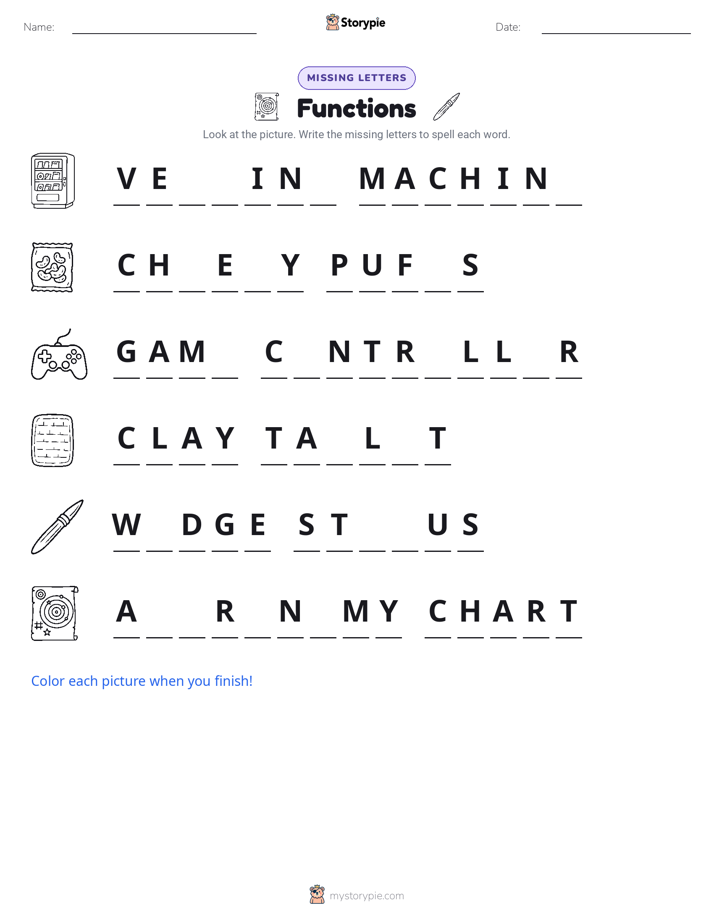
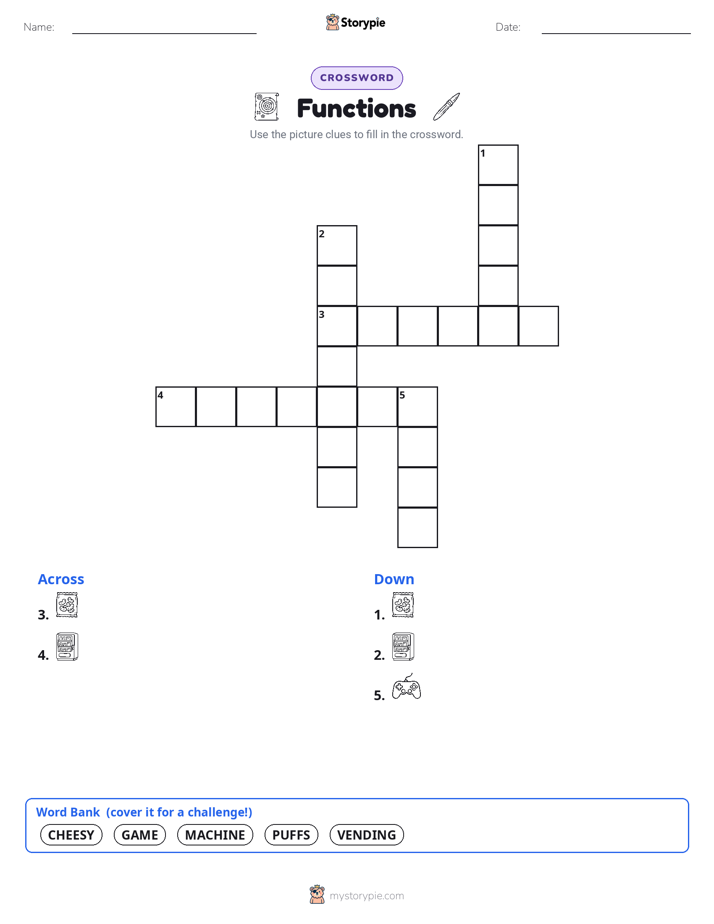
Answer keys·No prep·Free with an account
28 worksheets · answer keys · full story · quiz · Ages 8-10 · CEFR B1
Plus adds 244,000+ more stories in 27 languages, audio for every one, and printables for all of them.
Just want Functions?
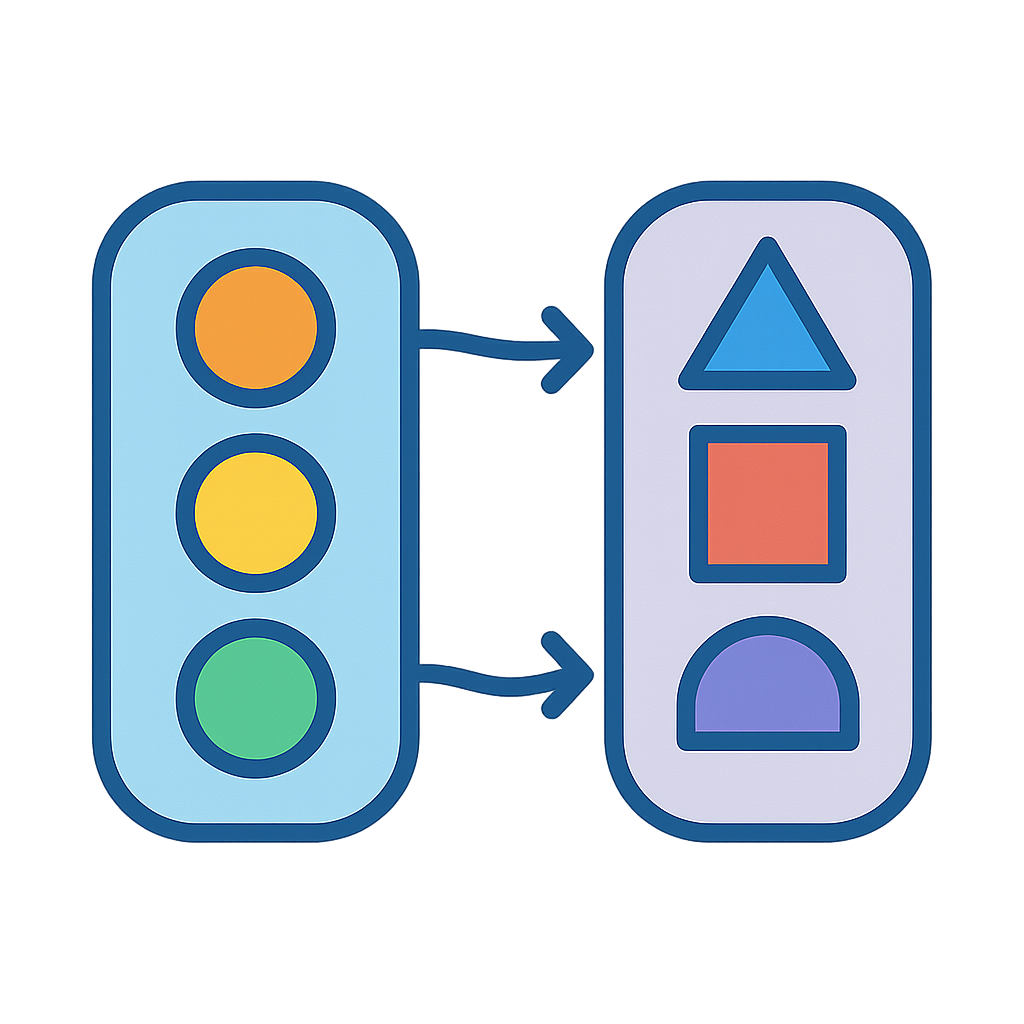
Have you ever felt like the world has secret rules that make everything work. A rule that promises if you do one thing, another specific thing will always happen. It’s like a magical vending machine in a land of candy. When you put in one shiny silver coin—that's your input—you get exactly the same swirly lollipop—your output—every single time. If you put in a golden coin, you always get a chocolate bar. The machine never gets confused and gives you a gumball by mistake. Or think of a master baker's recipe book. The recipe is the rule. If you follow it perfectly and put in flour, sugar, and eggs as your inputs, you will always, always get a fluffy, delicious cake as your output. You'd never get a bowl of soup. This dependable, predictable connection is my special power. I link one thing to another with a rule that never breaks, creating order out of chaos. Can you imagine a world without rules like me. I am a Function, the dependable rule that connects one thing to another.
Long before anyone knew my name, people still felt my presence. Let's travel way back in time, to the ancient land of Babylon, around 500 BCE. Imagine astronomers with long beards, looking up at the sparkly night sky. They didn't call me a function, but they used my idea to make sense of the heavens. They created special clay tables, like ancient spreadsheets, to predict where the moon and stars would be. For a specific day of the year, which was their input, their tables would point to a specific spot in the sky, which was their output. This helped them know when to plant crops and when to celebrate festivals. A few hundred years later, brilliant thinkers in ancient Greece also explored relationships between numbers and shapes. They played with circles and triangles, discovering how the length of one side could determine the length of another. They were getting so close to understanding me, but my true identity was still just a whisper carried on the wind, a secret waiting to be fully discovered.
I Am a Function
Have you ever felt like the world has secret rules that make everything work. A rule that promises if you do one thing, another specific thing will always happen. It’s like a magical vending machine in a land of candy. When you put in one shiny silver coin—that's your input—you get exactly the same swirly lollipop—your output—every single time. If you put in a golden coin, you always get a chocolate bar. The machine never gets confused and gives you a gumball by mistake. Or think of a master baker's recipe book. The recipe is the rule. If you follow it perfectly and put in flour, sugar, and eggs as your inputs, you will always, always get a fluffy, delicious cake as your output. You'd never get a bowl of soup. This dependable, predictable connection is my special power. I link one thing to another with a rule that never breaks, creating order out of chaos. Can you imagine a world without rules like me. I am a Function, the dependable rule that connects one thing to another.
Long before anyone knew my name, people still felt my presence. Let's travel way back in time, to the ancient land of Babylon, around 500 BCE. Imagine astronomers with long beards, looking up at the sparkly night sky. They didn't call me a function, but they used my idea to make sense of the heavens. They created special clay tables, like ancient spreadsheets, to predict where the moon and stars would be. For a specific day of the year, which was their input, their tables would point to a specific spot in the sky, which was their output. This helped them know when to plant crops and when to celebrate festivals. A few hundred years later, brilliant thinkers in ancient Greece also explored relationships between numbers and shapes. They played with circles and triangles, discovering how the length of one side could determine the length of another. They were getting so close to understanding me, but my true identity was still just a whisper carried on the wind, a secret waiting to be fully discovered.
For centuries, I was a helpful but nameless idea. Then, everything changed. Let's zoom forward to the 17th century, a time of big ideas and even bigger wigs. There I met a brilliant man named Gottfried Wilhelm Leibniz. Around the year 1673, while studying how things change, he finally gave me a proper name. He called me a "function." He saw me everywhere, especially in how things moved and changed together. For instance, he realized that the steepness of a hill is a function of where you are standing on it. At the bottom, it's not steep, but halfway up, it’s very steep. My job was to describe that relationship. But the person who really made me a superstar was a mathematician named Leonhard Euler in the 18th century. Around 1748, he gave me my famous signature: f(x), which you see in math books today. It looks fancy, but it just means "a function of x." Euler showed everyone that I could be written as a formula, like f(x) = x + 2. This meant you could put any number in for x, follow my rule, and get a specific answer. I became a powerful and precise tool for scientists, engineers, and dreamers to build and understand the world.
Even with a name and a signature, my definition needed a little polishing to be perfectly clear. That final touch came in 1837 from a careful mathematician named Peter Gustav Lejeune Dirichlet. He gave me the one rule to rule them all, the one that makes me so trustworthy. He announced to the world that for every single input, there can be one, and only one, single output. No exceptions. A vending machine can't give you both a soda and a bag of chips for one coin. This crystal-clear rule is what makes me so important today. I am working inside your favorite video games right now. When you press the 'jump' button (the input), I make sure your character jumps on the screen (the output). They don't suddenly start swimming. I am in the GPS that helps your family find their way. It takes your location as an input and shows you the right map as the output. I even help animators create your favorite cartoons, telling a computer exactly how a character should move from one moment to the next, making sure their smiles and waves look just right.
So you see, I am more than just a math term. I am your dependable friend, bringing order and predictability to a world that can sometimes feel very random. My core job is to build reliable relationships. From the giant computers that forecast tomorrow's weather to the little robot vacuum that cleans your floor, I am there, making sure things work the way they are supposed to. Even when you follow a simple recipe to bake cookies, you are using me. The amount of flour you put in affects how the cookies turn out. So next time you see a pattern, or a rule, or a connection where one thing leads to another, think of me. I am a Function, and I am here to remind you that by understanding the relationships between things, we can make sense of the universe and build the most amazing things together.
Wow facts
About
In mathematics, a function is a rule that relates a set of inputs to a set of possible outputs, where each input is related to exactly one output.
Take a Quiz
Question 1 of 5
According to the story, what did ancient Babylonian astronomers use to predict the location of the moon and stars?
Explore next





Want to do even more?
Go beyond exploring. Unlock tools that turn every story into real learning.

Storypie Plus for families
Full stories, quizzes, and printables. Nights and car rides, sorted.
- Unlimited audio stories
- Create Mode: your child stars in the story
- Offline downloads
- Printable worksheets & coloring pages

Why Storypie for Schools
Students engaged. Prep in seconds. Evenings back to you.
- Worksheets & Quizzes
- Classroom Management
- Formative Assessment
- Custom Curriculum & Lesson Plans
- 27 Languages

Why Storypie for Homeschool
Curriculum done. They'll ask for more. Hours back in your day.
- Worksheet Generator
- First-Person Audio Stories
- Built-in Comprehension Quizzes
- Custom Curriculum & Lesson Plans
- Print & Go Activities