English

How Libraries Work (A Visit to the Library)
A first-person story told from the perspective of the library concept…
Reads at Grades 6–8 Listens at Grades 4–8
Print & create
Answer keys·No prep·Free with an account
28 worksheets · answer keys · full story · quiz · Ages 10-12 · CEFR B2
Plus adds 244,000+ more stories in 27 languages, audio for every one, and printables for all of them.
Just want How Libraries Work (A Visit to the Library)?
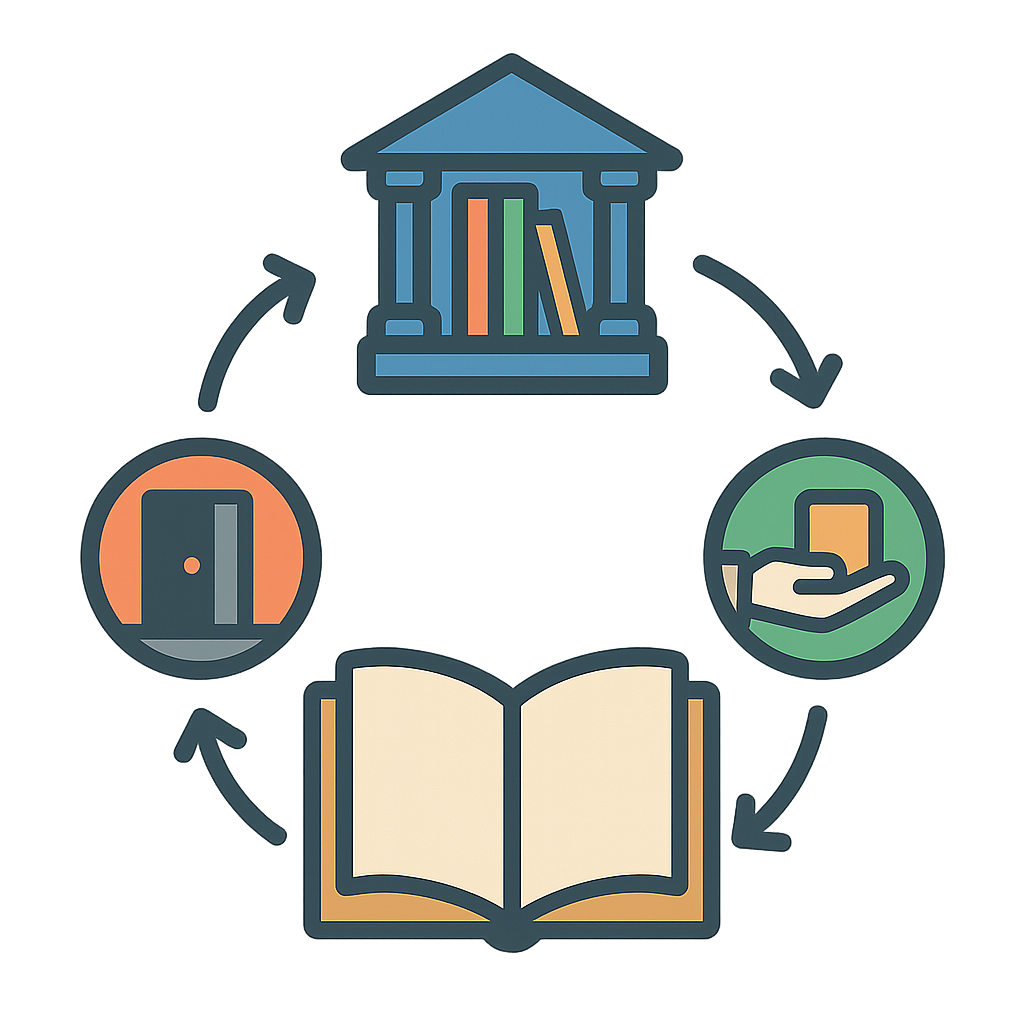
Imagine a place where silence has a sound. It’s not an empty quiet, but a gentle hum of turning pages, soft footsteps on carpet, and the distant tap-tap-tapping of fingers on a keyboard. The air itself smells of stories, a mix of old, dusty paper, the sharp scent of new ink, and the faint, clean smell of bookbinding glue. All around you, tall shelves stretch toward the ceiling, their spines lined up like patient soldiers guarding millions of secrets, adventures, and ideas. Each one is a doorway. One spine might lead you to a dragon’s lair, another to the outer rings of Saturn. One might teach you the secrets of ancient Rome, while the one next to it holds the blueprints for building a robot. In this house, you can travel through time, meet heroes, solve mysteries, and ask the biggest questions in the universe without ever leaving your chair. It is a treasure chest where the gold is knowledge and the jewels are brand new thoughts. I am a Library, a home for every story ever dreamed and every question ever asked.
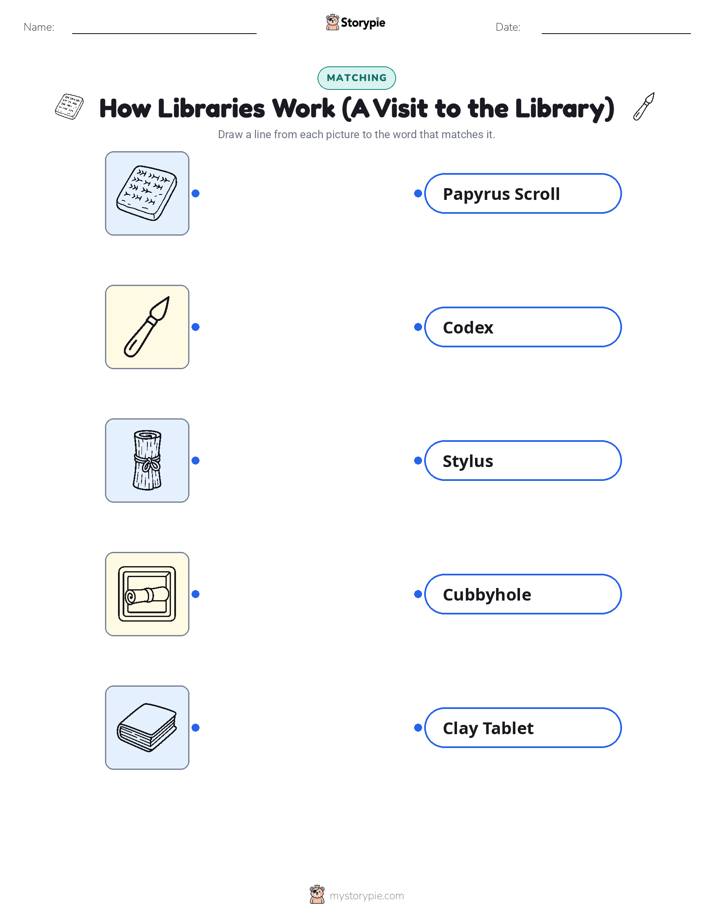
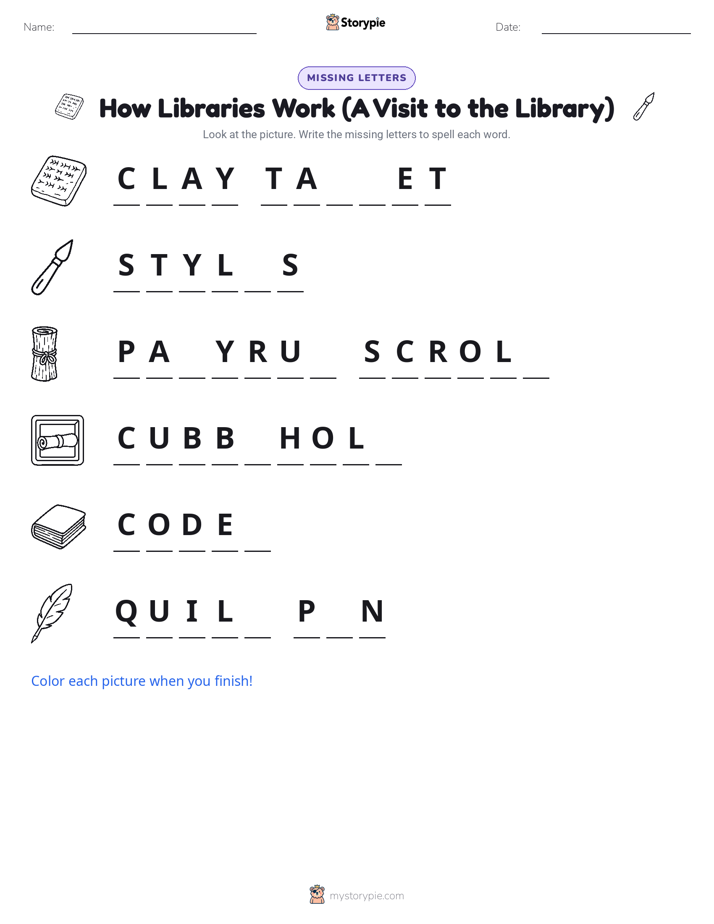
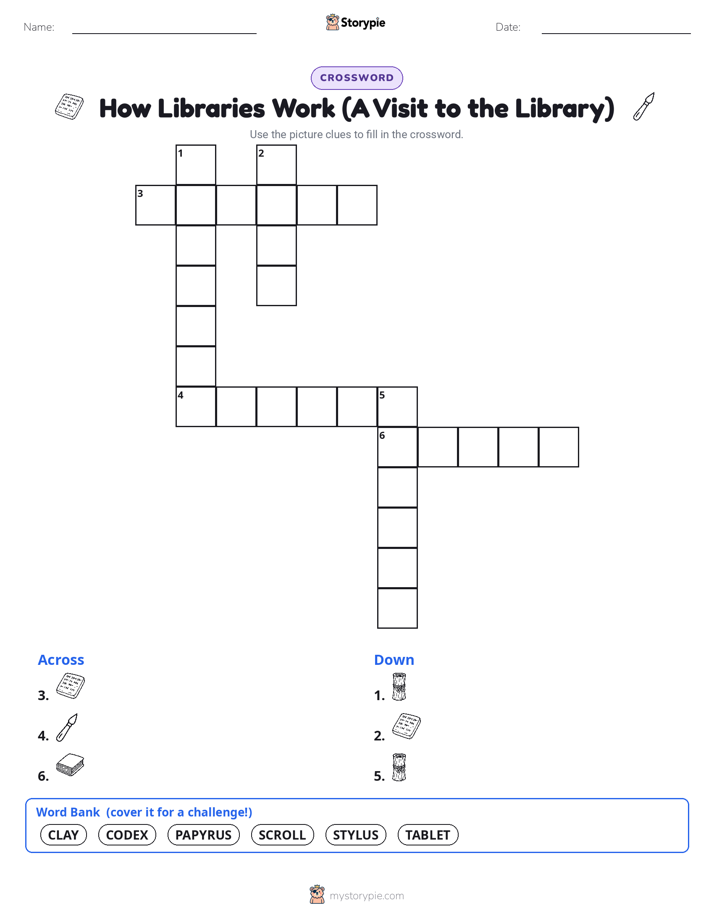
My first memories are not of paper and ink, but of damp clay and the sharp point of a stylus. My earliest form took shape in the sun-baked lands of Mesopotamia over four thousand years ago, around 2600 BCE. There, in cities like Ebla and Nineveh, I was an archive of clay tablets. Scribes would press wedge-shaped marks into me, recording laws, tax records, epic poems, and royal histories. I was heavy, sturdy, and built to last. One of my proudest early homes was the great Library of Ashurbanipal in the 7th century BCE. The Assyrian king was a passionate collector, and he sent scribes all over his empire to gather texts. He built a magnificent house for me, holding over 30,000 clay tablets, all carefully organized by subject. As time flowed on, I traveled to the warm banks of the Nile River in Egypt. There, I changed. I became light and portable, made from the papyrus plant. I was no longer a collection of tablets, but a room full of scrolls, rolled up and stored in neat rows of cubbyholes. My most famous home from this era was the legendary Library of Alexandria, founded in the 3rd century BCE. It was a breathtaking center for the entire known world’s learning, where scholars came to study mathematics, astronomy, and philosophy. But in these ancient days, I was a treasure. I belonged to kings, priests, and wealthy scholars. My doors were not open to everyone.
The House of Whispers
Imagine a place where silence has a sound. It’s not an empty quiet, but a gentle hum of turning pages, soft footsteps on carpet, and the distant tap-tap-tapping of fingers on a keyboard. The air itself smells of stories, a mix of old, dusty paper, the sharp scent of new ink, and the faint, clean smell of bookbinding glue. All around you, tall shelves stretch toward the ceiling, their spines lined up like patient soldiers guarding millions of secrets, adventures, and ideas. Each one is a doorway. One spine might lead you to a dragon’s lair, another to the outer rings of Saturn. One might teach you the secrets of ancient Rome, while the one next to it holds the blueprints for building a robot. In this house, you can travel through time, meet heroes, solve mysteries, and ask the biggest questions in the universe without ever leaving your chair. It is a treasure chest where the gold is knowledge and the jewels are brand new thoughts. I am a Library, a home for every story ever dreamed and every question ever asked.
My first memories are not of paper and ink, but of damp clay and the sharp point of a stylus. My earliest form took shape in the sun-baked lands of Mesopotamia over four thousand years ago, around 2600 BCE. There, in cities like Ebla and Nineveh, I was an archive of clay tablets. Scribes would press wedge-shaped marks into me, recording laws, tax records, epic poems, and royal histories. I was heavy, sturdy, and built to last. One of my proudest early homes was the great Library of Ashurbanipal in the 7th century BCE. The Assyrian king was a passionate collector, and he sent scribes all over his empire to gather texts. He built a magnificent house for me, holding over 30,000 clay tablets, all carefully organized by subject. As time flowed on, I traveled to the warm banks of the Nile River in Egypt. There, I changed. I became light and portable, made from the papyrus plant. I was no longer a collection of tablets, but a room full of scrolls, rolled up and stored in neat rows of cubbyholes. My most famous home from this era was the legendary Library of Alexandria, founded in the 3rd century BCE. It was a breathtaking center for the entire known world’s learning, where scholars came to study mathematics, astronomy, and philosophy. But in these ancient days, I was a treasure. I belonged to kings, priests, and wealthy scholars. My doors were not open to everyone.
As the Roman Empire rose, I changed my clothes again. The long, clumsy scrolls were gradually replaced by something wonderfully convenient: the codex. This was a collection of folded papyrus or parchment sheets stitched together at one end, much like the books you hold today. For the first time, readers could easily flip between my pages to find information. Then came a long, quiet period known as the Middle Ages. During these centuries, I often lived a secluded life inside stone monasteries. Monks became my dedicated guardians. In quiet rooms called scriptoriums, they would spend their entire lives hunched over desks, painstakingly copying texts by hand with quill and ink. It was slow, difficult work, but they preserved knowledge through wars and turmoil, keeping the lights of science, philosophy, and literature from going out. But everything changed around the year 1440. A man in Germany named Johannes Gutenberg invented the printing press with movable type. Suddenly, a book that took a monk a year to copy could be reproduced hundreds of times in a week. This invention was like a key turning in a lock. Ideas could now travel faster and farther than ever before, and I began to step out from the exclusive walls of palaces and monasteries, ready to meet the world.
My journey to becoming a place for everyone was a slow and steady march, built by people who believed knowledge was a right, not a privilege. One of the first great steps was taken in 1731 by Benjamin Franklin in America. He and his friends formed the Library Company of Philadelphia. It wasn't a public library like you know today; instead, members paid a fee to join and pooled their money to buy books that they could all share. It was a revolutionary idea. But the true birthday of my modern self came on April 9th, 1833, in Peterborough, New Hampshire. It was there that the first library supported by public taxes and open to absolutely everyone, for free, was established. This was the dream realized: a place for the community, funded by the community. The idea caught on, and it was fanned into a brilliant flame by a man named Andrew Carnegie. A Scottish immigrant who became one of the richest men in the world, Carnegie believed deeply in my power to help people improve their lives. In the late 19th and early 20th centuries, he used his incredible fortune to help build over 2,500 public libraries around the world. As I grew, I needed a way to keep myself organized. In 1876, a clever librarian named Melvil Dewey created a brilliant system using numbers to sort all human knowledge into ten basic categories. The Dewey Decimal System brought order to my shelves, empowering anyone to walk in and find exactly the book they were looking for.
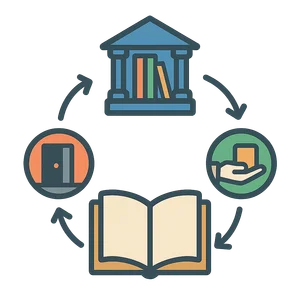
Today, I am more alive and dynamic than ever, and my shelves are both physical and digital. While I will always love the feel and smell of a paper book, my walls have expanded far beyond brick and mortar. I am the computer where you research a school project and the free Wi-Fi that connects you to the world. I am the e-book and audiobook you can download to your tablet or phone from anywhere, at any time. In some of my homes, I have 3D printers that can bring your digital designs into the physical world, and recording studios where you can start your own podcast. I am a bustling community center. I host book clubs where neighbors become friends, technology classes for learning new skills, and cheerful story times where the youngest children first fall in love with reading. I am a quiet, safe space to study, a bustling hub to meet with a group, and a launching pad for new hobbies and passions. My form has changed over the millennia, from clay to scroll to codex to computer screen, but my purpose has remained the same. I am proof that the best ideas are the ones we share. My doors, both physical and virtual, are always open for you to learn, to create, to dream, and to begin your very own story.
Wow facts
About
A first-person story told from the perspective of the library concept, tracing its history from ancient collections of clay tablets to the modern community hubs we know today.
Take a Quiz
Question 1 of 5
In your own words, describe the journey of the library from its earliest form in Mesopotamia to the invention of the printing press.
Explore next





Want to do even more?
Go beyond exploring. Unlock tools that turn every story into real learning.

Storypie Plus for families
Full stories, quizzes, and printables. Nights and car rides, sorted.
- Unlimited audio stories
- Create Mode: your child stars in the story
- Offline downloads
- Printable worksheets & coloring pages

Why Storypie for Schools
Students engaged. Prep in seconds. Evenings back to you.
- Worksheets & Quizzes
- Classroom Management
- Formative Assessment
- Custom Curriculum & Lesson Plans
- 27 Languages

Why Storypie for Homeschool
Curriculum done. They'll ask for more. Hours back in your day.
- Worksheet Generator
- First-Person Audio Stories
- Built-in Comprehension Quizzes
- Custom Curriculum & Lesson Plans
- Print & Go Activities