English

Human Heart
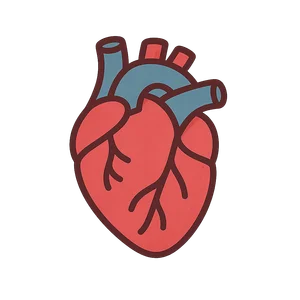
The Human Heart is a muscular organ that pumps blood throughout the body via the circulatory system…
Reads at Grades 3–5 Listens at Grades 1–5
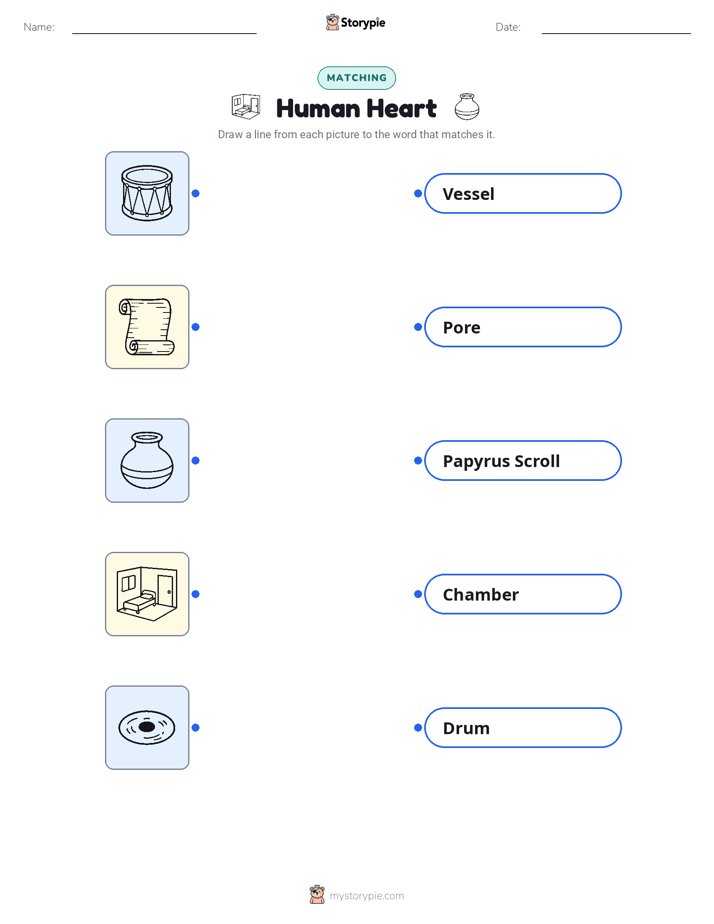
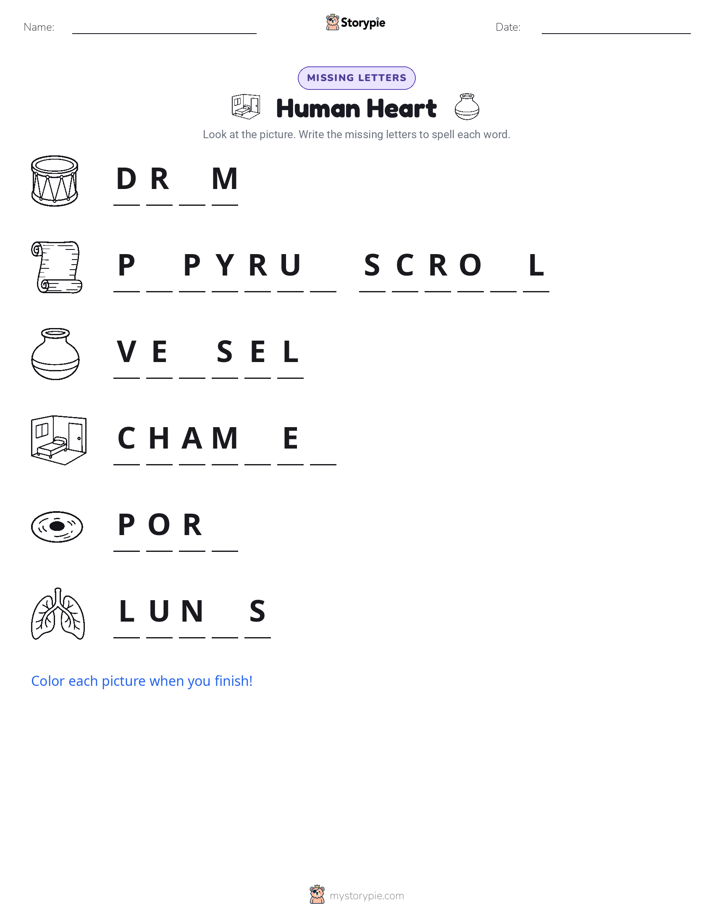
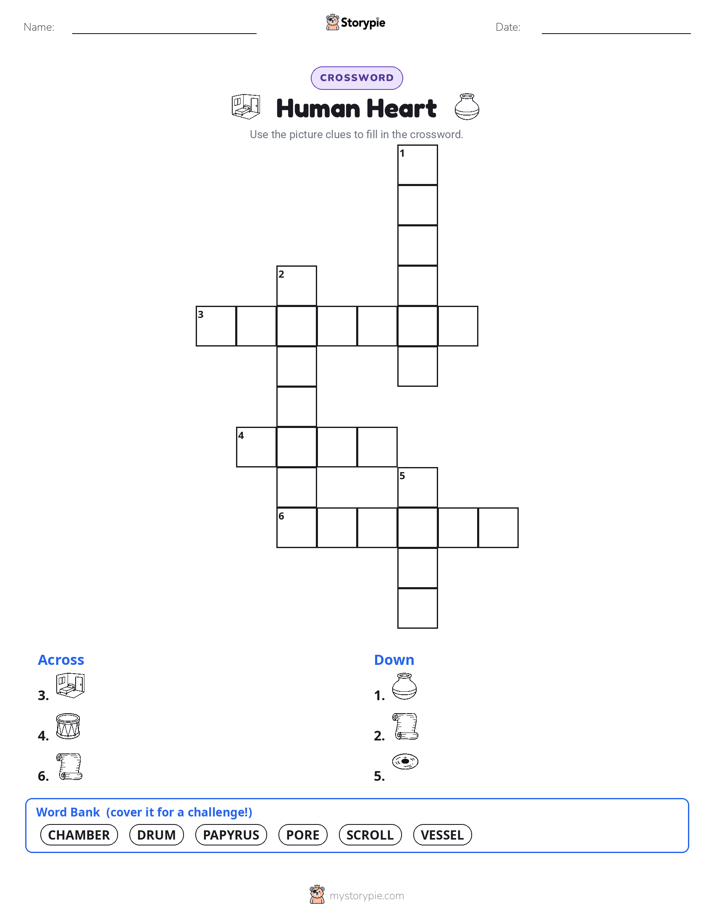
Print & create
Answer keys·No prep·Free with an account
28 worksheets · answer keys · full story · quiz · Ages 8-10 · CEFR B1
Plus adds 116,000+ more stories in 27 languages, audio for every one, and printables for all of them.
Just want Human Heart?
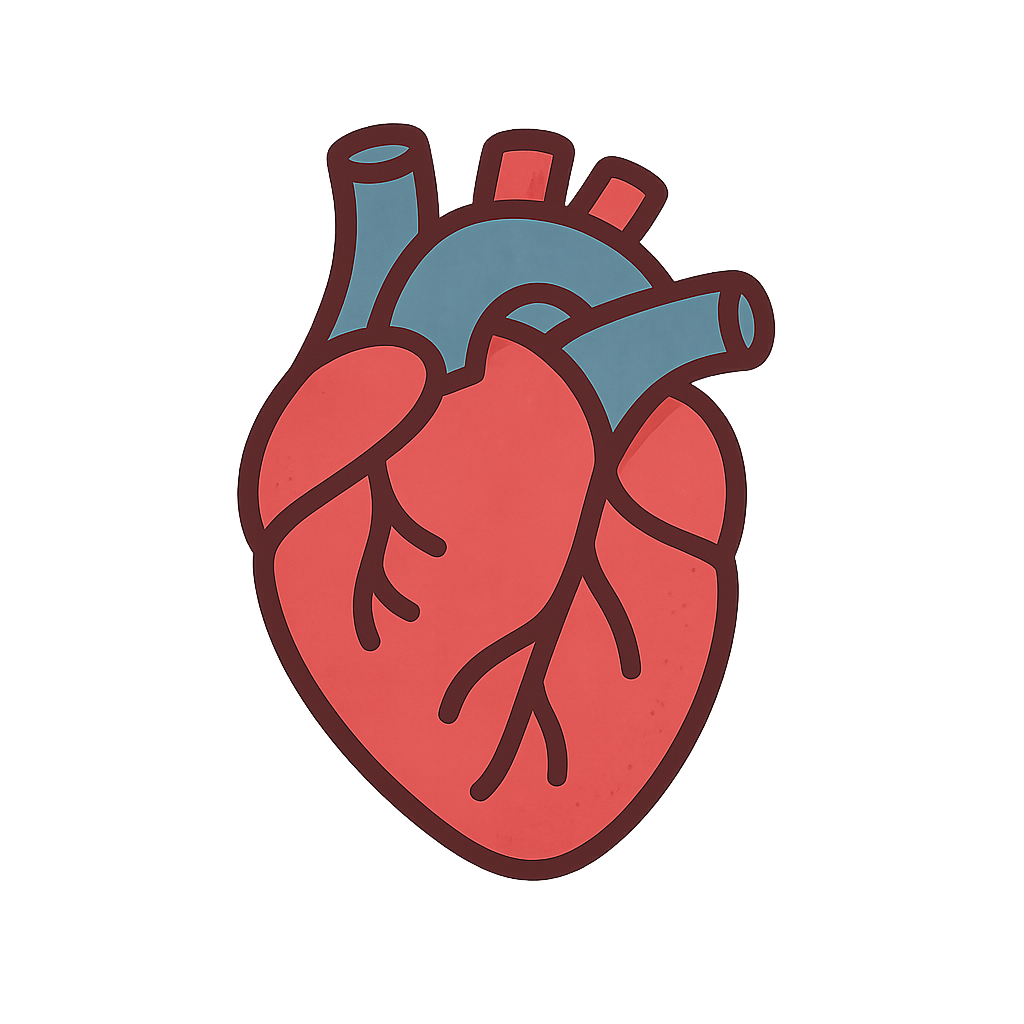
Listen closely. Can you hear a steady thump-thump, a rhythm you’ve known your whole life, even before you were born. I am your body’s own private drummer, playing a beat that never stops. I am a busy engine, working day and night to push amazing red rivers through tiny pathways all over your body. These rivers, your blood, carry everything you need—like oxygen from the air you breathe and energy from the food you eat—to the tips of your toes and the top of your head. I make sure your legs have the power to run, your fingers have the strength to draw, and your brain has the fuel to think big thoughts. I am always here, working hard inside your chest. Can you imagine a world without me working every second. You might have guessed by now. I am your Heart.
For thousands of years, people knew I was important, but they had some funny ideas about me. The ancient Egyptians, way back around 1550 BCE, believed I was the center of everything: your thoughts, your feelings, and all your memories. They thought I was so special that they carefully preserved me when they made mummies, believing I would be weighed in the afterlife. Later, in ancient Greece during the 4th century BCE, a famous thinker named Aristotle agreed, calling me the most important organ, the king of the body. Then, in the 2nd century CE, a brilliant Roman doctor named Galen of Pergamon discovered that my arteries were filled with blood, not air, which was a huge step. But he had one part of my story wrong. He thought the blood I pumped was used up on its journey and that the liver had to keep making more, like a leaky faucet that never gets turned off. His ideas were so respected that almost everyone believed them for over 1,400 years.
The Heart: A Rhythmic Story
Listen closely. Can you hear a steady thump-thump, a rhythm you’ve known your whole life, even before you were born. I am your body’s own private drummer, playing a beat that never stops. I am a busy engine, working day and night to push amazing red rivers through tiny pathways all over your body. These rivers, your blood, carry everything you need—like oxygen from the air you breathe and energy from the food you eat—to the tips of your toes and the top of your head. I make sure your legs have the power to run, your fingers have the strength to draw, and your brain has the fuel to think big thoughts. I am always here, working hard inside your chest. Can you imagine a world without me working every second. You might have guessed by now. I am your Heart.
For thousands of years, people knew I was important, but they had some funny ideas about me. The ancient Egyptians, way back around 1550 BCE, believed I was the center of everything: your thoughts, your feelings, and all your memories. They thought I was so special that they carefully preserved me when they made mummies, believing I would be weighed in the afterlife. Later, in ancient Greece during the 4th century BCE, a famous thinker named Aristotle agreed, calling me the most important organ, the king of the body. Then, in the 2nd century CE, a brilliant Roman doctor named Galen of Pergamon discovered that my arteries were filled with blood, not air, which was a huge step. But he had one part of my story wrong. He thought the blood I pumped was used up on its journey and that the liver had to keep making more, like a leaky faucet that never gets turned off. His ideas were so respected that almost everyone believed them for over 1,400 years.
It took a very long time for someone to solve the mystery of my true job. A curious physician from England named William Harvey was like a detective. He spent years carefully observing me in animals and realized Galen’s story just didn’t add up. Why would the body be so wasteful. In 1628, he published a small book with a huge idea. He showed that I don’t just push blood out on a one-way trip. I am a powerful pump at the center of a circle. He proved that I pump blood out through arteries and it comes back to me through veins, over and over again, in a closed loop. He called this 'circulation'. It was like discovering a superhighway system inside the body that was constantly moving traffic instead of a road that just ended. Interestingly, a doctor named Ibn al-Nafis had described part of this circular journey through the lungs way back in the 13th century, but his work wasn't widely known in Europe. Harvey’s discovery changed medicine forever and showed everyone how incredibly efficient and clever I am.
Once people understood how I worked, they got even better at taking care of me. In 1816, a French doctor named René Laennec invented the stethoscope, which let doctors listen to my beat clearly for the first time without putting their ear to someone's chest. Then came incredible bravery. In 1893, a surgeon named Daniel Hale Williams performed one of the first successful open-heart surgeries, proving I could be carefully repaired. The most amazing chapter came on December 3rd, 1967, when a surgeon named Christiaan Barnard performed the first successful human heart transplant, giving one person’s healthy heart to another. Today, I am known as a symbol of life and strength, but also of love and courage. Every thump-thump you feel is a reminder of the amazing, powerful engine you have inside you, working to keep you alive and full of energy. So take good care of me, and I’ll keep that steady beat going for all of your adventures.
Wow facts
About
The Human Heart is a muscular organ that pumps blood throughout the body via the circulatory system, supplying oxygen and nutrients to tissues and removing carbon dioxide and other waste products.
Take a Quiz
Question 1 of 5
In the story, the heart says Galen's ideas were 'believed' for over 1,400 years. What does the word 'believed' mean in this sentence?
Explore next


Want to do even more?
Go beyond exploring. Unlock tools that turn every story into real learning.

Storypie Plus for families
Full stories, quizzes, and printables. Nights and car rides, sorted.
- Unlimited audio stories
- Create Mode: your child stars in the story
- Offline downloads
- Printable worksheets & coloring pages

Why Storypie for Schools
Students engaged. Prep in seconds. Evenings back to you.
- Worksheets & Quizzes
- Classroom Management
- Formative Assessment
- Custom Curriculum & Lesson Plans
- 27 Languages

Why Storypie for Homeschool
Curriculum done. They'll ask for more. Hours back in your day.
- Worksheet Generator
- First-Person Audio Stories
- Built-in Comprehension Quizzes
- Custom Curriculum & Lesson Plans
- Print & Go Activities