English

Human Heart
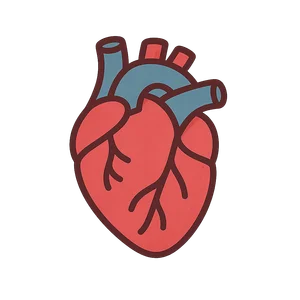
The Human Heart is a muscular organ that pumps blood throughout the body via the circulatory system…
Reads at Grades 6–8 Listens at Grades 4–8
Print & create
Answer keys·No prep·Free with an account
28 worksheets · answer keys · full story · quiz · Ages 10-12 · CEFR B2
Plus adds 116,000+ more stories in 27 languages, audio for every one, and printables for all of them.
Just want Human Heart?
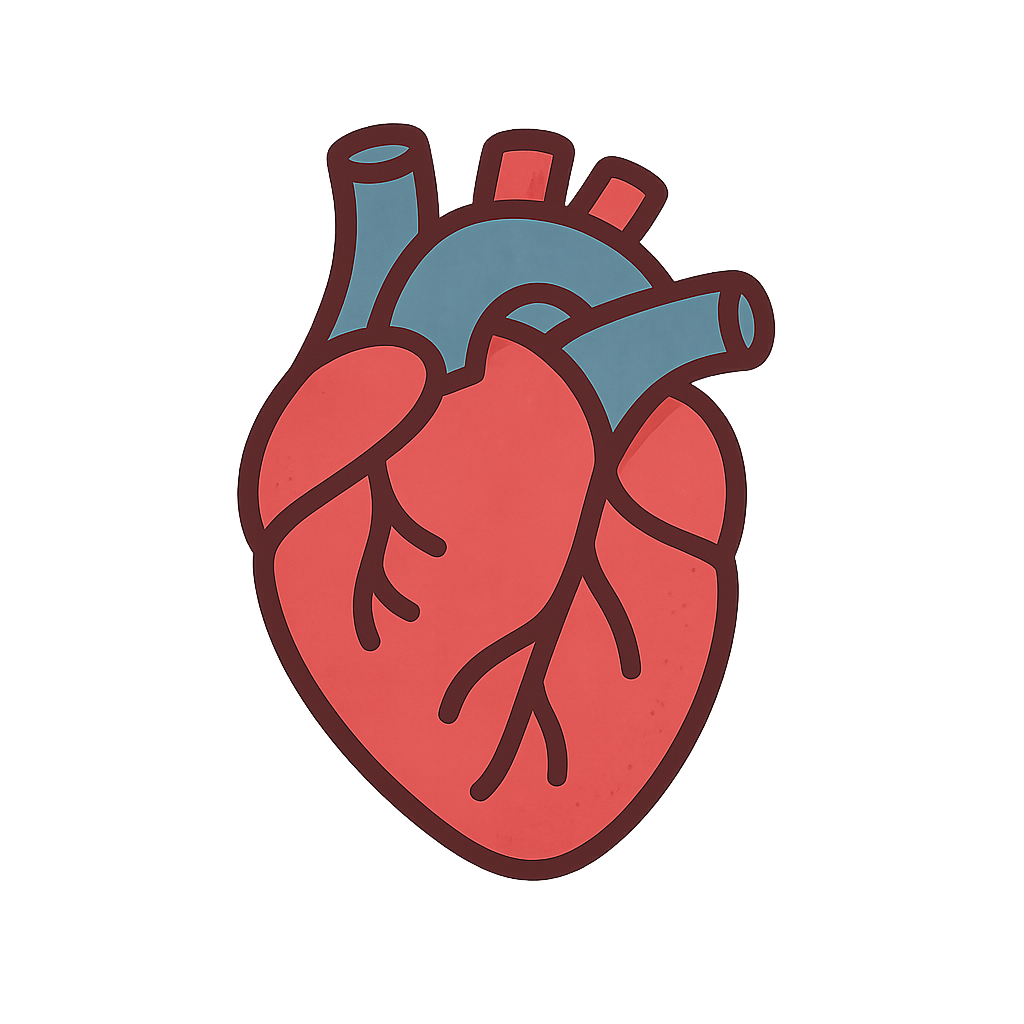
Listen closely. Can you feel me? I am the tireless drum inside your chest, a steady thrumming that has played your unique song since before you were born. Thump-thump. Thump-thump. When you race across a field, my tempo quickens, a frantic beat matching the pounding of your feet. When you are startled by a sudden noise, I leap in your chest, sending a surge of energy through you. And when you are sleeping soundly, I slow to a gentle, peaceful rhythm, a quiet lullaby. I am a powerful engine, constantly pushing a warm, red river through a vast network of tunnels that reach every tiny part of you, from the tips of your toes to the top of your head. This river delivers vital supplies, like oxygen and nutrients, and carries away waste. For every second of every day, I work without rest, a hidden guardian powering your entire existence. For centuries, however, the truth of how I worked remained one of humanity’s greatest mysteries.
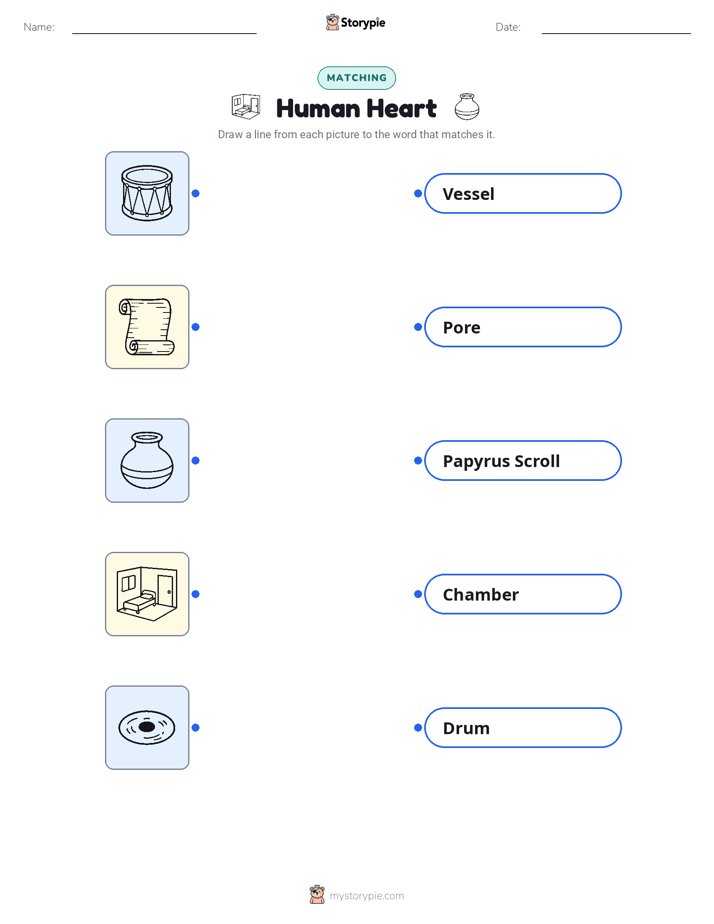
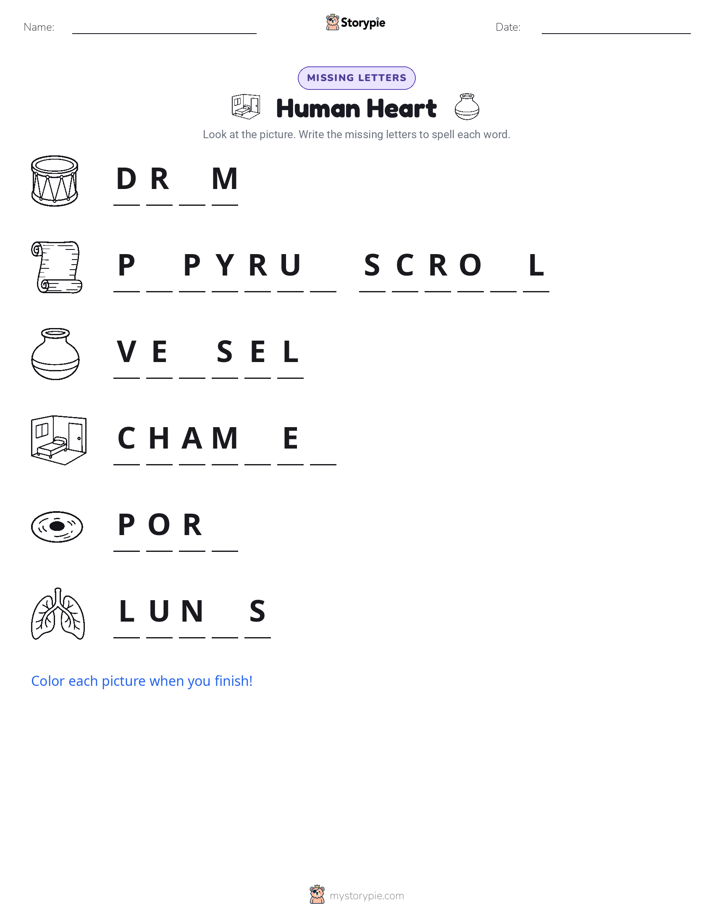
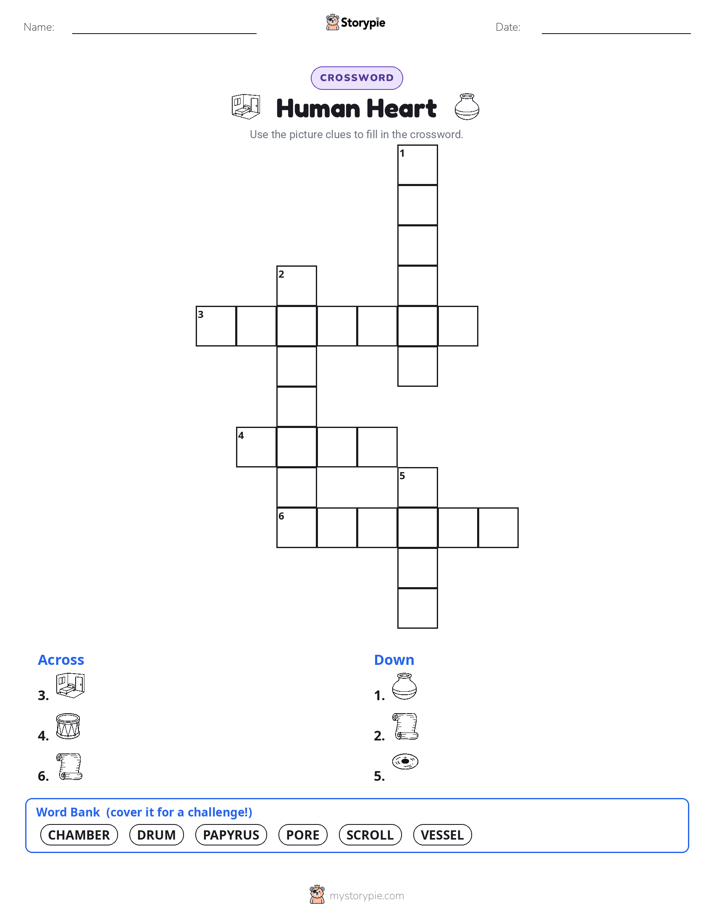
I am your Heart. For thousands of years, people knew I was important, but they had some fascinating, and often incorrect, ideas about me. Long ago, in ancient Egypt around 1550 BCE, scribes writing on the Ebers Papyrus described me as the center of everything. They believed I was not only a pump but also the source of all thoughts, feelings, and memories. They thought vessels connected me to every other part of the body, which was true, but they imagined these vessels carried air, tears, and other substances, not just blood. Later, in ancient Greece during the 4th century BCE, the brilliant thinker Aristotle declared me the most important organ in the body. He correctly identified me as the source of heat, but he was convinced I had only three chambers, not four. His ideas were so respected that few dared to question them. For over 1,400 years after that, the theories of a Roman physician named Galen, who lived in the 2nd century CE, were treated as undeniable fact. Galen understood that blood moved, but he incorrectly believed it passed from my right side to my left side through invisible pores in the wall between them. These pores never existed, but his influence was so immense that this error was taught for centuries.
The Heart: A Story of Discovery
Listen closely. Can you feel me? I am the tireless drum inside your chest, a steady thrumming that has played your unique song since before you were born. Thump-thump. Thump-thump. When you race across a field, my tempo quickens, a frantic beat matching the pounding of your feet. When you are startled by a sudden noise, I leap in your chest, sending a surge of energy through you. And when you are sleeping soundly, I slow to a gentle, peaceful rhythm, a quiet lullaby. I am a powerful engine, constantly pushing a warm, red river through a vast network of tunnels that reach every tiny part of you, from the tips of your toes to the top of your head. This river delivers vital supplies, like oxygen and nutrients, and carries away waste. For every second of every day, I work without rest, a hidden guardian powering your entire existence. For centuries, however, the truth of how I worked remained one of humanity’s greatest mysteries.
I am your Heart. For thousands of years, people knew I was important, but they had some fascinating, and often incorrect, ideas about me. Long ago, in ancient Egypt around 1550 BCE, scribes writing on the Ebers Papyrus described me as the center of everything. They believed I was not only a pump but also the source of all thoughts, feelings, and memories. They thought vessels connected me to every other part of the body, which was true, but they imagined these vessels carried air, tears, and other substances, not just blood. Later, in ancient Greece during the 4th century BCE, the brilliant thinker Aristotle declared me the most important organ in the body. He correctly identified me as the source of heat, but he was convinced I had only three chambers, not four. His ideas were so respected that few dared to question them. For over 1,400 years after that, the theories of a Roman physician named Galen, who lived in the 2nd century CE, were treated as undeniable fact. Galen understood that blood moved, but he incorrectly believed it passed from my right side to my left side through invisible pores in the wall between them. These pores never existed, but his influence was so immense that this error was taught for centuries.
My true purpose remained hidden in the shadows of these powerful, old ideas. But progress cannot be stopped forever. A glimmer of truth appeared in the 13th century with a remarkable physician named Ibn al-Nafis in Cairo. By studying the human body, he correctly reasoned that blood must travel from my right side to the lungs to get air, and then return to my left side before being sent to the rest of the body. He was the first to describe this crucial pathway, but sadly, his work was largely unknown in Europe for centuries. The real revolution came with an English doctor named William Harvey. He was a curious and determined man who wasn't afraid to challenge ancient beliefs. He spent years observing the way I beat in living animals and meticulously measuring the amount of blood I pushed out. In his groundbreaking book published in 1628, he proved that I function as a pump at the center of a closed loop. He demonstrated that the same blood continuously circulates throughout the body, traveling away from me in arteries and returning to me in veins. This discovery was monumental, overthrowing centuries of mistaken ideas and laying the foundation for modern medicine. Then, in 1816, a French doctor named René Laennec invented the stethoscope, a simple tube that allowed doctors to listen to my music—my lub-dub, my whooshes and murmurs—for the very first time. His invention gave them a window into my health, allowing them to diagnose problems without ever seeing me.
From Harvey’s stunning revelation, the pace of discovery quickened, leading to the incredible medical world of today. For centuries, operating on me was considered impossible. I was too delicate, too essential to life. But that changed on May 6th, 1953, when Dr. John Gibbon performed the first successful open-heart surgery using a heart-lung machine he had developed, which could do my job while surgeons carefully repaired me. An even more astonishing feat occurred on December 3rd, 1967. In Cape Town, South Africa, a surgeon named Dr. Christiaan Barnard performed the world’s first human-to-human heart transplant, giving a man a new chance at life with another person's heart. Today, these once-unthinkable procedures save thousands of lives every year. So you see, I live a double life. I am a biological marvel, a complex muscle of chambers and valves studied by scientists and fixed by surgeons. But I am also a powerful symbol. When you speak of love, courage, and kindness, you speak of 'the heart.' I represent the deepest emotions that make you human. So remember to care for me. Fuel me with healthy food, strengthen me with exercise, and protect me from harm. But also, listen to me. Be brave, be compassionate, and fill your life with the kindness that I have come to represent. Your beat is the rhythm of your own unique and wonderful life.
Wow facts
About
The Human Heart is a muscular organ that pumps blood throughout the body via the circulatory system, supplying oxygen and nutrients to tissues and removing carbon dioxide and other waste products.
Take a Quiz
Question 1 of 5
According to the story, what was William Harvey's revolutionary discovery in 1628?
Explore next


Want to do even more?
Go beyond exploring. Unlock tools that turn every story into real learning.

Storypie Plus for families
Full stories, quizzes, and printables. Nights and car rides, sorted.
- Unlimited audio stories
- Create Mode: your child stars in the story
- Offline downloads
- Printable worksheets & coloring pages

Why Storypie for Schools
Students engaged. Prep in seconds. Evenings back to you.
- Worksheets & Quizzes
- Classroom Management
- Formative Assessment
- Custom Curriculum & Lesson Plans
- 27 Languages

Why Storypie for Homeschool
Curriculum done. They'll ask for more. Hours back in your day.
- Worksheet Generator
- First-Person Audio Stories
- Built-in Comprehension Quizzes
- Custom Curriculum & Lesson Plans
- Print & Go Activities