English

Lunar Eclipses
A lunar eclipse is a celestial event that occurs when the Moon passes into Earth's shadow…
Reads at Grades 6–8 Listens at Grades 4–8
Print & create
Answer keys·No prep·Free with an account
28 worksheets · answer keys · full story · quiz · Ages 10-12 · CEFR B2
Plus adds 244,000+ more stories in 27 languages, audio for every one, and printables for all of them.
Just want Lunar Eclipses?
Imagine a perfect night. A full, silvery Moon hangs in the sky like a brilliant coin, so bright it casts soft shadows on the ground. But then, something strange begins. A darkness, subtle at first, starts to creep across the Moon’s edge. It’s not a cloud, but a deep, curved shadow, slowly swallowing the light. You might expect the Moon to vanish completely, to become a black hole in the starry sky. But it doesn't. Instead, as the last sliver of silver disappears, the Moon begins to glow with an eerie, beautiful light. It transforms from silver to a deep, coppery red, like a smoldering ember hanging in the darkness. It’s a silent, breathtaking show that has captivated people for all of human history. You might have seen me before, this strange and silent performance in the night sky. I am a Lunar Eclipse, but some people give me a more dramatic name: the Blood Moon.
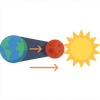
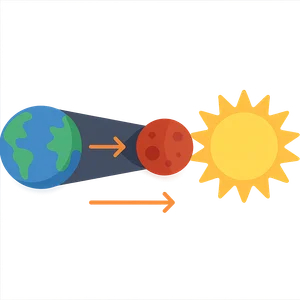
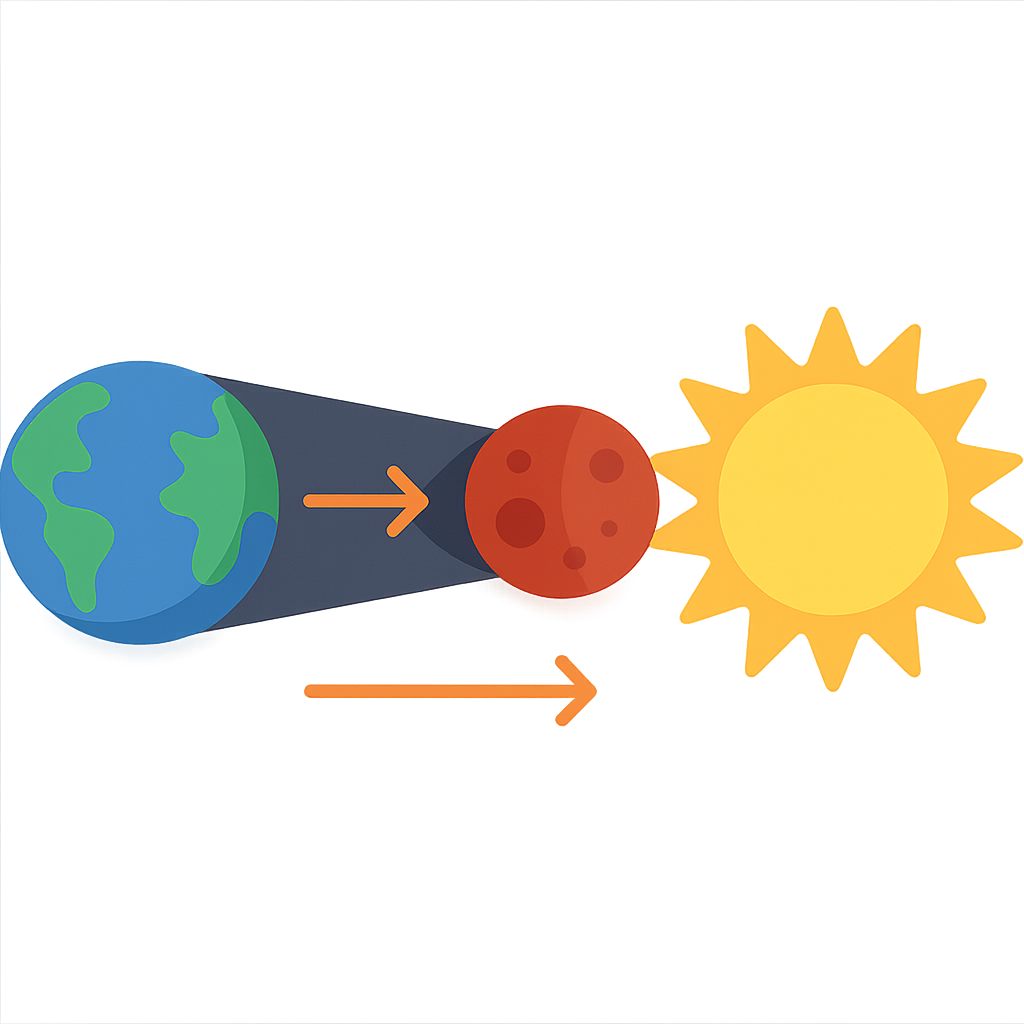
To create my spectacle, three celestial bodies must align in perfect order: the Sun, then your Earth, then the Moon. When this happens, your planet, being so much larger than the Moon, blocks the direct sunlight from reaching its surface. I am, quite simply, the Moon passing through Earth's giant shadow as it stretches out into space. But why the red color? That's the most beautiful part of my secret. It’s not total darkness inside Earth's shadow because your planet has an atmosphere. As sunlight streams past the edges of the Earth, the atmosphere filters it. It scatters the blue light but allows the red light to pass through, bending it inward toward the Moon. It’s as if all the sunrises and sunsets happening on Earth at that very moment are gathered up, projected through the lens of your atmosphere, and painted across the Moon's face. Long before you understood this, my appearance was a source of awe and fear. In ancient Mesopotamia, Babylonian astronomers as early as the 8th century BCE etched my appearances onto clay tablets. They were meticulous observers who saw me as a powerful omen, a message from the gods that could foretell the fate of their king. Far away in ancient China, the story was different. They imagined a great celestial dragon was trying to devour the Moon. To save it, people would rush outside, banging drums and clanging pots to create a tremendous noise, hoping to frighten the hungry dragon away.
The Moon that Blushed Red
Imagine a perfect night. A full, silvery Moon hangs in the sky like a brilliant coin, so bright it casts soft shadows on the ground. But then, something strange begins. A darkness, subtle at first, starts to creep across the Moon’s edge. It’s not a cloud, but a deep, curved shadow, slowly swallowing the light. You might expect the Moon to vanish completely, to become a black hole in the starry sky. But it doesn't. Instead, as the last sliver of silver disappears, the Moon begins to glow with an eerie, beautiful light. It transforms from silver to a deep, coppery red, like a smoldering ember hanging in the darkness. It’s a silent, breathtaking show that has captivated people for all of human history. You might have seen me before, this strange and silent performance in the night sky. I am a Lunar Eclipse, but some people give me a more dramatic name: the Blood Moon.
To create my spectacle, three celestial bodies must align in perfect order: the Sun, then your Earth, then the Moon. When this happens, your planet, being so much larger than the Moon, blocks the direct sunlight from reaching its surface. I am, quite simply, the Moon passing through Earth's giant shadow as it stretches out into space. But why the red color? That's the most beautiful part of my secret. It’s not total darkness inside Earth's shadow because your planet has an atmosphere. As sunlight streams past the edges of the Earth, the atmosphere filters it. It scatters the blue light but allows the red light to pass through, bending it inward toward the Moon. It’s as if all the sunrises and sunsets happening on Earth at that very moment are gathered up, projected through the lens of your atmosphere, and painted across the Moon's face. Long before you understood this, my appearance was a source of awe and fear. In ancient Mesopotamia, Babylonian astronomers as early as the 8th century BCE etched my appearances onto clay tablets. They were meticulous observers who saw me as a powerful omen, a message from the gods that could foretell the fate of their king. Far away in ancient China, the story was different. They imagined a great celestial dragon was trying to devour the Moon. To save it, people would rush outside, banging drums and clanging pots to create a tremendous noise, hoping to frighten the hungry dragon away.
For centuries, your stories about me were grand and dramatic. But some thoughtful people started to look closer, not just at the Moon, but at the shadow falling upon it. A brilliant Greek philosopher named Aristotle, living around the 4th century BCE, was one of those thinkers. He watched me carefully and noticed something crucial. The edge of the shadow that your Earth cast upon the Moon was always, without fail, curved. It didn’t matter what part of the Earth was facing the Moon, or what time of night it was; the shadow's edge was always a distinct arc. He reasoned that only one shape could cast a perfectly round shadow from any angle: a sphere. Just by observing me, he found powerful and elegant evidence that your world was not a flat disk, but a globe. This was a monumental discovery, a clue to the very shape of your planet, all thanks to my celestial performance. Centuries later, my predictability became a tool of power. On the night of February 29th, 1504, an Italian explorer named Christopher Columbus was stranded in Jamaica. His crew was in trouble, and the native Arawak people were no longer willing to provide them with food. But Columbus had a secret weapon: an almanac containing astronomical tables that predicted my arrival. He gathered the Arawak leaders and declared that his god was angry with them and would show his displeasure by making the Moon vanish in a bloody fire. When, right on schedule, the Moon began to darken and turn a haunting red, the terrified Arawak begged for his forgiveness and promised to provide all the food he needed. My predictable mechanics were used to manipulate and control, a stark example of how scientific knowledge could be wielded.
Today, you know the celestial dragon isn't real, and my arrival doesn't signal the anger of a god. The ancient fear has been replaced by fascination and excitement. People gather in backyards and parks for 'eclipse parties,' pointing telescopes and cameras at the sky to capture my reddish glow. Scientists now use me as a unique laboratory. When my light, filtered through Earth's atmosphere, reaches your telescopes, they can analyze it. This spectrum of light holds clues about the composition of your air, revealing the presence of dust from volcanic eruptions or other pollutants. I am like a health report for your planet's atmosphere, read from a great distance. Even your spacecraft get in on the act. NASA's Lunar Reconnaissance Orbiter has studied how quickly the Moon's surface temperature drops when I block the Sun’s warmth. This reveals clues about the lunar soil, whether it’s made of fine dust or solid rock. I am more than just a shadow; I am a reflection. When you see me blush red, you are seeing the combined light of all your world's sunrises and sunsets. I am a beautiful reminder of the cosmic dance you are part of, and the round, wonderful world you call home.
Wow facts
About
A lunar eclipse is a celestial event that occurs when the Moon passes into Earth's shadow, which can be the lighter part called the penumbra or the darker part called the umbra. This often causes the Moon to appear reddish.
Take a Quiz
Question 1 of 5
What is the main reason Aristotle's observation of the lunar eclipse was so important to science?
Explore next





Want to do even more?
Go beyond exploring. Unlock tools that turn every story into real learning.

Storypie Plus for families
Full stories, quizzes, and printables. Nights and car rides, sorted.
- Unlimited audio stories
- Create Mode: your child stars in the story
- Offline downloads
- Printable worksheets & coloring pages

Why Storypie for Schools
Students engaged. Prep in seconds. Evenings back to you.
- Worksheets & Quizzes
- Classroom Management
- Formative Assessment
- Custom Curriculum & Lesson Plans
- 27 Languages

Why Storypie for Homeschool
Curriculum done. They'll ask for more. Hours back in your day.
- Worksheet Generator
- First-Person Audio Stories
- Built-in Comprehension Quizzes
- Custom Curriculum & Lesson Plans
- Print & Go Activities