English

Lunar Eclipses
A lunar eclipse is a celestial event that occurs when the Moon passes into Earth's shadow…
Reads at Grades 3–5 Listens at Grades 1–5
Print & create
Answer keys·No prep·Free with an account
28 worksheets · answer keys · full story · quiz · Ages 8-10 · CEFR B1
Plus adds 244,000+ more stories in 27 languages, audio for every one, and printables for all of them.
Just want Lunar Eclipses?
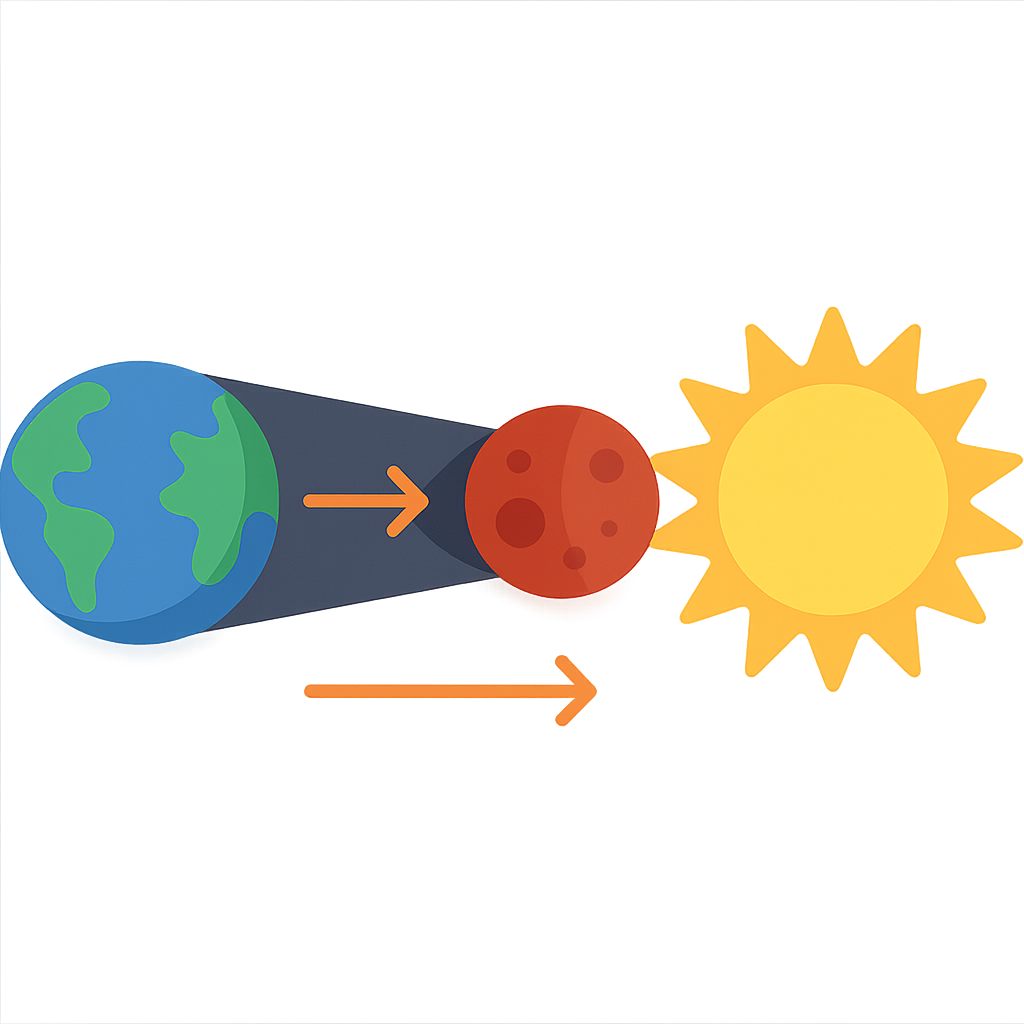
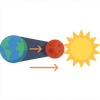
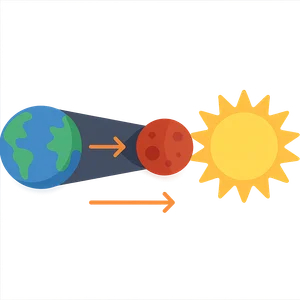
Imagine a bright, full moon hanging in the night sky like a giant pearl. It’s so brilliant you can see everything bathed in its silvery light. But then, something strange begins to happen. A tiny, dark nibble appears on its edge, as if an invisible creature is taking a bite. Slowly, steadily, the shadow creeps across the Moon’s bright face until it is completely covered. The sky grows darker, and the stars pop out like scattered diamonds. Instead of disappearing, the Moon glows with a new, mysterious light—a beautiful, spooky, coppery red. It looks like a ghost of its former self. Is it magic? Is the Moon playing a great disappearing act just for you? Not quite. The secret is me. I am a Lunar Eclipse, and I am not magic, but a magnificent dance of shadows. I happen when the Sun, the Earth, and the Moon line up in a perfectly straight row. When that happens, the big, round Earth blocks the Sun’s light, casting a giant shadow into space. And for a few special hours, the Moon glides right through it, putting on a show for everyone watching below.
For thousands of years, people looked up at me with a mix of awe and fear. Can you imagine seeing the Moon turn red without knowing why? Some ancient cultures believed a giant sky jaguar or a hungry dragon was trying to eat the Moon. They would bang drums and shout to scare the creature away, and when the Moon returned to its bright self, they would cheer, thinking they had saved it. But slowly, people started to solve my shadowy mystery. In a land called Babylonia, as early as the 8th century BCE, very patient astronomers began watching me carefully. They were like detectives of the sky, writing down every time I appeared. After many years, they noticed a pattern and became the first people in history who could predict my arrival. Then, my story traveled to ancient Greece. Around 450 BCE, a wise thinker named Anaxagoras looked at my disappearing act and had a brilliant idea. He realized I wasn't being eaten at all. He correctly explained that I was simply passing through the Earth’s own shadow. About a hundred years later, another famous philosopher named Aristotle noticed something very important. He saw that the edge of the Earth’s shadow on the Moon was always curved. A flat object would make a straight shadow, but only a round object could make a curved shadow from any angle. He used me as proof that the Earth was not flat, but a sphere. My most famous trick, though, involved a sailor named Christopher Columbus. On February 29th, 1504, his ships were stranded in Jamaica, and his crew was running out of food. He knew from his books that I was scheduled to appear that very night. He warned the native people that if they didn't help him, he would use his powers to make the Moon vanish in anger. When I began to creep across the sky, they were terrified and quickly brought him all the food he needed.
The Shadow Dancer
Imagine a bright, full moon hanging in the night sky like a giant pearl. It’s so brilliant you can see everything bathed in its silvery light. But then, something strange begins to happen. A tiny, dark nibble appears on its edge, as if an invisible creature is taking a bite. Slowly, steadily, the shadow creeps across the Moon’s bright face until it is completely covered. The sky grows darker, and the stars pop out like scattered diamonds. Instead of disappearing, the Moon glows with a new, mysterious light—a beautiful, spooky, coppery red. It looks like a ghost of its former self. Is it magic? Is the Moon playing a great disappearing act just for you? Not quite. The secret is me. I am a Lunar Eclipse, and I am not magic, but a magnificent dance of shadows. I happen when the Sun, the Earth, and the Moon line up in a perfectly straight row. When that happens, the big, round Earth blocks the Sun’s light, casting a giant shadow into space. And for a few special hours, the Moon glides right through it, putting on a show for everyone watching below.
For thousands of years, people looked up at me with a mix of awe and fear. Can you imagine seeing the Moon turn red without knowing why? Some ancient cultures believed a giant sky jaguar or a hungry dragon was trying to eat the Moon. They would bang drums and shout to scare the creature away, and when the Moon returned to its bright self, they would cheer, thinking they had saved it. But slowly, people started to solve my shadowy mystery. In a land called Babylonia, as early as the 8th century BCE, very patient astronomers began watching me carefully. They were like detectives of the sky, writing down every time I appeared. After many years, they noticed a pattern and became the first people in history who could predict my arrival. Then, my story traveled to ancient Greece. Around 450 BCE, a wise thinker named Anaxagoras looked at my disappearing act and had a brilliant idea. He realized I wasn't being eaten at all. He correctly explained that I was simply passing through the Earth’s own shadow. About a hundred years later, another famous philosopher named Aristotle noticed something very important. He saw that the edge of the Earth’s shadow on the Moon was always curved. A flat object would make a straight shadow, but only a round object could make a curved shadow from any angle. He used me as proof that the Earth was not flat, but a sphere. My most famous trick, though, involved a sailor named Christopher Columbus. On February 29th, 1504, his ships were stranded in Jamaica, and his crew was running out of food. He knew from his books that I was scheduled to appear that very night. He warned the native people that if they didn't help him, he would use his powers to make the Moon vanish in anger. When I began to creep across the sky, they were terrified and quickly brought him all the food he needed.
Today, no one needs to be scared of me. In fact, when I am about to arrive, people get excited. They plan parties, take out their binoculars and telescopes, and gather with family and friends to watch my silent, colorful show. I bring people together, all looking up at the same sky in wonder. Scientists get excited, too. That reddish glow on the Moon during my performance is actually all the sunrises and sunsets happening on Earth, all at once, filtered through our planet's atmosphere and projected onto the Moon. By studying that light, scientists can learn amazing things about the air we breathe, like whether it has dust from a volcanic eruption or other changes in its chemistry. It’s like the Moon becomes a giant screen, and I reflect the story of Earth’s atmosphere back to you. I am a beautiful reminder that we live in a solar system full of predictable, wonderful patterns. I am the shadow of your own world, showing you how everything is connected in a grand, cosmic dance. So the next time you hear I'm coming, I hope you'll go outside, look up, and stay curious.
Wow facts
About
A lunar eclipse is a celestial event that occurs when the Moon passes into Earth's shadow, which can be the lighter part called the penumbra or the darker part called the umbra. This often causes the Moon to appear reddish.
Take a Quiz
Question 1 of 5
The story says Aristotle used the 'curved shadow on the Moon's face as proof that the Earth was a sphere.' What does 'sphere' mean?
Explore next





Want to do even more?
Go beyond exploring. Unlock tools that turn every story into real learning.

Storypie Plus for families
Full stories, quizzes, and printables. Nights and car rides, sorted.
- Unlimited audio stories
- Create Mode: your child stars in the story
- Offline downloads
- Printable worksheets & coloring pages

Why Storypie for Schools
Students engaged. Prep in seconds. Evenings back to you.
- Worksheets & Quizzes
- Classroom Management
- Formative Assessment
- Custom Curriculum & Lesson Plans
- 27 Languages

Why Storypie for Homeschool
Curriculum done. They'll ask for more. Hours back in your day.
- Worksheet Generator
- First-Person Audio Stories
- Built-in Comprehension Quizzes
- Custom Curriculum & Lesson Plans
- Print & Go Activities