English

Maize
Maize, commonly known as corn…
Reads at Grades 6–8 Listens at Grades 4–8
Print & create
Answer keys·No prep·Free with an account
28 worksheets · answer keys · full story · quiz · Ages 10-12 · CEFR B2
Plus adds 164,000+ more stories in 27 languages, audio for every one, and printables for all of them.
Just want Maize?
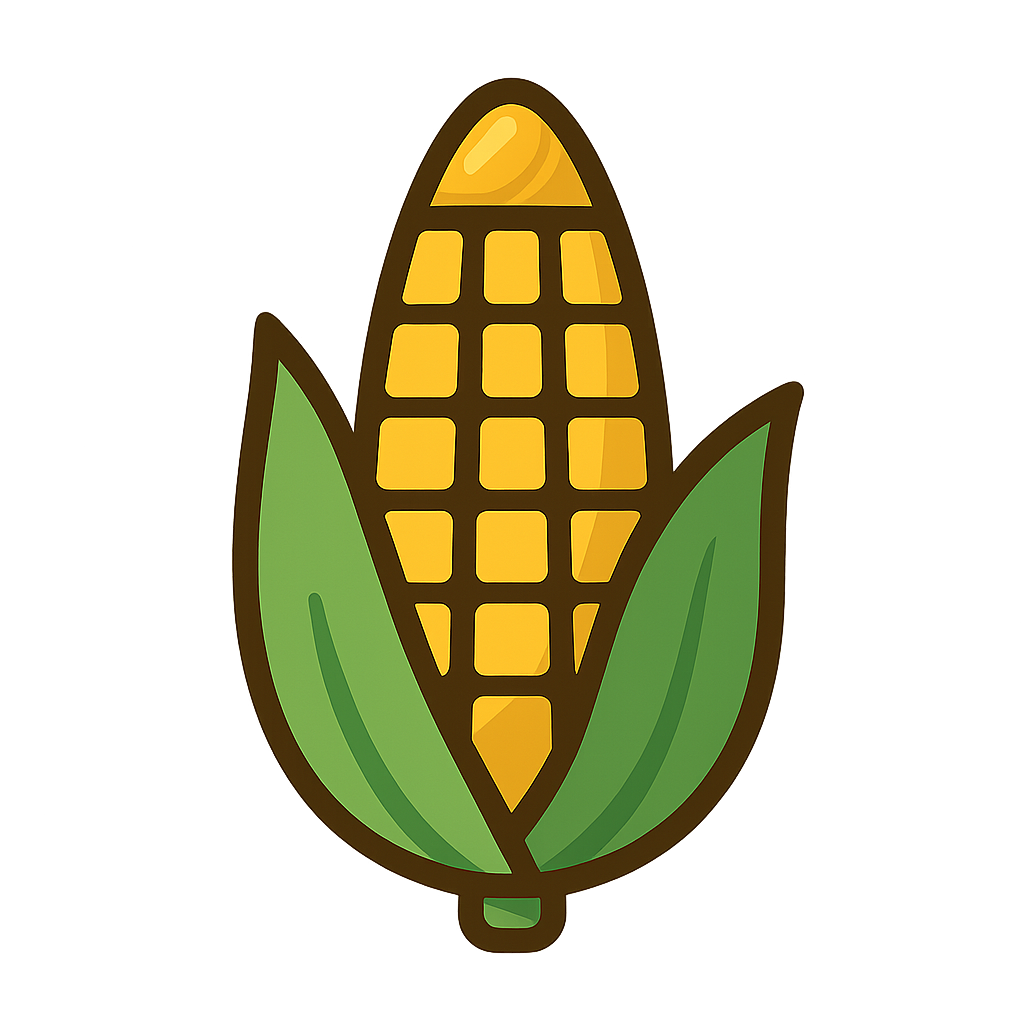
Imagine standing tall under a warm sun, your roots deep in the earth and your head brushing against a brilliant blue sky. Silky tassels flow from your crown like hair in the breeze, and hidden beneath your green cloak are hundreds of jewels—kernels of yellow, red, blue, and white, arranged in perfect rows. You are one of thousands, standing together in a vast, rustling field, a living sea of green and gold. This is what it is like to be me. You might call me corn, but my true name is Maize, and my story is much older and wilder than you can imagine. It did not begin in these sprawling, orderly fields. My story began around 9,000 years ago in the warm valleys of what is now southern Mexico. I was not tall and generous then. I was a scruffy, tough little wild grass called teosinte. My seeds were few, locked away in a stony, hard-to-crack casing. I was just one of many plants reaching for the sun, with no idea that I held the potential to feed civilizations and travel the entire world. I was just a tiny seed of a giant idea, waiting for a friend to notice me.
My first friends, the ones who changed my life forever, were the ancient peoples of Mesoamerica. Around 7000 BCE, long before the great pyramids were built, hunters and gatherers in the Balsas River Valley saw something special in me. They noticed that not all teosinte plants were the same. Some had slightly larger seeds or thinner casings. So they began a great experiment, a partnership that would last for thousands of years. They became my first farmers. Each year, they would carefully select and save the seeds from the very best plants—the ones that were tastiest, softest, and most plentiful. This patient process, this gentle guidance, transformed me. Over countless generations, I grew taller, my ears became larger, and my kernels multiplied, bursting with nourishment. I was no longer a wild grass; I was a creation, a testament to our friendship. The great civilizations of the Olmec, Maya, and Aztec grew strong with me. I was the foundation of their world. In the sacred Maya text, the Popol Vuh, it is even said that the gods made the first humans from my golden and white kernels. I wasn't just food; I was life itself. I also learned to work with others. My human partners taught me to grow alongside my best friends, who you might know as the 'Three Sisters.' I provided a strong stalk for my sister, the bean, to climb. She, in turn, gathered nitrogen from the air and fed it to the soil, making it rich for all of us. And our third sister, the squash, spread her wide leaves across the ground, keeping the soil moist and shading out troublesome weeds. Together, we were a perfect team, a thriving family that sustained the people who had so lovingly guided my journey.
The Voice of the Fields: My Story as Maize
Imagine standing tall under a warm sun, your roots deep in the earth and your head brushing against a brilliant blue sky. Silky tassels flow from your crown like hair in the breeze, and hidden beneath your green cloak are hundreds of jewels—kernels of yellow, red, blue, and white, arranged in perfect rows. You are one of thousands, standing together in a vast, rustling field, a living sea of green and gold. This is what it is like to be me. You might call me corn, but my true name is Maize, and my story is much older and wilder than you can imagine. It did not begin in these sprawling, orderly fields. My story began around 9,000 years ago in the warm valleys of what is now southern Mexico. I was not tall and generous then. I was a scruffy, tough little wild grass called teosinte. My seeds were few, locked away in a stony, hard-to-crack casing. I was just one of many plants reaching for the sun, with no idea that I held the potential to feed civilizations and travel the entire world. I was just a tiny seed of a giant idea, waiting for a friend to notice me.
My first friends, the ones who changed my life forever, were the ancient peoples of Mesoamerica. Around 7000 BCE, long before the great pyramids were built, hunters and gatherers in the Balsas River Valley saw something special in me. They noticed that not all teosinte plants were the same. Some had slightly larger seeds or thinner casings. So they began a great experiment, a partnership that would last for thousands of years. They became my first farmers. Each year, they would carefully select and save the seeds from the very best plants—the ones that were tastiest, softest, and most plentiful. This patient process, this gentle guidance, transformed me. Over countless generations, I grew taller, my ears became larger, and my kernels multiplied, bursting with nourishment. I was no longer a wild grass; I was a creation, a testament to our friendship. The great civilizations of the Olmec, Maya, and Aztec grew strong with me. I was the foundation of their world. In the sacred Maya text, the Popol Vuh, it is even said that the gods made the first humans from my golden and white kernels. I wasn't just food; I was life itself. I also learned to work with others. My human partners taught me to grow alongside my best friends, who you might know as the 'Three Sisters.' I provided a strong stalk for my sister, the bean, to climb. She, in turn, gathered nitrogen from the air and fed it to the soil, making it rich for all of us. And our third sister, the squash, spread her wide leaves across the ground, keeping the soil moist and shading out troublesome weeds. Together, we were a perfect team, a thriving family that sustained the people who had so lovingly guided my journey.
For thousands of years, my world was the Americas. I spread from the high mountains of Peru to the river valleys of North America, changing and adapting to new lands and new peoples. But my greatest journey was yet to come. In the late 15th century, everything changed. On October 12th, 1492, strange ships with enormous white sails arrived on the shores of the Caribbean. They were the ships of an Italian explorer named Christopher Columbus, sailing for Spain. The explorers had never seen a plant like me, with my tall stalks and magnificent ears. When they returned to Europe, they took my seeds with them. I had crossed the vast Atlantic Ocean for the first time. This was the beginning of what historians call the Columbian Exchange, a massive movement of plants, animals, and ideas between the Old World of Europe, Africa, and Asia, and the New World of the Americas. I was one of its most important travelers. My journey was astonishingly fast. By the early 16th century, I was growing in Spanish and Portuguese fields. From there, traders and explorers carried me everywhere. I traveled to Africa, where my ability to grow in hot, dry climates helped feed millions. I sailed to Asia, where I grew on the terraced hills of China and became a staple food. Unlike some other crops, I was incredibly adaptable. I could thrive in different soils and climates, and I produced an enormous amount of food from a small plot of land. For growing populations across the globe, I was a miracle. I, a plant born in a small valley in Mexico, was now a citizen of the world.
Today, my journey continues in ways my first partners could never have dreamed of. You see me everywhere, though you might not always recognize me. I am the buttery popcorn you munch on at the movies. I am the soft tortilla that holds your taco together and the crunchy chip you dip in salsa. I am the sweet corn on the cob at a summer barbecue. But I have many secret identities, too. My kernels are used to feed the chickens and cattle that provide eggs and milk. I am transformed into biofuel, a type of ethanol that can power cars. The starch from my kernels helps make paper stronger, gives glue its stickiness, and thickens soups and sauces. The sweetness in many of your favorite drinks often comes from me, in the form of corn syrup. I am a plant of a thousand faces, a humble grass that has become one of the cornerstones of modern life. My long story is a reminder of the power of partnership. It shows how, with patience, observation, and care, a tiny seed of potential can be nurtured over generations to grow and nourish the entire world. Look closely at the world around you. Just like those ancient farmers saw a future in a wild blade of grass, you too can find hidden possibilities in the smallest of things, waiting for a chance to grow.
Wow facts
About
Maize, commonly known as corn, is a cereal grain first domesticated by Indigenous peoples in southern Mexico about 9,000 years ago from a wild grass called teosinte.
Take a Quiz
Question 1 of 5
What is the main idea of this story, told from the perspective of Maize?
Explore next



Want to do even more?
Go beyond exploring. Unlock tools that turn every story into real learning.

Storypie Plus for families
Full stories, quizzes, and printables. Nights and car rides, sorted.
- Unlimited audio stories
- Create Mode: your child stars in the story
- Offline downloads
- Printable worksheets & coloring pages

Why Storypie for Schools
Students engaged. Prep in seconds. Evenings back to you.
- Worksheets & Quizzes
- Classroom Management
- Formative Assessment
- Custom Curriculum & Lesson Plans
- 27 Languages

Why Storypie for Homeschool
Curriculum done. They'll ask for more. Hours back in your day.
- Worksheet Generator
- First-Person Audio Stories
- Built-in Comprehension Quizzes
- Custom Curriculum & Lesson Plans
- Print & Go Activities