English

Online Privacy (Keeping Personal Information Private)
Online privacy is the concept of protecting personal information and controlling who can see and use one's…
Reads at Grades 6–8 Listens at Grades 4–8
Print & create
Answer keys·No prep·Free with an account
28 worksheets · answer keys · full story · quiz · Ages 10-12 · CEFR B2
Plus adds 244,000+ more stories in 27 languages, audio for every one, and printables for all of them.
Just want Online Privacy (Keeping Personal Information Private)?
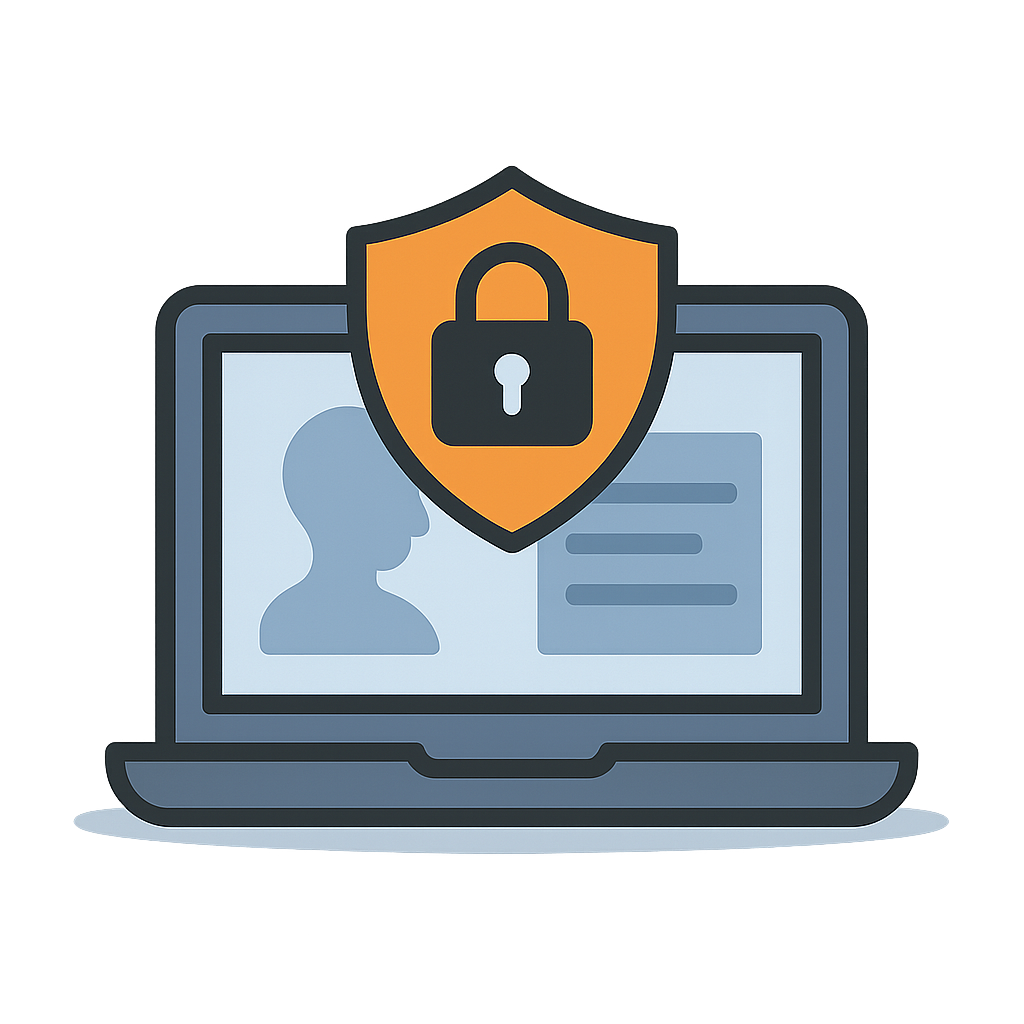
Think about a secret you’ve ever had. Maybe it was a thought you wrote down just for yourself, a funny drawing meant only for your best friend, or a question you were too shy to ask anyone out loud. That feeling of wanting to keep something safe and personal is where I live. I am the invisible shield that guards those things when you share them in the digital world. I am like a locked diary in a world of open books, a whispered message in a crowded room. My entire job is to keep your personal information—your name, where you live, when your birthday is, and the things you love—safe and sound, belonging only to you. Before people knew they needed me on their computers and phones, they still needed me for their letters and their conversations. I give you the power to choose what you share, who you share it with, and when. I am Online Privacy.
To understand my story, you have to travel back with me to a time before wires connected the entire world. The idea of me has always been important. People kept their thoughts in diaries with tiny locks and sent their secrets in sealed letters. In the United States, leaders thought I was so essential that they included a version of me in the Constitution. The 4th Amendment, which was ratified on December 15th, 1791, protects people from unreasonable searches, creating a zone of personal space. For a long time, that was enough. Then came the age of computers. The first ones, like the enormous ENIAC built in 1945, were like lonely islands of information, holding data but not speaking to one another. The world shifted in 1969 with the creation of ARPANET, the ancestor of the internet. For the first time, these digital islands could connect. Information could travel between machines in different cities. People quickly realized that if information could travel, it could also be seen by the wrong people. They needed me in a new, electronic way. This concern led to some of my first official rules, like the U.S. Privacy Act of 1974, which was created to make sure personal data stored on government computers was handled with care and respect.
The Invisible Shield of the Internet
Think about a secret you’ve ever had. Maybe it was a thought you wrote down just for yourself, a funny drawing meant only for your best friend, or a question you were too shy to ask anyone out loud. That feeling of wanting to keep something safe and personal is where I live. I am the invisible shield that guards those things when you share them in the digital world. I am like a locked diary in a world of open books, a whispered message in a crowded room. My entire job is to keep your personal information—your name, where you live, when your birthday is, and the things you love—safe and sound, belonging only to you. Before people knew they needed me on their computers and phones, they still needed me for their letters and their conversations. I give you the power to choose what you share, who you share it with, and when. I am Online Privacy.
To understand my story, you have to travel back with me to a time before wires connected the entire world. The idea of me has always been important. People kept their thoughts in diaries with tiny locks and sent their secrets in sealed letters. In the United States, leaders thought I was so essential that they included a version of me in the Constitution. The 4th Amendment, which was ratified on December 15th, 1791, protects people from unreasonable searches, creating a zone of personal space. For a long time, that was enough. Then came the age of computers. The first ones, like the enormous ENIAC built in 1945, were like lonely islands of information, holding data but not speaking to one another. The world shifted in 1969 with the creation of ARPANET, the ancestor of the internet. For the first time, these digital islands could connect. Information could travel between machines in different cities. People quickly realized that if information could travel, it could also be seen by the wrong people. They needed me in a new, electronic way. This concern led to some of my first official rules, like the U.S. Privacy Act of 1974, which was created to make sure personal data stored on government computers was handled with care and respect.
My job became truly massive in 1989. That was the year a brilliant computer scientist named Tim Berners-Lee invented the World Wide Web. The Web wasn't the internet itself, but a revolutionary way for everyone to easily access and share information on it. It was like a global library being opened to the public for the first time, and it was incredibly exciting. But with billions of new voices joining the conversation, my role became more complex and critical than ever. Suddenly, people were shopping, talking, and sharing huge parts of their lives online. Just a few years later, in 1994, another computer scientist named Lou Montulli invented something that changed my world again: the 'HTTP cookie.' Cookies are like little digital memory notes that websites leave on your computer. They can be very helpful, like remembering what’s in your online shopping cart or keeping you logged into a site. But they also had a side effect: they could be used to follow you from site to site, learning your habits and interests. This made people think about me, their privacy, very seriously. Then came the 2000s, and with the launch of social media sites like Facebook in 2004, people began sharing their daily lives, photos, and personal thoughts with hundreds of friends at once. My presence was no longer just a good idea; it was a necessity.
Every time you post, click, search, or shop online, you leave behind a trail of information. This is called your 'digital footprint.' It tells a story about you. But I am here to help you become the author of that story. I give you tools that are like superpowers for navigating the digital world safely. Think of creating a strong, tricky password as building an unbreakable fortress. Using two-factor authentication, where you need a password and a special code, is like having a secret handshake to get inside. And checking the privacy settings on your apps and accounts is like deciding exactly who you invite into your home. My importance has grown so much that countries have created powerful laws to protect me. A major example is the General Data Protection Regulation, or GDPR, which took effect across Europe on May 25th, 2018. This law gives people more control over their data, including the 'right to be forgotten,' which means they can ask for their personal information to be deleted. I am not about hiding you from the world. I am about giving you the confidence to explore, learn, and connect, knowing that you are in control. I am your partner in being your true, safe self in the digital world.
Wow facts
About
Online privacy is the concept of protecting personal information and controlling who can see and use one's data while using the internet.
Take a Quiz
Question 1 of 5
What is the main role of Online Privacy, according to the story?
Explore next




Want to do even more?
Go beyond exploring. Unlock tools that turn every story into real learning.

Storypie Plus for families
Full stories, quizzes, and printables. Nights and car rides, sorted.
- Unlimited audio stories
- Create Mode: your child stars in the story
- Offline downloads
- Printable worksheets & coloring pages

Why Storypie for Schools
Students engaged. Prep in seconds. Evenings back to you.
- Worksheets & Quizzes
- Classroom Management
- Formative Assessment
- Custom Curriculum & Lesson Plans
- 27 Languages

Why Storypie for Homeschool
Curriculum done. They'll ask for more. Hours back in your day.
- Worksheet Generator
- First-Person Audio Stories
- Built-in Comprehension Quizzes
- Custom Curriculum & Lesson Plans
- Print & Go Activities