English

Opportunity Cost (Making Choices)
Opportunity cost is a core concept in economics that represents the potential benefits an individual…
Reads at Grades 6–8 Listens at Grades 4–8
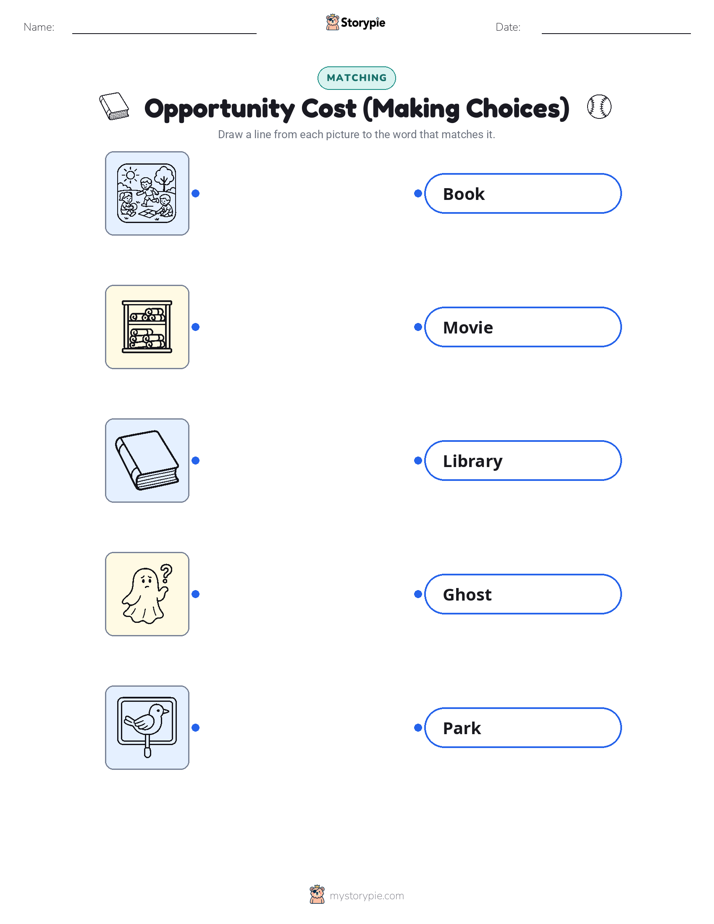
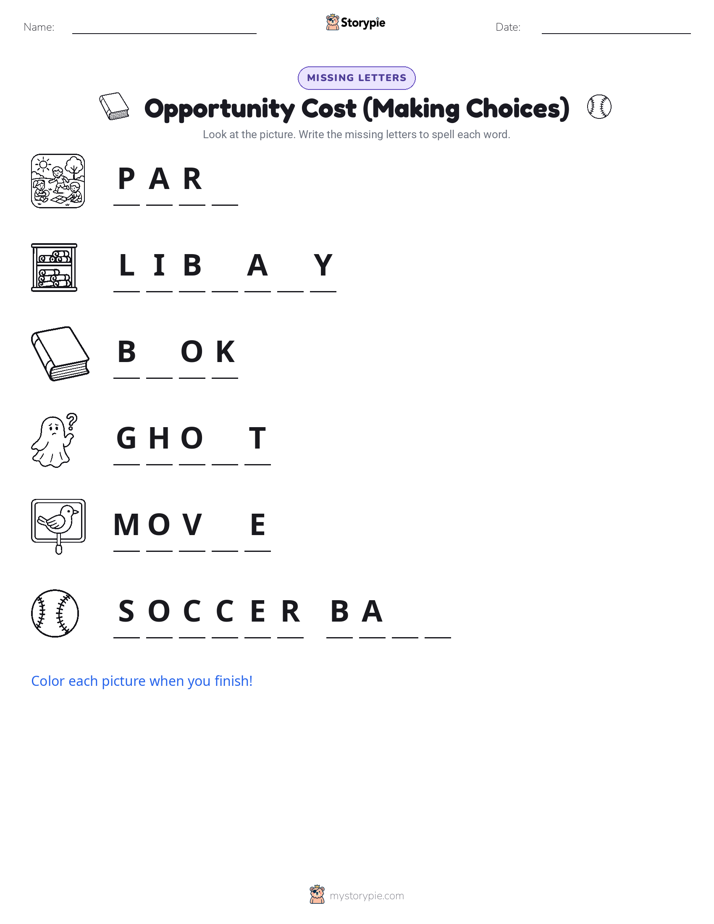
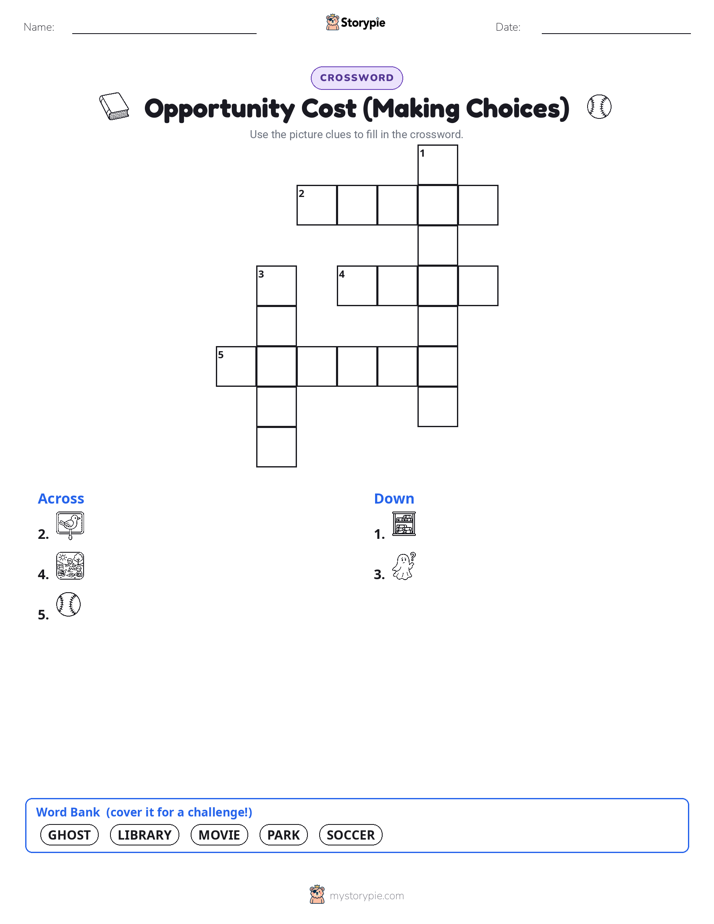
Print & create
Answer keys·No prep·Free with an account
28 worksheets · answer keys · full story · quiz · Ages 10-12 · CEFR B2
Plus adds 244,000+ more stories in 27 languages, audio for every one, and printables for all of them.
Just want Opportunity Cost (Making Choices)?
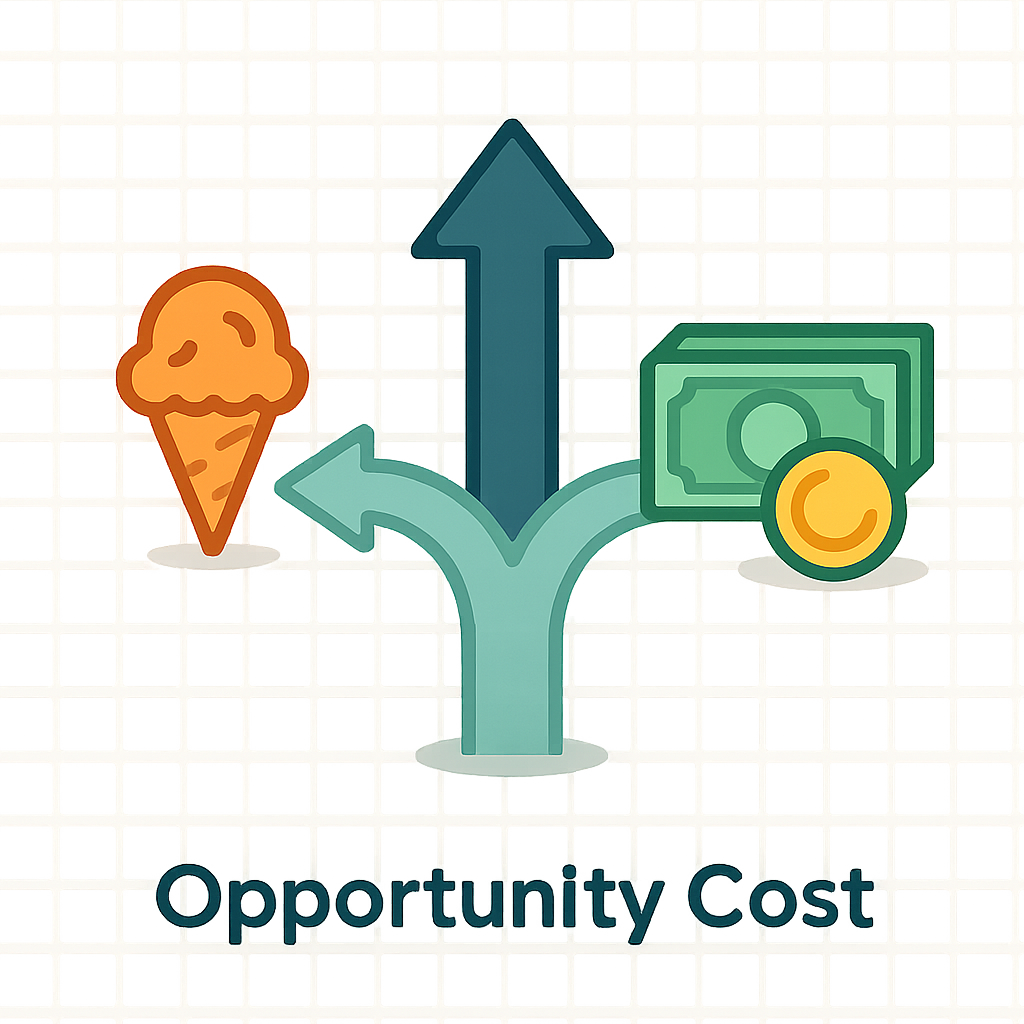
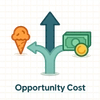
Imagine you’re standing at a fork in a path. One way leads to a sunny park where your friends are playing, the other to a quiet library with a new adventure book waiting for you. When you decide to run toward the park, the path to the library seems to fade away, becoming a silent, invisible trail of what might have been. I am that fading path. I am the silent sacrifice you make with every decision. I am the exciting movie you missed when you chose to go to soccer practice, and I am the delicious ice cream you gave up when you saved your money for a new video game. For centuries, you could feel my presence in that tiny moment of hesitation, that little question of 'what if?' that flickers in your mind before you act. I was a ghost of another possibility, a whisper of a different afternoon. But I am not a ghost; I am very real, and I am a part of every single choice you make, from what to eat for breakfast to what you want to be when you grow up. Hello, my name is Opportunity Cost, and I am the value of the road not taken.
For a very long time, people understood that their choices mattered, but they mostly focused on the immediate, visible results. It took a few brilliant thinkers to shine a light on me, the unseen part of every decision. One of the first was a famous American inventor, writer, and statesman named Benjamin Franklin. Way back on July 21st, 1748, in a little book he wrote called 'Advice to a Young Tradesman,' he penned the now-famous words, 'Remember that time is money.' He was talking about me without even knowing my name. He wanted people to understand that if you choose to spend an afternoon doing nothing, you are not just losing time; you are giving up the chance to use that same time to work and earn money. The money you didn't earn is the opportunity cost of your relaxation. Almost a century later, in 1850, a clever French writer named Frédéric Bastiat told a story that made my existence crystal clear. He called it the 'Parable of the Broken Window.' In his tale, a shopkeeper's son accidentally breaks a window. Some people in the town try to find a silver lining, saying, 'Well, at least this is good for the glassmaker. It creates business.' But Bastiat urged them to look deeper, to see what was now unseen. The shopkeeper had to spend his money on a new window, but he had been saving that exact amount to buy a new pair of shoes. Because the window broke, the shoemaker lost a sale, and the shopkeeper never got his new shoes. I am that pair of shoes he never got to own. I am the benefit that disappeared. Bastiat brilliantly showed everyone that I am the cost that isn't obvious—the 'unseen' trade-off in every economic event.
The Ghost of the Other Path
Imagine you’re standing at a fork in a path. One way leads to a sunny park where your friends are playing, the other to a quiet library with a new adventure book waiting for you. When you decide to run toward the park, the path to the library seems to fade away, becoming a silent, invisible trail of what might have been. I am that fading path. I am the silent sacrifice you make with every decision. I am the exciting movie you missed when you chose to go to soccer practice, and I am the delicious ice cream you gave up when you saved your money for a new video game. For centuries, you could feel my presence in that tiny moment of hesitation, that little question of 'what if?' that flickers in your mind before you act. I was a ghost of another possibility, a whisper of a different afternoon. But I am not a ghost; I am very real, and I am a part of every single choice you make, from what to eat for breakfast to what you want to be when you grow up. Hello, my name is Opportunity Cost, and I am the value of the road not taken.
For a very long time, people understood that their choices mattered, but they mostly focused on the immediate, visible results. It took a few brilliant thinkers to shine a light on me, the unseen part of every decision. One of the first was a famous American inventor, writer, and statesman named Benjamin Franklin. Way back on July 21st, 1748, in a little book he wrote called 'Advice to a Young Tradesman,' he penned the now-famous words, 'Remember that time is money.' He was talking about me without even knowing my name. He wanted people to understand that if you choose to spend an afternoon doing nothing, you are not just losing time; you are giving up the chance to use that same time to work and earn money. The money you didn't earn is the opportunity cost of your relaxation. Almost a century later, in 1850, a clever French writer named Frédéric Bastiat told a story that made my existence crystal clear. He called it the 'Parable of the Broken Window.' In his tale, a shopkeeper's son accidentally breaks a window. Some people in the town try to find a silver lining, saying, 'Well, at least this is good for the glassmaker. It creates business.' But Bastiat urged them to look deeper, to see what was now unseen. The shopkeeper had to spend his money on a new window, but he had been saving that exact amount to buy a new pair of shoes. Because the window broke, the shoemaker lost a sale, and the shopkeeper never got his new shoes. I am that pair of shoes he never got to own. I am the benefit that disappeared. Bastiat brilliantly showed everyone that I am the cost that isn't obvious—the 'unseen' trade-off in every economic event.
Even with Franklin’s wisdom and Bastiat’s clever parable, I remained a nameless idea, a concept people could describe but not define with a single term. I was like a character in a story that everyone recognized but whose name no one knew. That all changed in the early 20th century. In 1914, an economist from Austria-Hungary named Friedrich von Wieser was writing an important book called 'Theorie der gesellschaftlichen Wirtschaft,' or 'Social Economics.' He was trying to explain how societies make choices with limited resources, like time, money, and materials. He realized there was a huge piece missing in the language of economics. He needed a precise term to describe the value of the 'next-best alternative' that you must give up when you commit to a certain choice. After much thought, he finally found the perfect words to capture my essence. He called me 'Opportunity Cost.' The name was an instant success because it perfectly described my two parts. There's the 'opportunity'—the other valuable thing you could have had or done. And then there's the 'cost'—the reality that you must sacrifice that opportunity to gain something else. Once I had a name, everything changed. People could finally talk about me clearly. Economists began using me to explain everything from why a country might choose to produce cars instead of wheat to why a company might invest in a new factory instead of a marketing campaign. I had finally stepped out of the shadows of 'what ifs' and into the clear light of economic science.
So, what does my story, from a nameless whisper to a core economic principle, mean for you? It means you hold a secret superpower for making better, more thoughtful choices every day. Thinking about me helps you see the complete picture, not just the part that’s right in front of you. Imagine you have ten dollars of allowance money. You could spend it on a cool new video game right now, or you could save it toward the new bicycle you’ve been dreaming of. If you buy the game, the progress you would have made toward owning that bike is your opportunity cost. Is the immediate fun of the game worth more to you than getting your bike sooner? Only you can decide, but by recognizing me—the value of the bike savings you're giving up—your choice becomes clearer and more deliberate. I'm not here to make you feel bad about the things you didn't choose. My purpose is to empower you. By understanding exactly what you're trading away, you can be more confident and satisfied with the path you ultimately take. Every decision you make, from choosing which club to join at school to planning your career, is a brushstroke in the painting of your life. I am your quiet guide, always there to remind you to choose wisely, to value your precious time and resources, and to build the best, most fulfilling life you can imagine, one thoughtful choice at a time.
Wow facts
About
Opportunity cost is a core concept in economics that represents the potential benefits an individual, investor, or business misses out on when choosing one alternative over another.
Take a Quiz
Question 1 of 5
In your own words, what is the main lesson the story of Opportunity Cost teaches us about making choices?
Explore next






Want to do even more?
Go beyond exploring. Unlock tools that turn every story into real learning.

Storypie Plus for families
Full stories, quizzes, and printables. Nights and car rides, sorted.
- Unlimited audio stories
- Create Mode: your child stars in the story
- Offline downloads
- Printable worksheets & coloring pages

Why Storypie for Schools
Students engaged. Prep in seconds. Evenings back to you.
- Worksheets & Quizzes
- Classroom Management
- Formative Assessment
- Custom Curriculum & Lesson Plans
- 27 Languages

Why Storypie for Homeschool
Curriculum done. They'll ask for more. Hours back in your day.
- Worksheet Generator
- First-Person Audio Stories
- Built-in Comprehension Quizzes
- Custom Curriculum & Lesson Plans
- Print & Go Activities