English

Paleontology
Paleontology is the scientific study of the history of life on Earth based on fossils…
Reads at Grades K-2 Listens at K–3
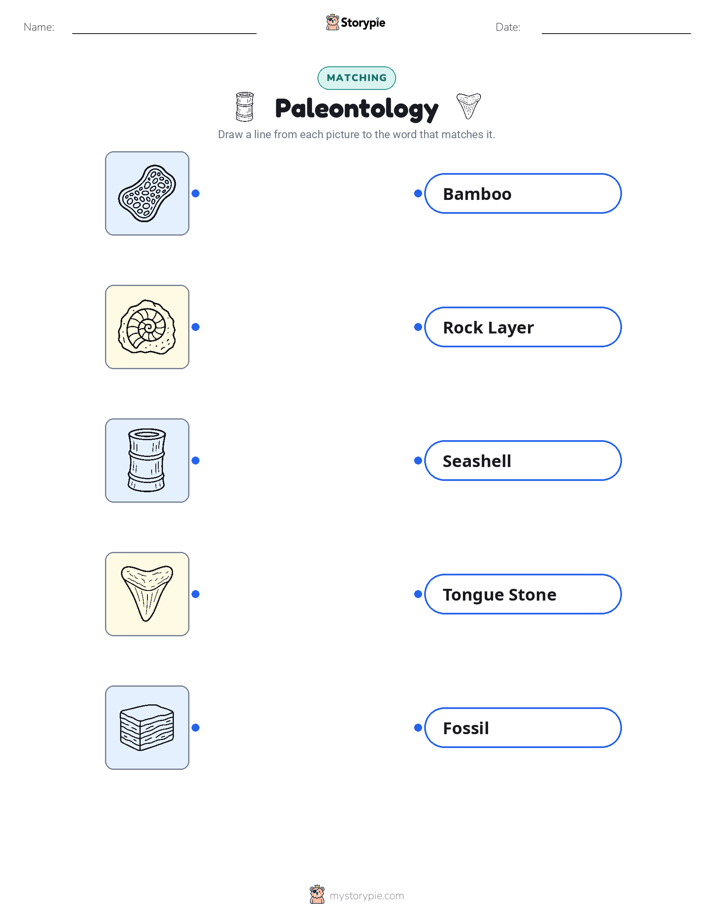
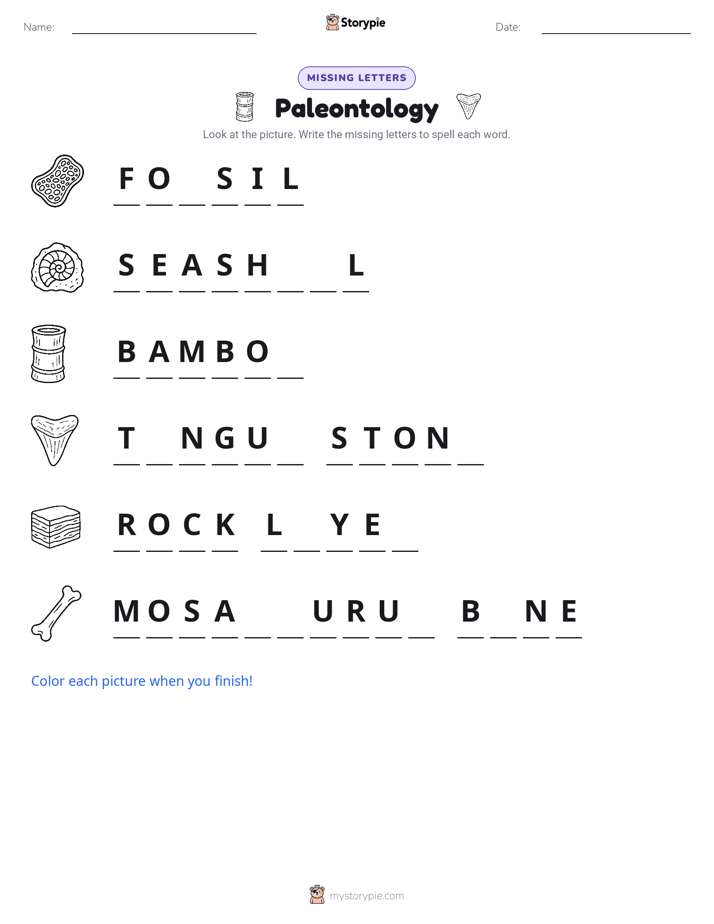
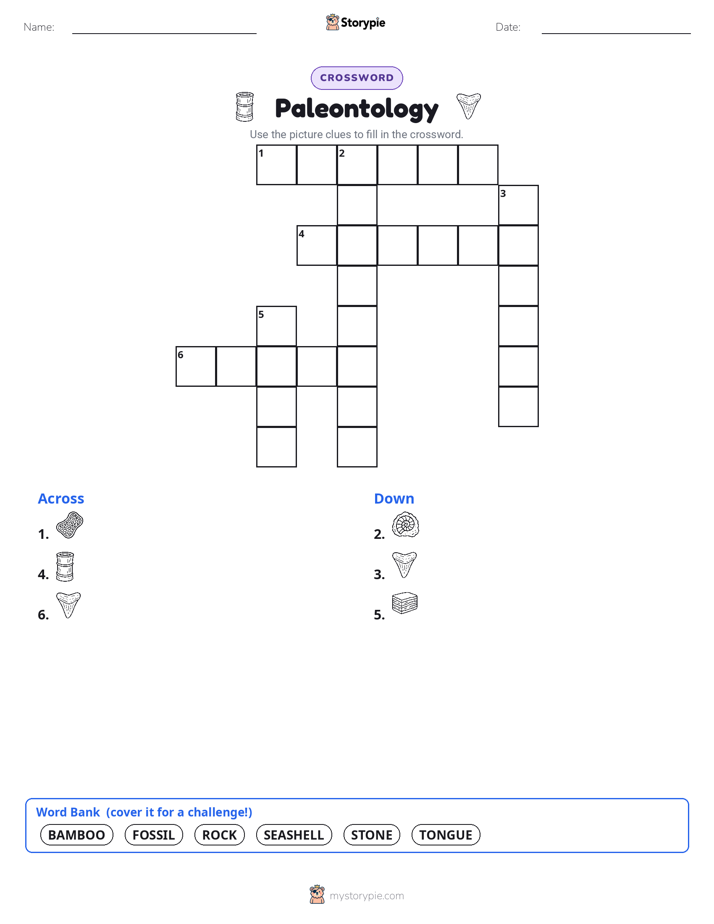
Print & create
Answer keys·No prep·Free with an account
28 worksheets · answer keys · full story · quiz · Ages 6-8 · CEFR A2
Plus adds 164,000+ more stories in 27 languages, audio for every one, and printables for all of them.
Just want Paleontology?
Have you ever dug in the dirt and found a funny-shaped rock that looked like a shell or a bone? For thousands of years, people all over the world found these little treasures. Way back in the 6th century BCE, clever people in Ancient Greece found fossils of sea creatures high up in the mountains. They scratched their heads and wondered how seashells got all the way up there. They didn't know it yet, but they were meeting me for the very first time. I am the secret keeper of a world that existed long, long before people, and I hide my stories in the rocks.
For a long, long time, people made up silly stories about me. When they found giant bones buried in the earth, they thought they must have belonged to monsters or giants from their favorite myths. But then, a few curious people started looking closer, like super detectives. In the late 18th century, a scientist in France named Georges Cuvier studied some giant fossil bones. He figured out that they belonged to animals that no longer existed on Earth. He helped people understand a very big idea called extinction, which means some animals have disappeared forever. Around the same time, a young girl in England named Mary Anning spent her days searching the cliffs by the sea. Starting in the year 1811, she found the most incredible skeletons. They were giant swimming reptiles and amazing flying creatures that the world had never seen before. Everyone was so amazed. They realized there was a whole history of life hidden in the rocks, and they needed a name for this exciting detective work. Around the year 1822, they started calling me Paleontology. That’s my name. It’s a fancy word that means the study of ancient life.
The Secret Keeper in the Stones
Have you ever dug in the dirt and found a funny-shaped rock that looked like a shell or a bone? For thousands of years, people all over the world found these little treasures. Way back in the 6th century BCE, clever people in Ancient Greece found fossils of sea creatures high up in the mountains. They scratched their heads and wondered how seashells got all the way up there. They didn't know it yet, but they were meeting me for the very first time. I am the secret keeper of a world that existed long, long before people, and I hide my stories in the rocks.
For a long, long time, people made up silly stories about me. When they found giant bones buried in the earth, they thought they must have belonged to monsters or giants from their favorite myths. But then, a few curious people started looking closer, like super detectives. In the late 18th century, a scientist in France named Georges Cuvier studied some giant fossil bones. He figured out that they belonged to animals that no longer existed on Earth. He helped people understand a very big idea called extinction, which means some animals have disappeared forever. Around the same time, a young girl in England named Mary Anning spent her days searching the cliffs by the sea. Starting in the year 1811, she found the most incredible skeletons. They were giant swimming reptiles and amazing flying creatures that the world had never seen before. Everyone was so amazed. They realized there was a whole history of life hidden in the rocks, and they needed a name for this exciting detective work. Around the year 1822, they started calling me Paleontology. That’s my name. It’s a fancy word that means the study of ancient life.
Once you knew my name, you started finding the most incredible things. You discovered dinosaurs. You found the giant, long-necked Argentinosaurus, which was as heavy as a whole herd of elephants, and the mighty Tyrannosaurus rex with its super-sharp teeth. Thanks to me, you can visit museums and see their giant skeletons standing tall, and you can imagine what it was like when they stomped and roared across the land. I am like your very own time machine, made of stone and bone. I show you that Earth has a long, amazing story, and we are just the newest chapter. So keep digging, keep asking questions, and who knows? Maybe you’ll be the one to discover the next amazing secret I’m waiting to share.
Wow facts
About
Paleontology is the scientific study of the history of life on Earth based on fossils, which are the remains of plants, animals, and other organisms from the distant past.
Take a Quiz
Question 1 of 4
Why did people a long time ago think that giant bones belonged to monsters?
Explore next





Want to do even more?
Go beyond exploring. Unlock tools that turn every story into real learning.

Storypie Plus for families
Full stories, quizzes, and printables. Nights and car rides, sorted.
- Unlimited audio stories
- Create Mode: your child stars in the story
- Offline downloads
- Printable worksheets & coloring pages

Why Storypie for Schools
Students engaged. Prep in seconds. Evenings back to you.
- Worksheets & Quizzes
- Classroom Management
- Formative Assessment
- Custom Curriculum & Lesson Plans
- 27 Languages

Why Storypie for Homeschool
Curriculum done. They'll ask for more. Hours back in your day.
- Worksheet Generator
- First-Person Audio Stories
- Built-in Comprehension Quizzes
- Custom Curriculum & Lesson Plans
- Print & Go Activities