English

Pharaohs
Pharaohs were the supreme rulers of ancient Egypt, serving as the religious, political…
Reads at Grades K-2 Listens at K–3
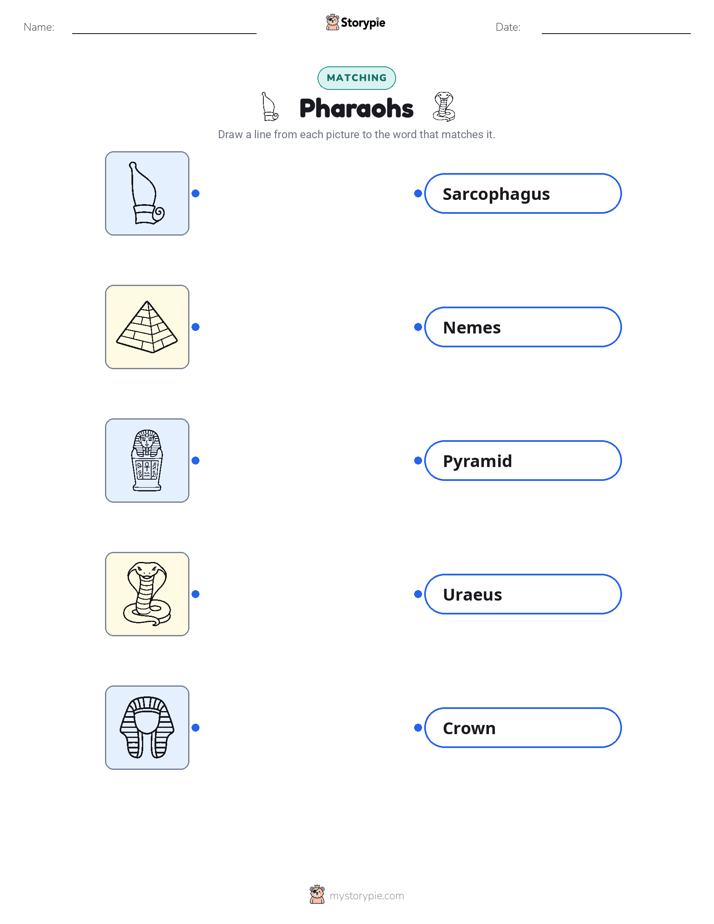
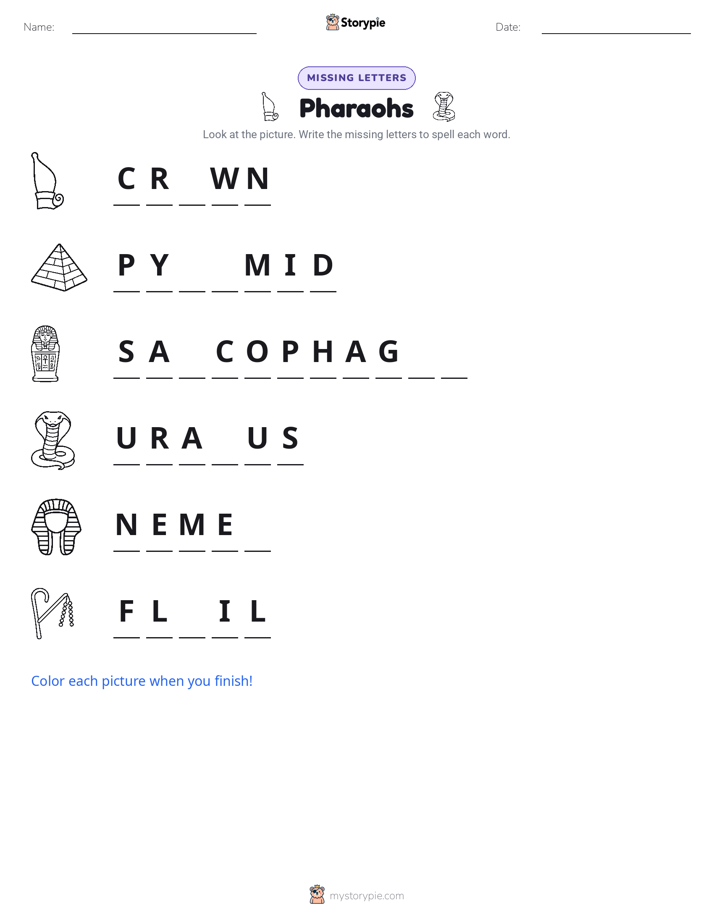
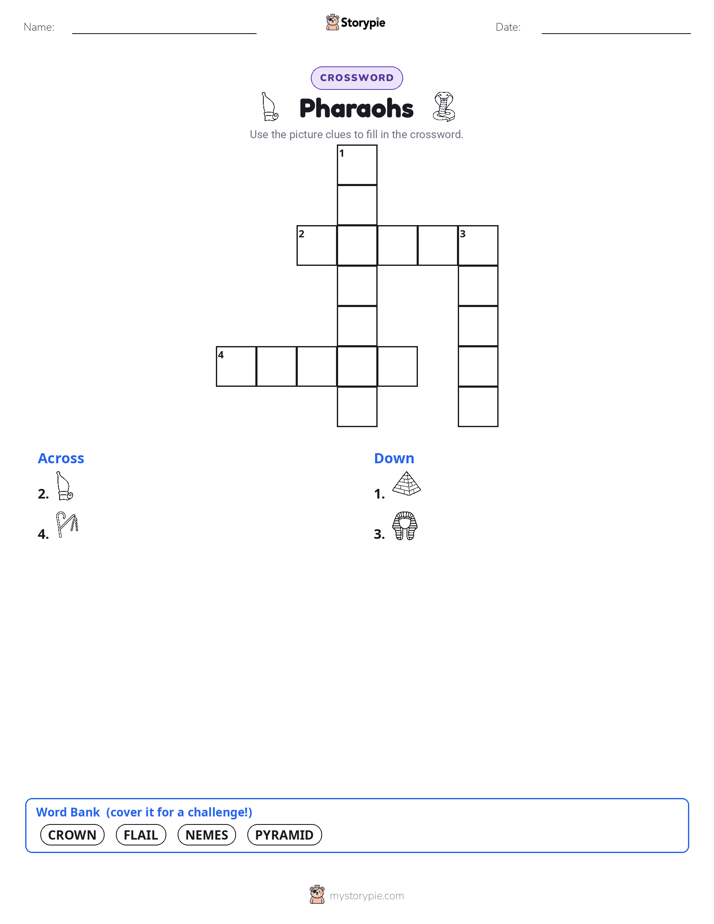
Print & create
Answer keys·No prep·Free with an account
28 worksheets · answer keys · full story · quiz · Ages 6-8 · CEFR A2
Plus adds 164,000+ more stories in 27 languages, audio for every one, and printables for all of them.
Just want Pharaohs?
Imagine a land with a long, winding river under a bright, hot sun. A powerful ruler sits on a golden throne, wearing a special crown that is both white and red. This crown shows they rule over the whole country—the green lands by the river and the sandy deserts beyond. The people look up to this ruler, who they believe is a connection to the gods, almost like a superhero who keeps them safe and helps their farms grow. I am the idea, the power, and the spirit of these special rulers who wore that amazing double crown. I am the Pharaohs.
My story begins a very, very long time ago, around the year 3100 BCE, when a great king named Narmer brought the two parts of Egypt together to make one big kingdom. For almost 3,000 years after that, I was the title given to the kings—and sometimes powerful queens—of ancient Egypt. The word 'pharaoh' was special. At first, it meant 'great house,' which was the palace where the ruler lived. As a pharaoh, you had many important jobs. You had to make sure everyone had enough food to eat, you led brave armies to protect the kingdom, and you built amazing things that would last forever. Great pharaohs like Khufu built giant pyramids, which were tombs to help them on their journey to the afterlife. Strong queens like Hatshepsut ruled just like kings, and she even wore a false beard to show her power. And there was even a famous boy king, Tutankhamun, who became a pharaoh when he was only nine years old.
My time as the ruler of Egypt ended a long, long time ago with the very last pharaoh, Queen Cleopatra, in the year 30 BCE. But my story lives on and continues to be told. Hundreds of years later, explorers called archaeologists began to uncover the many secrets I left behind in the sand. In the year 1922, they found something incredible: the amazing, treasure-filled tomb of Tutankhamun, which had been hidden for thousands of years. By studying the pictures on tomb walls, the giant statues of my rulers, and the special picture-writing called hieroglyphs, people today can learn all about my world. I am a reminder that even stories from long, long ago can still fill us with wonder and teach us about the incredible things people can build and achieve.
I Am the Pharaohs
Imagine a land with a long, winding river under a bright, hot sun. A powerful ruler sits on a golden throne, wearing a special crown that is both white and red. This crown shows they rule over the whole country—the green lands by the river and the sandy deserts beyond. The people look up to this ruler, who they believe is a connection to the gods, almost like a superhero who keeps them safe and helps their farms grow. I am the idea, the power, and the spirit of these special rulers who wore that amazing double crown. I am the Pharaohs.
My story begins a very, very long time ago, around the year 3100 BCE, when a great king named Narmer brought the two parts of Egypt together to make one big kingdom. For almost 3,000 years after that, I was the title given to the kings—and sometimes powerful queens—of ancient Egypt. The word 'pharaoh' was special. At first, it meant 'great house,' which was the palace where the ruler lived. As a pharaoh, you had many important jobs. You had to make sure everyone had enough food to eat, you led brave armies to protect the kingdom, and you built amazing things that would last forever. Great pharaohs like Khufu built giant pyramids, which were tombs to help them on their journey to the afterlife. Strong queens like Hatshepsut ruled just like kings, and she even wore a false beard to show her power. And there was even a famous boy king, Tutankhamun, who became a pharaoh when he was only nine years old.
My time as the ruler of Egypt ended a long, long time ago with the very last pharaoh, Queen Cleopatra, in the year 30 BCE. But my story lives on and continues to be told. Hundreds of years later, explorers called archaeologists began to uncover the many secrets I left behind in the sand. In the year 1922, they found something incredible: the amazing, treasure-filled tomb of Tutankhamun, which had been hidden for thousands of years. By studying the pictures on tomb walls, the giant statues of my rulers, and the special picture-writing called hieroglyphs, people today can learn all about my world. I am a reminder that even stories from long, long ago can still fill us with wonder and teach us about the incredible things people can build and achieve.
Wow facts
About
Pharaohs were the supreme rulers of ancient Egypt, serving as the religious, political, and military leaders of their people for nearly 3,000 years.
Take a Quiz
Question 1 of 4
Why did Queen Hatshepsut wear a false beard?
Explore next

Want to do even more?
Go beyond exploring. Unlock tools that turn every story into real learning.

Storypie Plus for families
Full stories, quizzes, and printables. Nights and car rides, sorted.
- Unlimited audio stories
- Create Mode: your child stars in the story
- Offline downloads
- Printable worksheets & coloring pages

Why Storypie for Schools
Students engaged. Prep in seconds. Evenings back to you.
- Worksheets & Quizzes
- Classroom Management
- Formative Assessment
- Custom Curriculum & Lesson Plans
- 27 Languages

Why Storypie for Homeschool
Curriculum done. They'll ask for more. Hours back in your day.
- Worksheet Generator
- First-Person Audio Stories
- Built-in Comprehension Quizzes
- Custom Curriculum & Lesson Plans
- Print & Go Activities