English

Suburbia
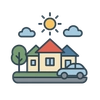
Suburbia is a residential area or a community located within commuting distance of a city.
Reads at Grades 3–5 Listens at Grades 1–5
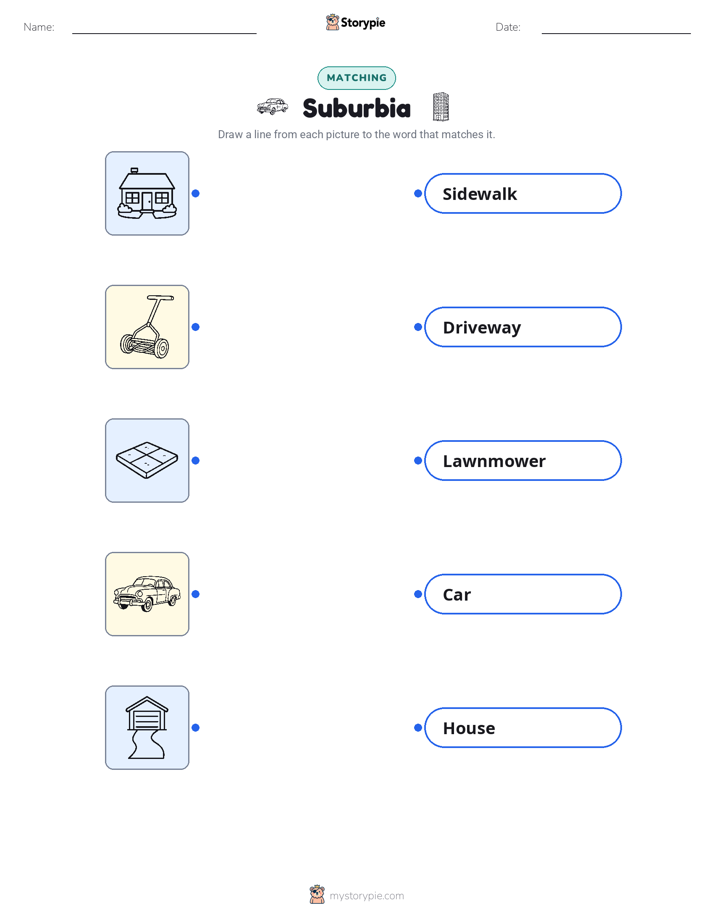
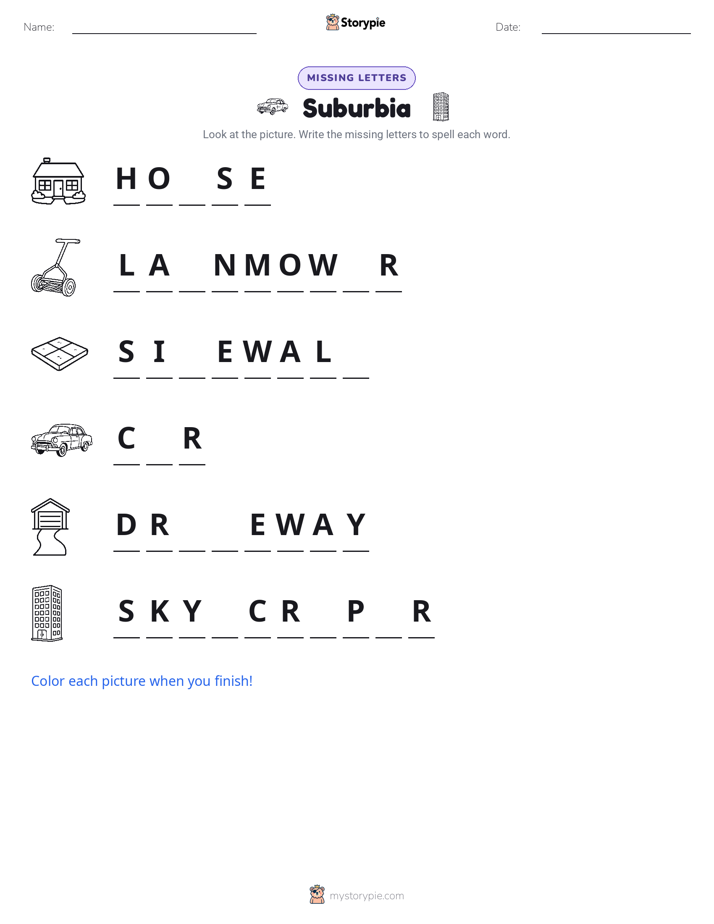
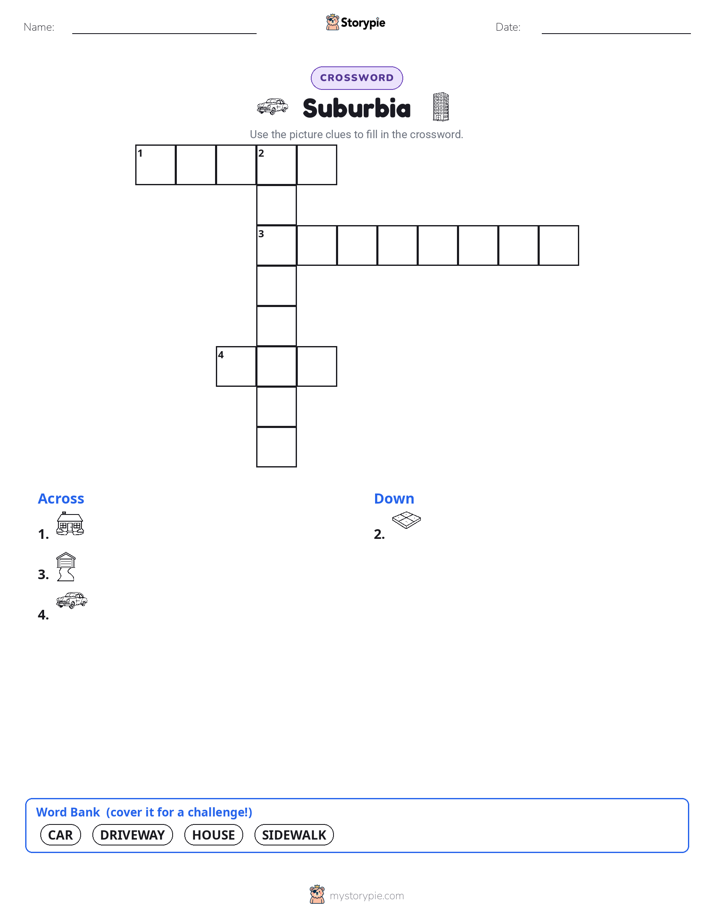
Print & create
Answer keys·No prep·Free with an account
28 worksheets · answer keys · full story · quiz · Ages 8-10 · CEFR B1
Plus adds 102,000+ more stories in 27 languages, audio for every one, and printables for all of them.
Just want Suburbia?
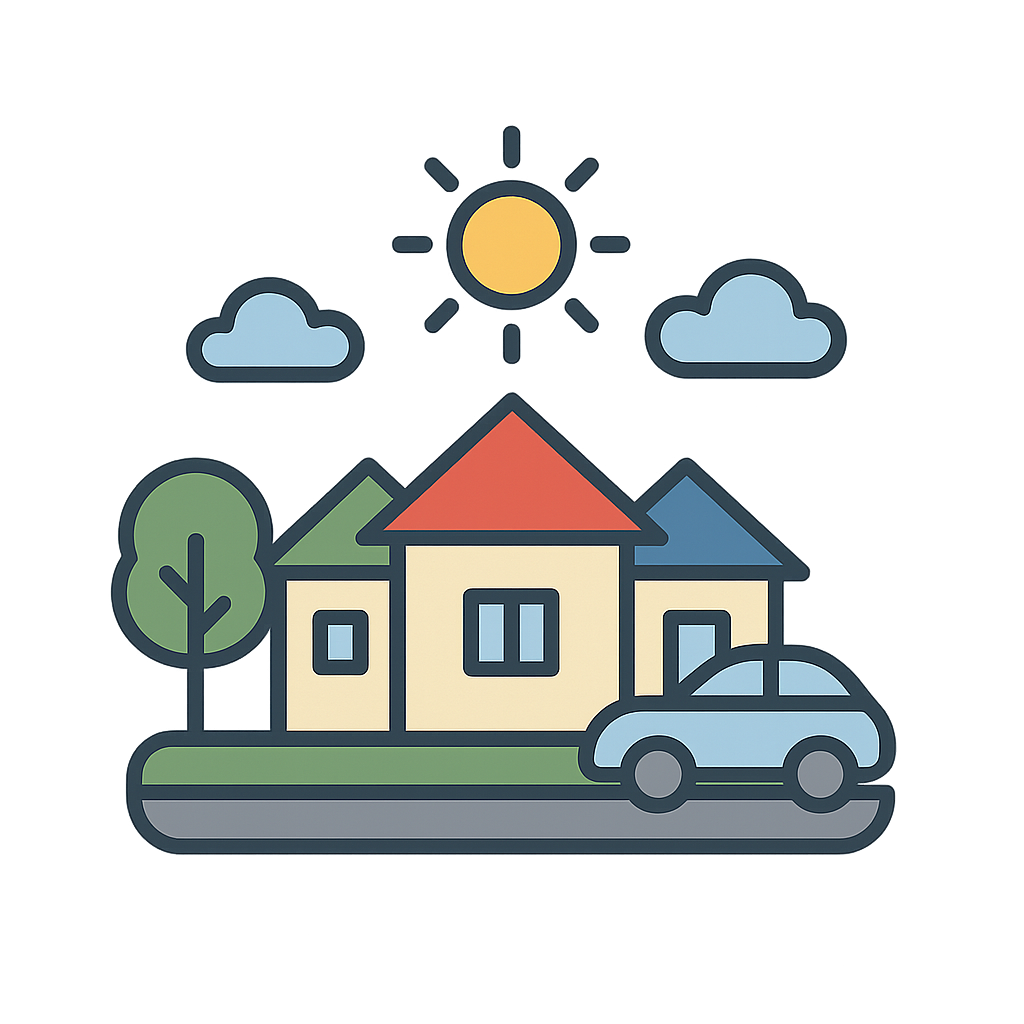
I am the quiet hum of a lawnmower on a Saturday morning, the scent of barbecue smoke in the summer air, and the sight of houses lined up neatly, each with its own patch of green grass. I am the space between the bustling, noisy city and the wide-open country. I am where you can hear birds chirping in the morning and see stars at night. In the city, buildings stretch to the sky, but here, trees do. I am a place of backyards for playing catch, driveways for learning to ride a bike, and sidewalks that lead to a friend’s front door. For many people, I am the picture of home, a neighborhood where the city takes a deep breath and life slows down just a little bit. I am Suburbia, and I am the story of how millions of families found their own special place to live.
My idea isn't brand new. For hundreds of years, cities were often crowded and dirty places. Wealthy people in ancient Rome and later in 18th-century London built large homes just outside the city walls to get away from the noise and find some fresh air. But it was the invention of trains and streetcars in the 1800s that really helped me grow into a home for more than just the very rich. Suddenly, people didn’t have to live right next to their jobs in the loud, busy city. They could take a short ride to work. In 1853, a special community called Llewellyn Park was designed in New Jersey. It was one of the very first places planned from the start to be a quiet, green neighborhood away from the city, connected by new transportation. This was the beginning of me becoming a home for many more families.
The Story of Suburbia
I am the quiet hum of a lawnmower on a Saturday morning, the scent of barbecue smoke in the summer air, and the sight of houses lined up neatly, each with its own patch of green grass. I am the space between the bustling, noisy city and the wide-open country. I am where you can hear birds chirping in the morning and see stars at night. In the city, buildings stretch to the sky, but here, trees do. I am a place of backyards for playing catch, driveways for learning to ride a bike, and sidewalks that lead to a friend’s front door. For many people, I am the picture of home, a neighborhood where the city takes a deep breath and life slows down just a little bit. I am Suburbia, and I am the story of how millions of families found their own special place to live.
My idea isn't brand new. For hundreds of years, cities were often crowded and dirty places. Wealthy people in ancient Rome and later in 18th-century London built large homes just outside the city walls to get away from the noise and find some fresh air. But it was the invention of trains and streetcars in the 1800s that really helped me grow into a home for more than just the very rich. Suddenly, people didn’t have to live right next to their jobs in the loud, busy city. They could take a short ride to work. In 1853, a special community called Llewellyn Park was designed in New Jersey. It was one of the very first places planned from the start to be a quiet, green neighborhood away from the city, connected by new transportation. This was the beginning of me becoming a home for many more families.
My biggest moment came after a huge event called World War II, which ended in 1945. Millions of soldiers returned home, eager to start families and find a place of their own. But there was a big problem. there weren't enough houses for everyone. A smart builder named William Levitt had an idea. He had learned how to build things very quickly during the war. Starting on July 1st, 1947, he began building thousands of simple, affordable houses in New York using assembly-line methods, just like how a car is built. He called this place Levittown, and it was a huge success. At the same time, cars were becoming the main way people traveled. In 1956, the government passed the Federal-Aid Highway Act, which started building massive highways that connected cities to me. With cars to drive and highways to drive on, families could move into my new neighborhoods and still get to work in the city. I started popping up all over America.
Today, I am home to millions and millions of people. I am the setting for block parties on warm summer evenings, the splash-filled fun of community pools, and the green fields of local parks where kids play soccer. I am constantly changing and growing, just like the families who live within me. Some of my neighborhoods are becoming more like little towns, with shops, libraries, and restaurants you can walk to. I am not just a collection of houses with white picket fences; I am a place where communities are formed and memories are made. I provide a little patch of earth for people to call their own, a place to plant a garden, or watch a sunset from the front porch. I continue to be a place where people build their lives, one home, one family, and one neighborhood at a time.
Wow facts
About
Suburbia is a residential area or a community located within commuting distance of a city. It is characterized by lower population density than urban centers and is often associated with single-family homes, private yards, and car-dependent lifestyles.
Take a Quiz
Question 1 of 5
Why were trains and streetcars so important for the growth of suburbs in the 1800s?
Explore next




Want to do even more?
Go beyond exploring. Unlock tools that turn every story into real learning.

Storypie Plus for families
Full stories, quizzes, and printables. Nights and car rides, sorted.
- Unlimited audio stories
- Create Mode: your child stars in the story
- Offline downloads
- Printable worksheets & coloring pages

Why Storypie for Schools
Students engaged. Prep in seconds. Evenings back to you.
- Worksheets & Quizzes
- Classroom Management
- Formative Assessment
- Custom Curriculum & Lesson Plans
- 27 Languages

Why Storypie for Homeschool
Curriculum done. They'll ask for more. Hours back in your day.
- Worksheet Generator
- First-Person Audio Stories
- Built-in Comprehension Quizzes
- Custom Curriculum & Lesson Plans
- Print & Go Activities