English

Suburbia
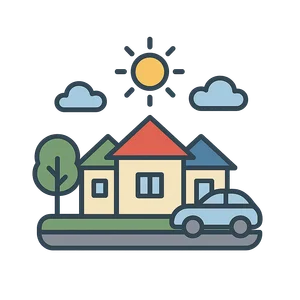
Suburbia is a residential area or a community located within commuting distance of a city.
Reads at Grades 6–8 Listens at Grades 4–8
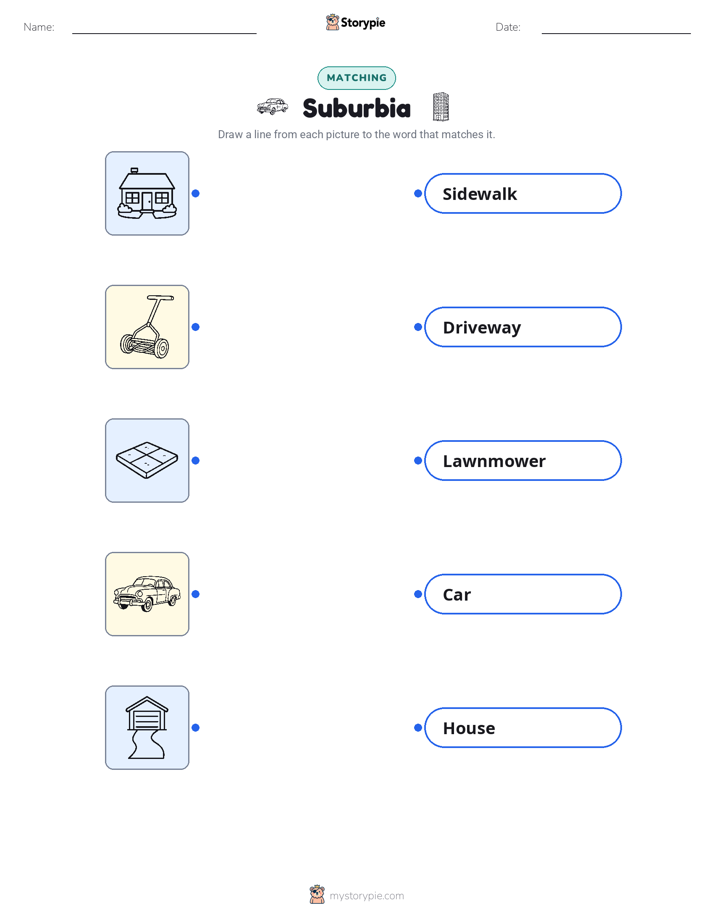
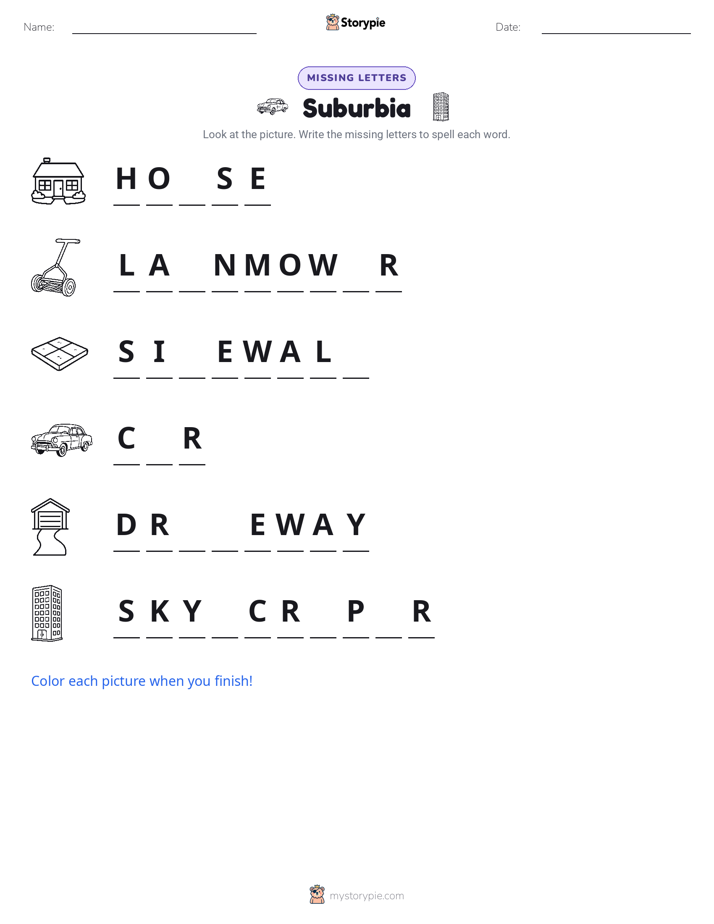
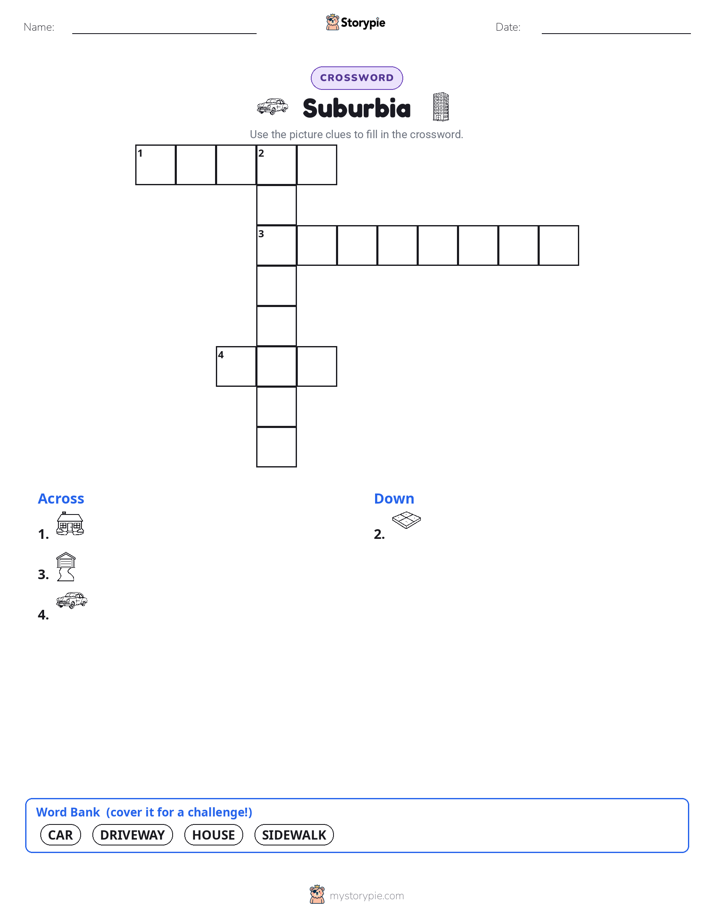
Print & create
Answer keys·No prep·Free with an account
28 worksheets · answer keys · full story · quiz · Ages 10-12 · CEFR B2
Plus adds 102,000+ more stories in 27 languages, audio for every one, and printables for all of them.
Just want Suburbia?
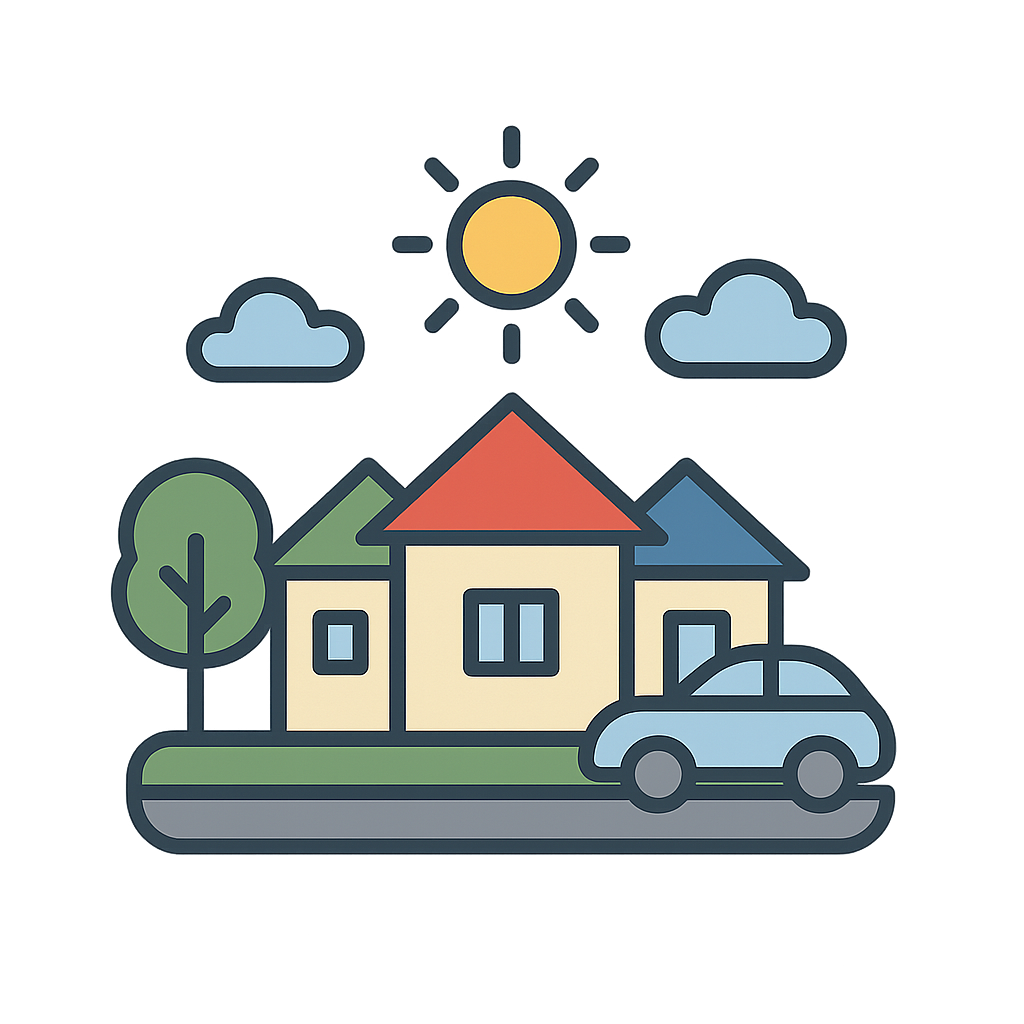
Imagine a street where every house has a patch of green grass in the front and a private space in the back. Picture the gentle hum of a lawnmower on a warm Saturday morning, the distant shouts of kids playing tag on the sidewalk, and the jingle of an ice cream truck turning the corner. This is a place of rhythms. The morning sees a parade of cars pulling out of driveways, carrying people to work or school. The afternoon brings them back, filling the quiet streets with life again. It's not the roaring, sleepless energy of a city, with its towering skyscrapers and endless traffic. Nor is it the vast, quiet solitude of the countryside, where the nearest neighbor might be a mile away. I exist in the space between those two worlds. To get to the grocery store, the movie theater, or a friend's house, you almost always need a car. Life is spread out, connected by roads and driveways. I am a patchwork of neighborhoods, each with its own character, but all sharing a similar dream of space, safety, and a place to call one's own. I am the space between the city and the country. I am Suburbia.
My story began long ago, born from a desire to escape. During a period called the Industrial Revolution, which swept through countries like England and the United States in the late 18th and 19th centuries, cities changed dramatically. Factories rose up, puffing thick, dark smoke into the air. People flocked to them for work, and cities became incredibly crowded. Families were often crammed into small, dark apartments in buildings packed tightly together. The air was thick with pollution, and life could be very difficult and unhealthy. It was then that some wealthier families began to look for a way out. They wanted fresh air, green space, and a healthier environment for their children. They started building large homes on the outskirts of the city, in areas they called the 'sub-urbs,' which literally means 'below the city.' At first, only the rich could afford this lifestyle, as they needed carriages to travel back and forth. But then, in the mid-19th century, a powerful new invention changed everything: the railroad. Soon, steam trains and electric streetcars were crisscrossing the land, laying down tracks that acted like arteries connecting the heart of the city to the land outside. For the first time, middle-class families could live farther away and still 'commute,' or travel, to their jobs in the city each day. I represented a new promise: the chance to have the best of both worlds.
The Story of Suburbia
Imagine a street where every house has a patch of green grass in the front and a private space in the back. Picture the gentle hum of a lawnmower on a warm Saturday morning, the distant shouts of kids playing tag on the sidewalk, and the jingle of an ice cream truck turning the corner. This is a place of rhythms. The morning sees a parade of cars pulling out of driveways, carrying people to work or school. The afternoon brings them back, filling the quiet streets with life again. It's not the roaring, sleepless energy of a city, with its towering skyscrapers and endless traffic. Nor is it the vast, quiet solitude of the countryside, where the nearest neighbor might be a mile away. I exist in the space between those two worlds. To get to the grocery store, the movie theater, or a friend's house, you almost always need a car. Life is spread out, connected by roads and driveways. I am a patchwork of neighborhoods, each with its own character, but all sharing a similar dream of space, safety, and a place to call one's own. I am the space between the city and the country. I am Suburbia.
My story began long ago, born from a desire to escape. During a period called the Industrial Revolution, which swept through countries like England and the United States in the late 18th and 19th centuries, cities changed dramatically. Factories rose up, puffing thick, dark smoke into the air. People flocked to them for work, and cities became incredibly crowded. Families were often crammed into small, dark apartments in buildings packed tightly together. The air was thick with pollution, and life could be very difficult and unhealthy. It was then that some wealthier families began to look for a way out. They wanted fresh air, green space, and a healthier environment for their children. They started building large homes on the outskirts of the city, in areas they called the 'sub-urbs,' which literally means 'below the city.' At first, only the rich could afford this lifestyle, as they needed carriages to travel back and forth. But then, in the mid-19th century, a powerful new invention changed everything: the railroad. Soon, steam trains and electric streetcars were crisscrossing the land, laying down tracks that acted like arteries connecting the heart of the city to the land outside. For the first time, middle-class families could live farther away and still 'commute,' or travel, to their jobs in the city each day. I represented a new promise: the chance to have the best of both worlds.
My biggest moment, my true population boom, arrived after a massive global conflict. When World War II finally ended on September 2nd, 1945, millions of American soldiers returned home. They had faced incredible hardships and were ready to build peaceful lives. They dreamed of getting married, starting families, and owning a piece of land with a house on it. The United States government wanted to help these veterans, so it created a program called the G.I. Bill. This bill made it much easier for former soldiers to get loans to buy houses or go to college. Suddenly, the dream of homeownership was within reach for many more people. This created a huge demand for new homes, and builders had to figure out how to meet it. One man, William Levitt, had a revolutionary idea. He had seen how factories used assembly lines to build things quickly and efficiently, and he applied the same concept to building houses. Starting on Long Island, New York, in 1947, his company created Levittown. Trucks delivered pre-cut materials to a plot of land, and specialized teams of workers moved from house to house, each performing one specific job, like pouring the foundation or installing the windows. They built thousands of simple, affordable, nearly identical houses in record time. This model was copied all across the country, and I grew at an astonishing speed. The automobile became my best friend. People needed cars to get from their new homes to their jobs, and in 1956, the government passed the Federal-Aid Highway Act, which created a massive network of interstate highways. These roads made it even easier to live far from the city center. However, it's a difficult but important part of my history to admit that this dream was not available to everyone. Many of these new communities, including Levittown, had rules that explicitly prevented families of color, particularly African Americans, from buying homes. This practice, known as redlining and restrictive covenants, meant that I was a symbol of opportunity for some, but a barrier for others.
If you travel through my communities today, you'll see that I have changed a great deal since those early days of identical houses and sprawling lawns. The families who call me home are more diverse than ever before, with people from every corner of the world and every walk of life. The architecture has evolved, too. You can find townhouses, apartments, and unique custom-built homes alongside the classic single-family house. Many of my neighborhoods are no longer just 'bedroom communities,' places where people only came to sleep. They have developed their own vibrant centers with shops, restaurants, libraries, and parks. Some are even designed to be more walkable, with paths and sidewalks that connect homes to community spaces, reducing the need for a car for every single trip. I am still learning and growing. Planners and residents are always thinking of new ways to make me more sustainable, inclusive, and connected. I am a living idea, constantly being reshaped by the people who inhabit me. I continue to represent the search for that delicate balance—between the energy of the city and the peace of the country, between the need for community and the desire for personal space. I am the ongoing quest to build a place that people are proud to call home.
Wow facts
About
Suburbia is a residential area or a community located within commuting distance of a city. It is characterized by lower population density than urban centers and is often associated with single-family homes, private yards, and car-dependent lifestyles.
Take a Quiz
Question 1 of 5
What was the main problem in cities during the Industrial Revolution that led to my early growth?
Explore next




Want to do even more?
Go beyond exploring. Unlock tools that turn every story into real learning.

Storypie Plus for families
Full stories, quizzes, and printables. Nights and car rides, sorted.
- Unlimited audio stories
- Create Mode: your child stars in the story
- Offline downloads
- Printable worksheets & coloring pages

Why Storypie for Schools
Students engaged. Prep in seconds. Evenings back to you.
- Worksheets & Quizzes
- Classroom Management
- Formative Assessment
- Custom Curriculum & Lesson Plans
- 27 Languages

Why Storypie for Homeschool
Curriculum done. They'll ask for more. Hours back in your day.
- Worksheet Generator
- First-Person Audio Stories
- Built-in Comprehension Quizzes
- Custom Curriculum & Lesson Plans
- Print & Go Activities