English

Taxonomy
Taxonomy is the science of naming, defining…
Reads at Grades 6–8 Listens at Grades 4–8
Print & create
Answer keys·No prep·Free with an account
28 worksheets · answer keys · full story · quiz · Ages 10-12 · CEFR B2
Plus adds 102,000+ more stories in 27 languages, audio for every one, and printables for all of them.
Just want Taxonomy?
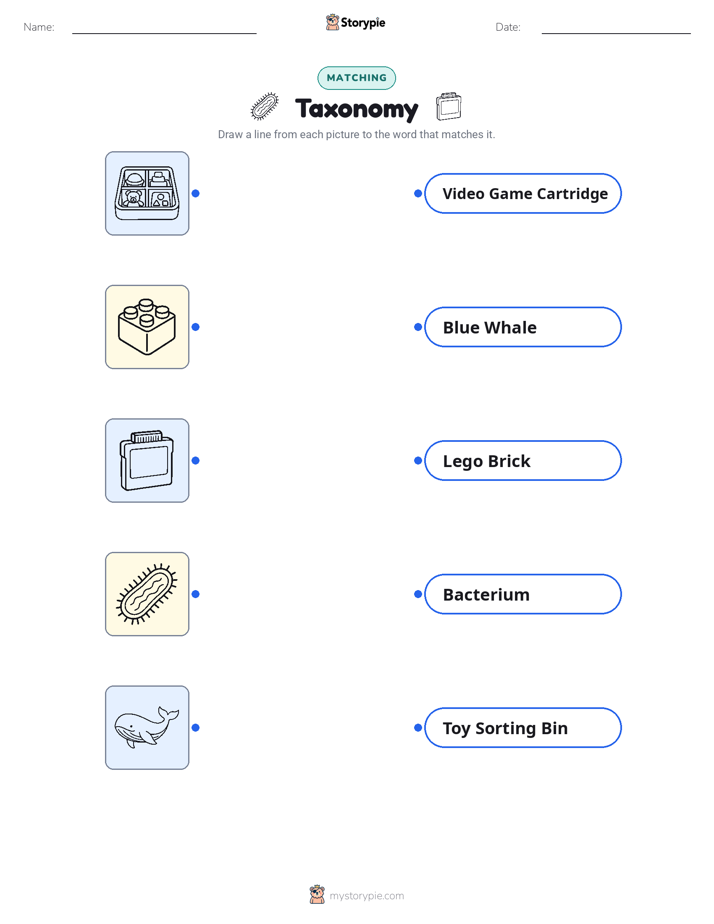
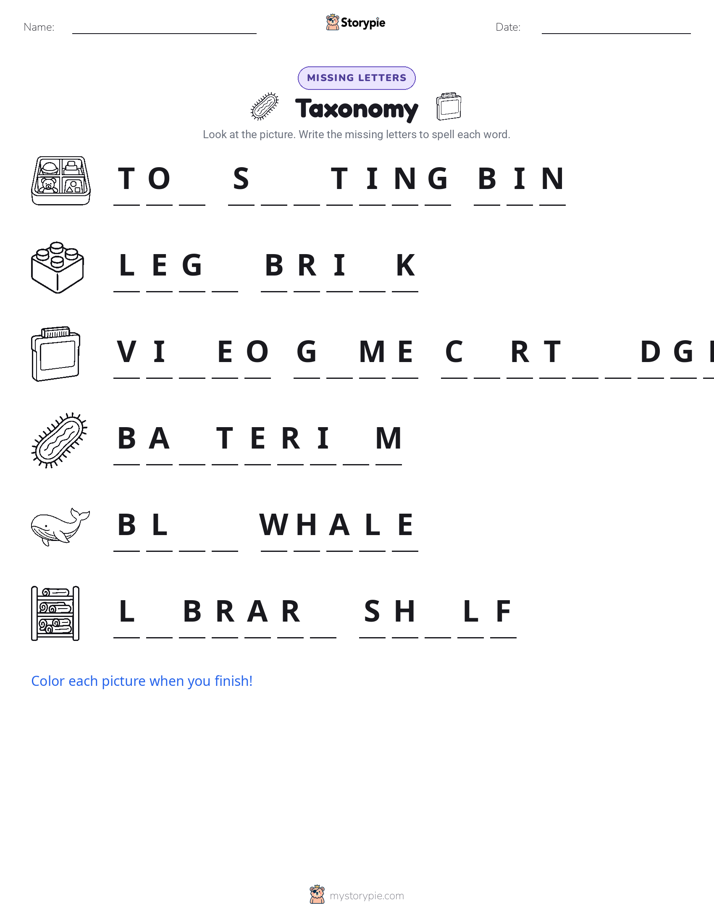
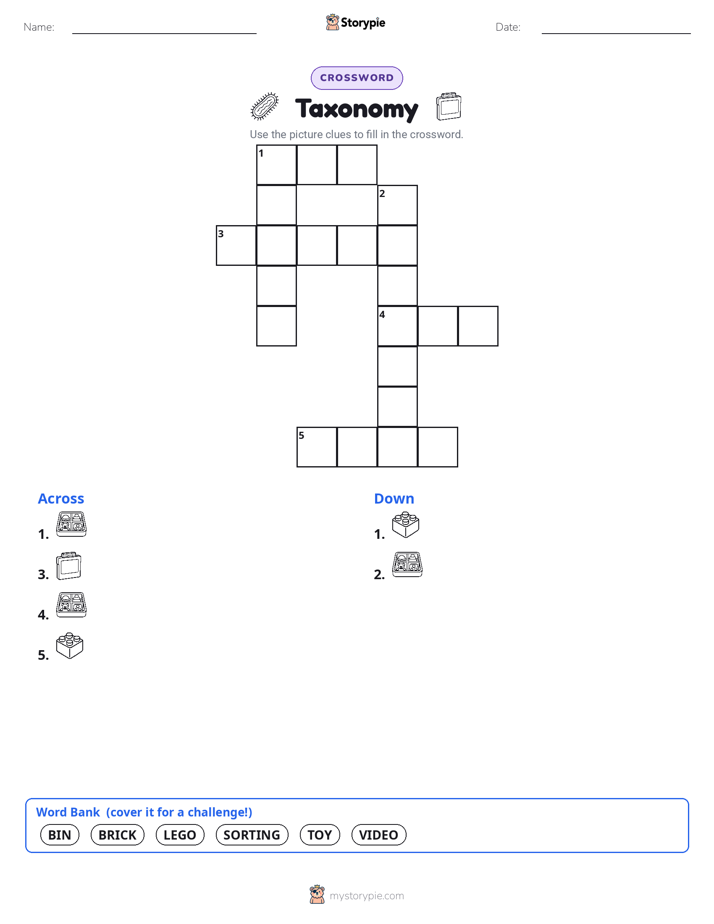
Have you ever organized your toys, your books, or even your socks? You might put all the blue socks in one pile and all the striped ones in another. It feels good, right? It takes a messy jumble and makes it neat and understandable. That feeling—that little spark of satisfaction when everything has a place—is me at work. I am the instinct inside you that loves to create order. I live in the way you sort your LEGO bricks by color and size, or arrange your video games alphabetically. For thousands of years, I’ve been helping humans make sense of their world. But I don’t just work on socks and books. My real job, my biggest and most exciting project, is organizing every single living thing on Planet Earth. From the tiniest bacterium wiggling in a drop of water to the giant blue whale cruising through the ocean, I give everything a name and a place in the grand family of life. I am a map, a library, and a detective story all rolled into one. I am the science of order. My name is Taxonomy.
My story begins a very long time ago, in the sunshine of Ancient Greece. People had always given names to the plants and animals around them, of course, but one man decided to think about it more deeply. His name was Aristotle, and back in the 4th century BCE, he was one of the greatest thinkers in the world. He looked at the animal kingdom and saw what you see: a bewildering variety of creatures. But instead of just shrugging, he used me to ask a simple question: How are these things alike, and how are they different? He began to group them. He created big categories, like animals with red blood and those without. He sorted them by where they lived—on the land, in the water, or in the air. It was a brilliant start! For the first time, someone was trying to find the underlying patterns in nature’s design. For over a thousand years, Aristotle’s ideas were the best anyone had. But then, something exciting happened. Around the 15th and 16th centuries, brave explorers began sailing across the oceans to lands they’d never seen before. They brought back stories, treasures, and best of all, thousands of new plants and animals. Suddenly, Aristotle’s simple boxes weren’t big enough. There were flying squirrels, fish with legs, and plants that ate insects! The world of life was far bigger and stranger than anyone had imagined, and I knew I needed a major upgrade to handle it all.
The Story of Taxonomy: How I Organized Life
Have you ever organized your toys, your books, or even your socks? You might put all the blue socks in one pile and all the striped ones in another. It feels good, right? It takes a messy jumble and makes it neat and understandable. That feeling—that little spark of satisfaction when everything has a place—is me at work. I am the instinct inside you that loves to create order. I live in the way you sort your LEGO bricks by color and size, or arrange your video games alphabetically. For thousands of years, I’ve been helping humans make sense of their world. But I don’t just work on socks and books. My real job, my biggest and most exciting project, is organizing every single living thing on Planet Earth. From the tiniest bacterium wiggling in a drop of water to the giant blue whale cruising through the ocean, I give everything a name and a place in the grand family of life. I am a map, a library, and a detective story all rolled into one. I am the science of order. My name is Taxonomy.
My story begins a very long time ago, in the sunshine of Ancient Greece. People had always given names to the plants and animals around them, of course, but one man decided to think about it more deeply. His name was Aristotle, and back in the 4th century BCE, he was one of the greatest thinkers in the world. He looked at the animal kingdom and saw what you see: a bewildering variety of creatures. But instead of just shrugging, he used me to ask a simple question: How are these things alike, and how are they different? He began to group them. He created big categories, like animals with red blood and those without. He sorted them by where they lived—on the land, in the water, or in the air. It was a brilliant start! For the first time, someone was trying to find the underlying patterns in nature’s design. For over a thousand years, Aristotle’s ideas were the best anyone had. But then, something exciting happened. Around the 15th and 16th centuries, brave explorers began sailing across the oceans to lands they’d never seen before. They brought back stories, treasures, and best of all, thousands of new plants and animals. Suddenly, Aristotle’s simple boxes weren’t big enough. There were flying squirrels, fish with legs, and plants that ate insects! The world of life was far bigger and stranger than anyone had imagined, and I knew I needed a major upgrade to handle it all.
By the 1700s, things were a mess. A scientist in England might call a beautiful flower a ‘Blue-petaled sun-catcher of the valley,’ while a scientist in France called the exact same flower a ‘Petite star of the morning meadow.’ It was confusing, and it made sharing knowledge nearly impossible. The world needed a hero, and it found one in a Swedish botanist named Carl Linnaeus. He was born on May 23rd, 1707, and he loved order as much as I do. He saw the chaos and decided to fix it. In 1735, he published a small book that would change science forever. It was called Systema Naturae, or ‘The System of Nature.’ In it, Linnaeus gave me two incredible new powers. First, he created what we call binomial nomenclature. It sounds complicated, but it’s simple: a two-part name for every single species. The first name identifies the group it belongs to (the genus), and the second is its unique name (the species). He gave humans the name Homo sapiens and the mighty lion Panthera leo. It was like giving everyone a universal first and last name that any scientist, anywhere in the world, could understand. His second brilliant idea was a system of nested groups, like Russian dolls. He sorted all of life into a few large groups called Kingdoms, then divided those into smaller groups, and smaller, and smaller, all the way down to the individual species. His main ranks were Kingdom, Class, Order, Genus, and Species. It was like having an address for every living thing, showing exactly where it fit in the grand scheme. Thanks to Carl Linnaeus, I was no longer just a loose collection of ideas; I was a powerful, organized system.
Linnaeus’s system was amazing, but it was based on one main thing: what an organism looked like. If two animals both had wings and six legs, they were probably related. This worked well, but it was like judging a book by its cover. A new, world-changing idea was about to give me a much deeper purpose. On November 24th, 1859, an English naturalist named Charles Darwin published a book called On the Origin of Species. In it, he explained his theory of evolution. He showed that all life on Earth wasn't created separately, but had changed, or evolved, over millions of years from common ancestors. Everything was connected on a gigantic ‘tree of life.’ This changed my job completely! I wasn’t just a librarian anymore, sorting creatures onto shelves. Now, I was a historian, tracing family trees. My goal was no longer just to group similar-looking things, but to group things that were truly related by ancestry. This explained so many puzzles. For example, a whale lives in the ocean and looks a bit like a giant fish. But Darwin’s ideas helped scientists see the truth: a whale’s skeleton, the way it breathes air, and the fact that it gives milk to its babies prove it’s a mammal. My new evolutionary mission showed that the whale’s closest living relatives aren't sharks, but hippos! I was now on a quest to map the true, historical relationships connecting every living thing.
My story has one more giant leap, and it took me from the outside of an organism right into its very cells. In the second half of the 20th century, scientists unlocked the secrets of DNA—the incredible molecule that carries the building instructions for every living thing. By comparing the DNA of different species, scientists could now see, with amazing precision, just how closely related they were. It was like finally being able to read the entire family history book instead of just looking at old photos. This new tool was so powerful that in 1977, a scientist named Carl Woese used it to redraw the very top of the tree of life. He discovered a whole new form of microscopic life and proposed that all life be grouped into three main ‘Domains’: Bacteria, Archaea (a group of single-celled extremists), and Eukarya (which includes all plants, animals, and fungi). Today, I am more important than ever. I help conservationists protect endangered species by understanding their place in the ecosystem. I help doctors track viruses and diseases. I help researchers discover new medicines from rare plants. I am a living, breathing science, constantly being updated with new discoveries. I am the story of life on Earth, and the best part is, the book is still being written.
Wow facts
About
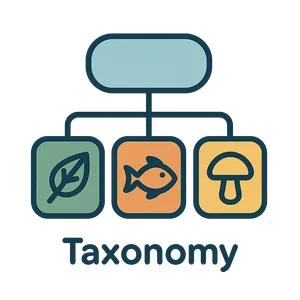
Taxonomy is the science of naming, defining, and classifying groups of biological organisms based on shared characteristics, helping us understand the relationships between all living things.
Take a Quiz
Question 1 of 5
What is the main purpose of Taxonomy, as described in the story?
Explore next





Want to do even more?
Go beyond exploring. Unlock tools that turn every story into real learning.

Storypie Plus for families
Full stories, quizzes, and printables. Nights and car rides, sorted.
- Unlimited audio stories
- Create Mode: your child stars in the story
- Offline downloads
- Printable worksheets & coloring pages

Why Storypie for Schools
Students engaged. Prep in seconds. Evenings back to you.
- Worksheets & Quizzes
- Classroom Management
- Formative Assessment
- Custom Curriculum & Lesson Plans
- 27 Languages

Why Storypie for Homeschool
Curriculum done. They'll ask for more. Hours back in your day.
- Worksheet Generator
- First-Person Audio Stories
- Built-in Comprehension Quizzes
- Custom Curriculum & Lesson Plans
- Print & Go Activities