English

Temperature
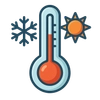
Temperature is a physical quantity that expresses the degree of hotness or coldness of a substance…
Reads at Grades 6–8 Listens at Grades 4–8
Print & create
Answer keys·No prep·Free with an account
28 worksheets · answer keys · full story · quiz · Ages 10-12 · CEFR B2
Plus adds 164,000+ more stories in 27 languages, audio for every one, and printables for all of them.
Just want Temperature?
A Shiver and a Sweat
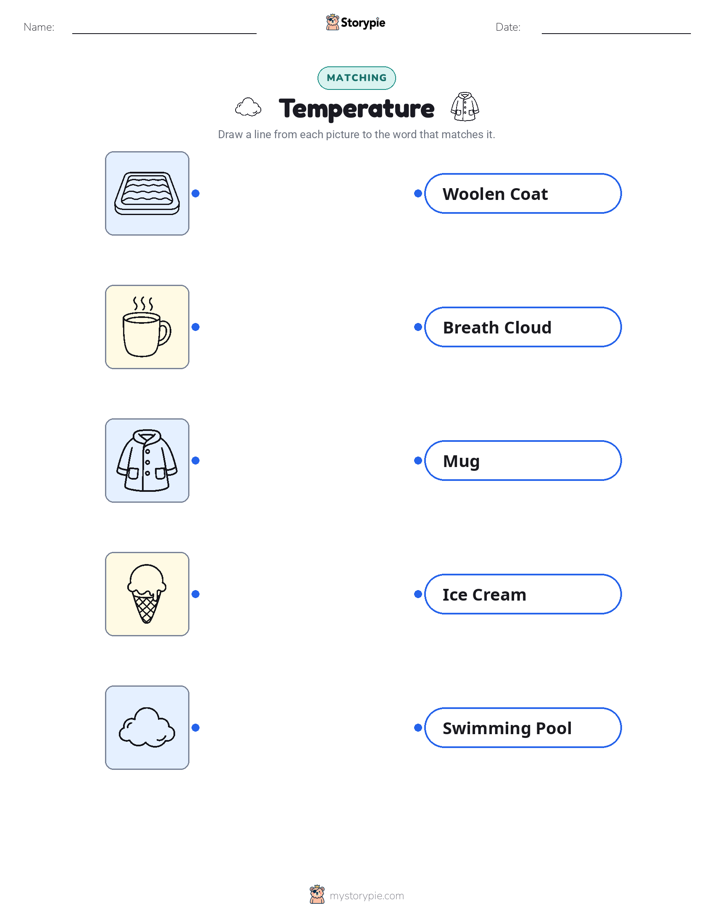
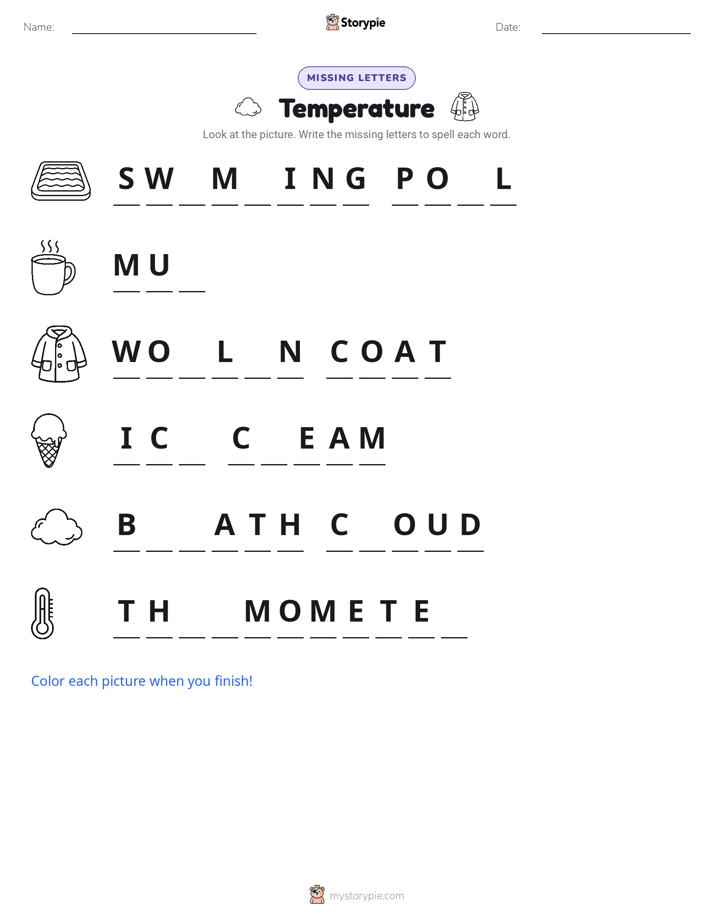
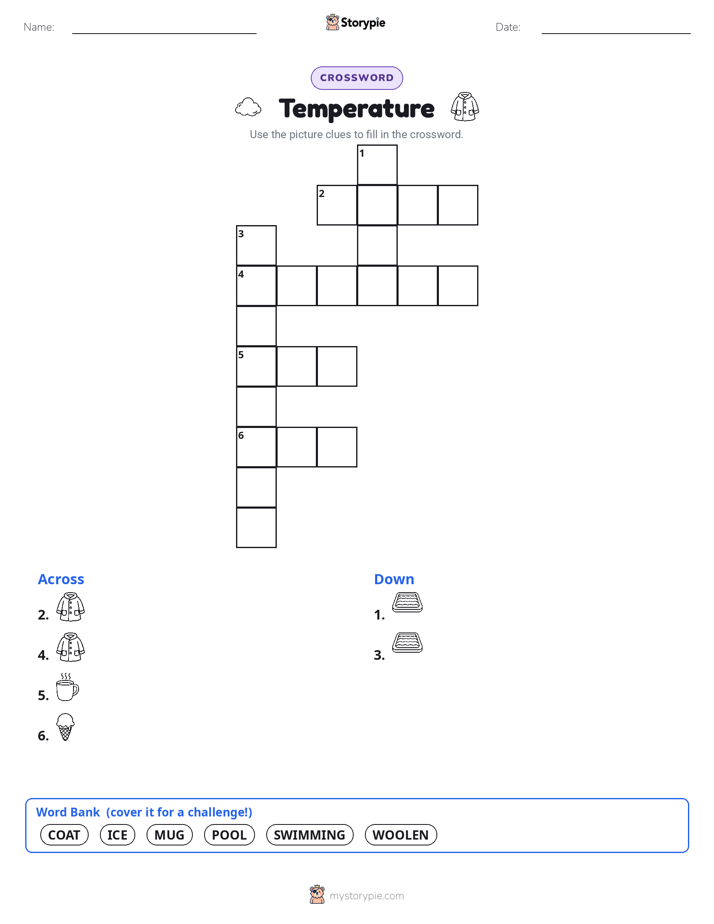
Imagine the shock of a cannonball splash as you jump into a cool swimming pool on a blistering summer afternoon. Feel the immediate relief, the goosebumps that rise on your skin even as the sun beats down. Now, picture a frigid winter day, with snow swirling outside your window. You wrap your hands around a steaming mug of hot chocolate, the comforting warmth seeping into your fingers. You pull a thick, woolen coat tight around your shoulders before stepping outside, creating a shield against the biting air. In both moments, you feel my presence. I am the invisible energy that makes ice cream melt into a sweet puddle on the sidewalk and causes your breath to form a misty cloud in the cold. I am there in the warmth of a feverish forehead, a silent signal that your body is fighting hard. I am the force a baker must control perfectly to turn sticky dough into a light, fluffy cake. I am in the sun's rays that travel millions of miles to warm your face and in the deep, unyielding cold of the ocean floor. You have felt me every moment of your life, in every room you have entered and every breeze that has touched your skin. You feel me, but you cannot see me. I am Temperature.
Putting a Number on Me
For most of human history, people knew me only as a feeling. I was simply ‘hot’ or ‘cold,’ ‘scorching’ or ‘freezing.’ Around 500 BCE, thinkers in ancient Greece described me as a quality that all things possessed, but they had no way to pin me down. I was a mystery, a sensation without a number. This began to change in the late 16th century. An Italian scientist, a man of brilliant curiosity named Galileo Galilei, wanted to understand me better. Around the year 1593, he invented a clever device called a thermoscope. It was a glass bulb with a long tube dipping into a container of water. As the air in the bulb warmed or cooled, the water level in the tube would rise or fall. It was a breakthrough. For the first time, people could see me change. But Galileo’s thermoscope had a problem; it could show that something was getting warmer, but it couldn't tell you exactly how warm. It had no scale, no numbers to make a precise measurement. I was still unquantified. That challenge was finally met by a German physicist named Daniel Gabriel Fahrenheit. In 1714, he created the first truly reliable thermometer using mercury sealed in a glass tube. More importantly, he gave me a scale. He marked his lowest point, 0, at the freezing temperature of a specific saltwater mixture. He set the freezing point of plain water at 32 and what he measured as the average human body temperature at 96. His Fahrenheit scale gave people a consistent way to talk about me with numbers. A few decades later, in 1742, a Swedish astronomer named Anders Celsius proposed a different, simpler idea. He thought it would be more logical to base a scale on the properties of water. He set the freezing point of water to 0 and the boiling point to 100. His elegant, easy-to-use Celsius scale eventually became the standard for most of the world. But my story wasn’t finished. In 1848, a brilliant Scottish scientist named William Thomson, who would later be known as Lord Kelvin, realized something profound. He reasoned that there must be a point where all the heat energy is gone, an absolute coldest possible state. He called this point ‘absolute zero.’ This idea led to the Kelvin scale, which starts at this ultimate cold. Scientists today rely on the Kelvin scale for their most important work, from studying the stars to exploring the tiniest particles of matter. From a simple feeling, I had become a precise, universal language of science.
The Tale of Temperature
A Shiver and a Sweat
Imagine the shock of a cannonball splash as you jump into a cool swimming pool on a blistering summer afternoon. Feel the immediate relief, the goosebumps that rise on your skin even as the sun beats down. Now, picture a frigid winter day, with snow swirling outside your window. You wrap your hands around a steaming mug of hot chocolate, the comforting warmth seeping into your fingers. You pull a thick, woolen coat tight around your shoulders before stepping outside, creating a shield against the biting air. In both moments, you feel my presence. I am the invisible energy that makes ice cream melt into a sweet puddle on the sidewalk and causes your breath to form a misty cloud in the cold. I am there in the warmth of a feverish forehead, a silent signal that your body is fighting hard. I am the force a baker must control perfectly to turn sticky dough into a light, fluffy cake. I am in the sun's rays that travel millions of miles to warm your face and in the deep, unyielding cold of the ocean floor. You have felt me every moment of your life, in every room you have entered and every breeze that has touched your skin. You feel me, but you cannot see me. I am Temperature.
Putting a Number on Me
For most of human history, people knew me only as a feeling. I was simply ‘hot’ or ‘cold,’ ‘scorching’ or ‘freezing.’ Around 500 BCE, thinkers in ancient Greece described me as a quality that all things possessed, but they had no way to pin me down. I was a mystery, a sensation without a number. This began to change in the late 16th century. An Italian scientist, a man of brilliant curiosity named Galileo Galilei, wanted to understand me better. Around the year 1593, he invented a clever device called a thermoscope. It was a glass bulb with a long tube dipping into a container of water. As the air in the bulb warmed or cooled, the water level in the tube would rise or fall. It was a breakthrough. For the first time, people could see me change. But Galileo’s thermoscope had a problem; it could show that something was getting warmer, but it couldn't tell you exactly how warm. It had no scale, no numbers to make a precise measurement. I was still unquantified. That challenge was finally met by a German physicist named Daniel Gabriel Fahrenheit. In 1714, he created the first truly reliable thermometer using mercury sealed in a glass tube. More importantly, he gave me a scale. He marked his lowest point, 0, at the freezing temperature of a specific saltwater mixture. He set the freezing point of plain water at 32 and what he measured as the average human body temperature at 96. His Fahrenheit scale gave people a consistent way to talk about me with numbers. A few decades later, in 1742, a Swedish astronomer named Anders Celsius proposed a different, simpler idea. He thought it would be more logical to base a scale on the properties of water. He set the freezing point of water to 0 and the boiling point to 100. His elegant, easy-to-use Celsius scale eventually became the standard for most of the world. But my story wasn’t finished. In 1848, a brilliant Scottish scientist named William Thomson, who would later be known as Lord Kelvin, realized something profound. He reasoned that there must be a point where all the heat energy is gone, an absolute coldest possible state. He called this point ‘absolute zero.’ This idea led to the Kelvin scale, which starts at this ultimate cold. Scientists today rely on the Kelvin scale for their most important work, from studying the stars to exploring the tiniest particles of matter. From a simple feeling, I had become a precise, universal language of science.
Your Everyday Guide
Because these brilliant minds learned to measure me, I became your constant and essential partner in daily life. My numbers guide you in countless ways. A chef consults me on an oven dial, ensuring bread rises perfectly and meat is cooked safely. A doctor places a thermometer under your tongue, using my reading as a critical clue to your health. When you wake up in the morning, you might check a weather forecast to see what number I am today, a decision that dictates whether you’ll wear shorts or a heavy coat. My influence extends far beyond your personal choices. Engineers must understand me to design car engines that run efficiently without overheating. Aerospace specialists have to protect astronauts and their delicate equipment from my extreme highs and lows in the vacuum of space. Scientists studying our planet’s climate watch my global average with great care, as tiny shifts can signal enormous changes for every living thing on Earth. By learning to measure and understand me, you have unlocked secrets of the universe and learned how to care for your world and for each other. I am more than just a number on a dial; I am a guide, helping you explore, create, and thrive.
Wow facts
About
Temperature is a physical quantity that expresses the degree of hotness or coldness of a substance, related to the average kinetic energy of its atoms or molecules.
Take a Quiz
Question 1 of 5
What is the main idea of the section 'Putting a Number on Me'?
Explore next





Want to do even more?
Go beyond exploring. Unlock tools that turn every story into real learning.

Storypie Plus for families
Full stories, quizzes, and printables. Nights and car rides, sorted.
- Unlimited audio stories
- Create Mode: your child stars in the story
- Offline downloads
- Printable worksheets & coloring pages

Why Storypie for Schools
Students engaged. Prep in seconds. Evenings back to you.
- Worksheets & Quizzes
- Classroom Management
- Formative Assessment
- Custom Curriculum & Lesson Plans
- 27 Languages

Why Storypie for Homeschool
Curriculum done. They'll ask for more. Hours back in your day.
- Worksheet Generator
- First-Person Audio Stories
- Built-in Comprehension Quizzes
- Custom Curriculum & Lesson Plans
- Print & Go Activities