English

Ukiyo-e
Ukiyo-e, meaning 'pictures of the floating world,' is a genre of Japanese art, particularly woodblock prints…
Reads at Grades K-2 Listens at K–3
Print & create
Answer keys·No prep·Free with an account
28 worksheets · answer keys · full story · quiz · Ages 6-8 · CEFR A2
Plus adds 164,000+ more stories in 27 languages, audio for every one, and printables for all of them.
Just want Ukiyo-e?

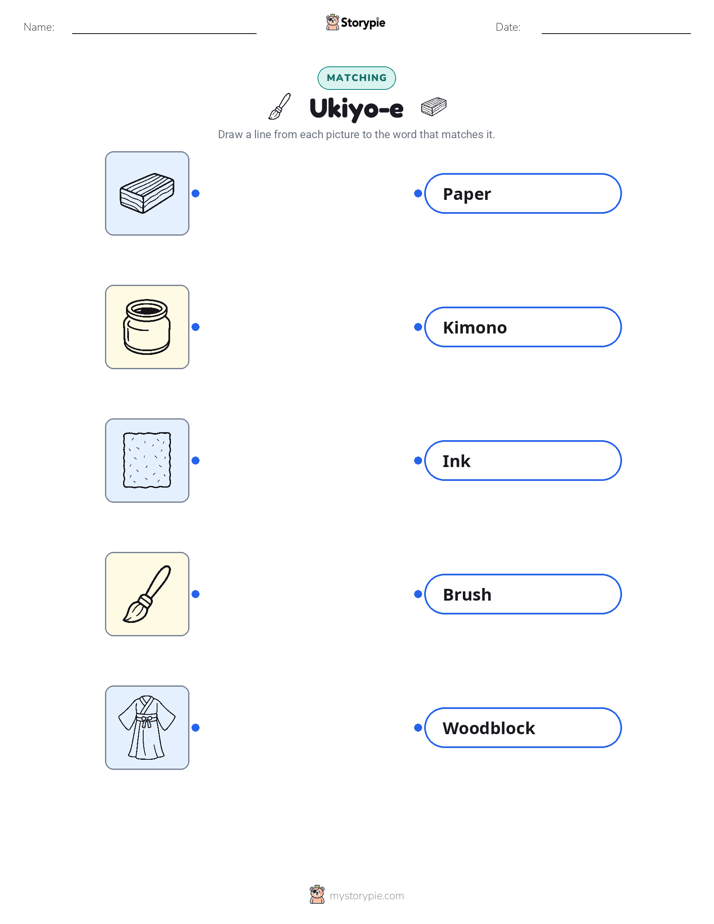
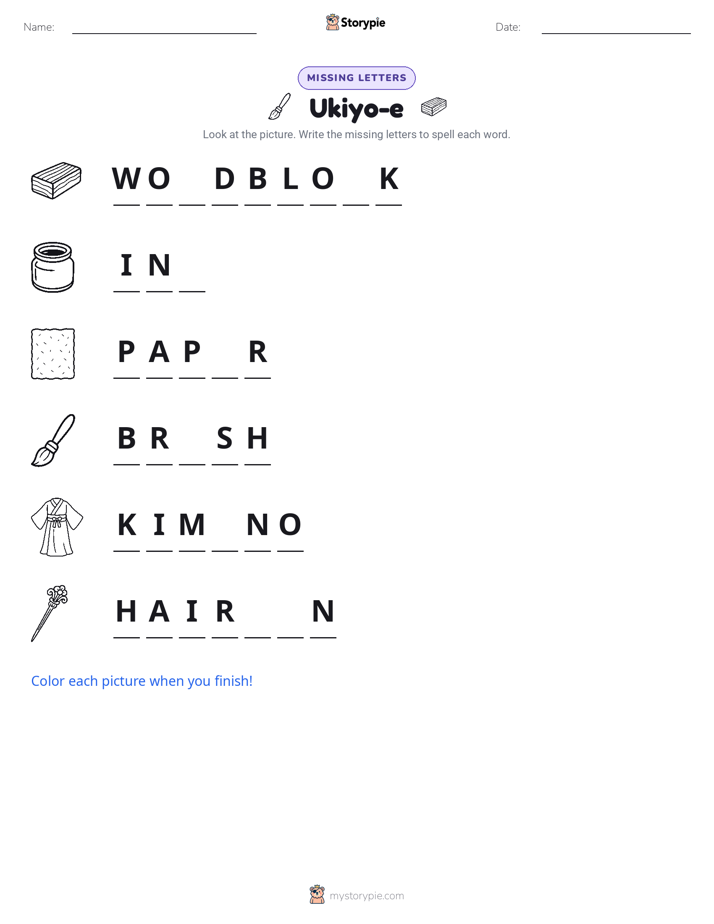
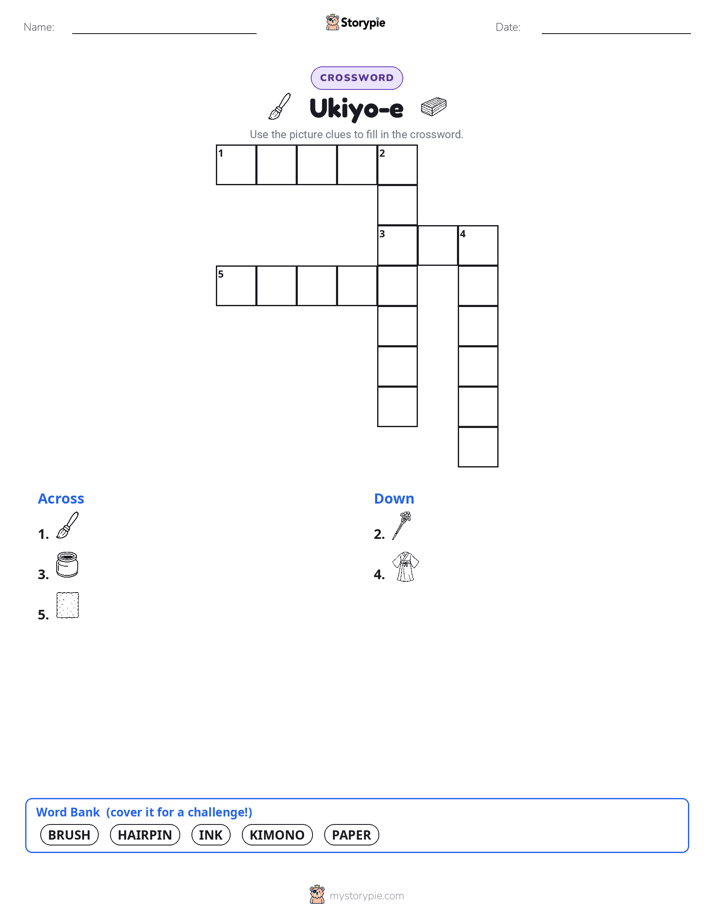
Imagine a picture of a brave samurai with a shiny sword, or a graceful dancer in a beautiful, colorful kimono. I can show you a giant blue wave, so big it almost touches the sky, with a snowy white mountain far away. I can take you back in time to the busy streets of a city in Japan, or show you a quiet garden where pink cherry blossoms are blooming. The best part about me was that I was not made of sparkly gold or expensive jewels. I was made from simple things: wood, ink, and paper. This meant that regular people, like shopkeepers and farmers, could have beautiful art in their homes, not just rich lords in big castles. I brought color and stories to everyone.
Are you wondering who I am? Hello. My name is Ukiyo-e. In the Japanese language, my name means 'pictures of the floating world.' Does not that sound magical? The 'floating world' was not really floating on clouds; it was the name for the exciting, fun-filled life in big cities like Edo, which is now called Tokyo. This was during a long, peaceful time in Japan called the Edo period, which lasted from the 17th to the 19th centuries. Making me was like a team project. First, an artist would draw a picture. Then, a super-skilled carver would carefully carve that drawing onto a flat block of wood. After that, a printer would brush ink onto the carved block and press a piece of paper on top. When they lifted the paper, poof—there I was. For every single color you see in me, like a red robe or a blue sky, a whole new woodblock had to be carved. One of my most famous creators was an artist named Katsushika Hokusai. Around the year 1831, he made an amazing picture of a giant wave called 'The Great Wave off Kanagawa,' which people all over the world still love to look at today.
The Picture of the Floating World
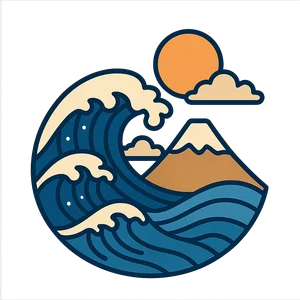
Imagine a picture of a brave samurai with a shiny sword, or a graceful dancer in a beautiful, colorful kimono. I can show you a giant blue wave, so big it almost touches the sky, with a snowy white mountain far away. I can take you back in time to the busy streets of a city in Japan, or show you a quiet garden where pink cherry blossoms are blooming. The best part about me was that I was not made of sparkly gold or expensive jewels. I was made from simple things: wood, ink, and paper. This meant that regular people, like shopkeepers and farmers, could have beautiful art in their homes, not just rich lords in big castles. I brought color and stories to everyone.
Are you wondering who I am? Hello. My name is Ukiyo-e. In the Japanese language, my name means 'pictures of the floating world.' Does not that sound magical? The 'floating world' was not really floating on clouds; it was the name for the exciting, fun-filled life in big cities like Edo, which is now called Tokyo. This was during a long, peaceful time in Japan called the Edo period, which lasted from the 17th to the 19th centuries. Making me was like a team project. First, an artist would draw a picture. Then, a super-skilled carver would carefully carve that drawing onto a flat block of wood. After that, a printer would brush ink onto the carved block and press a piece of paper on top. When they lifted the paper, poof—there I was. For every single color you see in me, like a red robe or a blue sky, a whole new woodblock had to be carved. One of my most famous creators was an artist named Katsushika Hokusai. Around the year 1831, he made an amazing picture of a giant wave called 'The Great Wave off Kanagawa,' which people all over the world still love to look at today.
For a very long time, I only lived in Japan. But during the 19th century, I got to go on a big adventure. I traveled on huge ships all the way across the ocean to a place called Europe. Artists there had never seen anything like me. A famous painter named Vincent van Gogh was completely amazed. He loved my bright, happy colors and the strong, dark lines that made everything stand out. I inspired him and many other artists to try painting in new and exciting ways. Today, you can find me in big museums all around the globe, from Paris to New York. I share stories of what life was like in Japan hundreds of years ago, and I keep inspiring artists to see the beauty in everyday things. I am a happy reminder that a simple picture made of wood and paper can travel the world and connect people everywhere.
Wow facts
About
Ukiyo-e, meaning 'pictures of the floating world,' is a genre of Japanese art, particularly woodblock prints, that flourished from the 17th to 19th centuries, depicting scenes of urban life, landscapes, and entertainment.
Take a Quiz
Question 1 of 4
Why was Ukiyo-e special for everyday people in Japan?
Want to do even more?
Go beyond exploring. Unlock tools that turn every story into real learning.

Storypie Plus for families
Full stories, quizzes, and printables. Nights and car rides, sorted.
- Unlimited audio stories
- Create Mode: your child stars in the story
- Offline downloads
- Printable worksheets & coloring pages

Why Storypie for Schools
Students engaged. Prep in seconds. Evenings back to you.
- Worksheets & Quizzes
- Classroom Management
- Formative Assessment
- Custom Curriculum & Lesson Plans
- 27 Languages

Why Storypie for Homeschool
Curriculum done. They'll ask for more. Hours back in your day.
- Worksheet Generator
- First-Person Audio Stories
- Built-in Comprehension Quizzes
- Custom Curriculum & Lesson Plans
- Print & Go Activities